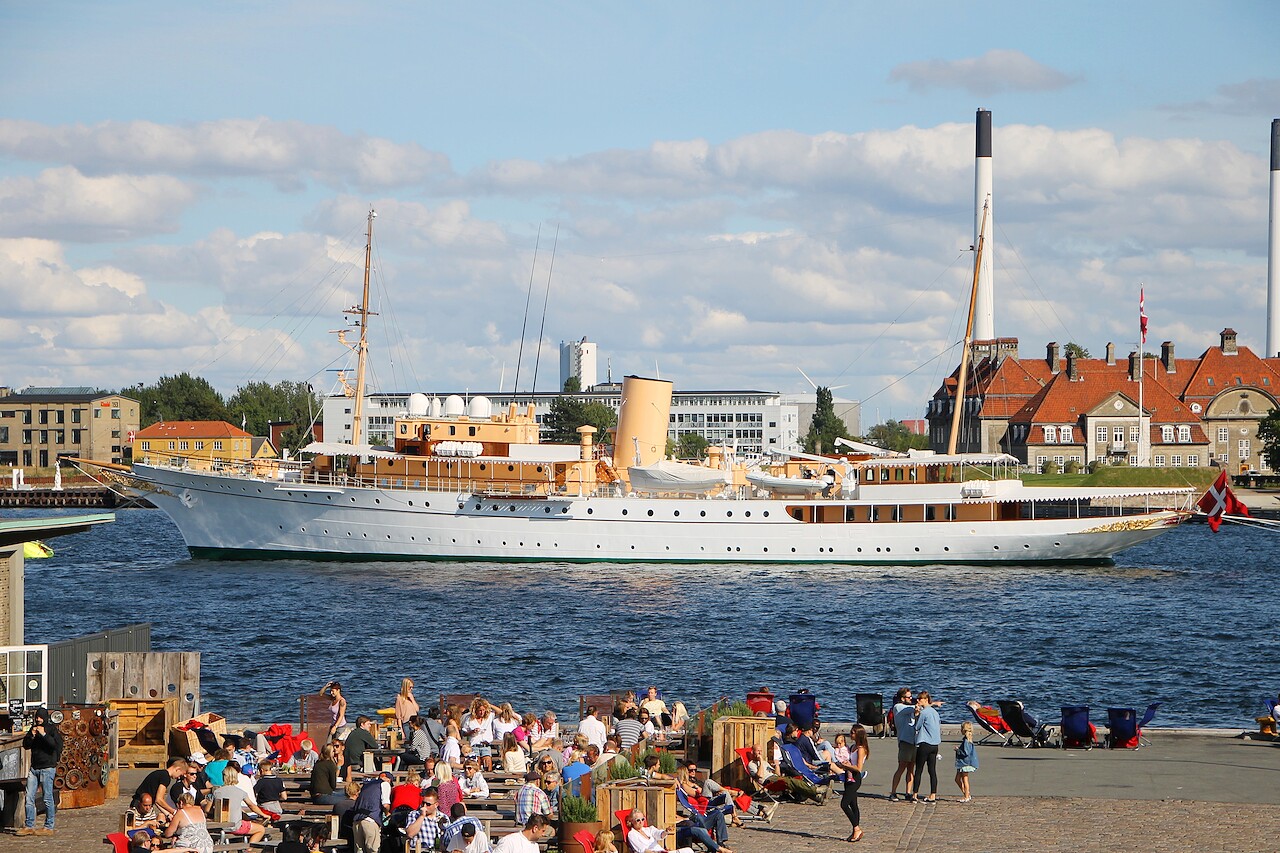
Selen Submarine, Sehested Messile Boat and Danneborg Yacht, Copenhagen
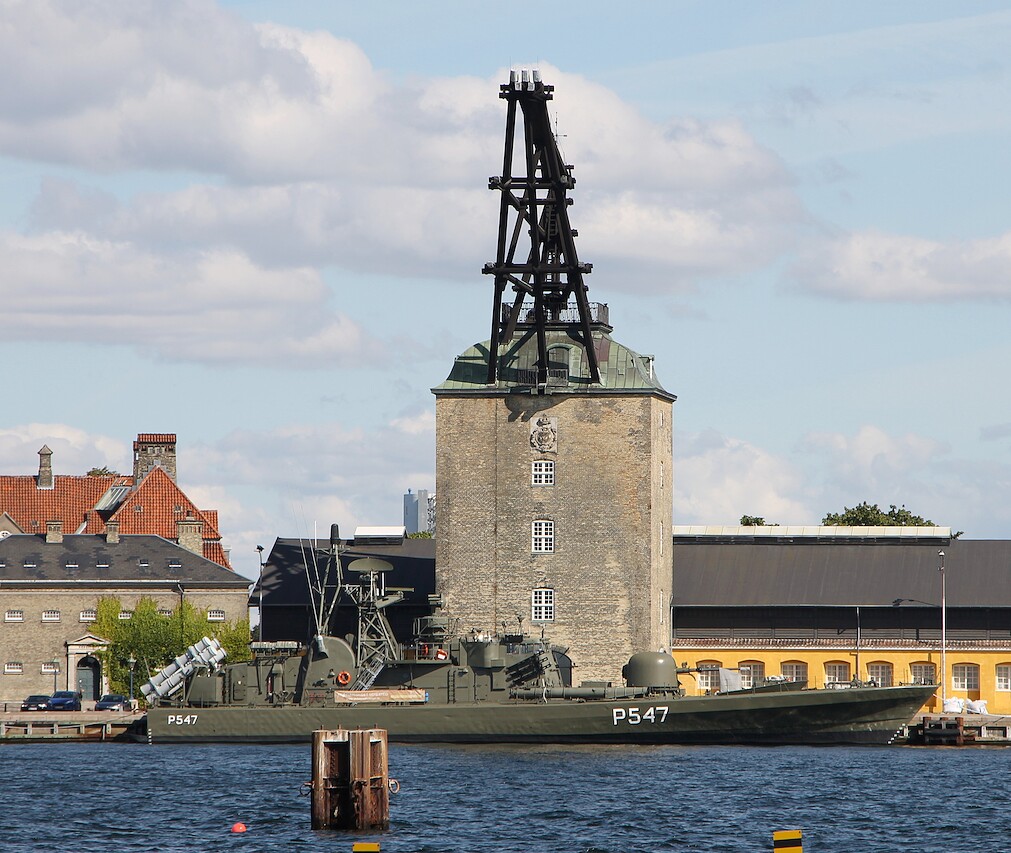
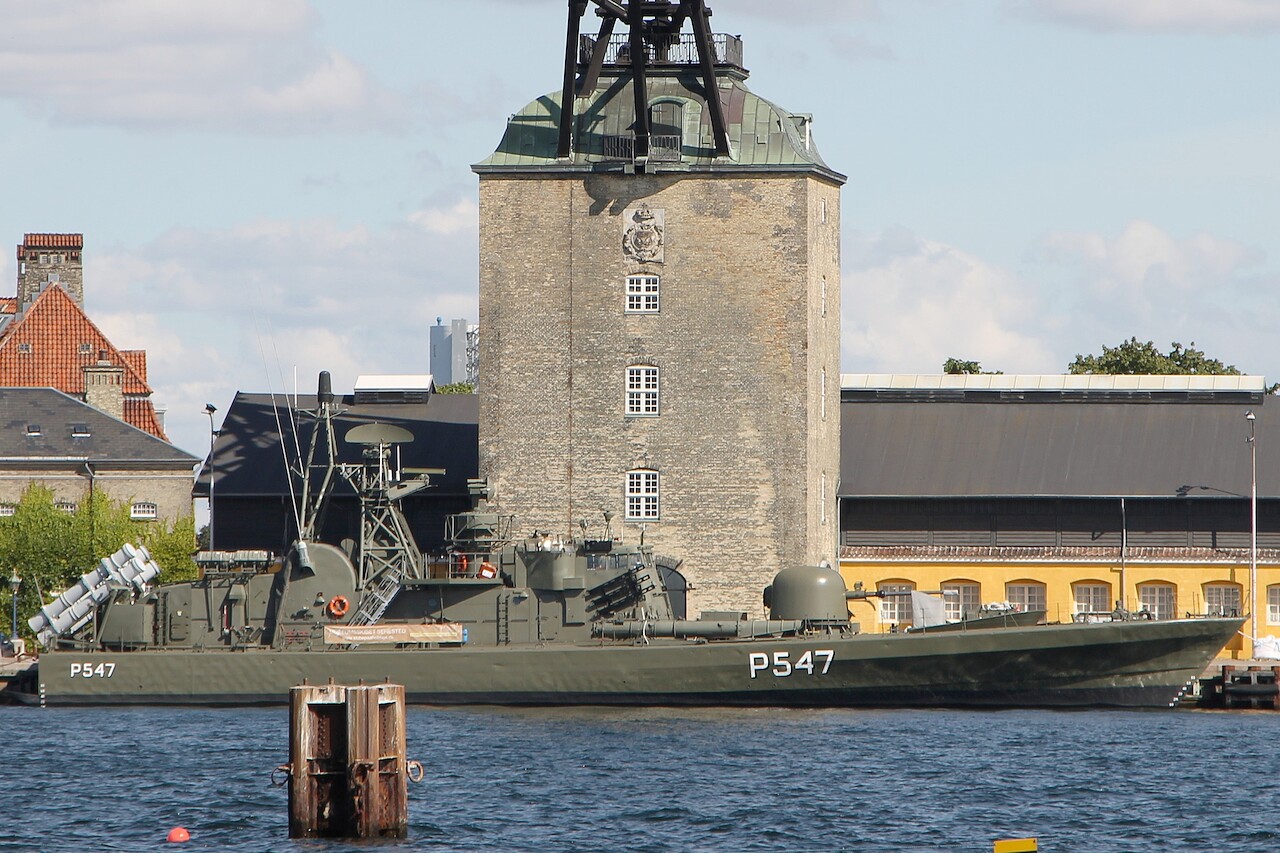
Opposite Larsens Plads, on the other side of the Inderhavn harbour, is the old Royal Naval Base Holmen (Holmen — “the islet”). Until the 1680s, the Danish navy was based in the harbour, practically in the centre of the city. Due to the growth of the fleet and the increase in the number of merchant ships arriving in Copenhagen, it was decided in 1680 to build a separate base for the fleet closer to the sea. In 1782, construction of wharves and barracks for naval crews began on the Holmen Islands; several forts were built to provide protection from the sea. A shipyard was also located there, which launched its first ship in 1692. After World War II, two new bases were built in Korsør and Frederikshavn; Holmen remained the main base until 1993. Now there is a new area of the city, Frederiksholm, the center of which was the opera house built in 2005. A small section of the base remains, which houses the Royal Navy Academy and several museum ships from the Cold War era. The 17th century tower with the royal coat of arms, on the roof of which there is a wooden lifting boom, which was used to install masts on ships, recalls the times of the sailing fleet.
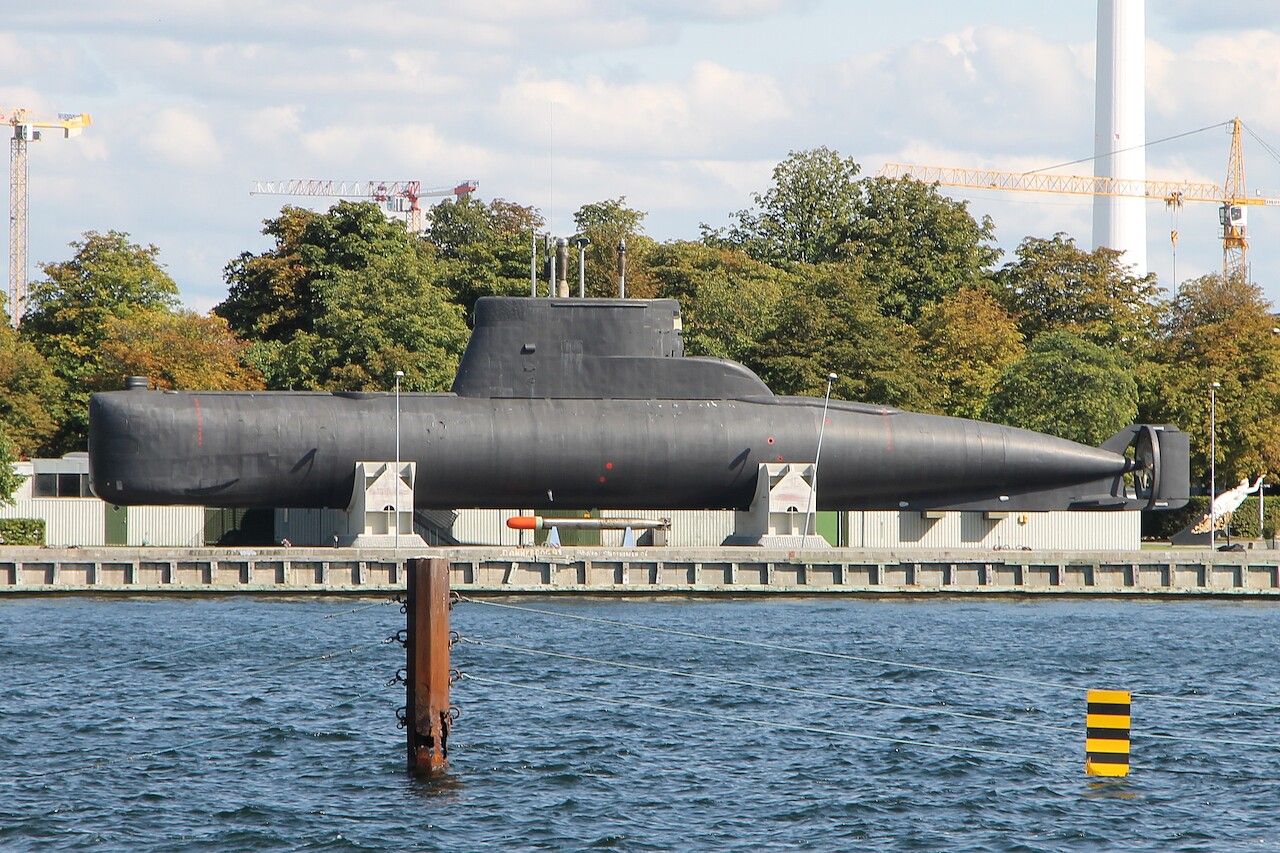
The submarine “Sælen” (Sælen) of Project 207 belongs to the class of small submarines and is designed for operations in coastal waters. In total, the Danish Navy had three submarines of this project. Displacement: 370 tons surfaced, 435 tons submerged; Length: 47.20 m, Width: 4.70 m, Draft: 0.80 m. The power plant consists of two diesel generators, each with 1,100 hp, and one electric motor with 1,700 hp. The submerged and surface speeds are 10 and 17 knots, respectively. Crew: 24 people. Armament: eight 533 mm (21‑inch) torpedo tubes, eight torpedoes. This boat was built in 1965 in Emden (Germany) for the Royal Norwegian Navy, where it served for 25 years under the name Uthaug, after which it was sold to Denmark. On December 4, 1990, the boat sank while being towed from Copenhagen to Aarhus. On December 17, it was raised by a German floating crane and placed in the Aarhus dock for repairs. On August 10, 1993, the boat, under the name Sælen, was put into service. In 2003, the boat participated in the NATO operation against Iraq. After a year of continuous duty in the Mediterranean Sea and the Persian Gulf, she was hoisted aboard the Grietje ship and taken to Copenhagen, where the territory of the old naval base was established. A fleet museum is now open in the boat. On weekdays, the boat can only be visited with an excursion (in English), which starts every half hour.
The Sehested missile boat was built by the Royal Shipyard and entered service in 1978. The ship, which is 46 metres long and has a displacement of 264 tons, is armed with four Harpoon anti‑ship missiles, six launchers for small missiles (103 mm), two torpedo tubes, and a 76 mm automatic artillery mount. The power plant consists of three gas turbines, each with 12,750 horsepower, which allow the boat to accelerate to 40 knots (74 km/h) during an attack; for cruising, two diesel engines with 800 horsepower each are used. On diesel power, the boat can travel at a speed of 12 knots (22 km/h). The boat’s crew consists of 25 people. On the last day of 2000, the boat became an exhibit at the Royal Naval Museum; visiting it is also part of the excursion program.
In the roadstead of the Holmen base, there is a mooring for the royal yacht Dannebrog (“Danish Standard”). The yacht was laid down at the naval shipyard in Copenhagen in 1931 and commissioned on May 26, 1932. It replaced the old historic wheeled yacht “Dannebrog”, built in 1879. The vessel’s hull is made of steel and is of a clipper type. In the forward part are the crew cabins, in the central part is the engine room, and in the stern are the royal apartments, which include a dining salon, a living room, the bedrooms of the royal family, and guest cabins. During official visits, receptions are held on the poop deck. The yacht is part of the Navy, so the crew consists of military sailors — 9 officers, 7 non‑commissioned officers, and 36 sailors. If necessary, the yacht can be converted into a hospital ship and is also equipped for conducting rescue operations at sea. During her long life, the yacht has traveled more than 300,000 nautical miles (500,000 km) and visited many ports in Europe, cruising the Caribbean. In 1980-1981 The yacht underwent major repairs with the replacement of the propulsion system and navigation equipment. Constant inspections show that the ship's hull is in excellent condition and will last for a very long time.