Neo-Gothic Wing of the Old Town Hall (Novogotické křídlo)
Until the late 18th century, Prague consisted of four independent towns. In 1784, they united, and the Old Town Hall became the main residence of the unified city government. The number of civil servants grew sharply, so the old medieval buildings were no longer enough. To expand the complex in 1835, the city authorities bought out and demolished three ancient burgher houses adjacent to the town hall on the northern and eastern sides. Viennese architect Peter Nobile designed a four-story building with huge floor-to-roof windows and even proposed demolishing the historic southern wing with its Gothic chapel, but Emperor Ferdinand V forbade touching the old part.
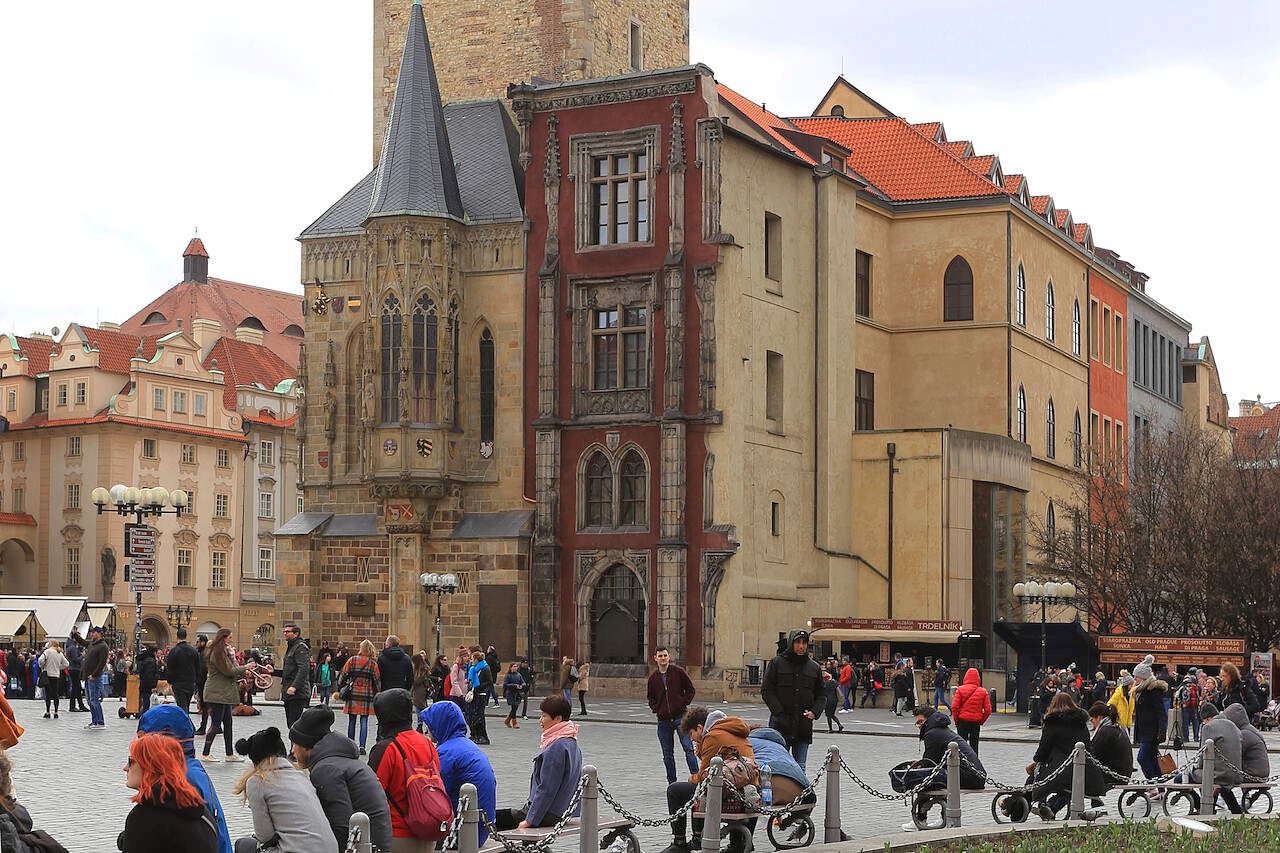
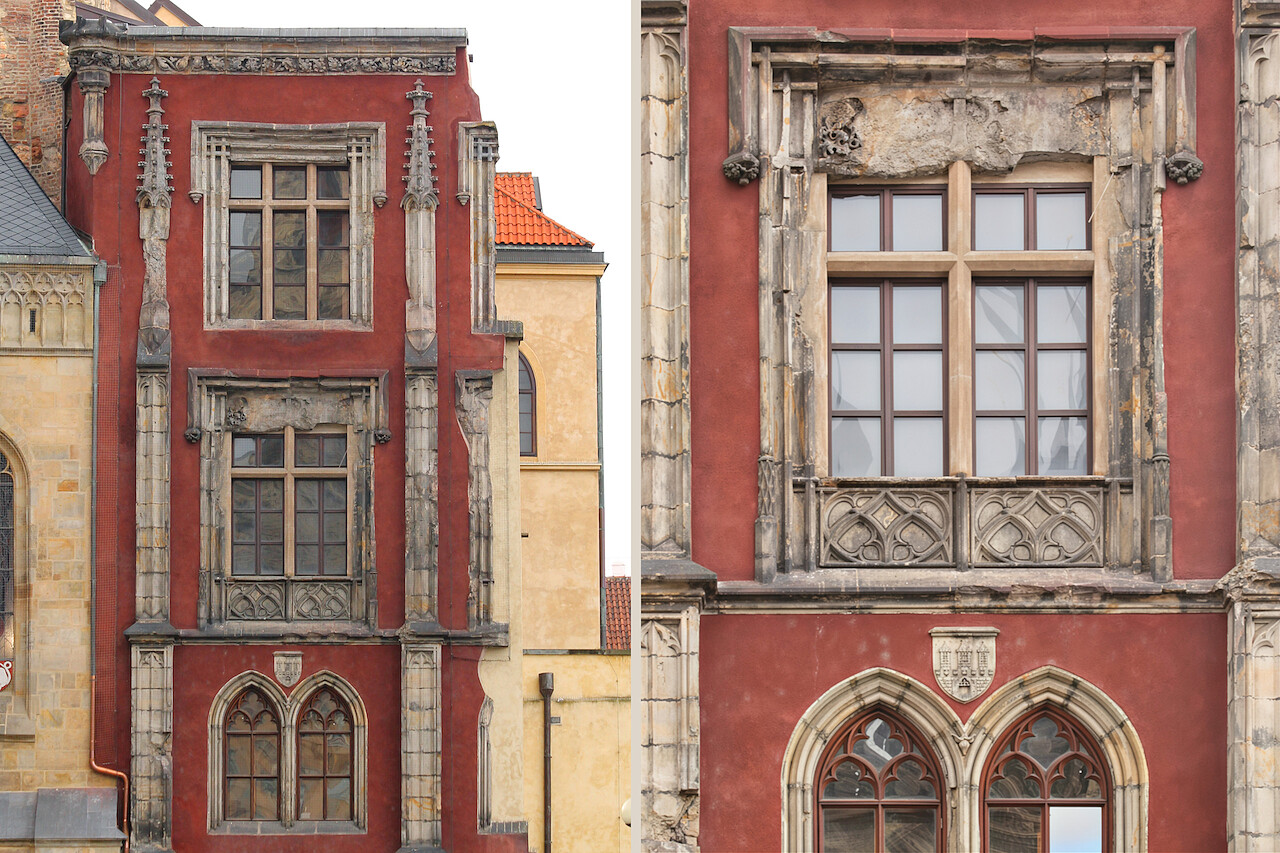
Construction began in 1838, but when the walls went up, the citizens of Prague found them ugly. The main complaints were about those very windows; because of them, townspeople mockingly began calling the new wing "a church converted into a warehouse." The authorities heard the voice of the people, work was suspended, and architect Pavel Sprenger redesigned the facade in the Neo-Gothic style, making the windows a normal size. In 1848, the construction was completed, and the huge building was occupied by the offices and chambers of the officials of the unified Prague Magistrate. Inside, there were rooms for receiving delegations and holding meetings of city commissions, as well as an extensive archive. By the end of the 19th century, the bureaucracy had bloated so much that clerks sat literally nose to nose. Without much enthusiasm, the authorities tried to solve this problem and even held three architectural competitions for a complete reconstruction of the northern wing in 1899, 1904, and 1908, but things never went beyond the blueprints.
The fate of the annex was decided in the final days of World War II. On May 5, 1945, an uprising broke out in Prague against the German occupiers; Czech insurgents occupied the Old Town Hall and set up the headquarters of the Czech National Council in its cellars. The complex became a key defense hub in the center of Prague. On May 7, German units pulled armored vehicles and anti-aircraft guns up to Old Town Square. Fire was directed at the town hall point-blank from the neighboring Mariánské Square, from the direction of Pařížská Street, and from Letná. Hits from incendiary shells caused flames to quickly engulf the wooden ceilings and the roof of the Neo-Gothic wing. There was no way to extinguish the fire during street fighting, and the city's water supply had been cut off, so the fire raged until May 8 and completely destroyed the building from the inside.
A significant part of the city archive, which housed documents dating back to the 13th century, perished in the blaze. A gallery of portraits of Prague's burgomasters also burned down. After the war, there was practically nothing left to restore-the ruins were dismantled, leaving only a small section of the wall adjacent to the chapel. Trees were planted on the site of the huge building, and a small park (Park u Staroměstského Náměstí) was laid out.