House at the Minute (Dům U Minuty)
The final acquisition by the city authorities for the Old Town Hall complex was a house on the border of Old Town Square and Little Square (Malé náměstí). The building's history began in the first half of the 15th century, when a small late-Gothic house was erected on the site of a narrow lane. The names of the house's early owners have not survived in the archives, though it is known that during the Renaissance the building repeatedly changed hands among wealthy Old Town burghers.
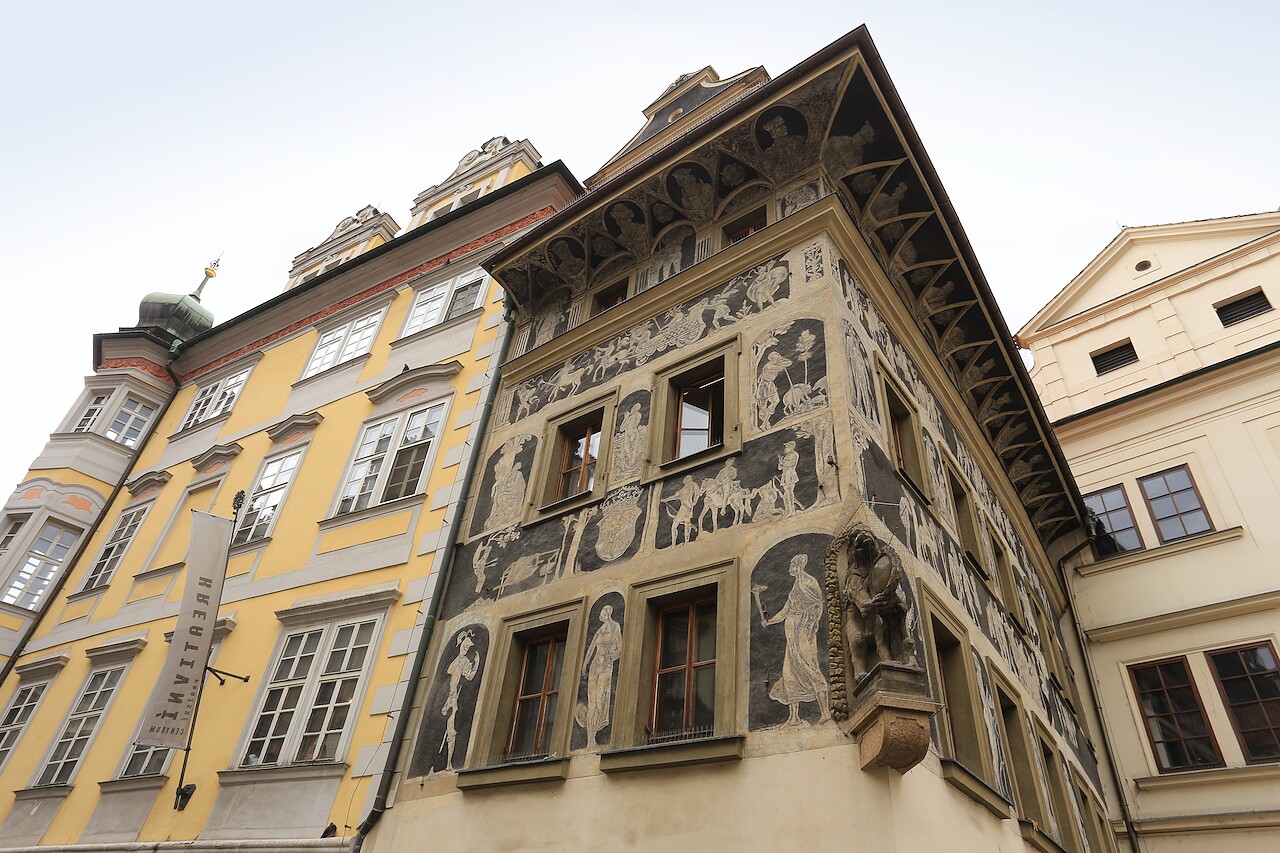
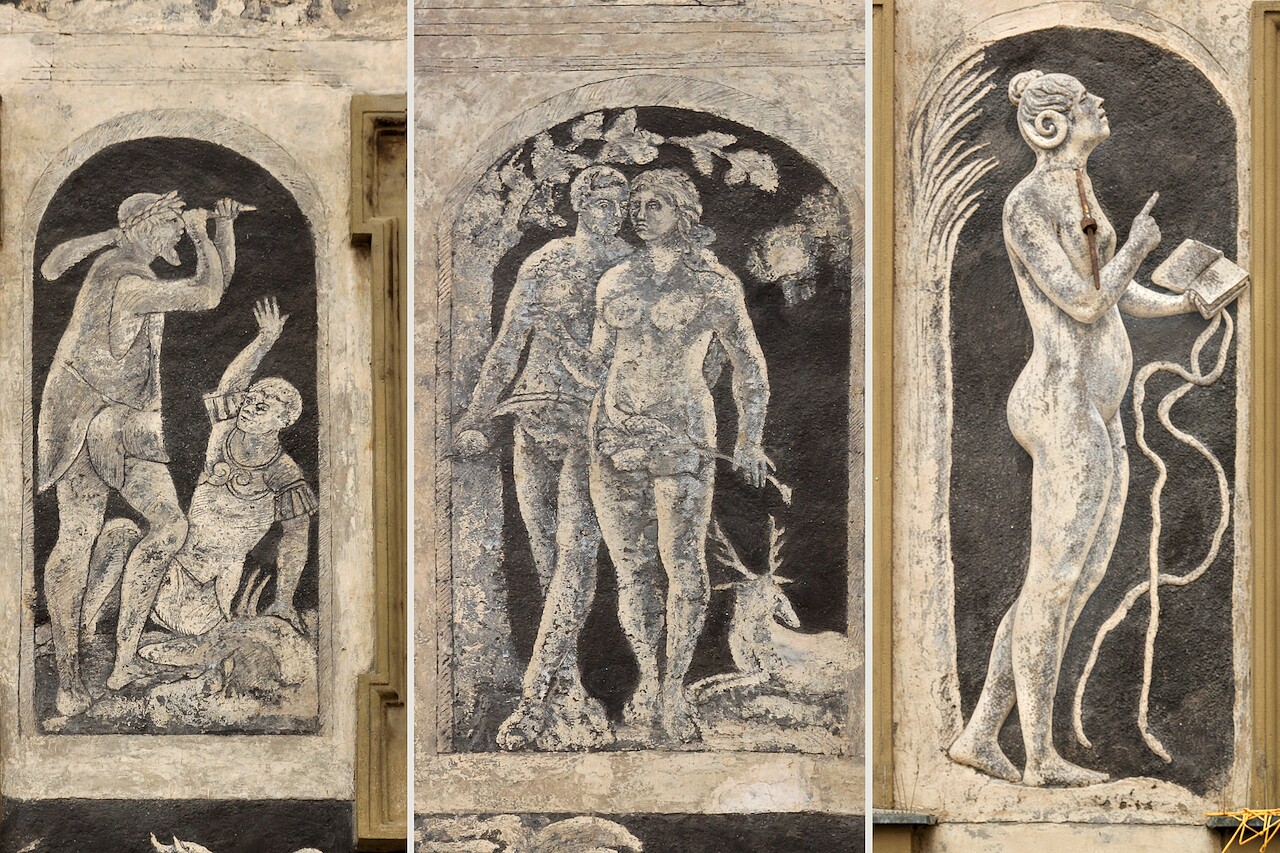
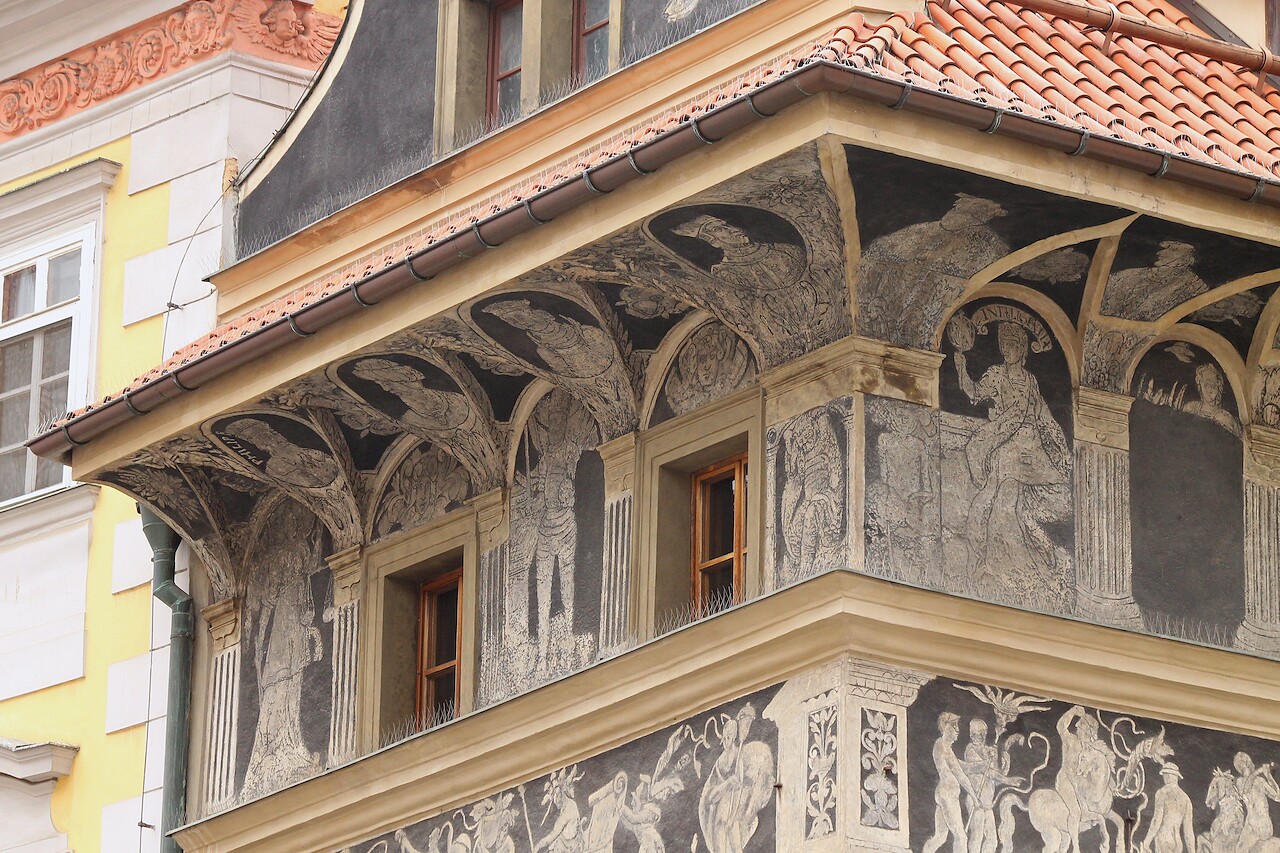
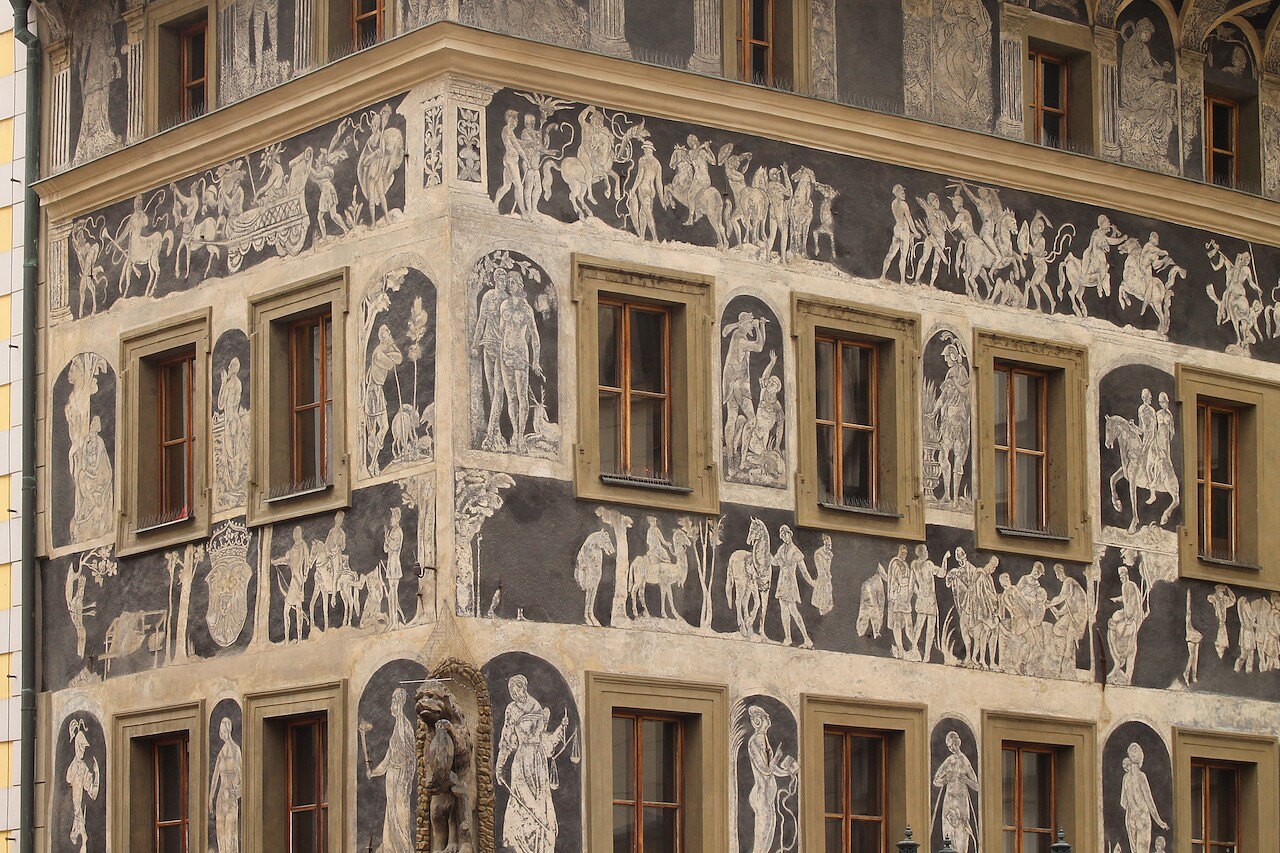
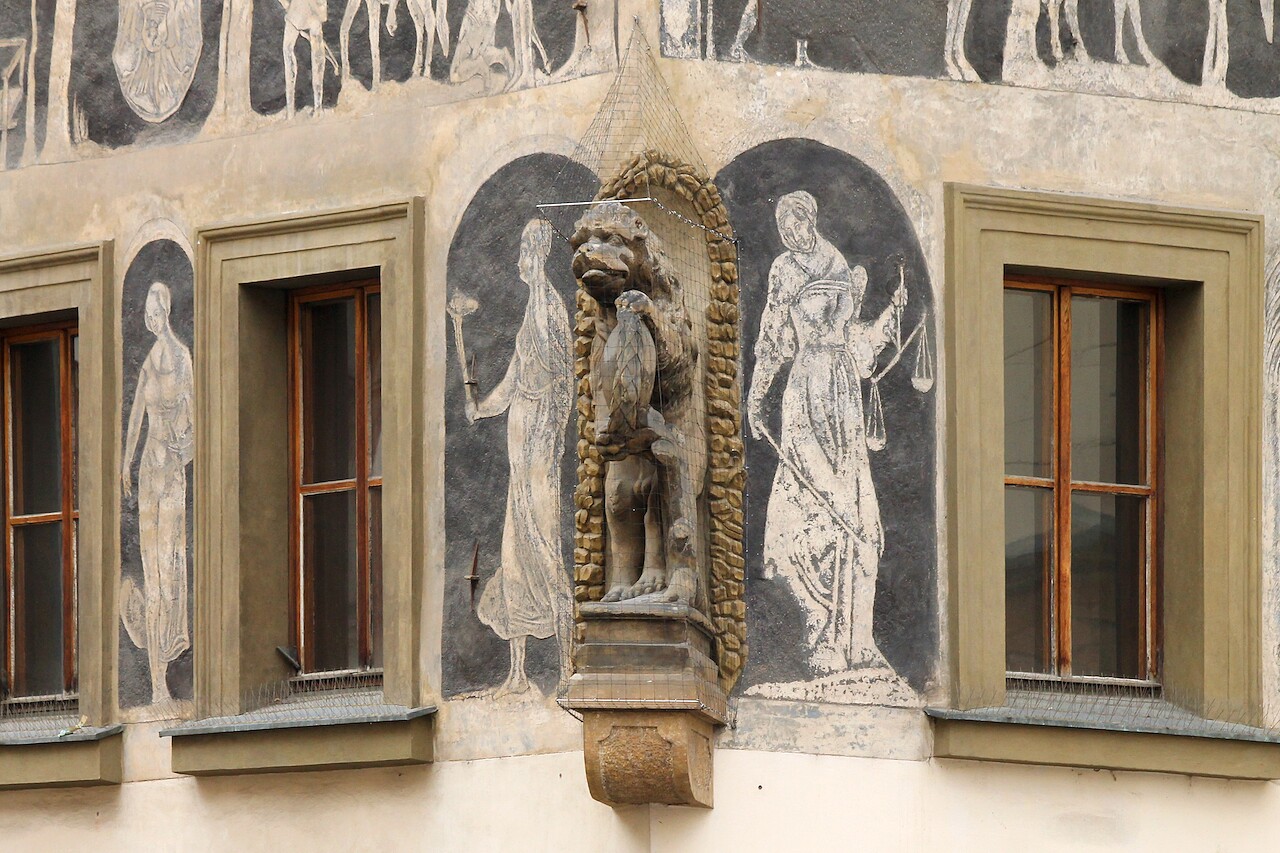
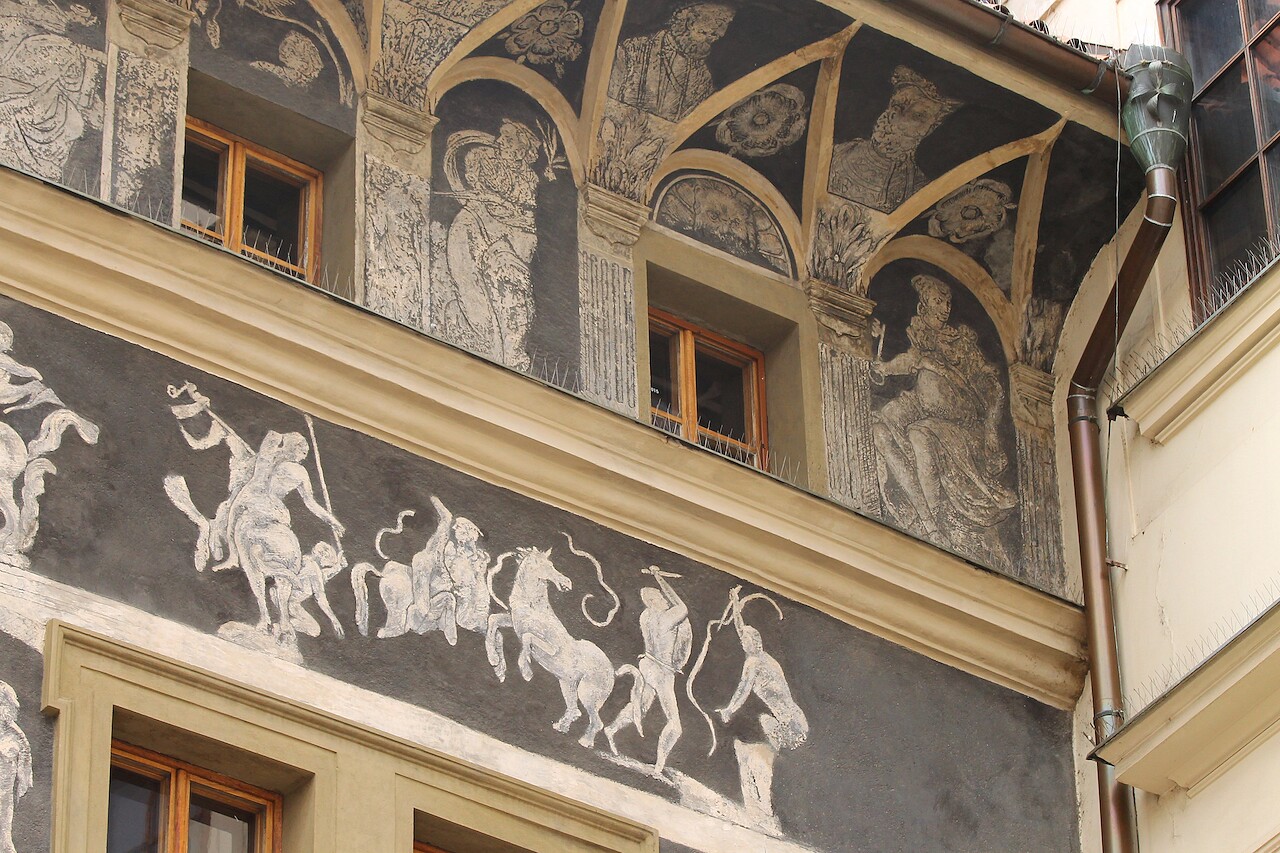
After 1564, the owners thoroughly rebuilt it in the Renaissance style, added a third floor, and crowned the facade with a characteristic lunette cornice. The mansion owes its main fame to the black-and-white sgraffito murals created at the turn of the 16th and 17th centuries. Craftsmen applied a bottom layer of plaster tinted with crushed charcoal, followed by a second, light-colored layer. By scratching through the top layer down to the dark base, they created an entire gallery of subjects: biblical scenes, classical myths, allegories of virtues, and portraits of rulers from the Habsburg dynasty sit side by side here. Archival records note that this sharply increased the mansion's value in subsequent sales.
In 1712, the house was bought by pharmacist Matěj Bartl, who opened the pharmacy "At the White Lion" on the ground floor; his descendants owned the building for over a hundred years. In the 19th century, new owners turned the house into a tenement: the ground floor was rented by small merchants, including the famous tobacco shop "At the Minute," which gave the building its name, while the upper floors were converted into apartments for middle-income families. By that time, the sgraffito murals were hidden beneath a layer of smooth plaster. In 1889, merchant Hermann Kafka rented an apartment on the upper floor, where he lived with his wife Julie and their son Franz. The future writer spent his elementary and early high school years here, and his three younger sisters were also born in this house.
At the end of the century, the building's fate took a sharp turn: the unique structure found itself on the brink of destruction. Thoroughly steeped in bureaucracy and red tape, the administrative bodies of Austria-Hungary had grown to incredible proportions by the late 19th century. This fate did not spare Prague's municipal government either, which found itself cramped even in its massive Neo-Gothic wing. In 1896, the city bought the house "At the Minute" from its owners and evicted the tenants, among whom was Franz Kafka's family. The dilapidated building was purchased for its plot of land in order to erect a modern building on the site, as well as to widen the narrow passage from Old Town Square to Little Square.
Ironically, the salvation of the unique building came from that very same bureaucracy—plans to construct the new wing drowned in waves of approvals and architectural competitions, of which as many as three were held (in 1899, 1904, and 1908), yet not a single project was accepted. Public opinion also played a significant role: in 1900, the "Club for Old Prague" (Klub Za starou Prahu) was founded, launching a powerful campaign to preserve the historic center. One way or another, the building remained untouched, although its apartments were converted into offices. Then the World War began, and the Austro-Hungarian monarchy had no time for reconstructions.
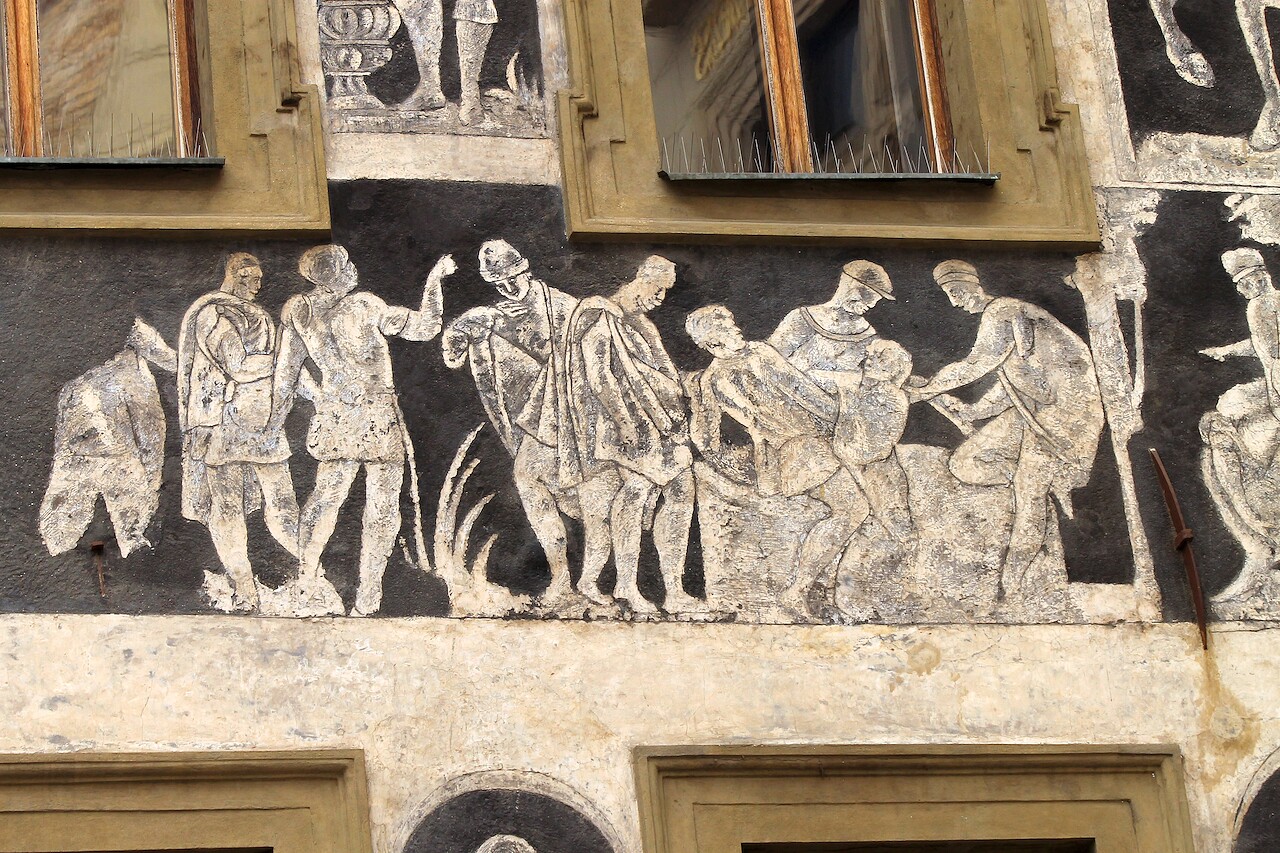
In 1919, authorities returned to the issue, and during preparations for demolition, a building commission accidentally discovered the unique Renaissance sgraffito beneath a layer of smooth 18th-century Baroque plaster. Demolition plans were immediately canceled, and the building was declared an architectural monument. In the 1920s, restorers manually stripped the walls of later layers. Part of the drawings had been lost, and Czech sculptor and restorer Jindřich Čapek undertook their restoration. He carefully redrew and reconstructed the missing lines of the sgraffito, relying on surviving contours, Renaissance stylistics, and the proportions of the compositions. However, one problem remained unsolved—the building severely narrowed the street and obstructed traffic. In 1938, the authorities altered the structure after all, cutting a pedestrian arcade gallery through the ground-floor level. To keep the heavy upper floors with their valuable sgraffito from collapsing after the arcade was carved out, engineers reinforced the building's load-bearing structures using modern reinforced concrete and new brickwork. They also strengthened the ancient wooden ceilings and roof rafters. During this work, yet another discovery was made: authentic painted wooden ceilings from the Renaissance era were uncovered on the second floor, along with Baroque vaults featuring frescoes, all of which were carefully restored as well.
Today, the upper floors house administrative offices of the Town Hall. Downstairs operates the pharmacy Lékárna U Minuty, carrying on the legacy of the famous pharmacy "At the White Lion," which is commemorated by the sculpture of a lion on the corner of the building. On the wall facing Old Town Square, a memorial plaque with a bas-relief of Franz Kafka serves as a reminder of the years he lived in this house.