Old Town Hall Chapel (Kaple Staroměstské radnice)
A chapel at the town hall had been planned since its founding in 1338; the first temporary altar was consecrated as early as 1348, and a permanent chaplain served here from 1350 onward. The chapel was likely located on the ground floor of the Wolflin House, though another theory suggests it was placed on the already completed lower level of the tower. To design and build a permanent chapel, the city authorities commissioned the renowned master builder Peter Parler. He cut a passage through the tower's eastern wall and added a two-story structure featuring tall Gothic windows and a unique five-sided oriel window topped with a slender turret. A statue of the so-called Old Town Madonna (Staroměstská Madona) was placed on the corner of the oriel. On August 4, 1381, the chapel was solemnly consecrated in honor of the Virgin Mary (Kaple Panny Marie).
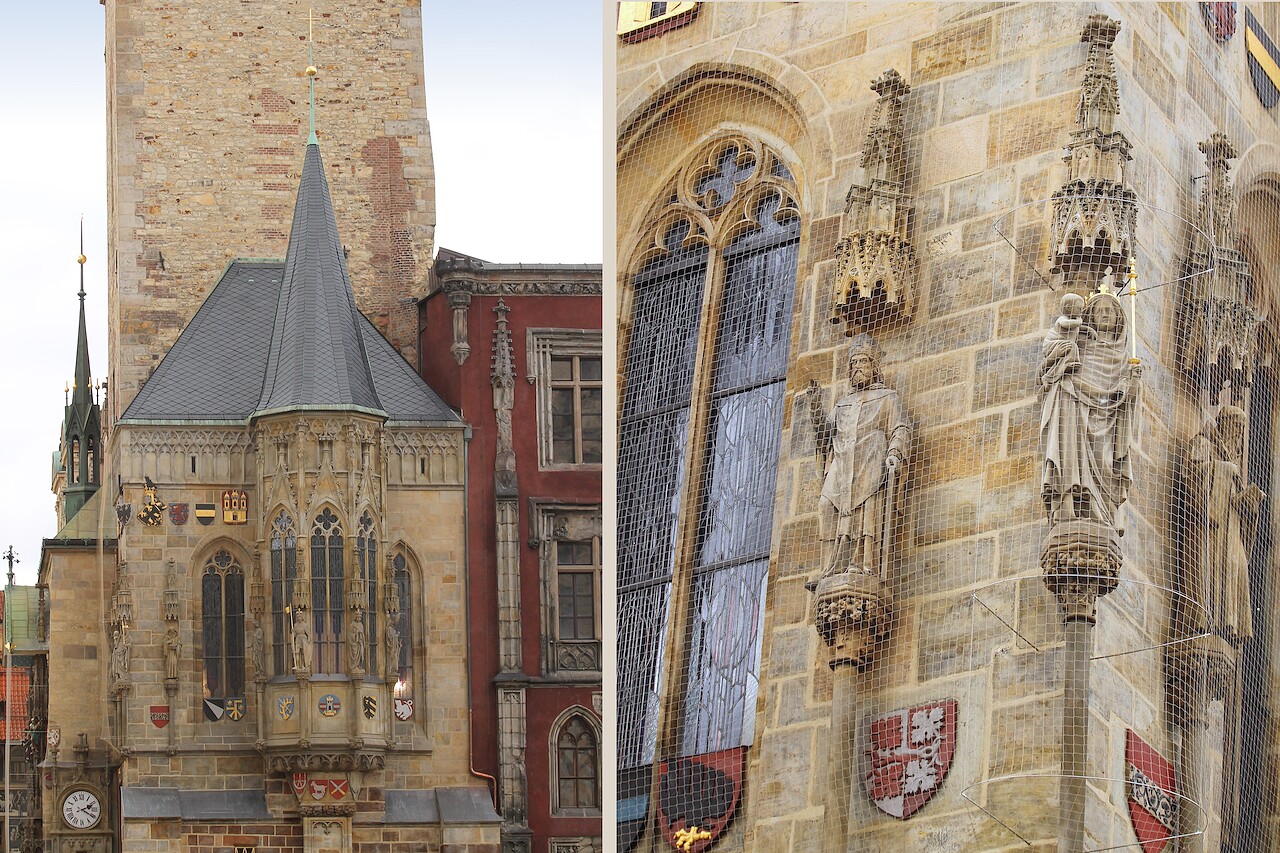
From that time on, all major meetings of the city council began with a Mass in the town hall chapel. Furthermore, prisoners from the town hall dungeon were brought here before their execution—including the 27 leaders of the anti-Habsburg uprising prior to their execution on June 21, 1621. During the Hussite Wars, religious services in the chapel ceased, though it was reopened and reconsecrated in 1481. In the 16th century, when Protestants held the majority on the city council, services were discontinued once again, and it was only after the Battle of White Mountain in 1620 that the chapel was permanently returned to the Catholics. In the late 19th century, as part of a major reconstruction of the town hall, a new carved Neo-Gothic altar designed by architect Josef Mocker was installed in the chapel, featuring figures of the Virgin Mary, Saint Wenceslas, and Saint Ludmila.
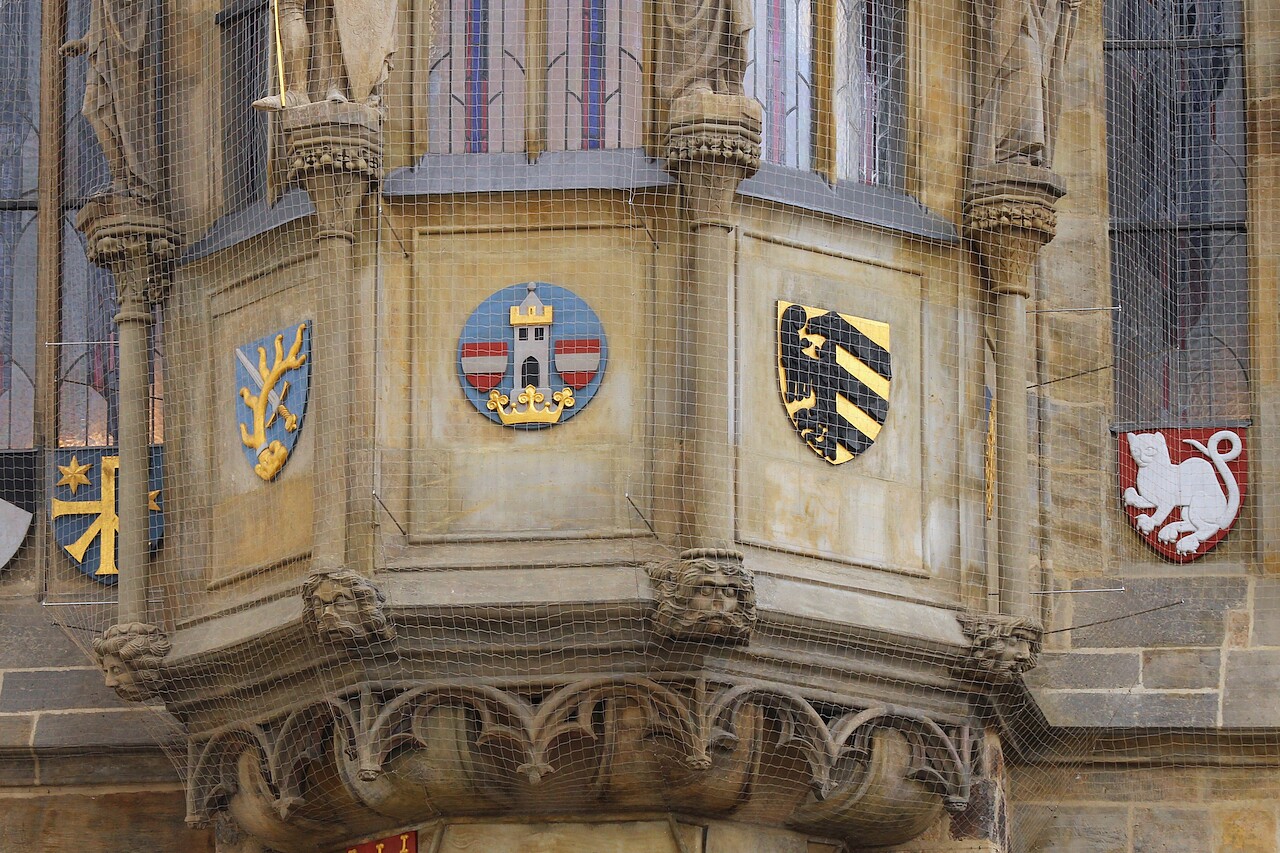
During the Prague Uprising in May 1945, the town hall complex became a defensive stronghold and came under artillery fire on May 8. The resulting blaze severely damaged the chapel's oriel, destroyed its stained-glass windows, and nearly obliterated the 1888 altar. After the war, the stone oriel was restored, and new modern stained-glass windows were created in the mid-20th century. Using archival photographs, restorers painstakingly reconstructed the surviving fragments of the historic 1888 altar, ceremonially returning it to its place in September 2018.
Most of the chapel's nave is situated on the second level of the tower and consists of an elongated transverse hall with an entrance from the Wolflin House. The ribbed vaults of the chapel and the oriel are painted a deep blue with golden stars, while the stone ribs and keystones are gilded, symbolizing the vault of heaven. Through a pointed Gothic arch, the hall opens into the bright, five-sided oriel that serves as the sanctuary (presbytery). The entrance is located on the second level of the Wolflin House and is adorned with a Late Gothic stone relief bearing the heraldic emblem of King Wenceslas IV - a wreath (torse) held by two kingfishers—and the letter "E". Set in the center of the five-sided oriel, the altar is a carved, gilded triptych by architect Josef Mocker, reconstructed by restorers in 2018. The central niche houses a figure of the Virgin Mary with the Infant Jesus, flanked by the Czech patron saints Wenceslas and Ludmila.
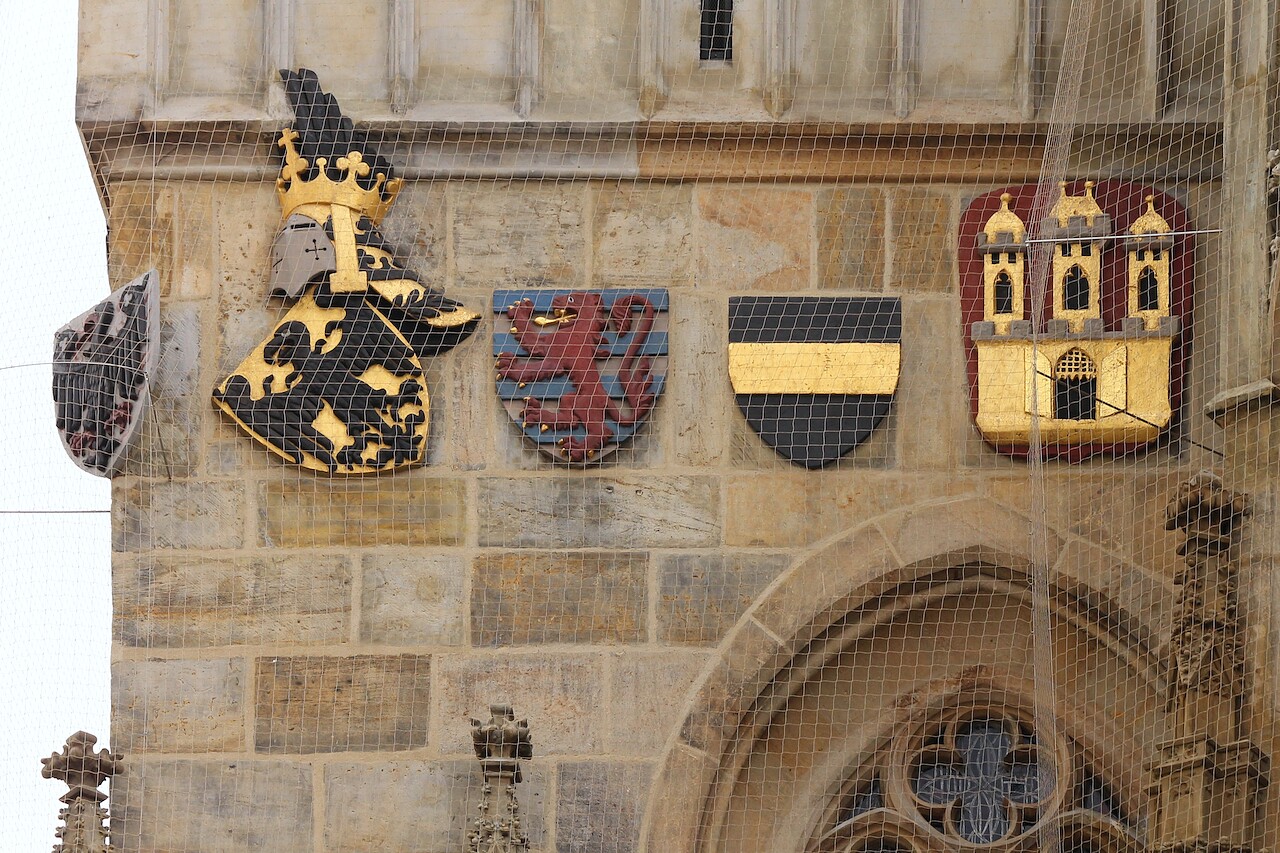
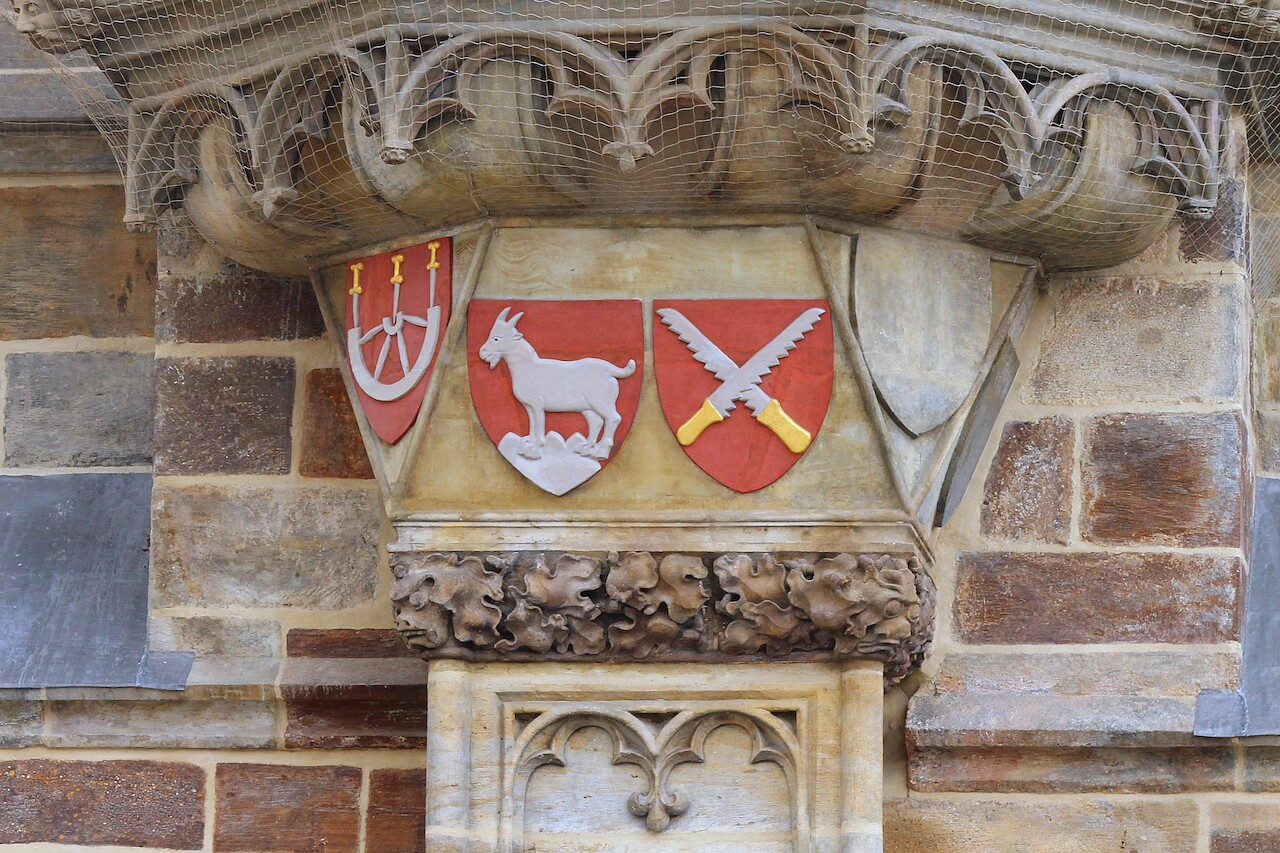
The tall, narrow pointed-arch windows of the oriel and walls are filled with stained glass in blue-violet and ruby tones, crafted in the mid-20th century to replace the windows lost in the 1945 fire. Fragments of medieval frescoes and a gallery of painted coats of arms belonging to Prague guilds and noble families remain preserved on the lower sections of the walls. Sculptures of saints and angels stand on stone corbels on either side of the sanctuary arch. The chapel's southern wall borders the interior chamber of the Prague Astronomical Clock. During a guided tour of the chapel, visitors can look through special glazed openings in the wall to see the rotating mechanism of the twelve wooden Apostle figures from the inside, just moments before they appear to the crowds in the square.
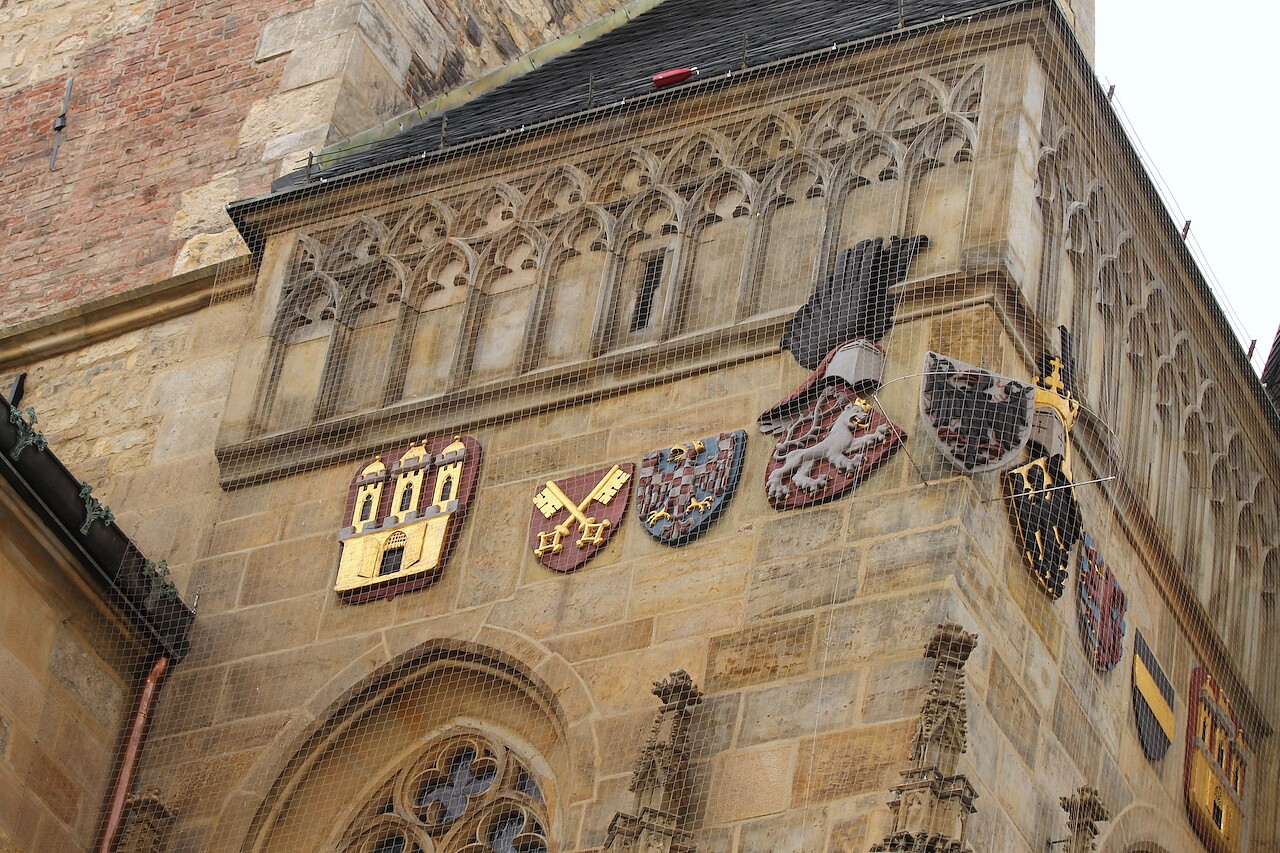
Beneath the chapel originally stood the quarters of the city watch (the guardhouse), which now houses the Tourist Information Center. There, you can purchase tickets for a guided tour whose route includes the Gothic chapel, the council halls, the medieval underground, and the mechanism of the Astronomical Clock. Tours are conducted on a regular schedule in Czech, English, German, French, Italian, and Spanish.