Casal de Santa Margarida, Sintra
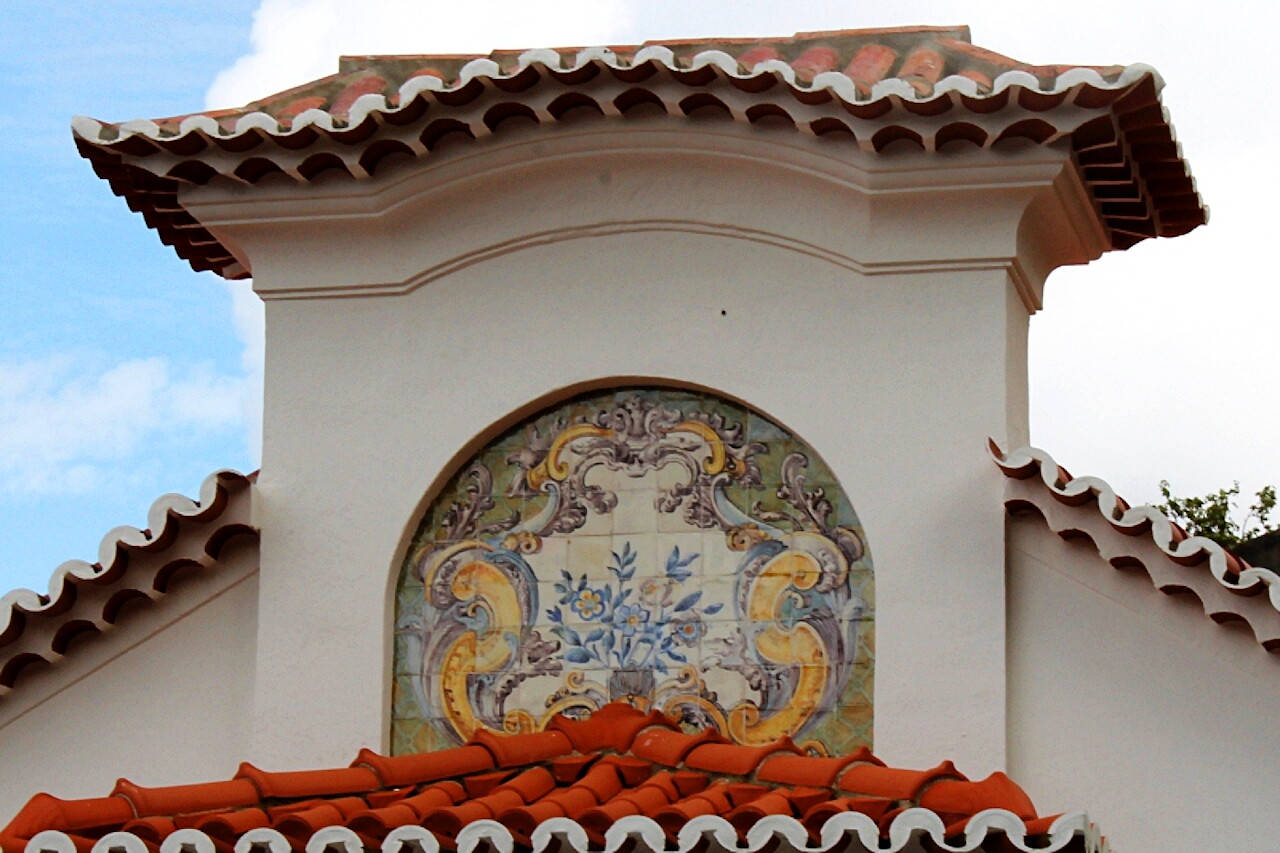
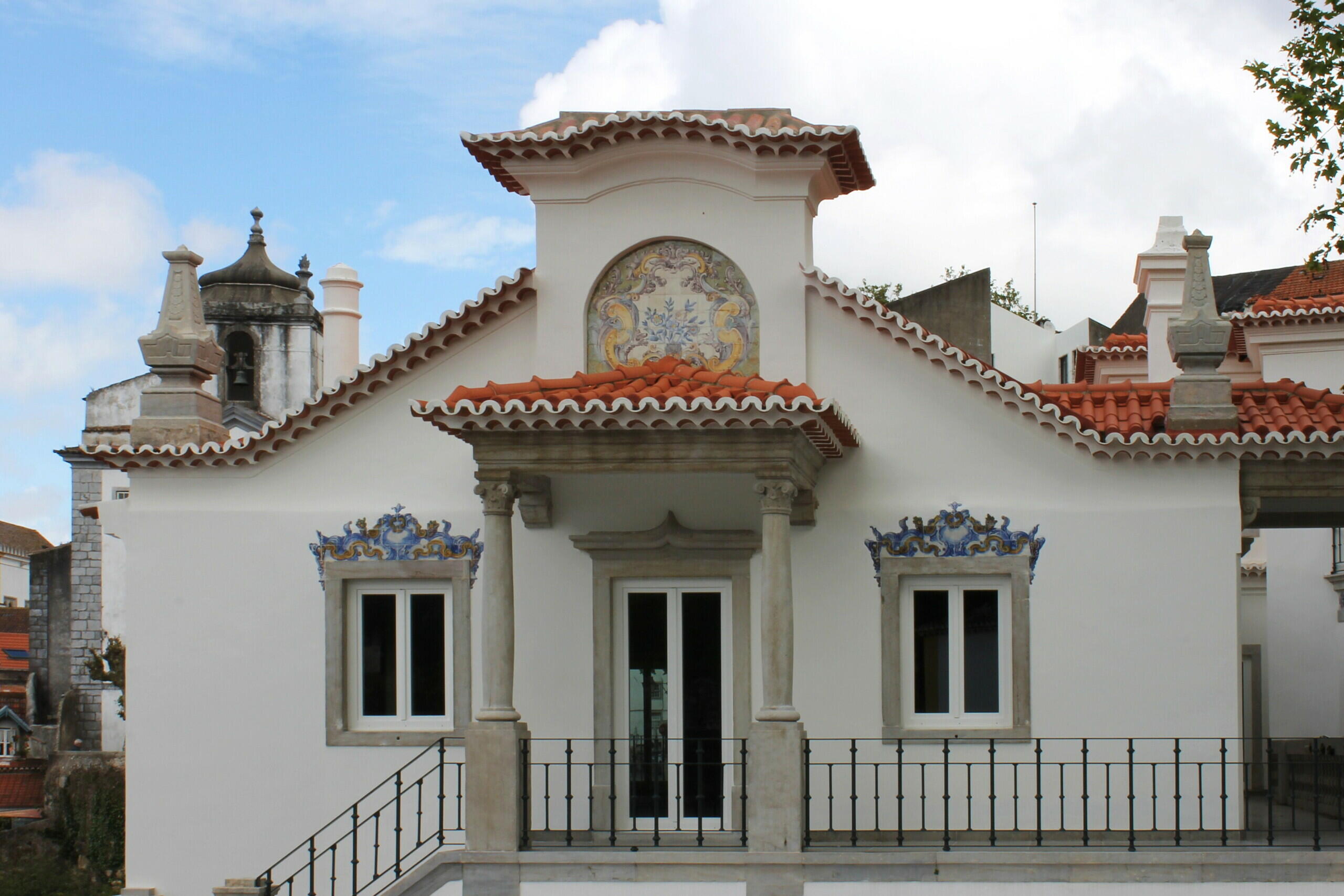
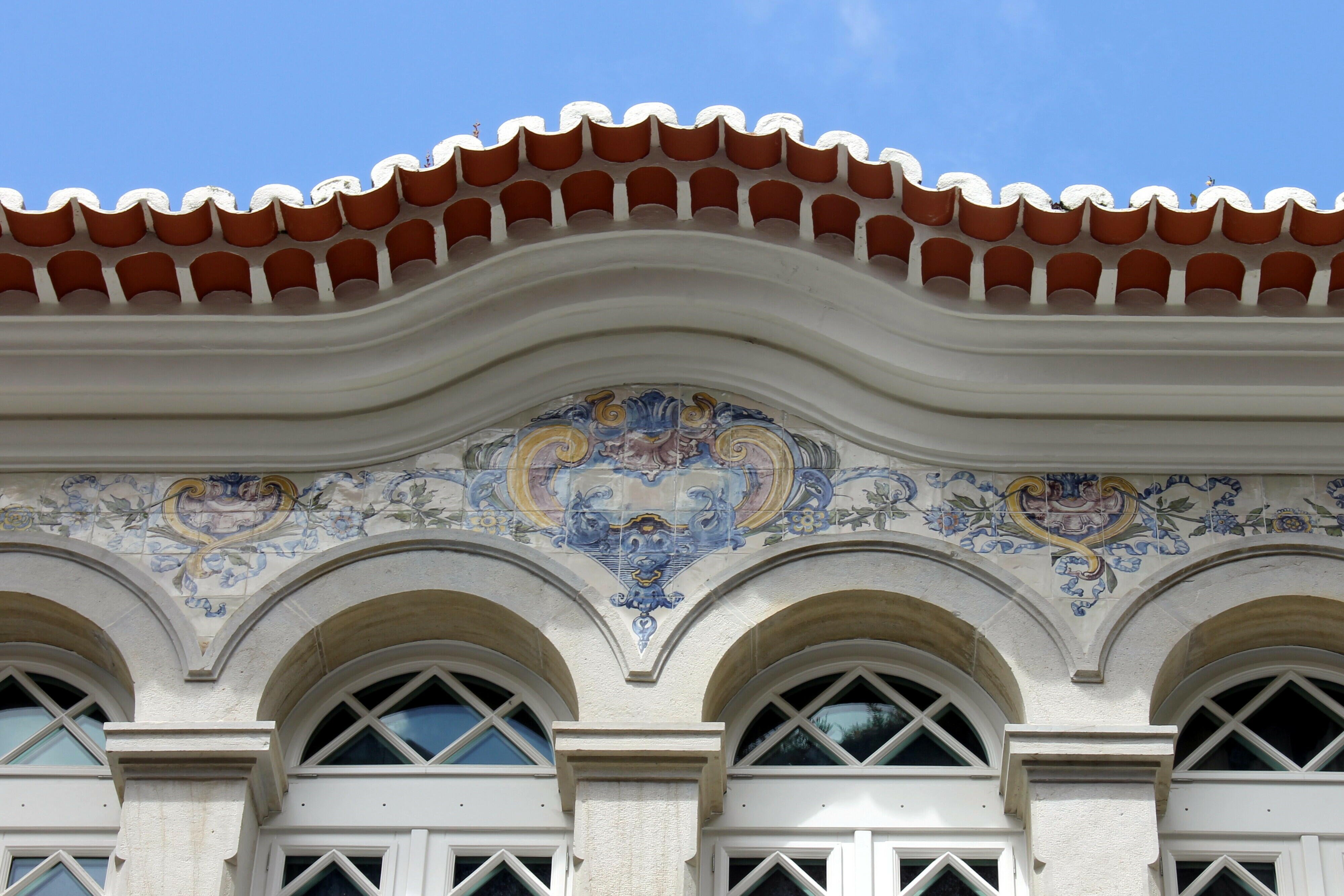
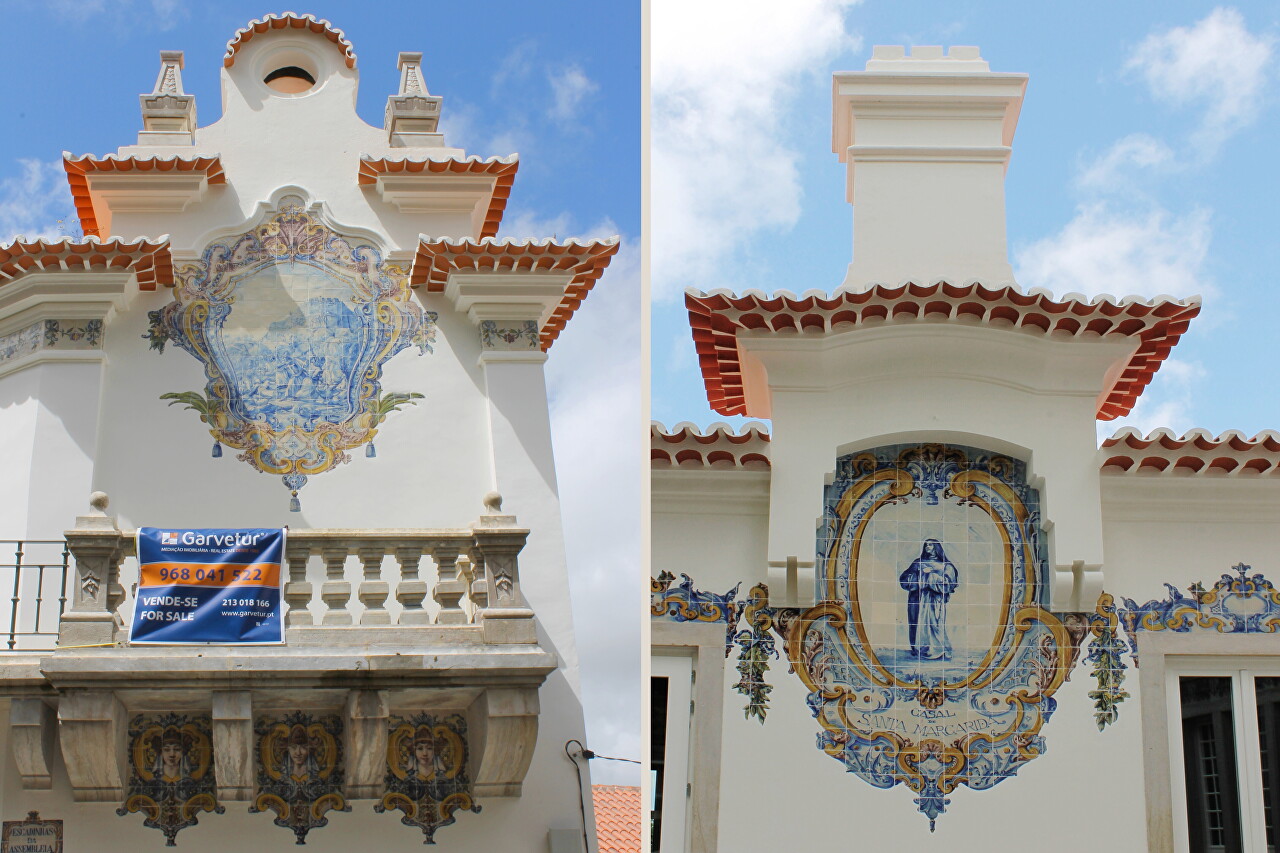
Not far from St. Martin's Church, on Rua Consiglieri Pedroso, 23, you can see a mansion built in the 19th century by the famous Portuguese architect Silva Norte Junior. It is a striking example of Portuguese eclectic architecture of the turn of the 19th and 20th centuries, its appearance combines elements of traditional Portuguese style, classicism and romanticism. The two-storey building is built on a steep slope, the entrance portico with a tiled roof is supported by two massive round columns of gray stone with classical capitals. The multi-level roof is covered with bright red terracotta Portuguese tiles. The eaves of the roof and portico have a characteristic undulating shape. The edges of the roof and corners of the building are decorated with decorative stone pinnacles (turrets) and stepped attics, which emphasize the silhouette of the mansion against the background of the hilly terrain of Sintra. A hinged wrought-iron balustrade encloses the terrace and the staircase leading to the main entrance. The walls of the building are smooth and covered with white plaster, which is typical of southern Portuguese architecture. The windows and doors are framed by strict rectangular platbands made of natural gray granite. The main visual detail of the facade is a traditional ceramic tile (azuleiju) with paintings a Baroque and Rococo patterns. It is used to make elegant figured sandriks (over-cornice decorations) above the windows, as well as a large central panel in the pediment above the entrance depicting a flower pot and heraldic motifs. The name of the first customer has sunk into oblivion, but it is clear that it was the residence of a wealthy family. Residents of Sintra call this building the Casal de Santa Margarida, apparently because of her image on one of the ceramic panels. At the time of my visit, the building was for sale. The estate is now occupied by the Palácio de Sintra Boutique House Boutique Hotel. To the right of the villa is the house museum of the greatest Portuguese writer of the 20th century (Museu Ferreira De Castro).
..
..
..