Imperial Armoury (Tophane-i Amire)
The cannon foundry in Topkapi was the main defense enterprise of the Ottoman Empire, providing the army and navy with advanced artillery. Immediately after the conquest of Constantinople in 1453, Sultan Mehmed II the Conqueror ordered the construction of a factory to produce artillery pieces. The foundry was located in Galata, outside the city walls, on the shore of the Bosphorus, thereby solving two problems at once: residential buildings were protected from fires, and cannons were installed on ships directly from the workshop gates. The workshops gave their name to the entire surrounding area; Tophane literally translates as “House of Cannons.” Production was radically expanded in the first half of the 16th century under Sultan Suleiman the Magnificent. The wooden workshops, which constantly suffered from fires, were replaced with huge stone workshops. Tophane turned into a colossal military‑industrial town. Hundreds of craftsmen worked there: foundry workers, blacksmiths, engineers, and gunpowder specialists. The factory cast giant siege weapons that were used in the assault on European fortresses. Another modernization took place at the end of the 18th century: Sultan Selim III introduced the latest European technologies, invited French and British engineers. The reconstruction of 1843 was part of the large-scale defense and industrial reforms of Sultan Abdul-Majid I. It was then that the Five-domed and Single-domed workshops, which are sometimes called Large and Small Foundries, received ventilation and lighting domes and acquired the appearance that we see today.

The cannon casting technology at the Topkapi Palace armory was considered advanced for centuries. The Ottoman Empire combined traditional casting methods, the secrets of Byzantine craftsmen, and invited European specialists, which enabled it to create artillery of ideal quality. The Ottomans were among the first to standardize the alloy, obtaining “ideal cannon bronze.” For this purpose, they used high‑quality copper ore, which was mined in the mines of Anatolia and the Balkans. Copper was melted and mixed in a strictly calibrated proportion with tin, which was purchased and imported from European countries. The resulting alloy had the necessary viscosity to ensure that the barrel could withstand the enormous pressure of gases during the explosion of gunpowder and would not crack. During the 1843 reconstruction, French and English engineers introduced a revolutionary European technology of solid casting with subsequent drilling of the barrel bore at Topkapi.

The history of the Cannon Yard is marked by several disasters that changed the appearance of the area and even influenced the course of Ottoman history. The production of tons of gunpowder and metal smelting in the very heart of wooden Istanbul made this complex the city’s powder keg. One of the earliest and most destructive explosions occurred in 1515. Due to careless handling of fire, huge stocks of gunpowder stored in the cellars of the armory yard detonated. The wooden workshops built under Mehmed II were completely destroyed. The blast wave and the ensuing fire wiped out the residential neighborhoods around the factory. This is what prompted Sultan Suleiman the Magnificent to rebuild the complex using stone and brick. Nevertheless, in 1765, a massive fire broke out at the factory, which spread to the warehouses containing finished ammunition. The explosions destroyed a large part of the production facilities and triggered numerous fires in the residential area, destroying most of the wooden district of Beyoğlu (Pera). The restoration of artillery production after this took several years; in addition, a regulation was issued that restricted movement across the Bosphorus during the most dangerous operations. The most tragic incident occurred in 1823. A fire at one of the artillery depots caused an explosion of such force that it was heard on the other side of the Bosphorus. The artillerymen’s barracks (Topçu Kışlası) adjacent to the cannon yard were completely destroyed, and the ancient Nusretiye Mosque was severely damaged. Hundreds of workers and soldiers died, and the area had to be rebuilt almost from scratch.
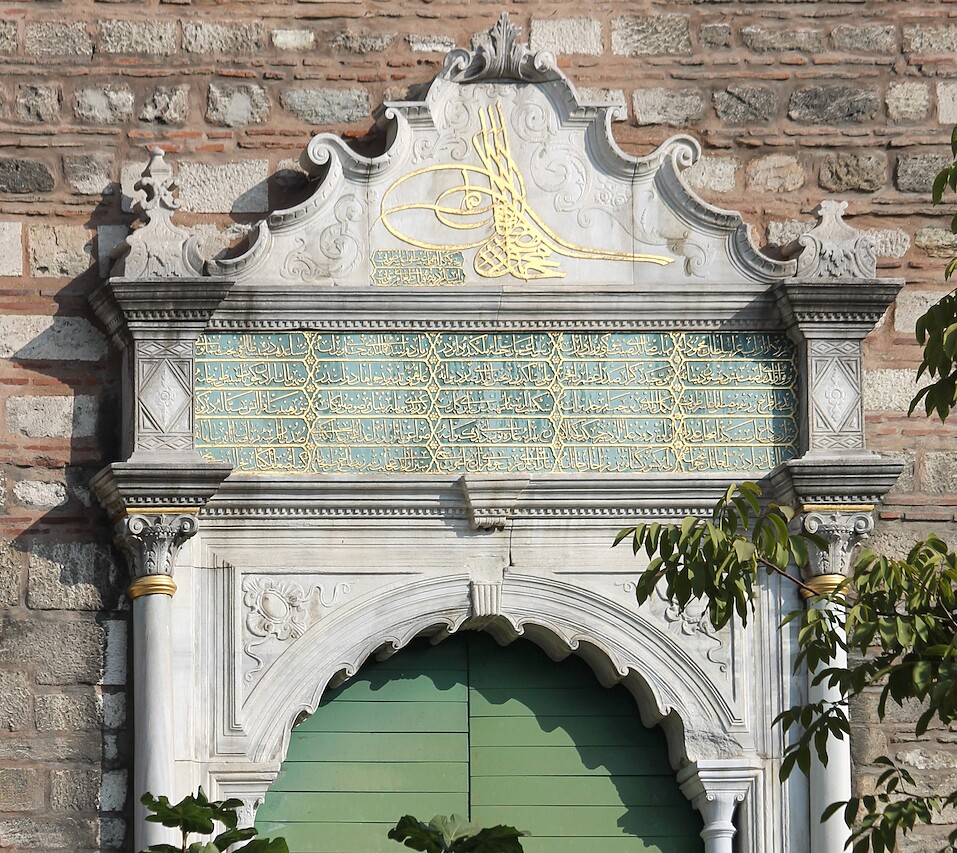
It was precisely because of the constant threat of explosions and the terrible overheating of the premises during the casting of cannons that the architects of the complex constantly upgraded the ventilation systems. The ceilings of the halls were made as high as possible, and open lantern‑towers were installed on top of the domes. In the event of minor explosions and smoke, they functioned like giant hoods, saving the lives of the foundry workers and preventing the accumulation of explosive gases under the ceiling. The walls of the workshops are more than two meters thick, and in the event of an explosion, the roof was blown off, and the shock wave went up without harming the surrounding buildings. Eventually, the powder production was moved outside the city. The complex has another important feature that is hidden from view: on its territory there are several underground reservoirs for water, which was used to cool castings and extinguish fires.

With the fall of the Ottoman Empire and the emergence of new factories in the interior of the country, the complex lost its status as the main arsenal. In the early 20th century, it was used as a military warehouse and training center. In 1958, the former Cannon Yard was transferred to civilian authorities, and it was decided to restore its appearance to that of its period of greatest flourishing. The territory was cleared of later buildings, and the workshop buildings were restored. The work dragged on for a third of a century, and in 1992, the cannon yard was officially transferred to the Mimar Sinan University of Fine Arts. Today, it is one of the most prestigious cultural venues in Istanbul. The complex is divided into three key areas: Beş Kubbe (the Five‑Dome Hall / the Large Foundry), Tek Kubbe (the Single‑Dome Hall), and Sarnıçlar (Ancient Cisterns). Major national and international exhibitions of painting, sculpture, and photography are held in these halls throughout the year. • Inside, an open area for reading and student learning has been created (Okuma Bahçesi). There is a café with a terrace on the premises, offering a view of the Bosphorus and the historic district.
