Exonarthex of Hagia Sophia
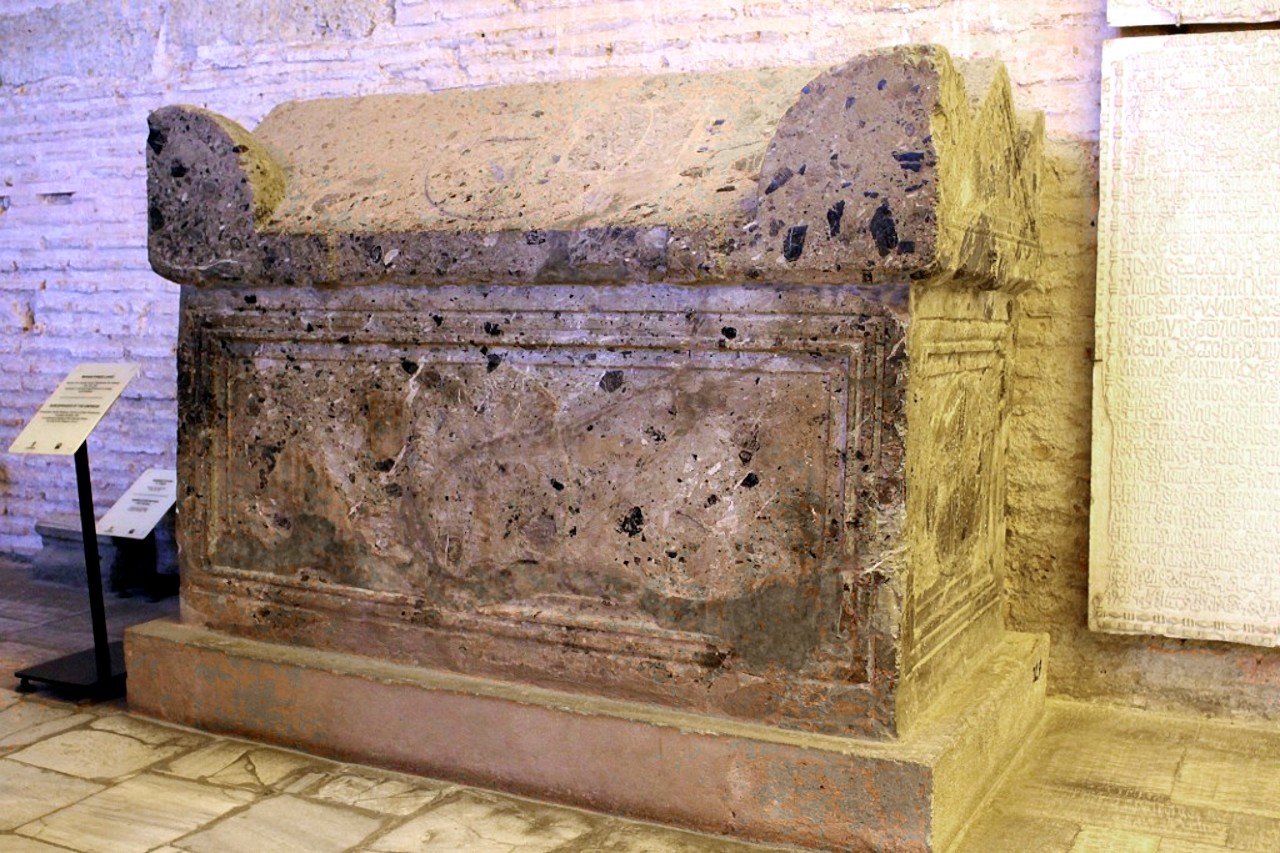
After passing between the buttresses, we will find ourselves in the exonarthex — a long, narrow room with walls made of Byzantine brick (plinf) and no traces of finishing. The luxurious marble cladding and golden Byzantine mosaics disappeared during the Ottoman period, mainly as a result of the reconstructions carried out in the 16th–18th centuries. Part of the mosaic covering fell off during strong earthquakes back in the Byzantine period; they were finally removed when the cathedral was converted into a mosque. In the exonarthex, a massive dark Byzantine sarcophagus is on display. It was located in the Pantocrator Monastery and is believed to have belonged to Empress Irene, the wife of John II Komnenos (12th century). In 1204, the sarcophagus was looted by the Crusaders; it was moved to Sofia in 1960.
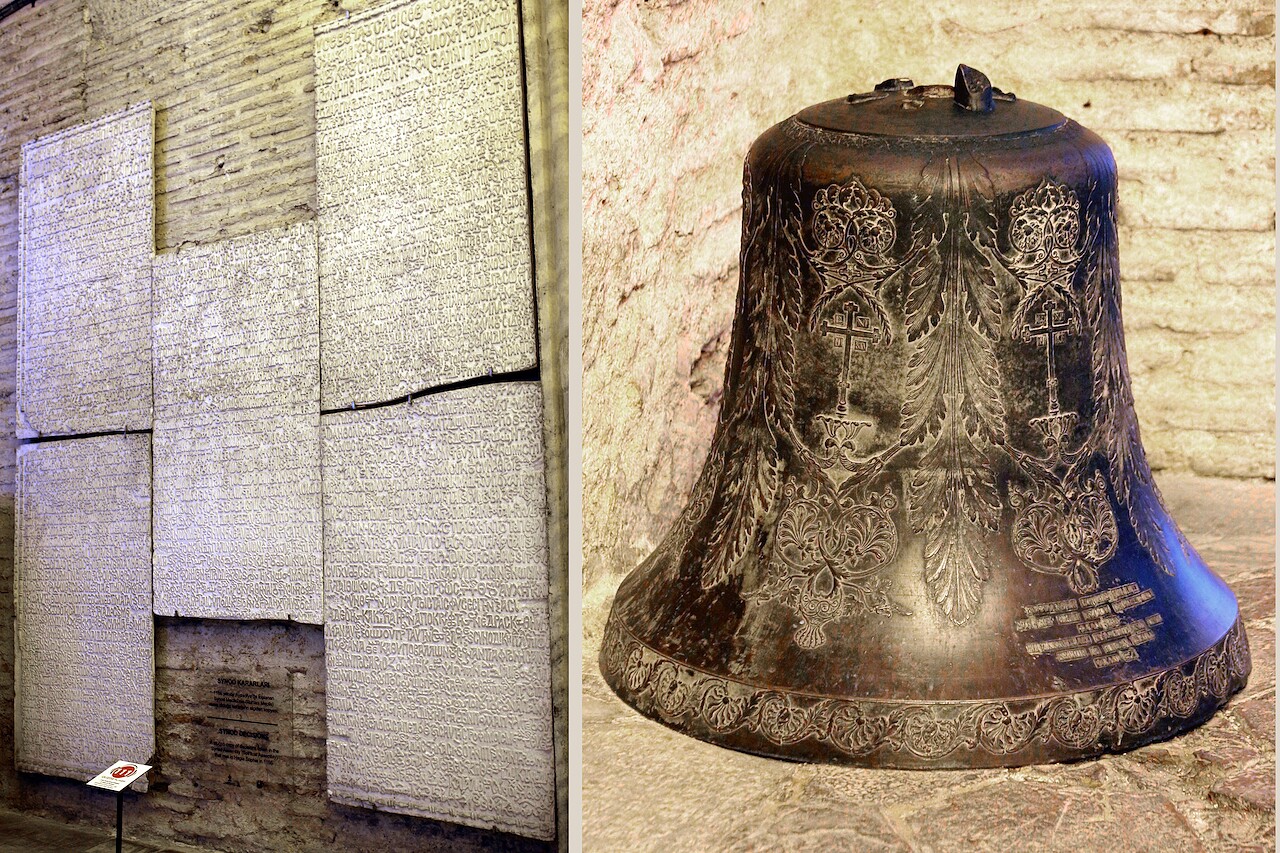
On the wall next to the sarcophagus, we see marble plaques with the text of the decisions of the 1166 Church Council of Constantinople, adopted under Emperor Manuel I Komnenos. Their emergence is linked to the resolution of a theological dispute that arose in the 12th century around Christ’s words: “My Father is greater than I.” Different groups of theologians interpreted this in different ways, which threatened to split the empire. Emperor Manuel I personally convened a council and approved the official interpretation, which was carved on huge marble tablets and displayed inside the main nave of St. Sophia. They stated that these words referred only to the human nature of Christ, not to his divine nature, and any further disputes were prohibited under penalty of death. What we see today is not the original, as in 1567 the Ottomans removed them, split them, and used them as a stone flooring in the monumental external mausoleum of Sultan Selim II, which is located in the courtyard of the complex. The slabs were laid with the text facing down, so until the mid‑20th century the Tablets were considered lost and were discovered during the mausoleum’s restoration in 1959. Even more striking is the fact that this outstanding monument of the Byzantine era still serves as a floor today. After the casts were made, the slabs were returned to the mausoleum. Many sources refer to them as the “Tablets of Heraclius,” although they have nothing to do with the emperor who ruled in the 7th century. This misconception stems from the records of early European travelers who tried to decipher the inscriptions and misinterpreted the Greek spelling of the name. We also see a bell here that has nothing to do with Byzantium. It was cast in Venice in 1906 and hung in the belfry of one of the Greek churches in Izmir. After the pogroms of 1922, the Greek churches were abandoned, and the bells were transferred to the museum fund. The bell appeared here when Hagia Sophia, by order of Atatürk, was granted museum status.
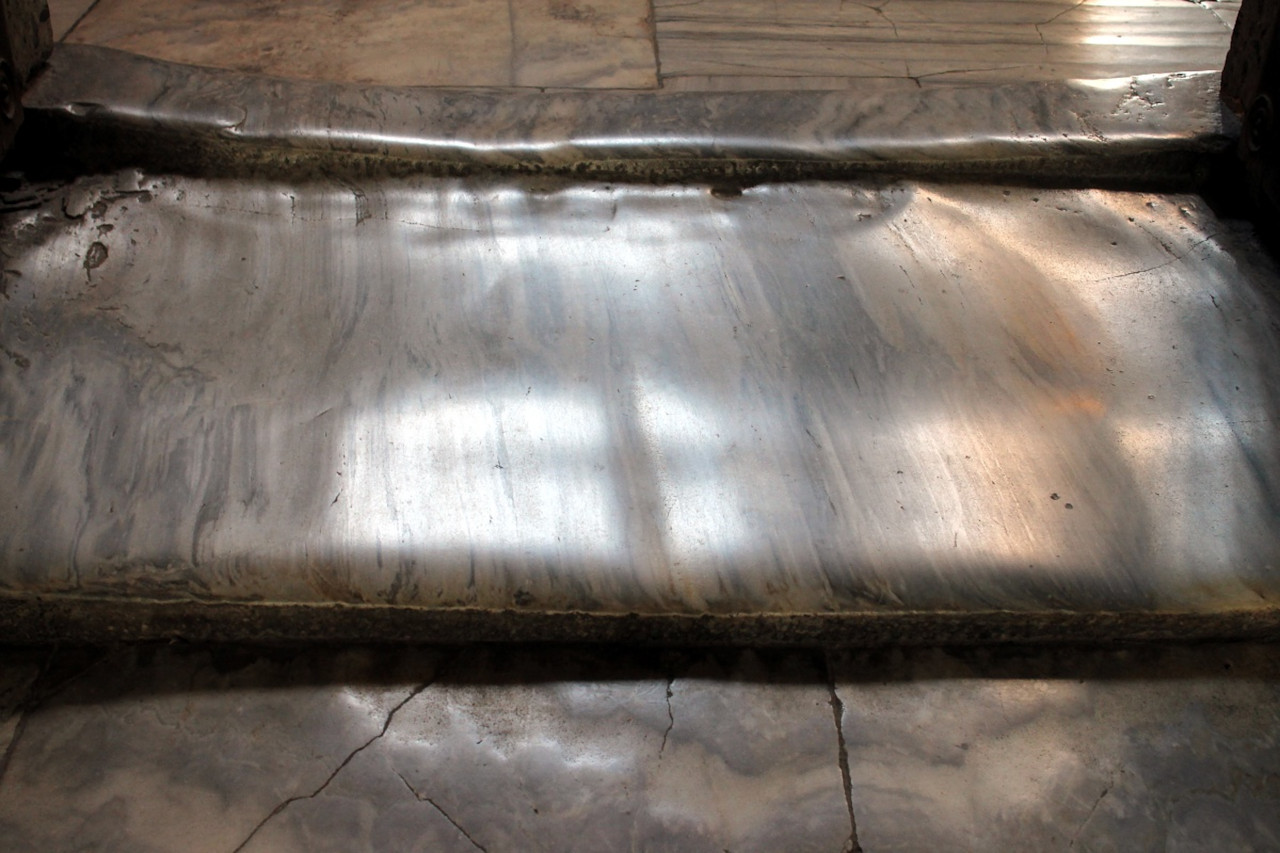
The room contains five doors, the worn marble steps of which lead to a better‑preserved narthex.