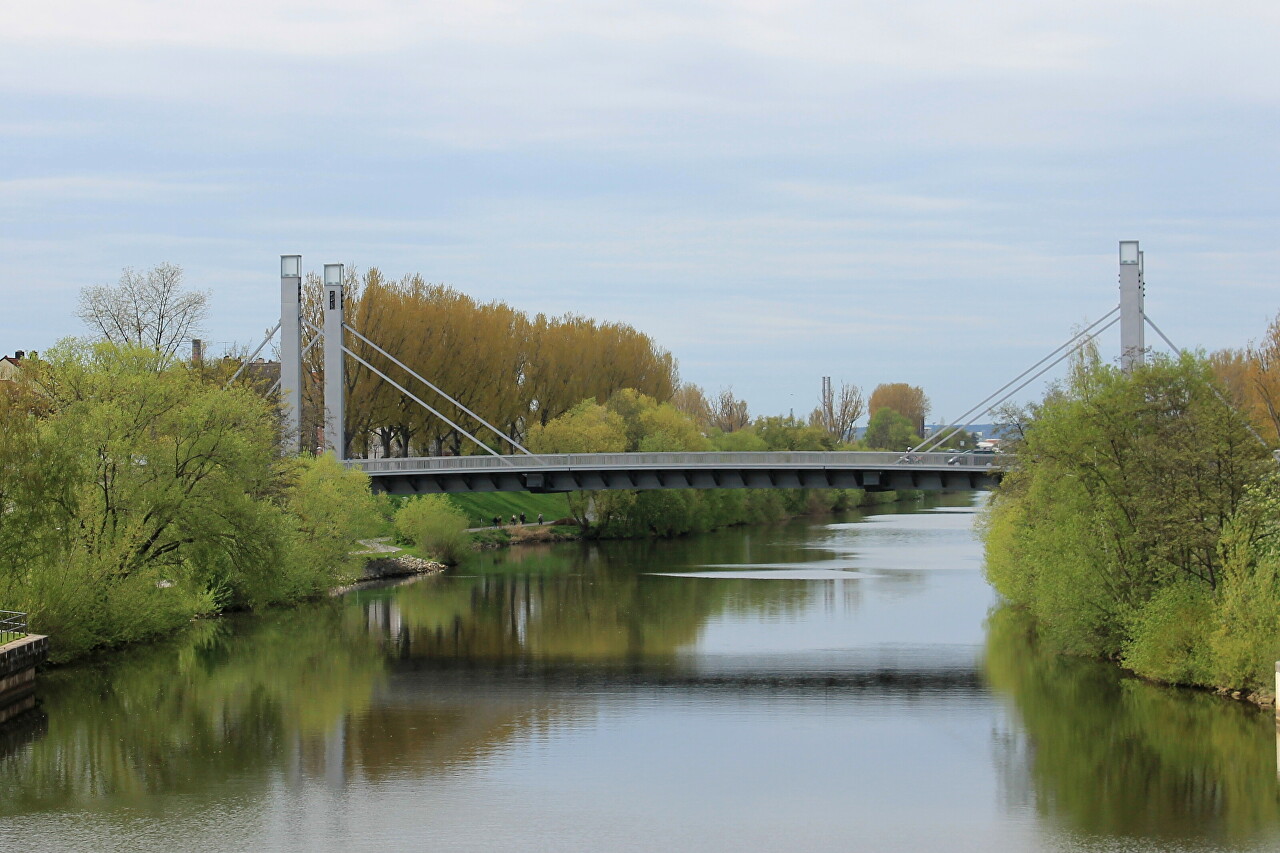
Kettenbrücke (Chain Bridge), Bamberg
After looking at the old architecture and signs of Ober Königstrasse, I turned onto Kettenbrückstrasse, heading towards the Old Town Hall.
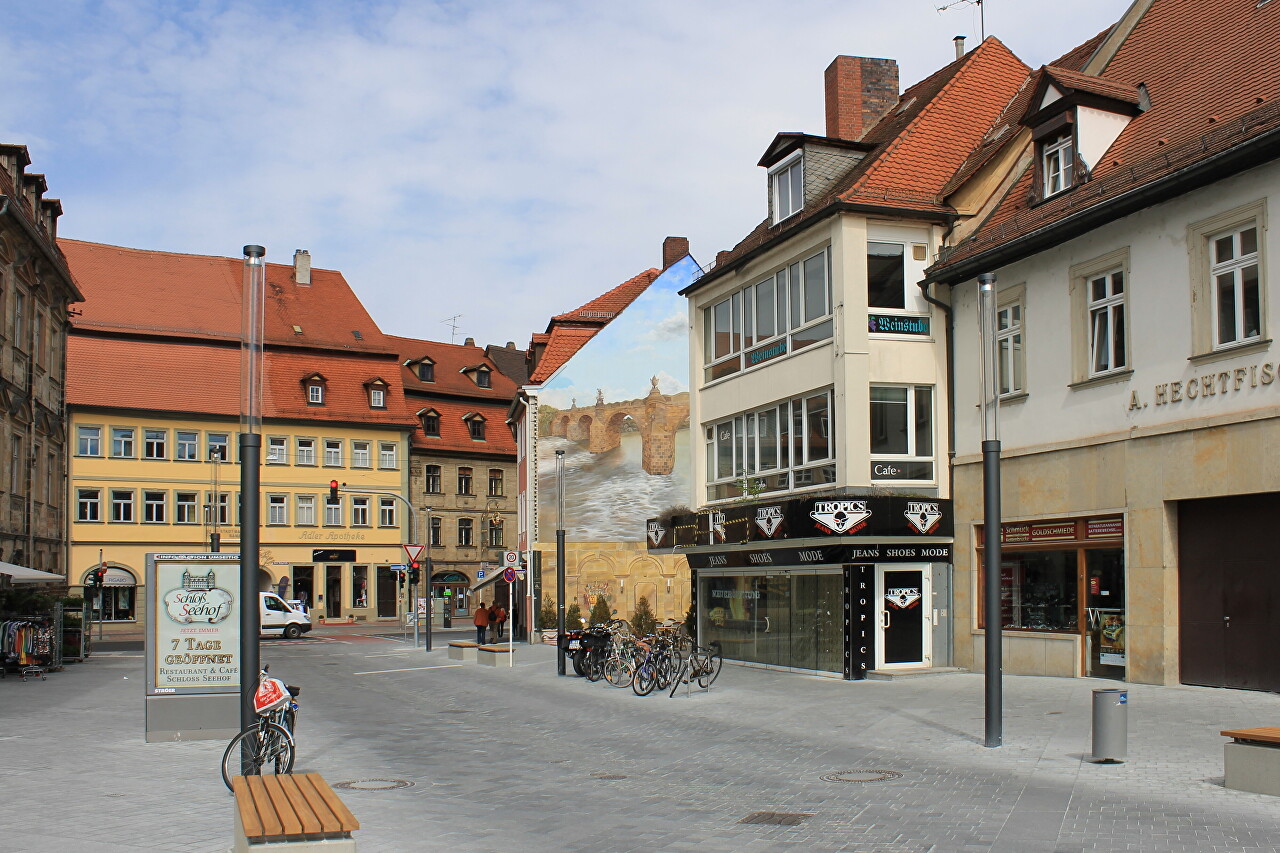
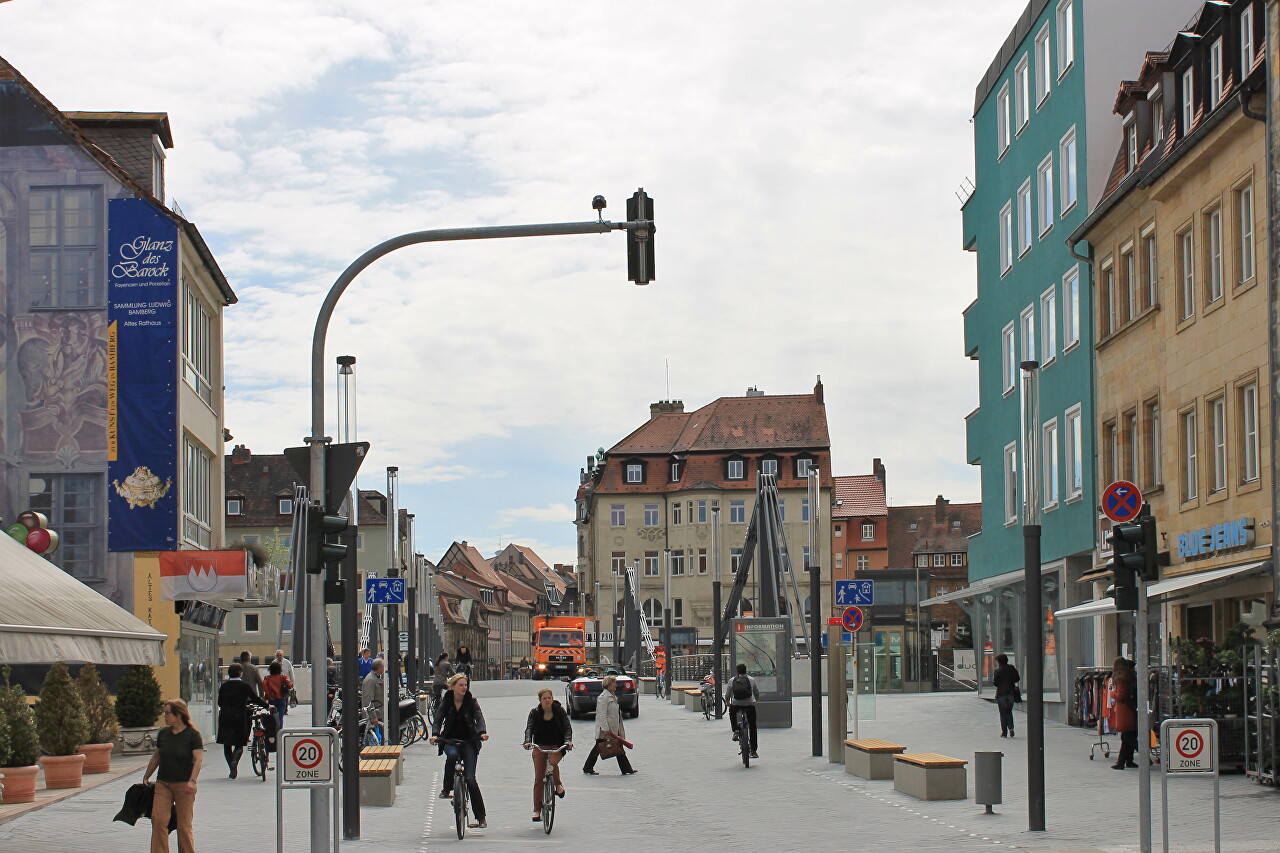
Kettenbrücker Straße takes its name from the bridge of the same name over the northern branch of the Regnitz River, which has a long history. The first bridge on this site was mentioned in documents from 1312, which stated that this wooden structure required constant repairs.
In the second half of the 18th century, Prince-Bishop of Bamberg Johann Philipp Anton von und zu Frankenstein commissioned his court architect Balthasar Neumann to build a stone bridge, which was opened in 1757 and was named Steinbogenbrücke (Stoned arch bridge).
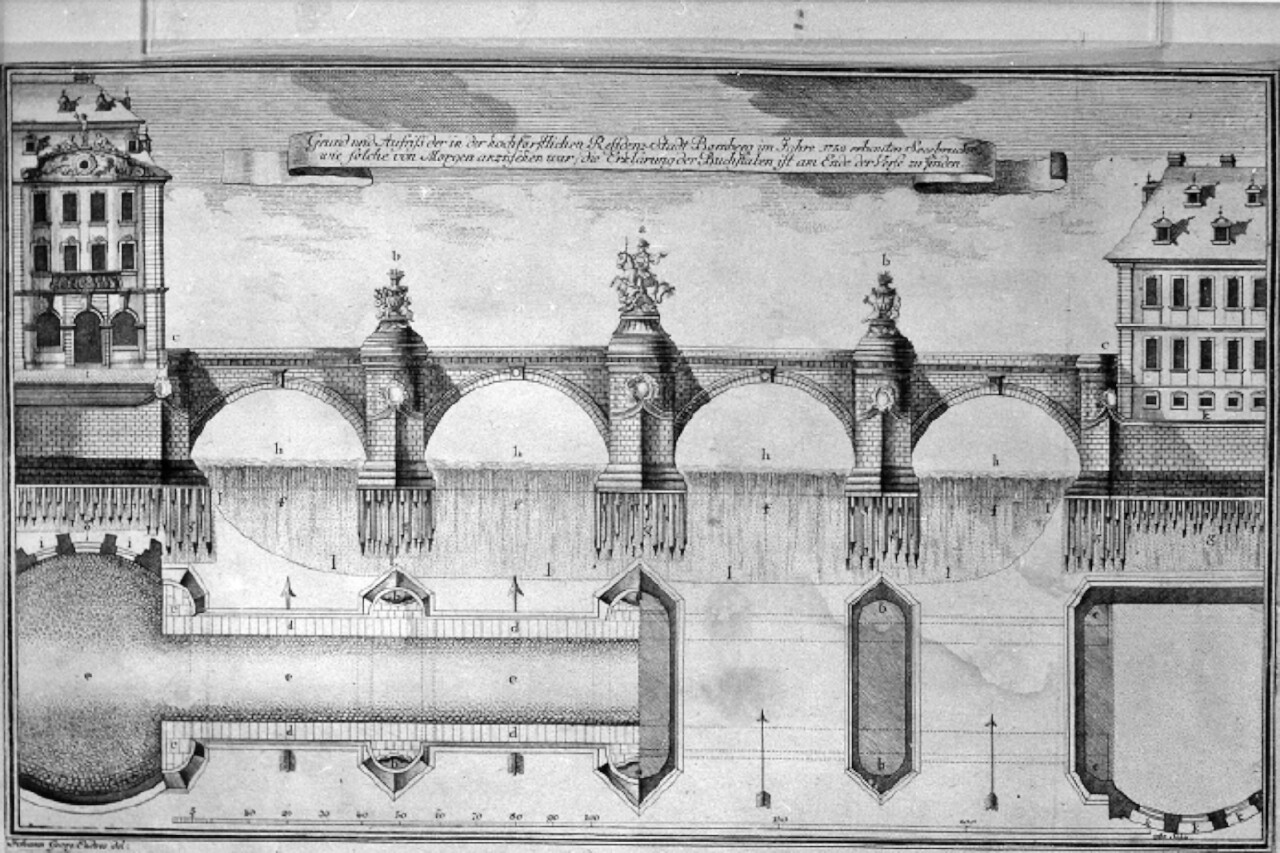
Today, the image of the Stone Bridge can be seen on the wall of a house on the corner of Ober Königstrasse and Kettenbrückstrasse.
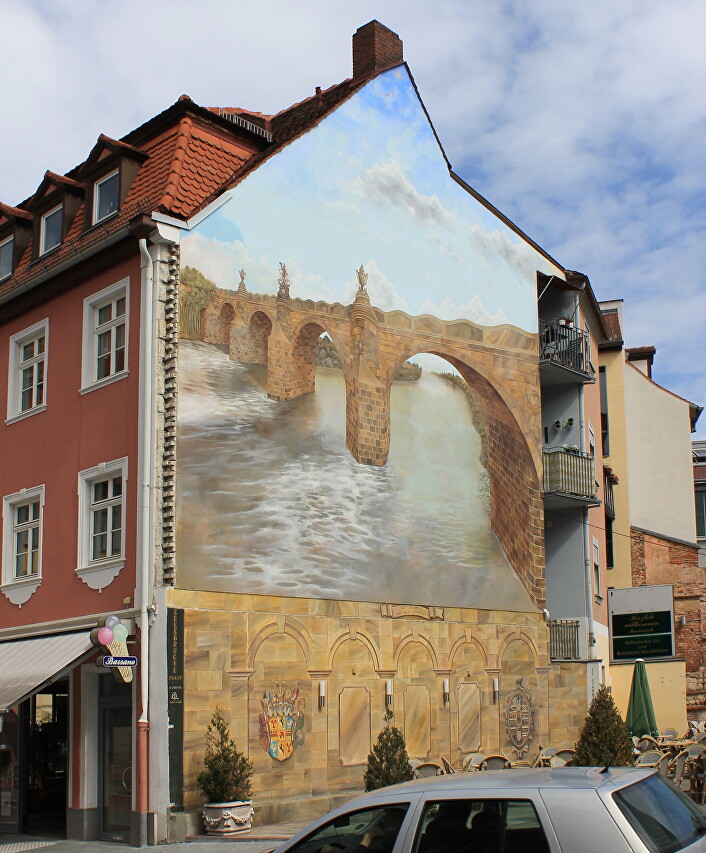
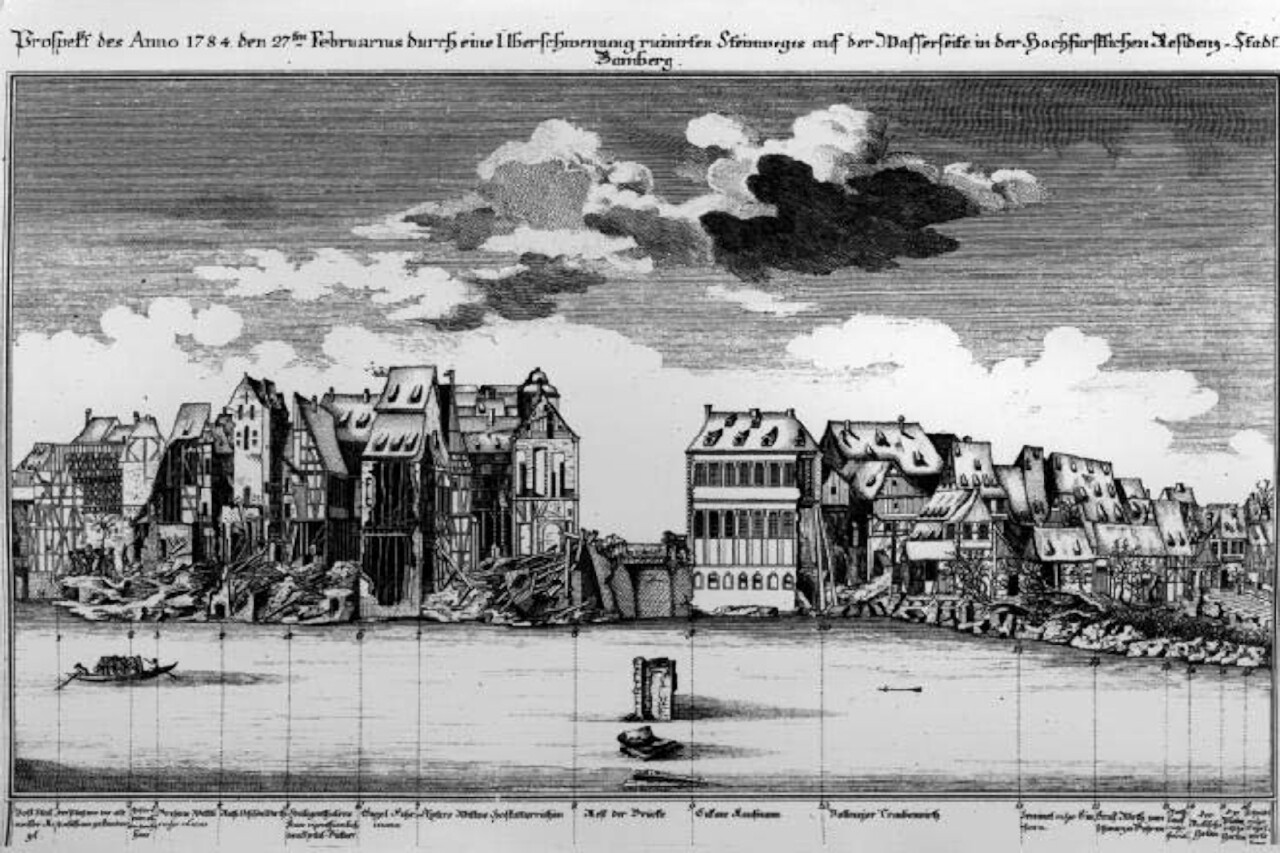
However, the beautiful and seemingly solid stone bridge did not last long - in the winter of 1783/84, a huge amount of snow fell, and early spring caused the largest flood in the history of Europe, which caused catastrophic damage and killed many people. The bridge in Bamberg was destroyed by an ice drift, and after the water receded, the surviving citizens saw only fragments of supporting pillars. As a temporary measure, a wooden bridge was built on the remains of the pillars, which, however, stood for a quarter of a century.
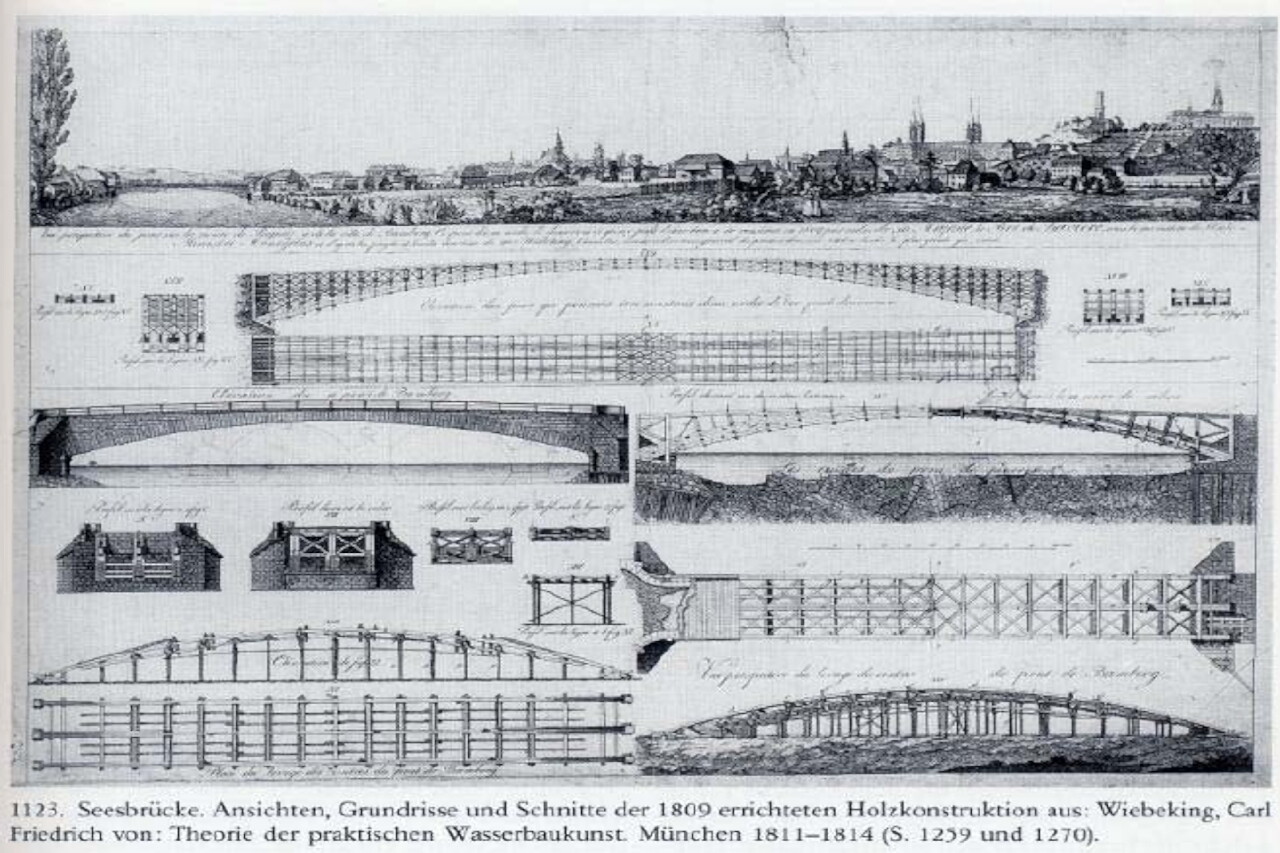
In 1909, a large arched bridge, called Seesbrücke, was built, covering the entire width of the river (72 meters) without intermediate supports. At the time of construction, it was the largest span in Europe and a real engineering masterpiece. However, the bridge was built of wood, after a few years problems with rotting began and in 1826 the bridge had to be dismantled.
In 1829, it was replaced by the Ludwigsbrücke (Ludwig's Bridge). The bridge had a suspended metal structure, and the locals often referred to it as the Kettenbrückke (Chain Bridge). According to the residents of Bamberg, the concept of this bridge was later used as a basis for the design of the Brooklyn Bridge in New York. However, this is just a beautiful legend, as construction technology had advanced significantly by that time.
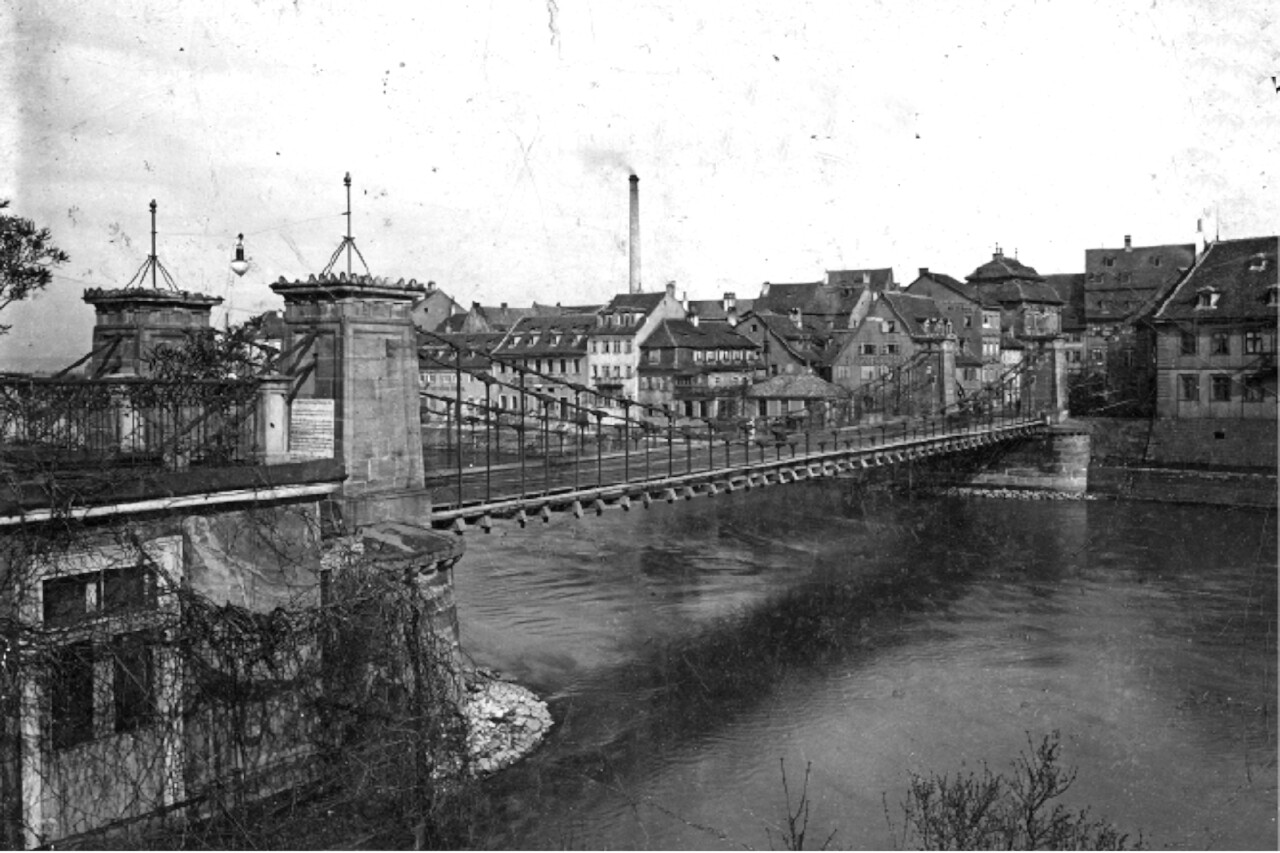
By the end of the 19th century, the chain bridge was no longer able to handle the increased traffic, and in 1892, a steel truss bridge with a paved roadway was built in its place. Although the official name remained the same, the locals continued to refer to it as the "chain bridge."
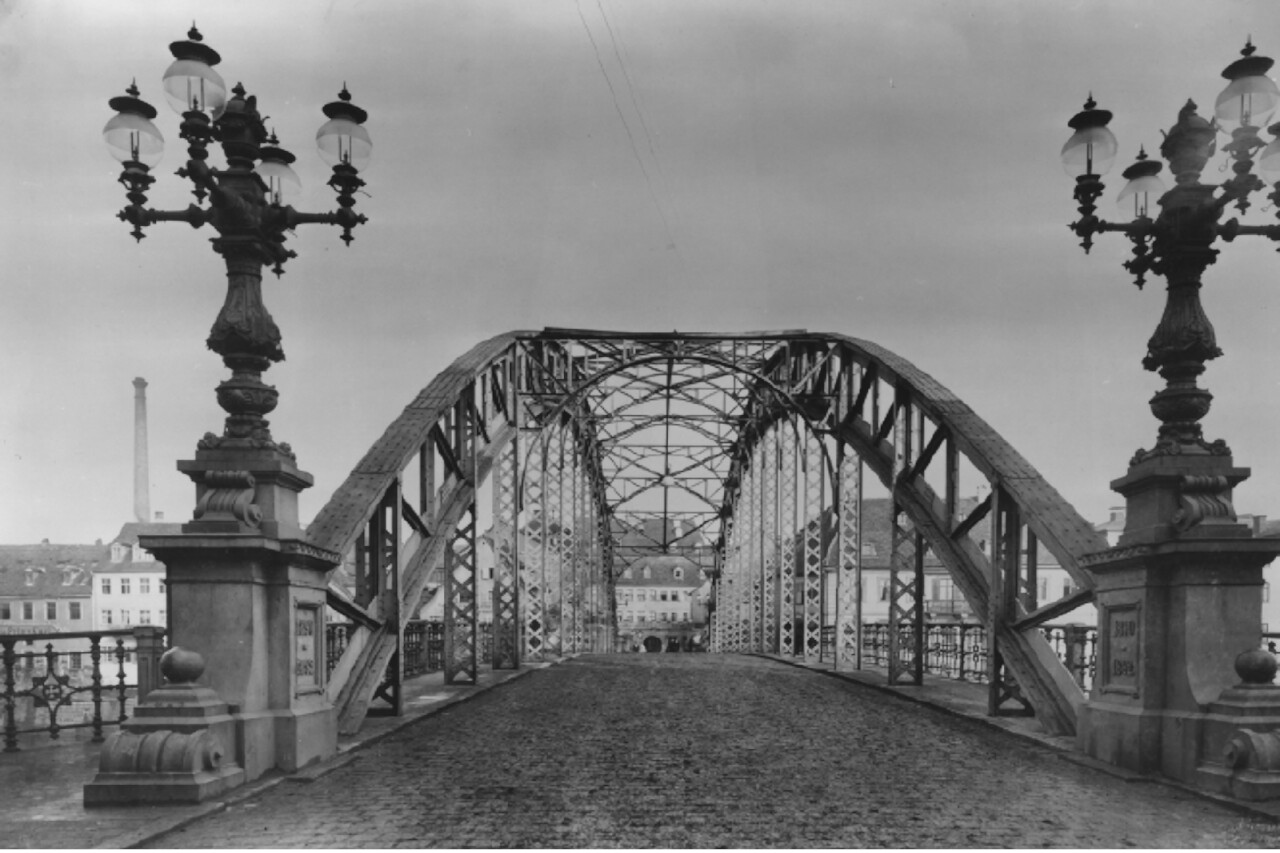
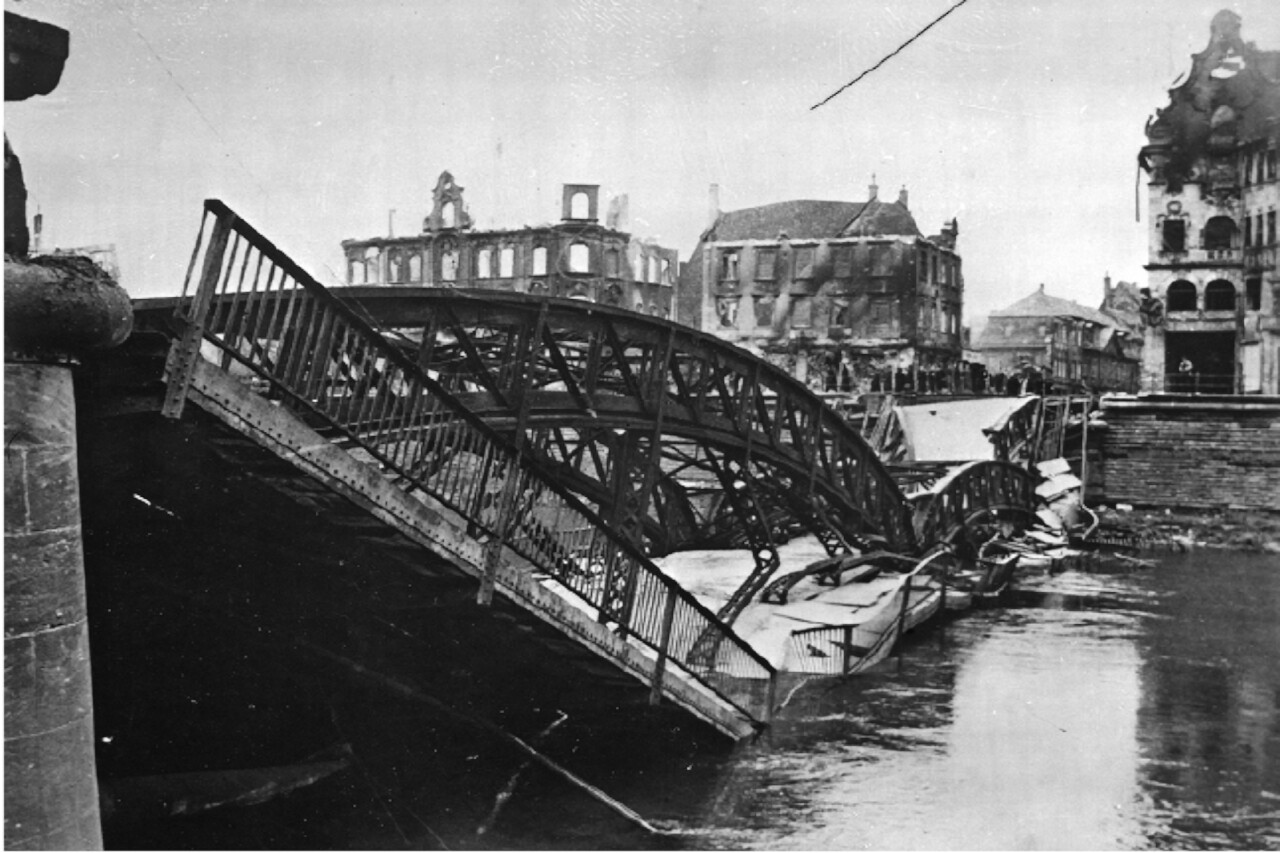
In April 1945, the Ludwigsbrücke was blown up to delay the advance of American troops.
In 1953, a reinforced concrete bridge of the most unpretentious kind was opened. Germany, devastated by the war, had no need for engineering feats.
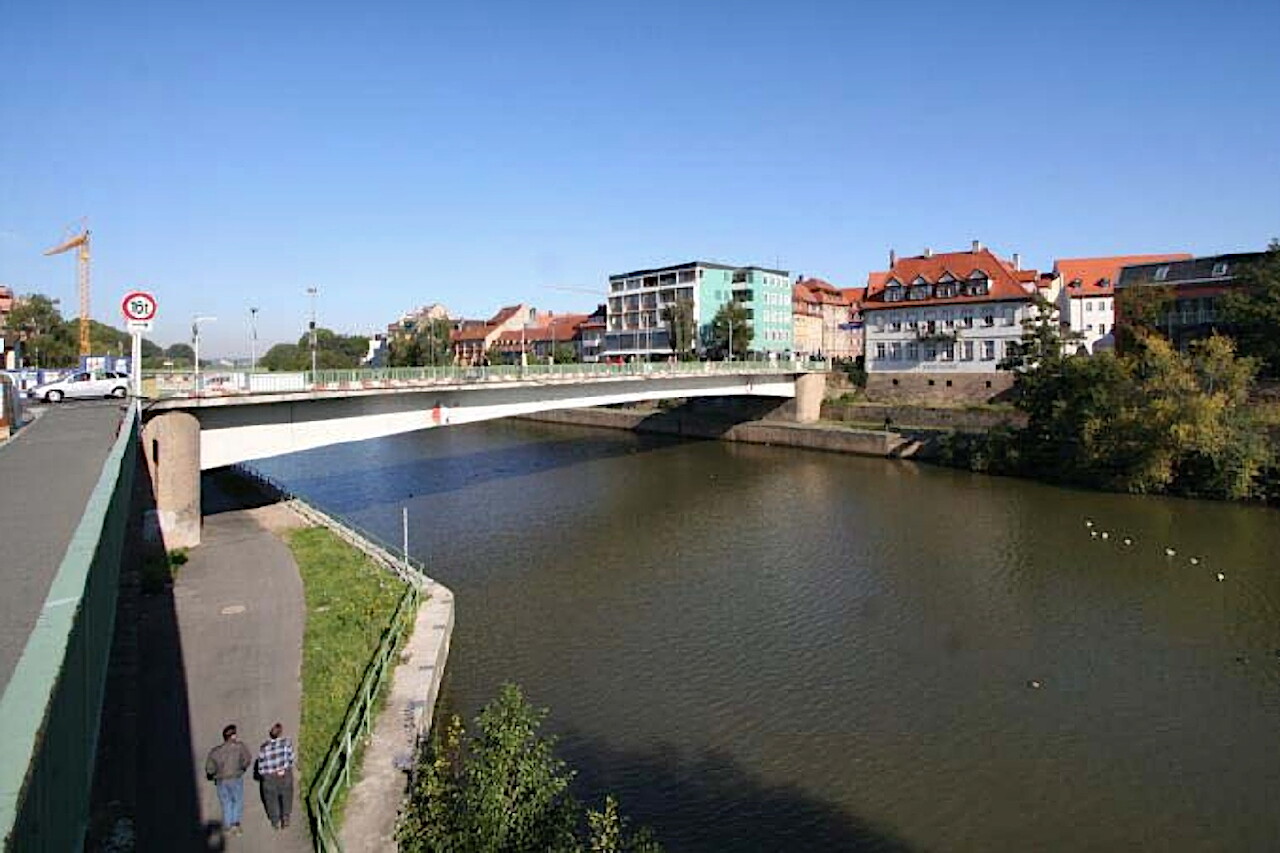
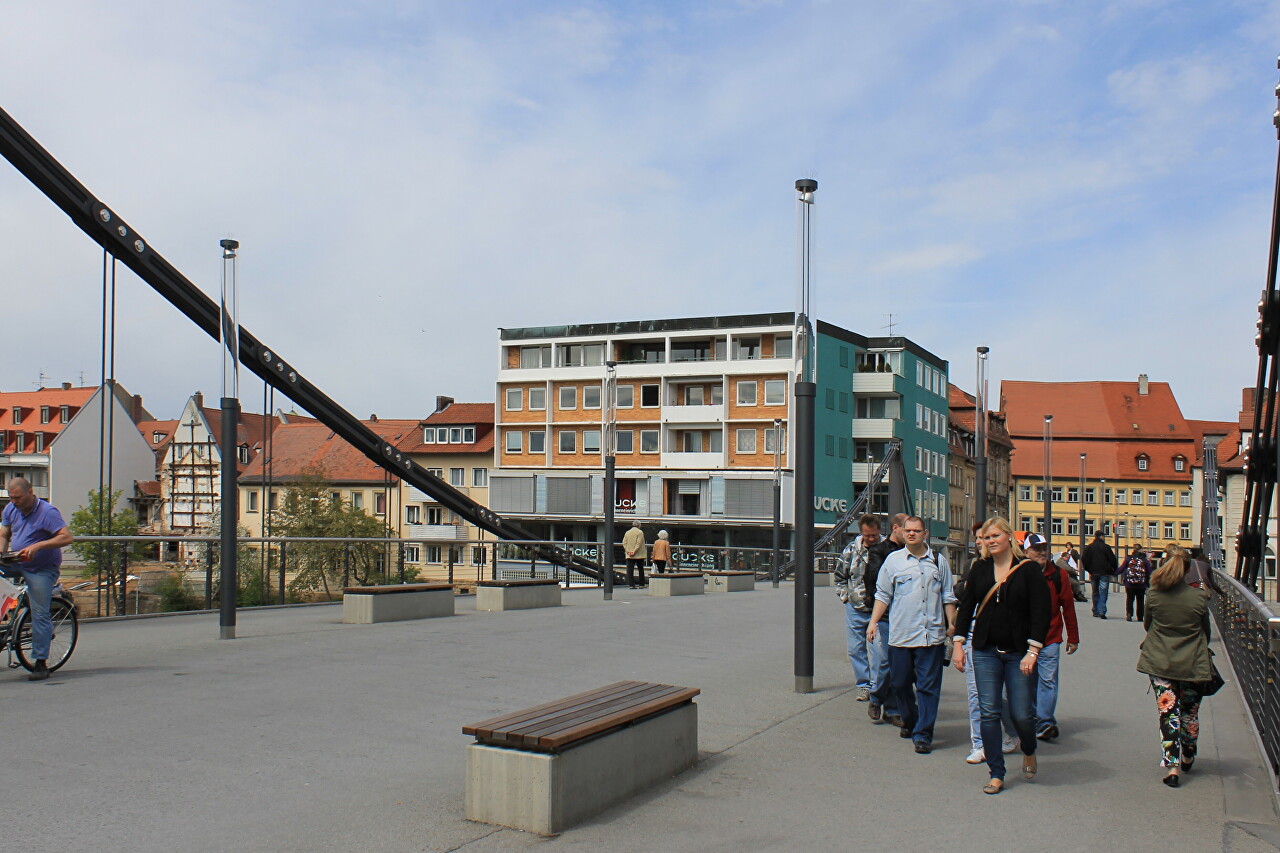
By the beginning of the new millennium, the reinforced concrete bridge no longer met modern requirements, and in 2005, a competition was announced for a new bridge project. In 2009, the reinforced concrete bridge was demolished, and a year later, a real "chain" bridge was built in its place.
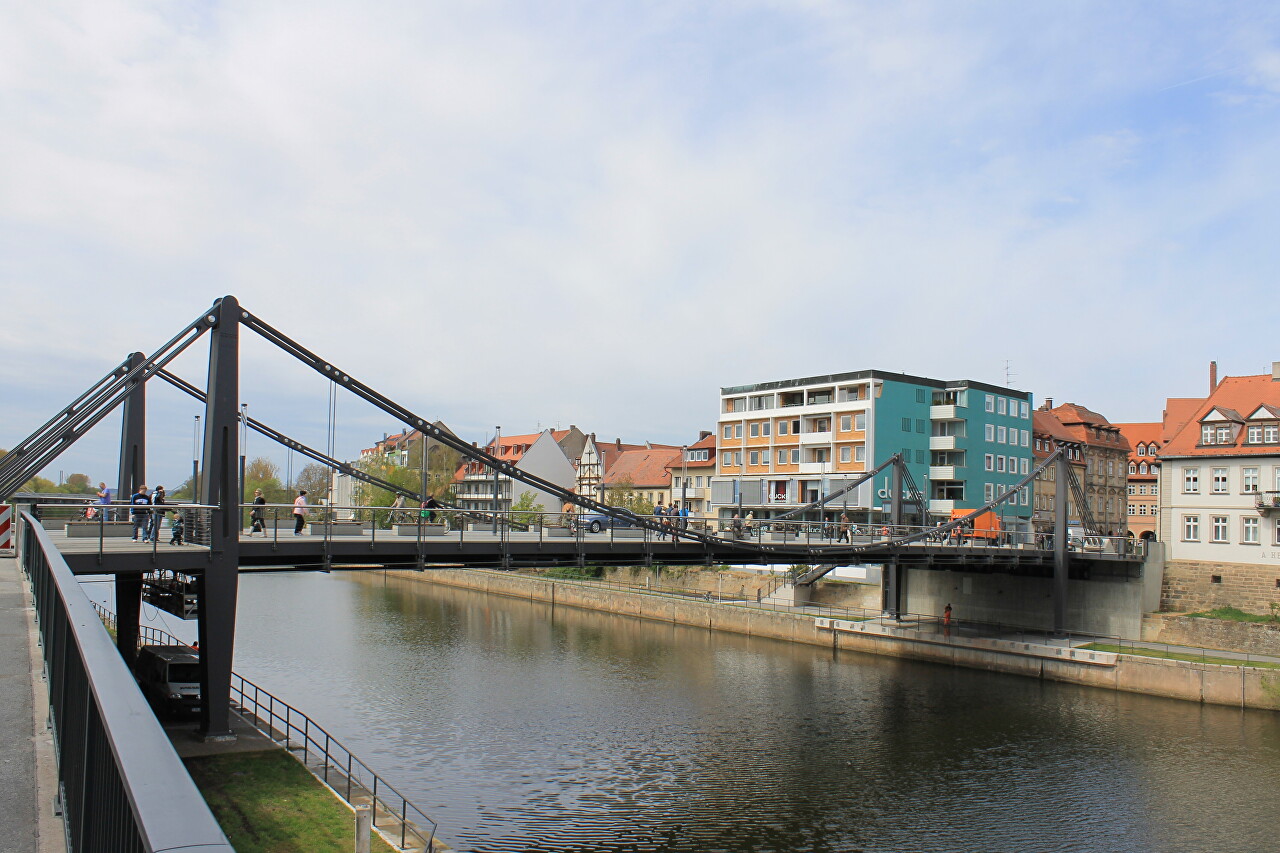
The bridge project won several awards at European and international architectural exhibitions and became so popular among tourists that the city authorities made it part of a pedestrian zone.
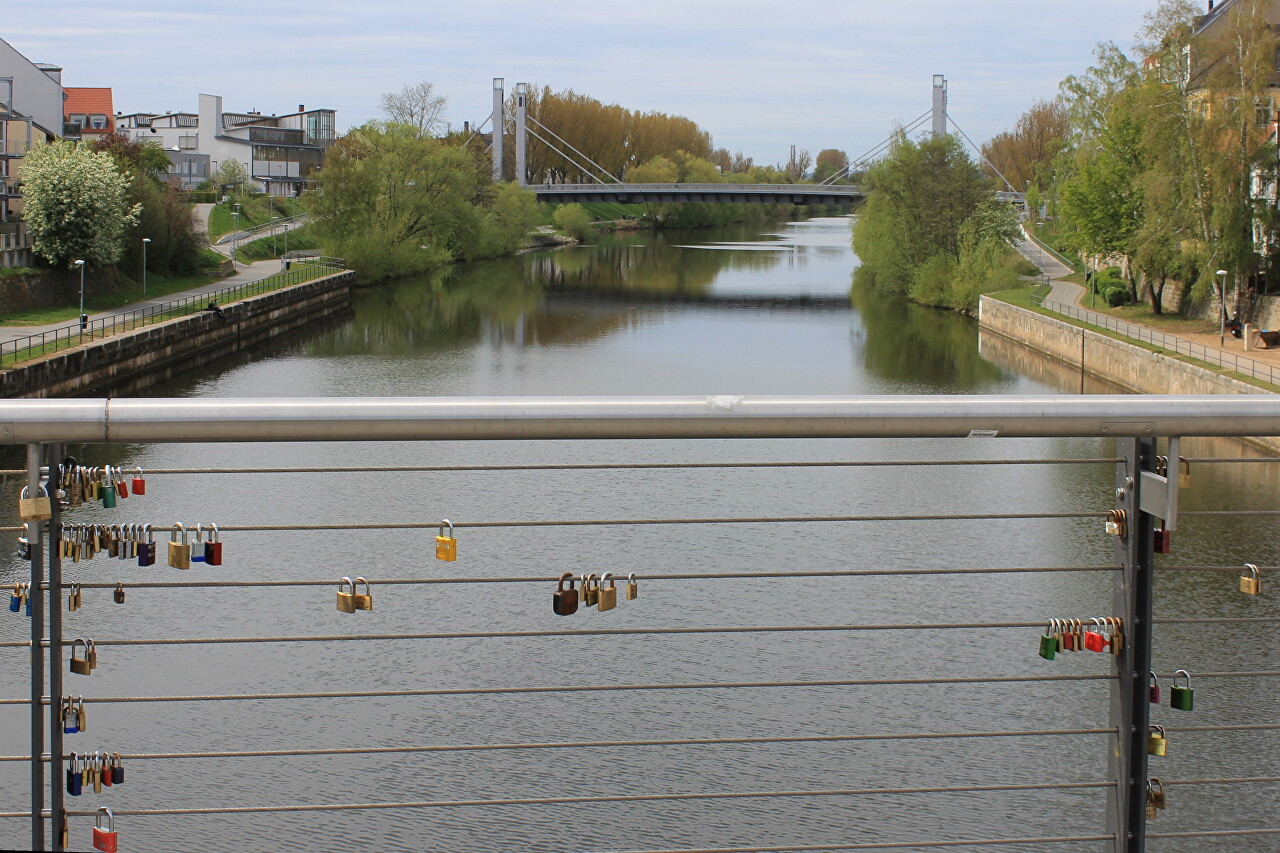
The city's lovers immediately found a use for the bridge's railings by hanging locks of love (Liebesschloss).
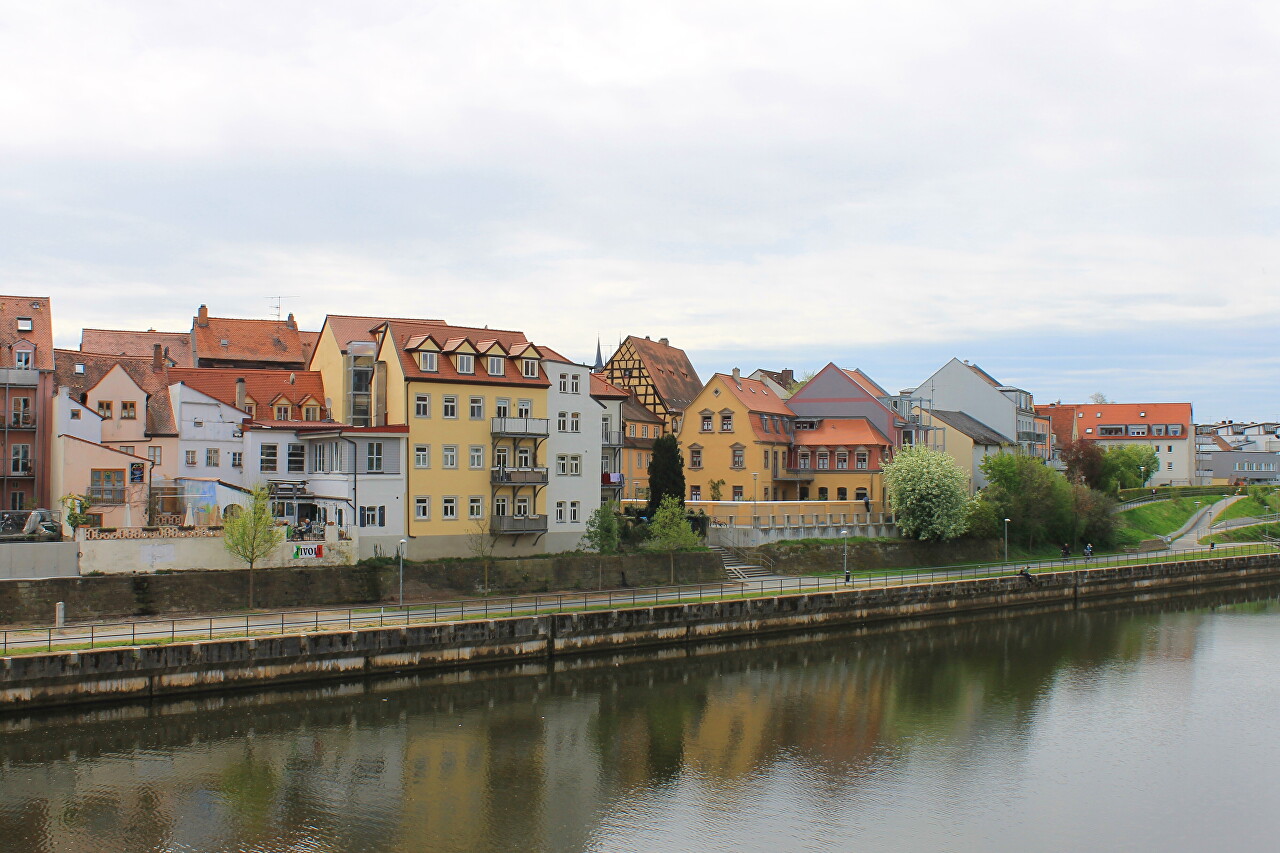
From the bridge, you can see the embankments, which were mostly built after the war, as the neighborhoods adjacent to the bridges were more severely damaged by the bombings. However, a few historical buildings have been restored.
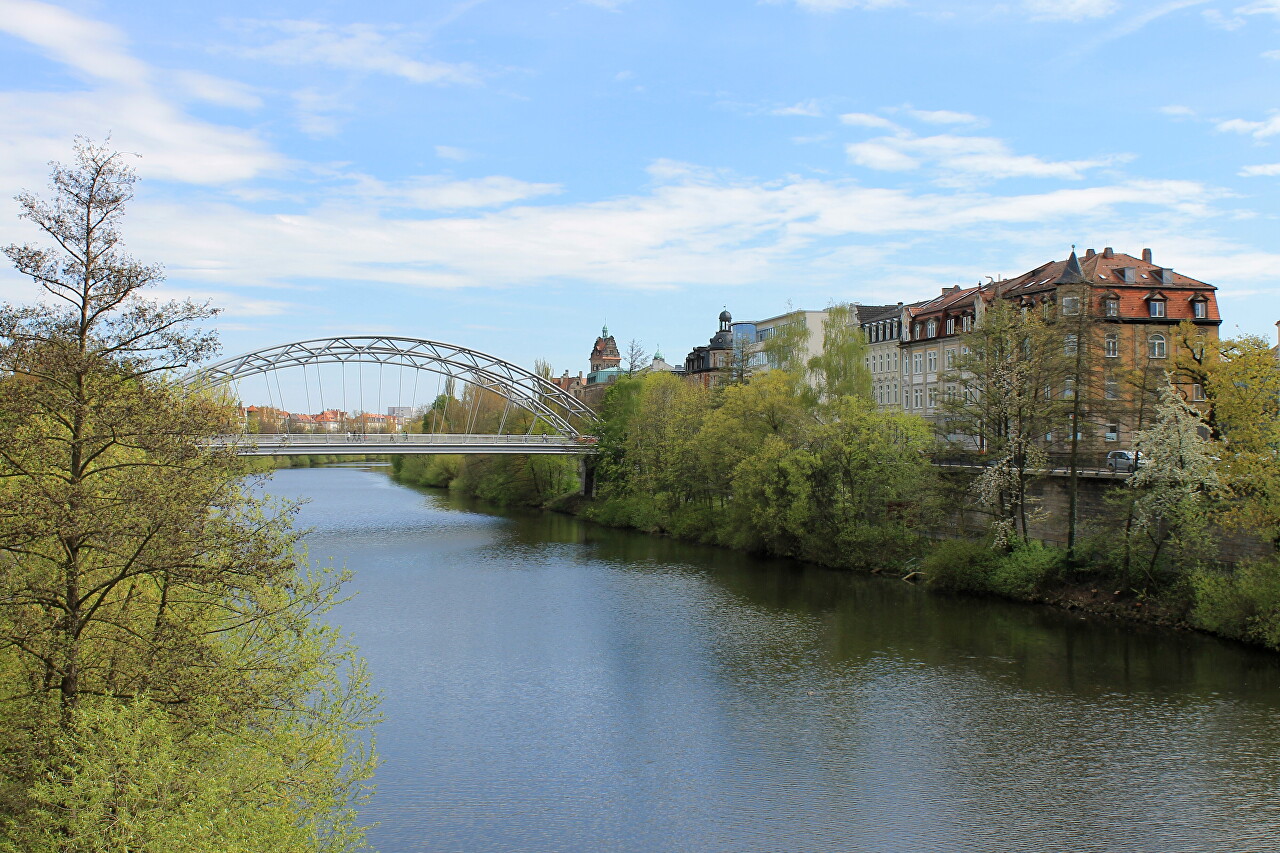
To the east, you can see the arched Luitpoldbrücke (Luitpold Bridge).
On the other side is the Löwenbrücke (Lion Bridge). This is a modern bridge and there are no lions there, of course. Lions decorated the old bridge that stood on this place.