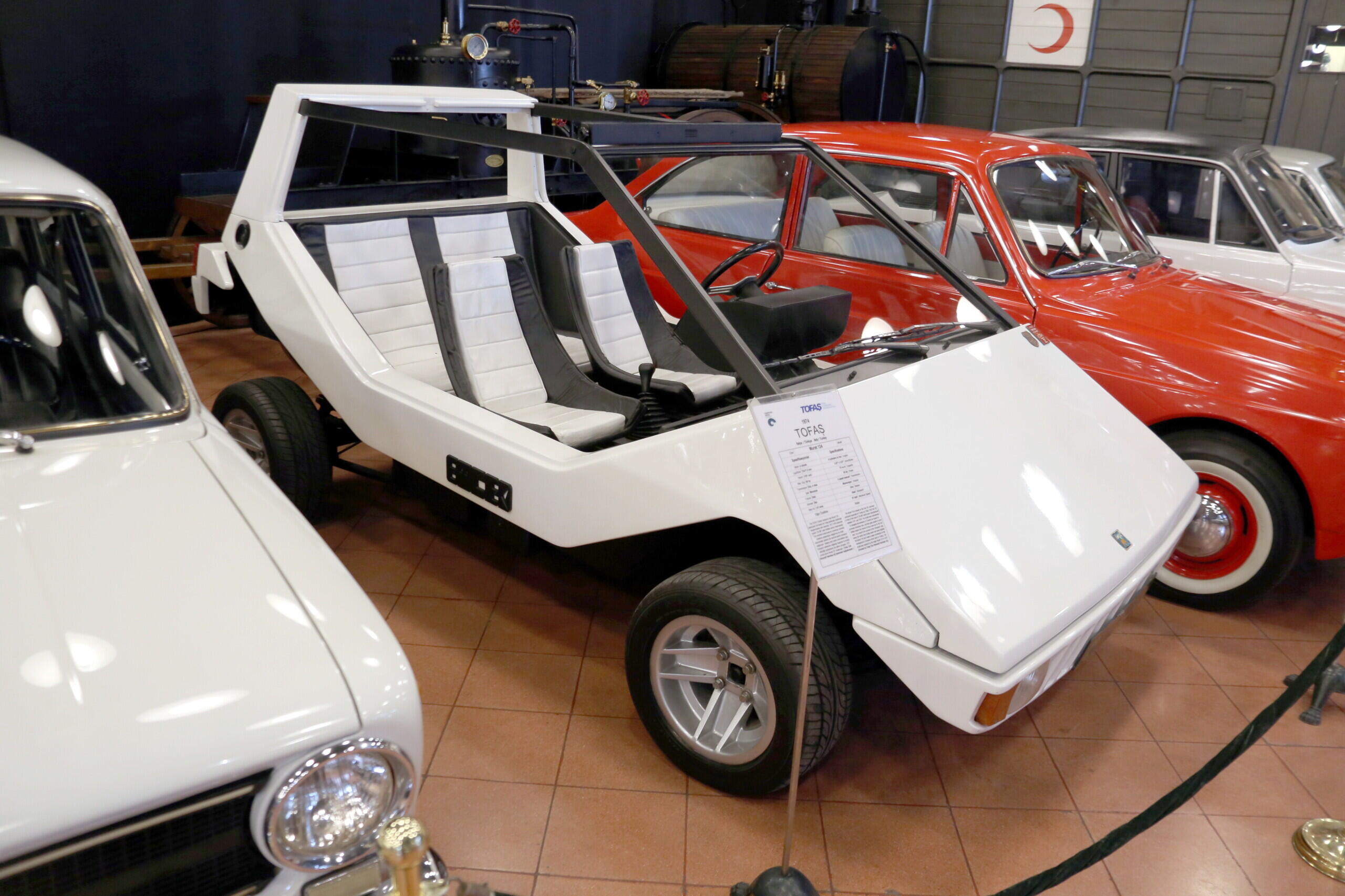
Turkish Cars (Rahmi M. Koç Museum, Istanbul)
Of course, the Rahmi M. Koç Museum features the products of the Turkish automotive industry, which began in the 1950s for a unique reason: the liberal economic reforms of the Adan Menderes government led to a severe shortage of foreign currency, which was largely used to purchase cars. As a result, strict restrictions were imposed on the purchase of foreign currency for importing cars. The first Turkish Willys Overland factory was a state-owned enterprise within the defense industry. As the name suggests, it produced legendary jeeps under license for the military. In 1959, businessman Vehbi Koç, father of the museum's founder, opened the Ford Ototsan truck factory. In 1960, a military coup took place in Turkey and the new government announced a policy of import substitution, as a result of which the import of finished cars was completely banned. This forced Renault and Fiat to open assembly plants in Turkey.
The iconic Fiat 124, produced as the Tofaş Murat 124 from 1971 to 1977, was widely popular in Turkey. The museum features a 1974 model.
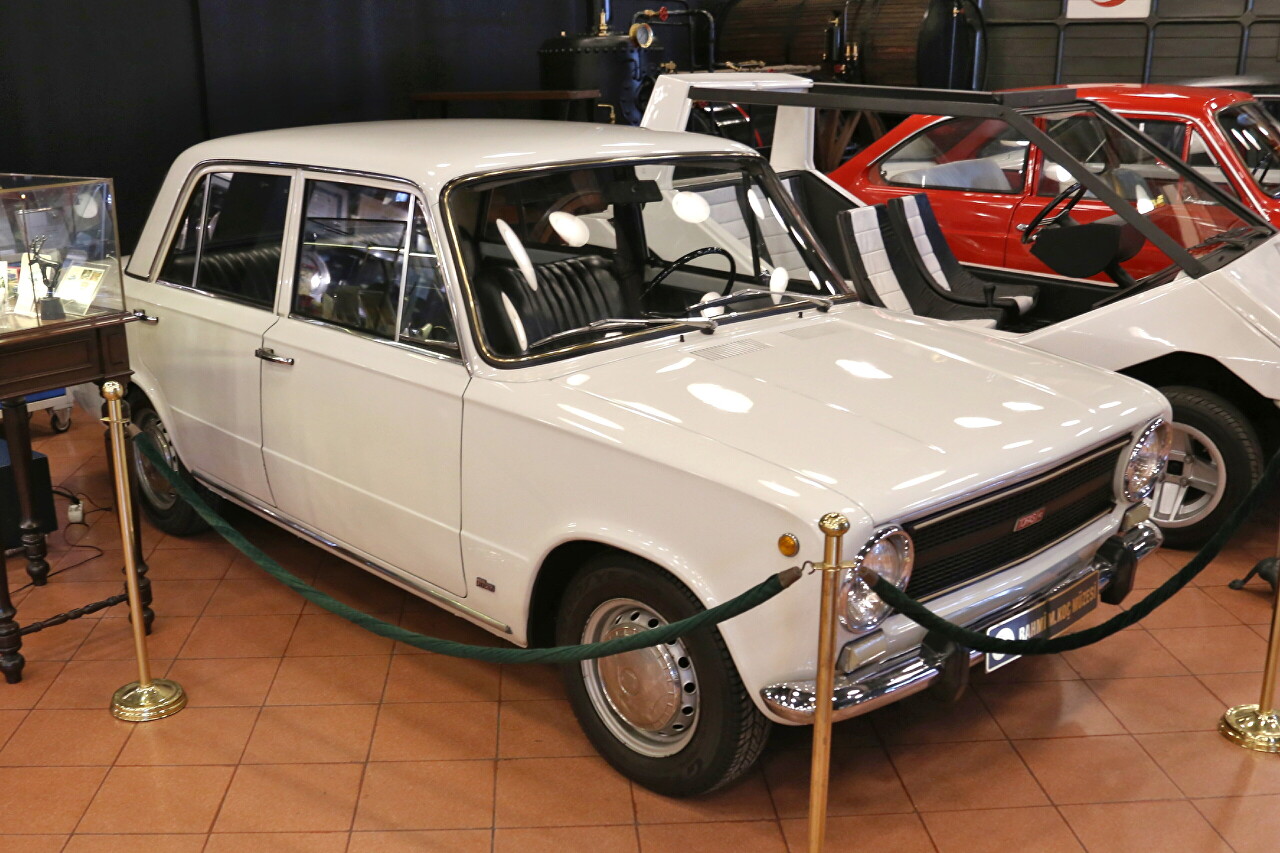
These cars turned out to be surprisingly resilient, and they can still be found in Turkey, both in their original form and in a restyled version.
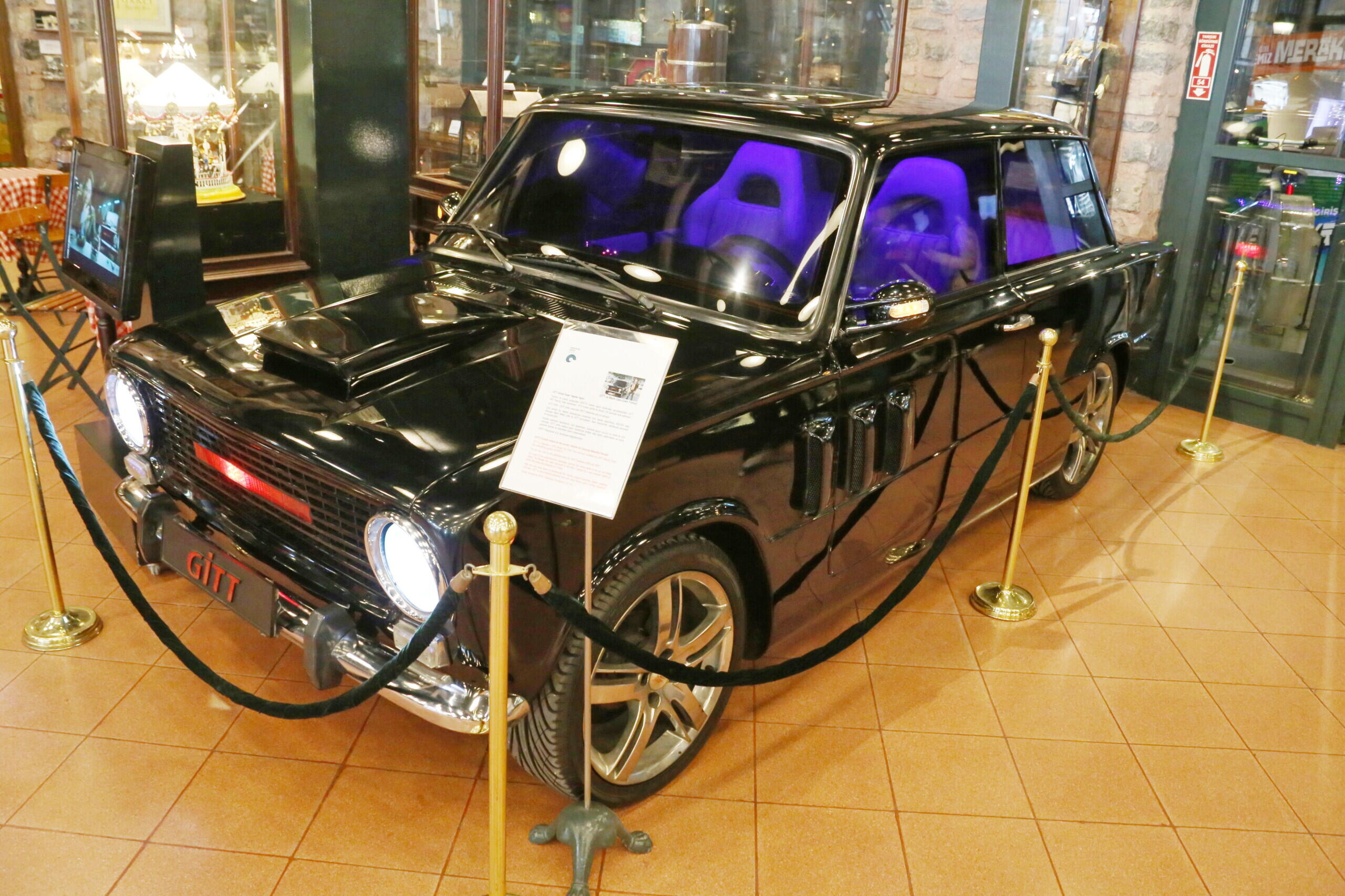
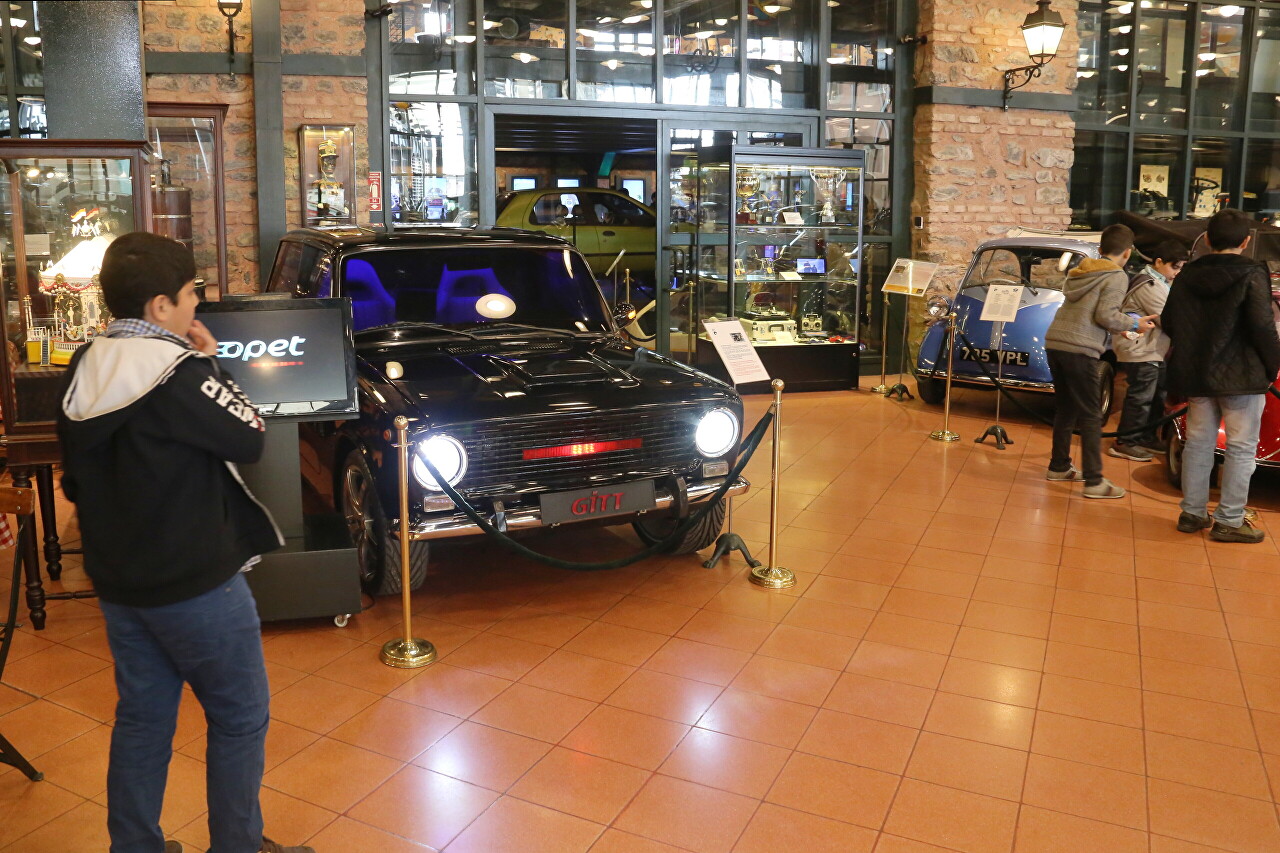
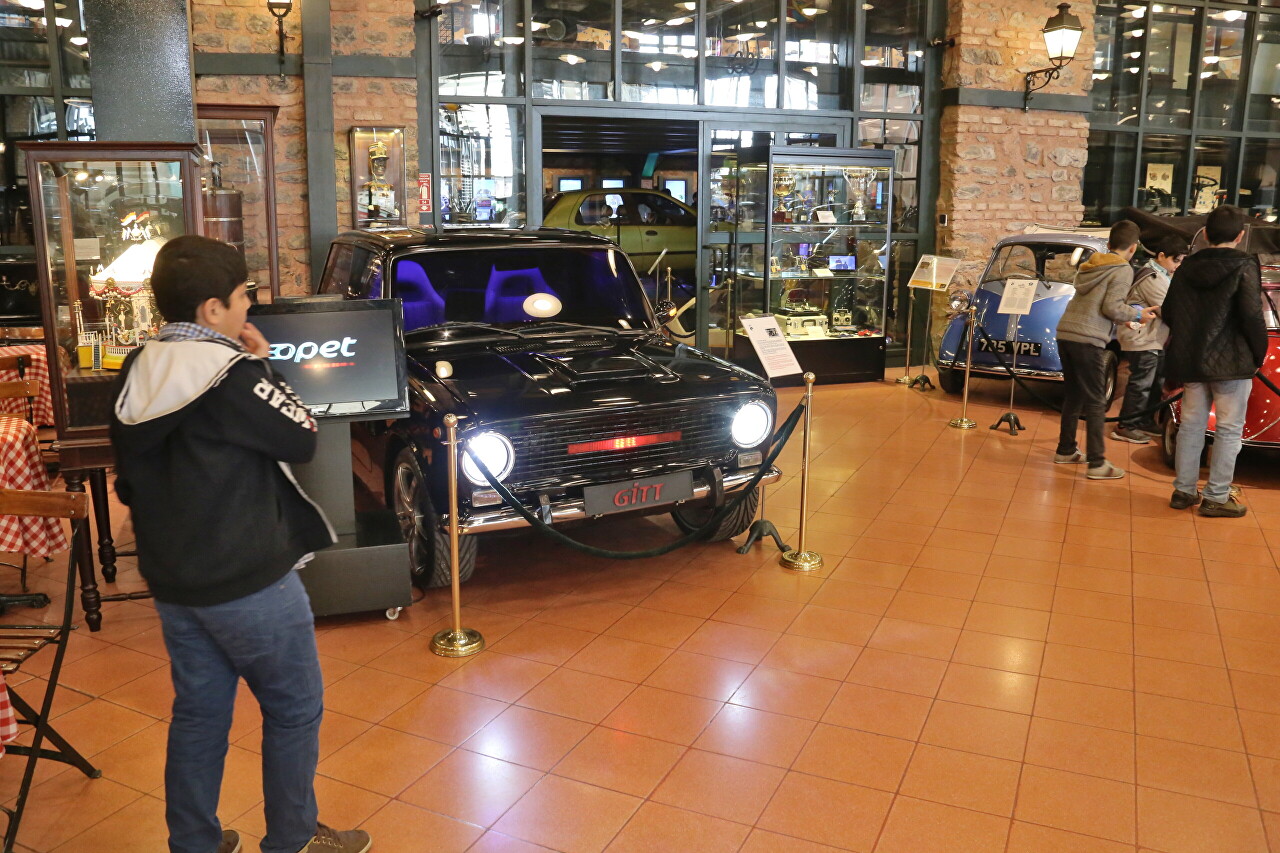
In the museum, you can see the Murat 124, which was created by the ART Racing Team tuning studio. The car is named Güzel İnsan Taşıma Taşıtı (GITT), which translates to "A Vehicle for Beautiful People".
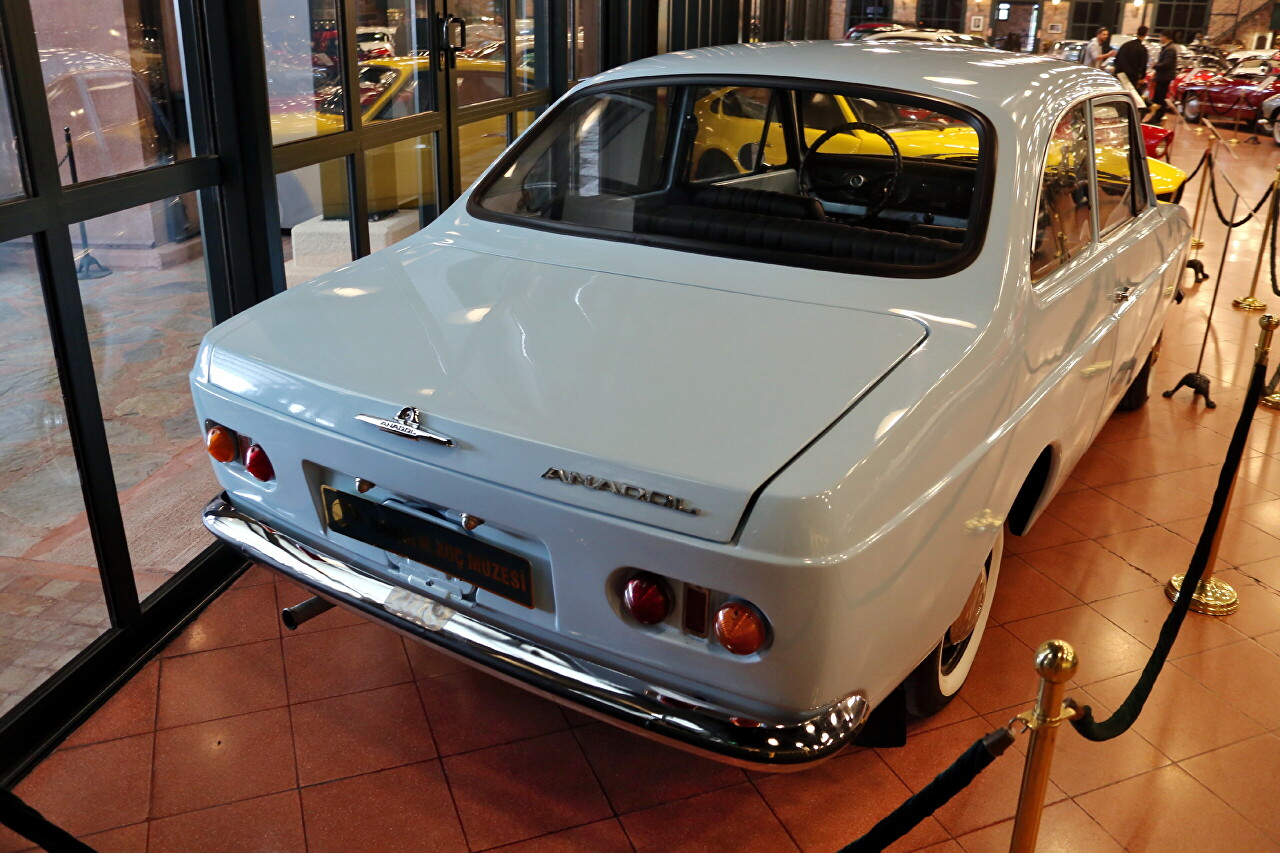
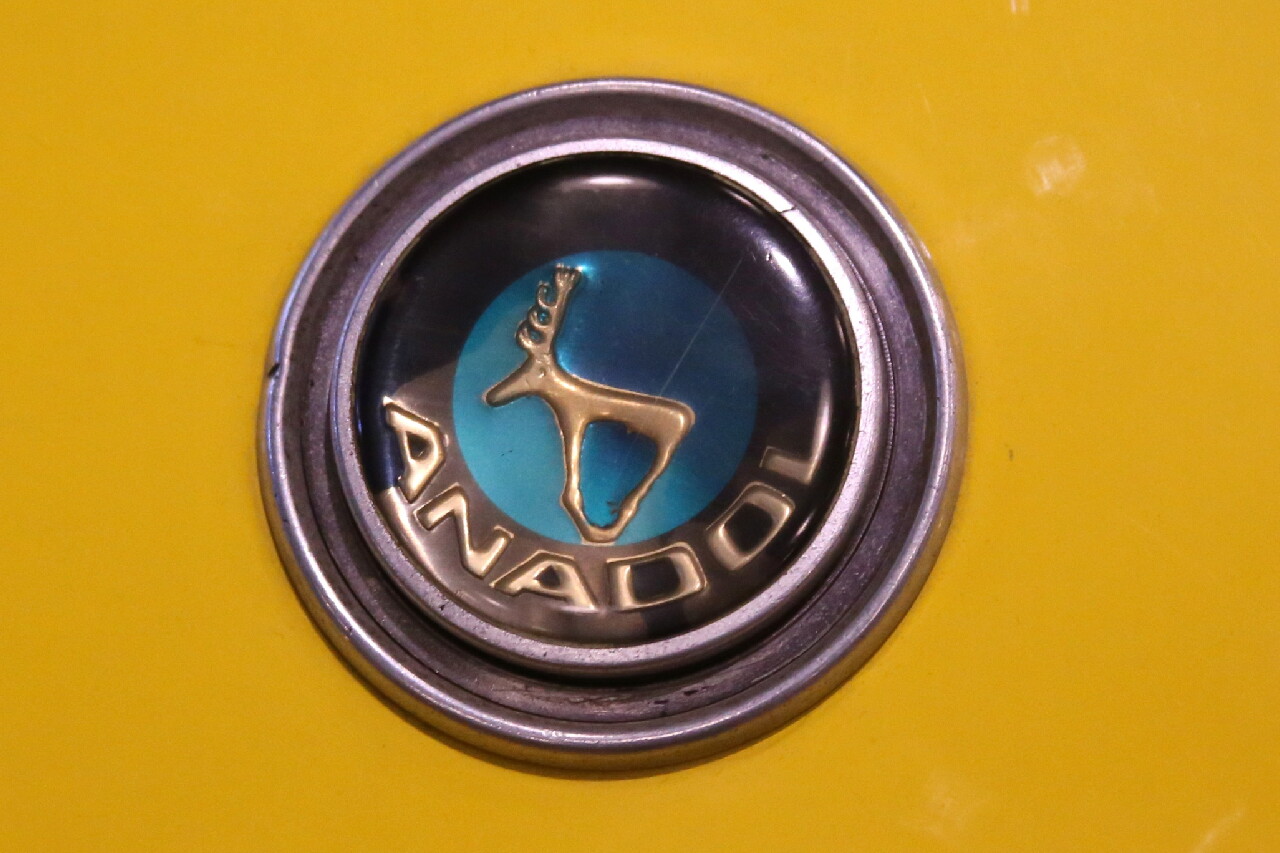
In 1966, the Otosan factory introduced the first domestic development under the Anadol brand. The A1 model features a very lightweight body with fiberglass panels.
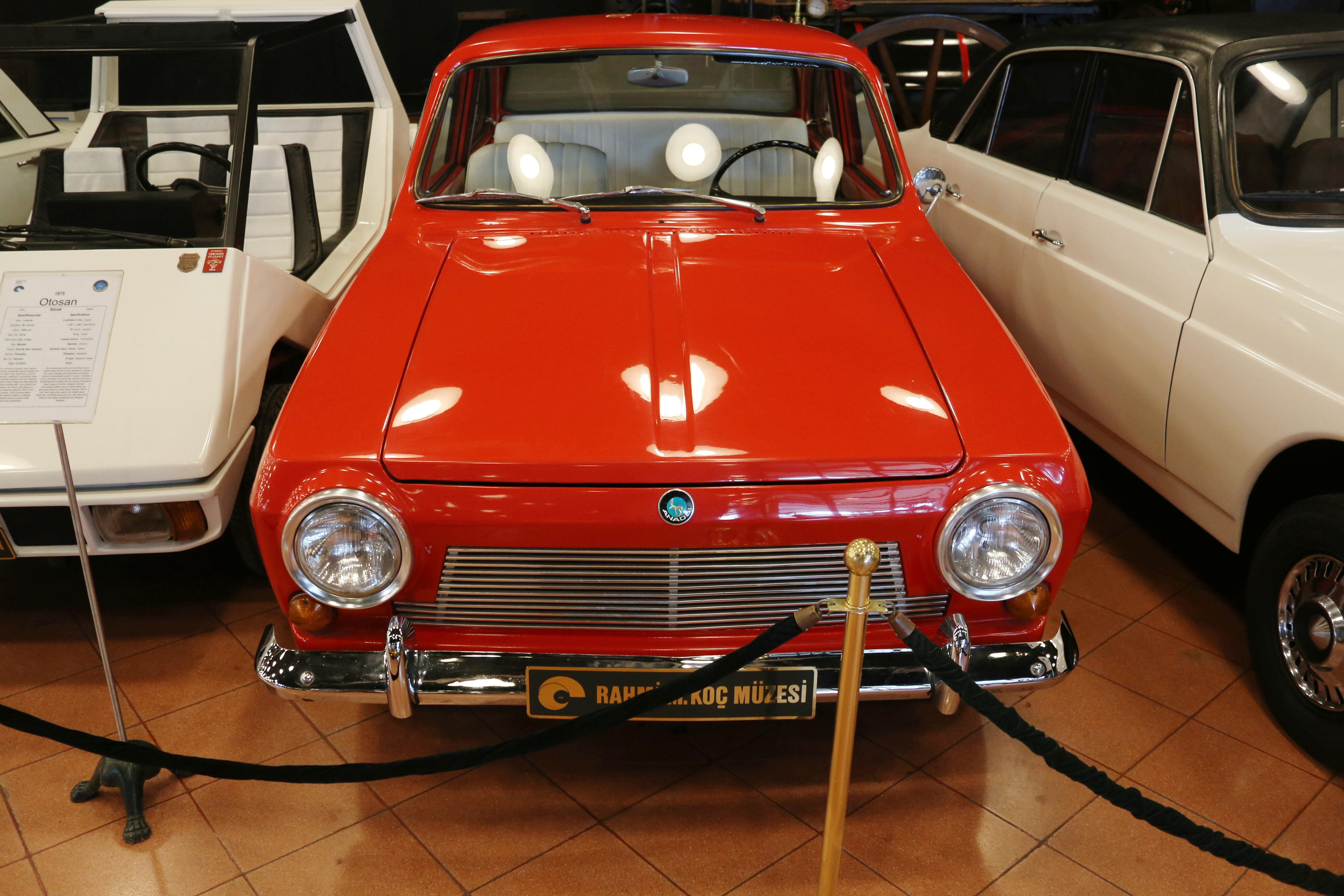
Thanks to the Ford Kent engine (4 cylinders, 1.2 liters, 50 hp) and its very low weight, the car can easily reach speeds of up to 130 km/h.
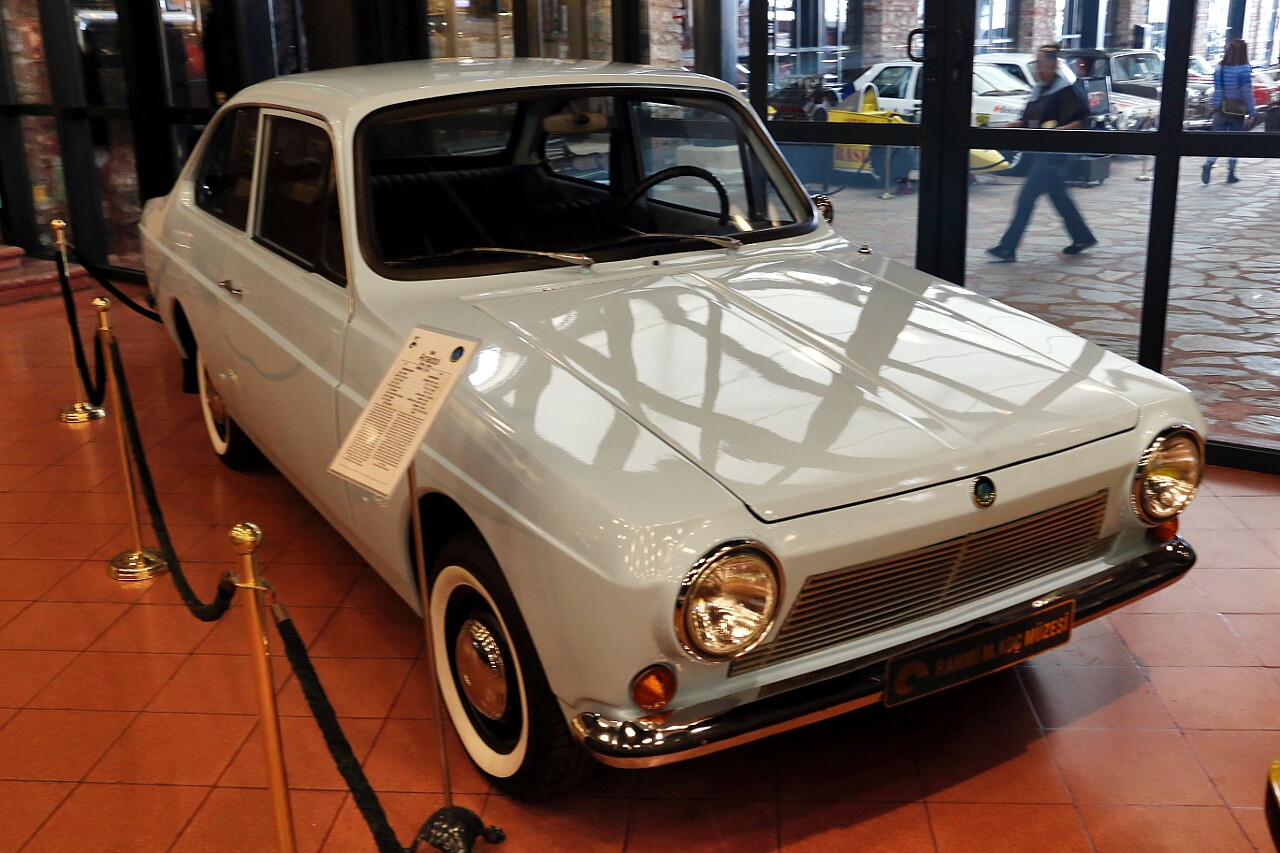
The museum features two Anadol A1 Sedan 2-door, 1968, in beige and red.
In 1970, the Anadol A2 was launched, also with a fiberglass body, but with four doors and a 1.3-liter Ford Kent engine. These cars were distinguished by their two-tone body paint.
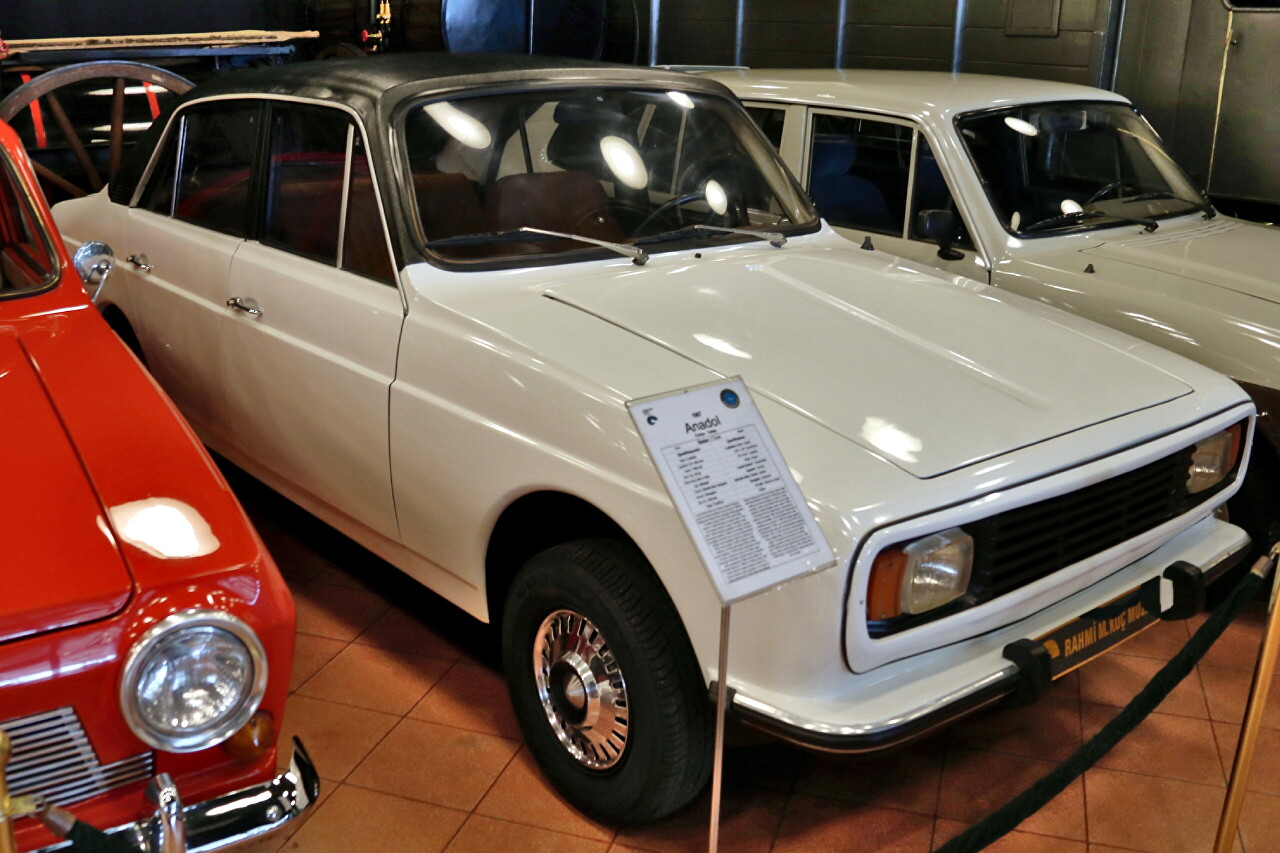
Later, a 5-door Anadol SV-1600 with a 1.6-liter engine was created on its basis. This is the world's first car with a plastic body of this type.
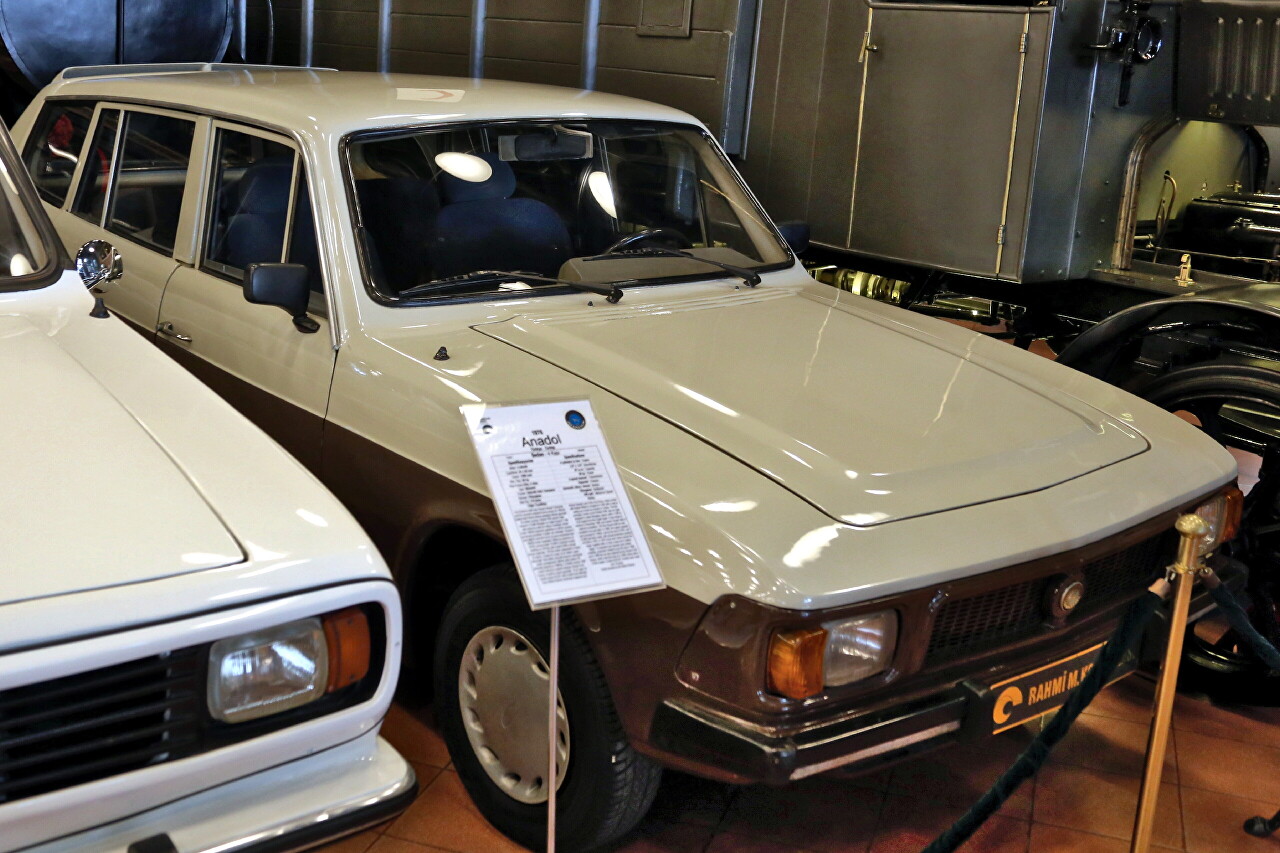
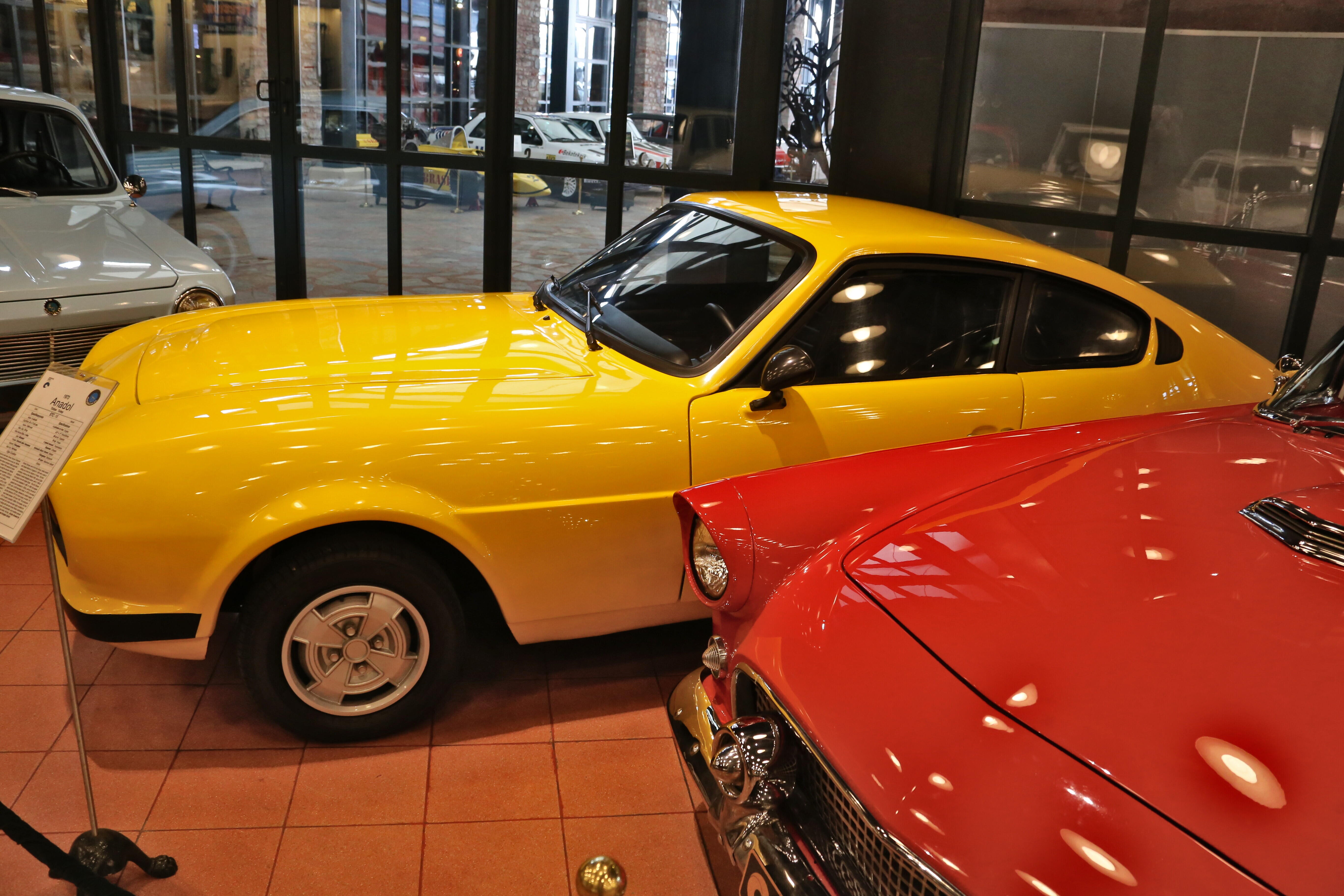
The Anadol STC-16 sports car, developed in 1973, is undoubtedly of great interest.
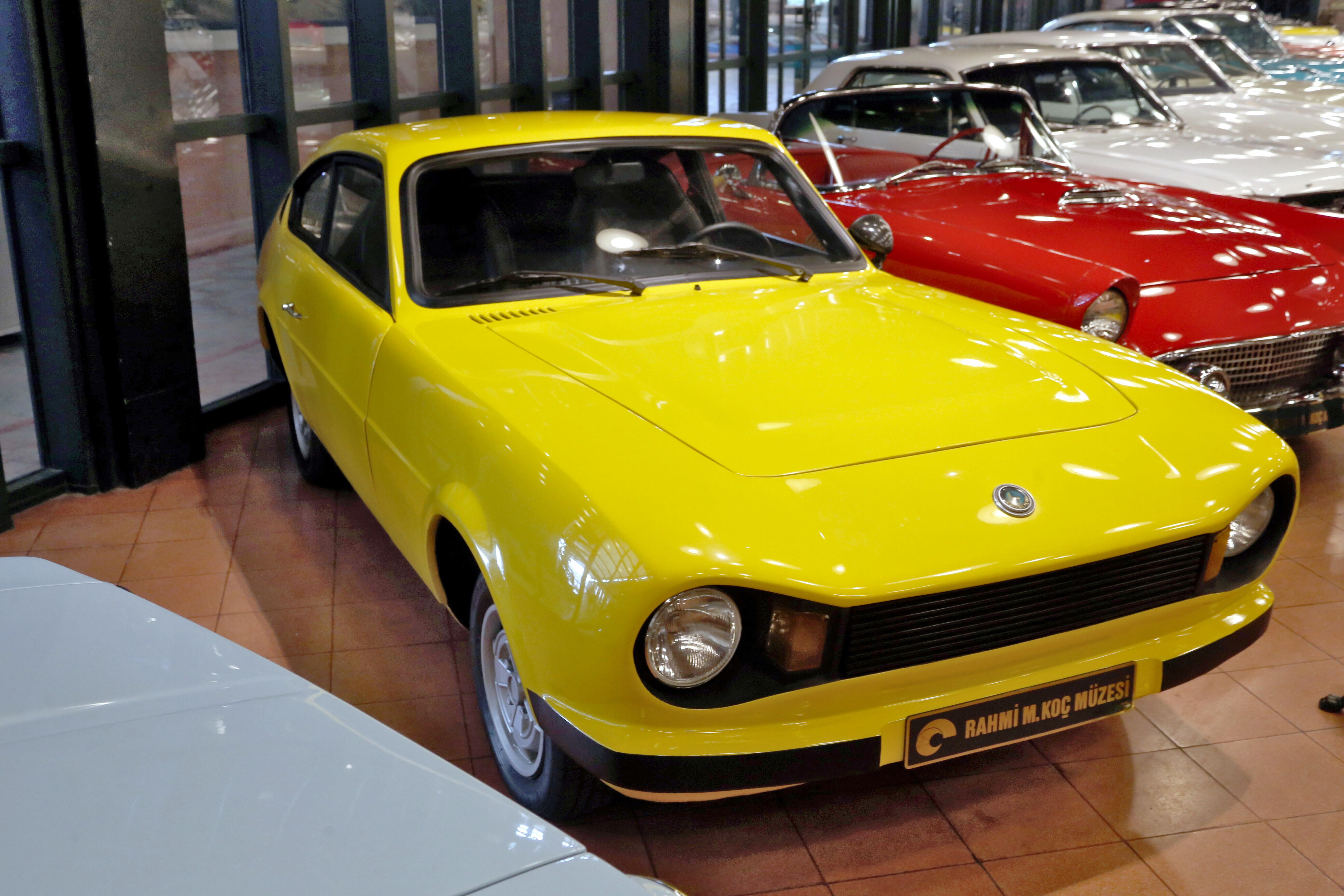
The car is painted in the iconic yellow color known as Alanya Yellow.
The car has a lightweight fiberglass body, a boosted 1.6-liter Ford Kent engine, and an upscale interior. However, in 1973, a fuel crisis occurred, leading to a decline in demand for powerful models. As a result, production was discontinued two years later. Only 176 units were produced, making it a rare collector's item.
Another Otosan project, the original Böcek (Beatle) concept-car, was created by designer Jan Nahum in 1975. Compact car in the style of "buggy" had a Ford engine with a volume of 1.3 liters and a capacity of 63 horsepower, so it showed good driving qualities. The car was intended for the military, but did not interest the Ministry of Defense. The manufacturer then tried to find buyers among car-tourism enthusiasts, but the production was limited to a series of 206 units.