Palacio de la Provincia, Vitoria-Gsateiz
The Palace of Deputies of the province of Álava (Palacio de la Diputación Foral de Álava) is located on the main square of the city (Placio de la Provincia). Its unofficial name is the Provincial Palace (Palacio de la Provincia), as the locals call it. Construction of the building began in 1833 under the direction of the city architect Martin Saracíbar, but a year later the First Carlist War broke out and the work continued until 1840. Initially, the building was intended to be single‑storey, but in 1844 it was decided to add a second storey. The construction and finishing work was fully completed in 1858, giving the palace its current monumental appearance.

The style can be described as neoclassical; the building has a rather austere appearance. The only decorations are pilasters with Ionic capitals and beautiful lanterns on the second‑floor balcony. The main portal is guarded by two lying stone lions, created by the local craftsman Francisco Rupert López de Alegria.

The portal is flanked by statues of prominent natives of Vitoria by the French sculptor Carlos Imber. The left sculpture depicts Prudencio Maria de Verasategui, a Spanish politician and the first president of the Provincial Council of Alava. On the right, we see General, politician and diplomat Miguel Ricardo de Álava y Esquivel.

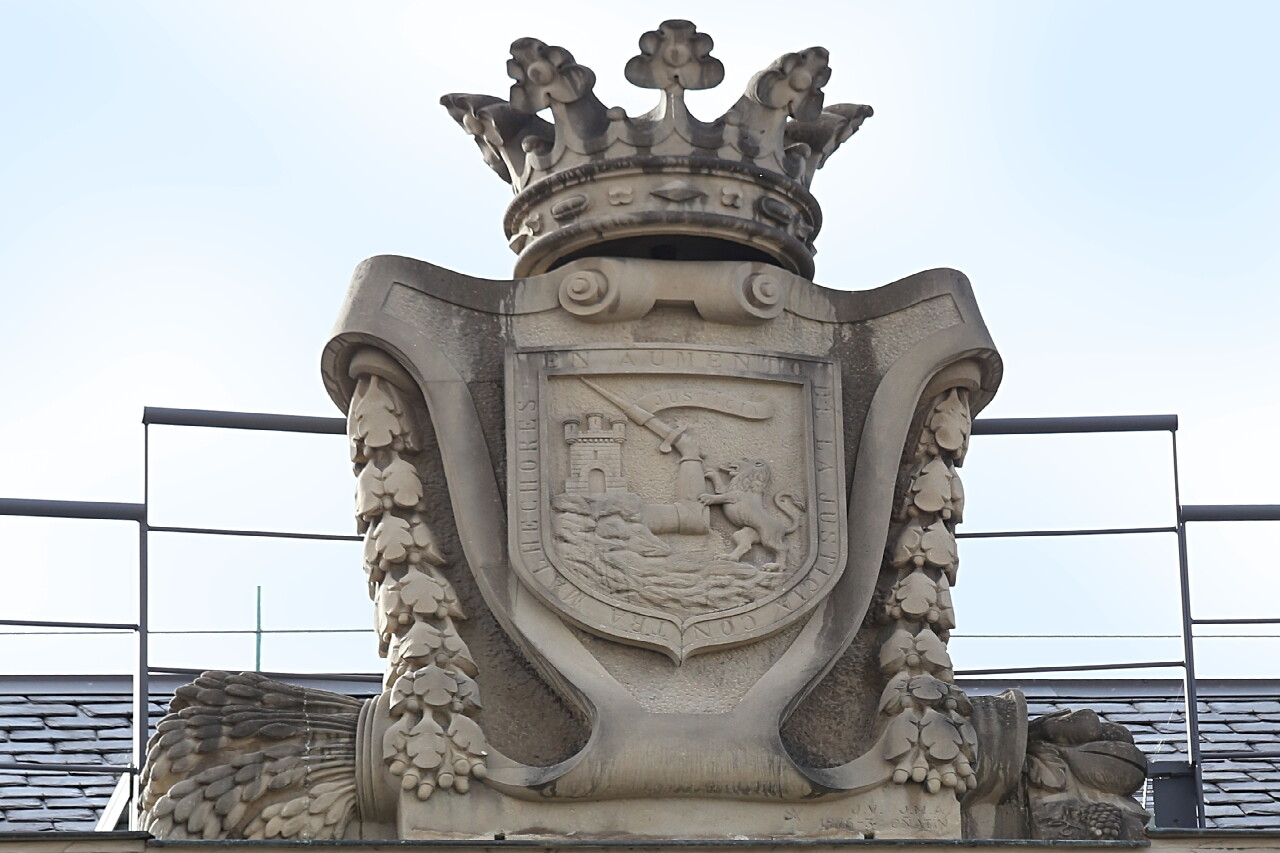
The coat of arms of the province of Álava (the historical territory of Araba/Álava) is rooted in the medieval history of Basque Country and symbolizes independence and the readiness to defend its lands. The shield features a fortified tower and a hand holding a sword, brandishing it at an aggressive lion. This symbolizes the province’s defense against enemies — which, over the centuries, have been the Kingdom of Castile, and the lion represents precisely that kingdom. Nevertheless, the lands of the свободолюбивые Basques have long been part of the Kingdom of Spain, although they enjoy a maximum degree of autonomy.
Inside the palace, luxurious historical halls have been preserved. The most famous is the Throne Hall (Salón de Tronos), which features a majestic fresco on the ceiling depicting the oath taken by the Castilian kings to respect and protect the Basque liberties. The palace is also famous for its rich historical archive of the province.