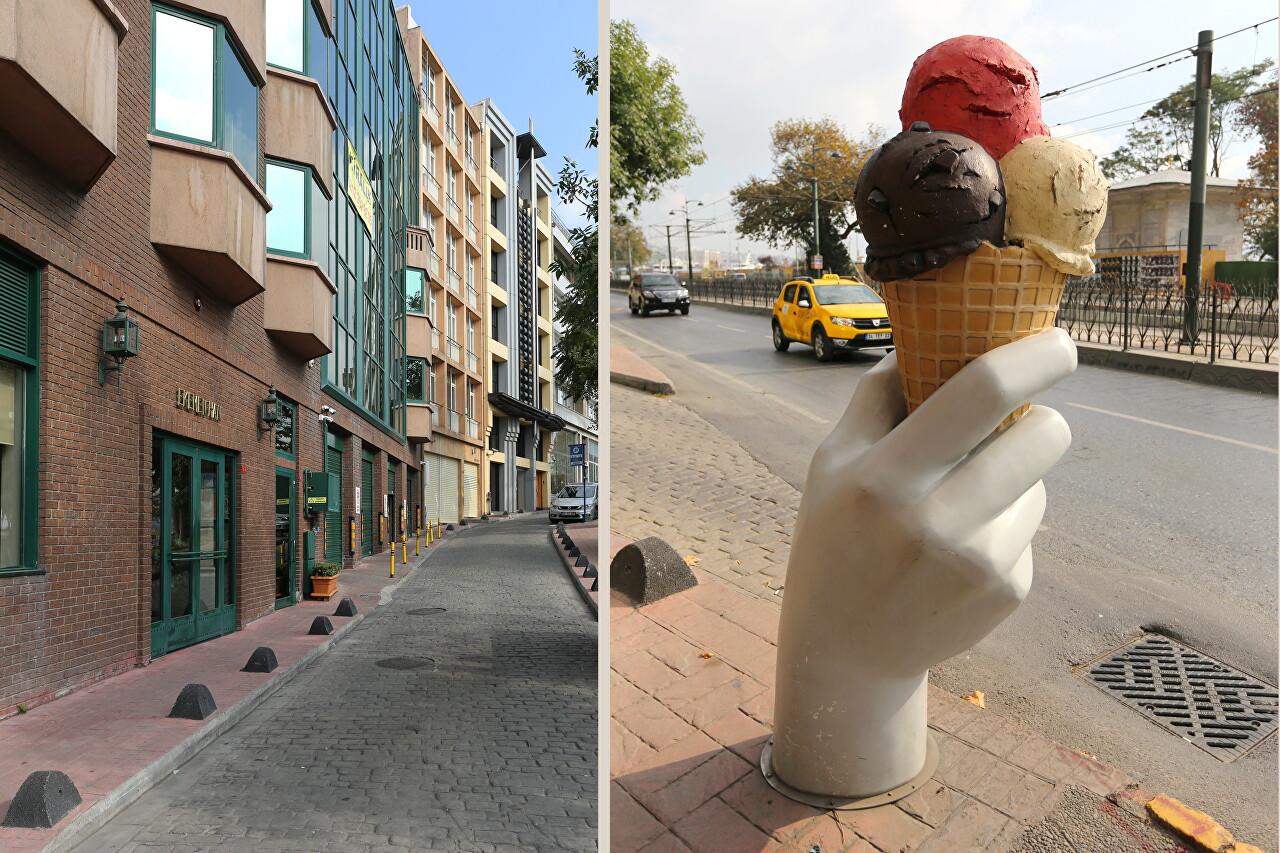
Meclis-i Mebusan Street
This street begins in Tophane and runs along the shore of the Bosphorus to the Dolmabahçe Palace. At the very beginning, on the mainland side, you can see the remains of a defensive wall, which are very often referred to as Byzantine. In fact, this is part of the Galata Walls (Galata Surları), which were built by the Genoese in the 14th–15th centuries. At the end of the 13th century, the Byzantine emperors transferred these lands to merchants from the Republic of Genoa, who established their trading colony of Pera here, turning it into an impregnable fortress.
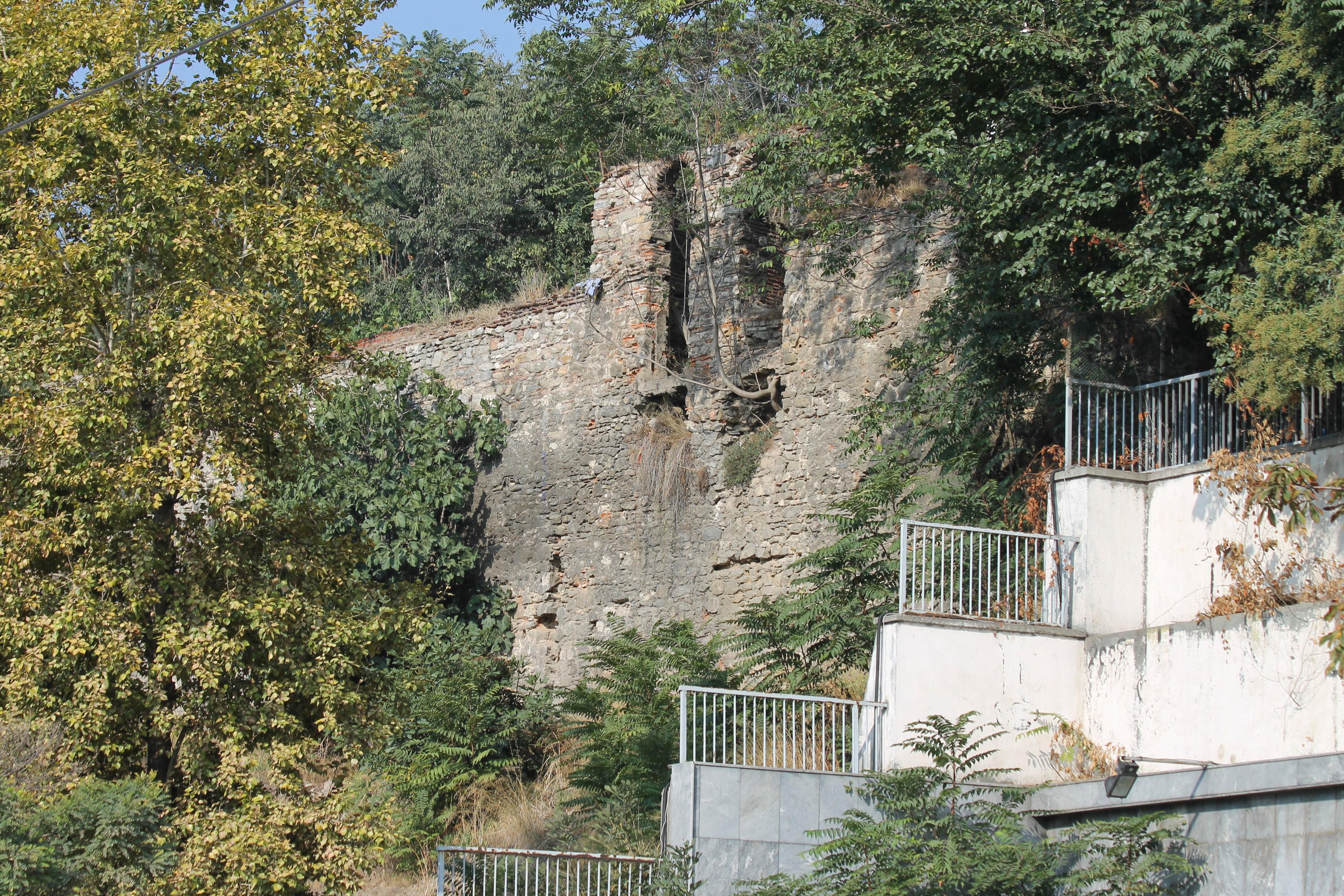
In 1453, Sultan Mehmed II the Conqueror besieged and captured Constantinople, and the Genoese surrendered Galata without a fight. The sultan ordered the upper part of the walls to be dismantled to deprive the area of its defensive value, and in the coastal part he built the Imperial Cannon Yard (Tophane-i Amire), which gave its name to the entire district. It was behind this wall that the foundries, artillery depots, and artillerymen’s barracks were located.
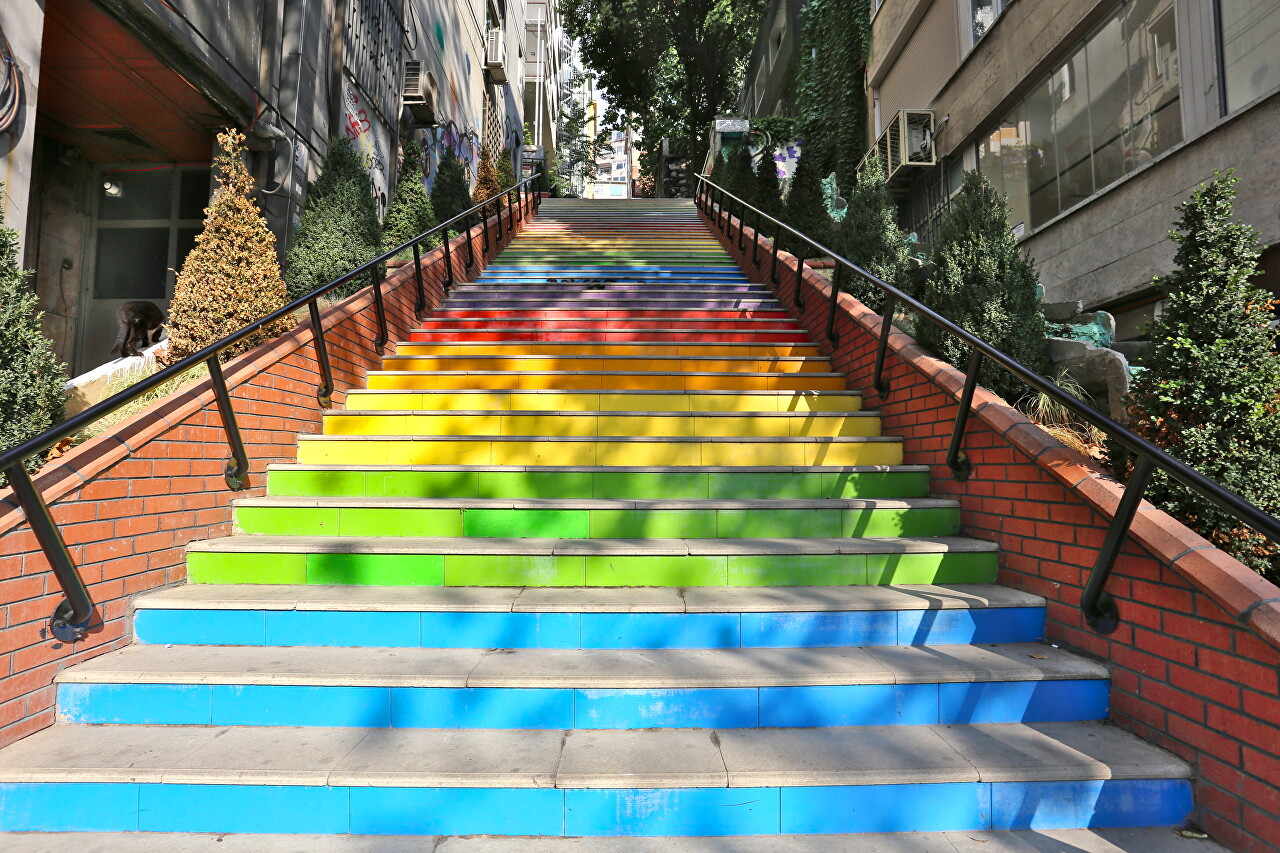
Several staircases rise from the street into the residential areas of Beyoglu, the most interesting one is the second one, 250 meters from the ruins of the wall. This concrete staircase was built in the 50s of the 20th century and was a common infrastructure structure, but in the 21st century it became a famous tourist attraction. In August 2013, pensioner Hüseyin Çetinel, who lived nearby, decided to add some variety to the city's landscape. He bought paint and painted the bases of all 145 steps of the staircase in bright rainbow colors. The municipal authorities considered this a bad idea (apparently seeing it as an LGBT flag) and, over the next night, painted the steps with gray paint, which caused widespread discontent among the residents of the area. The city hall yielded to public pressure and restored the staircase’s bright appearance, giving it the official name "Rainbow Staircase" (Salıpazarı Yokuşu). As a result of this story, a social movement called "Take a brush and come" (Fırçanı al gel) emerged, which instantly spread throughout Turkey. Residents of other cities began to paint street stairs in their neighborhoods in large numbers. And apparently, this wasn’t limited to Turkey. I also saw such staircases in Spain.
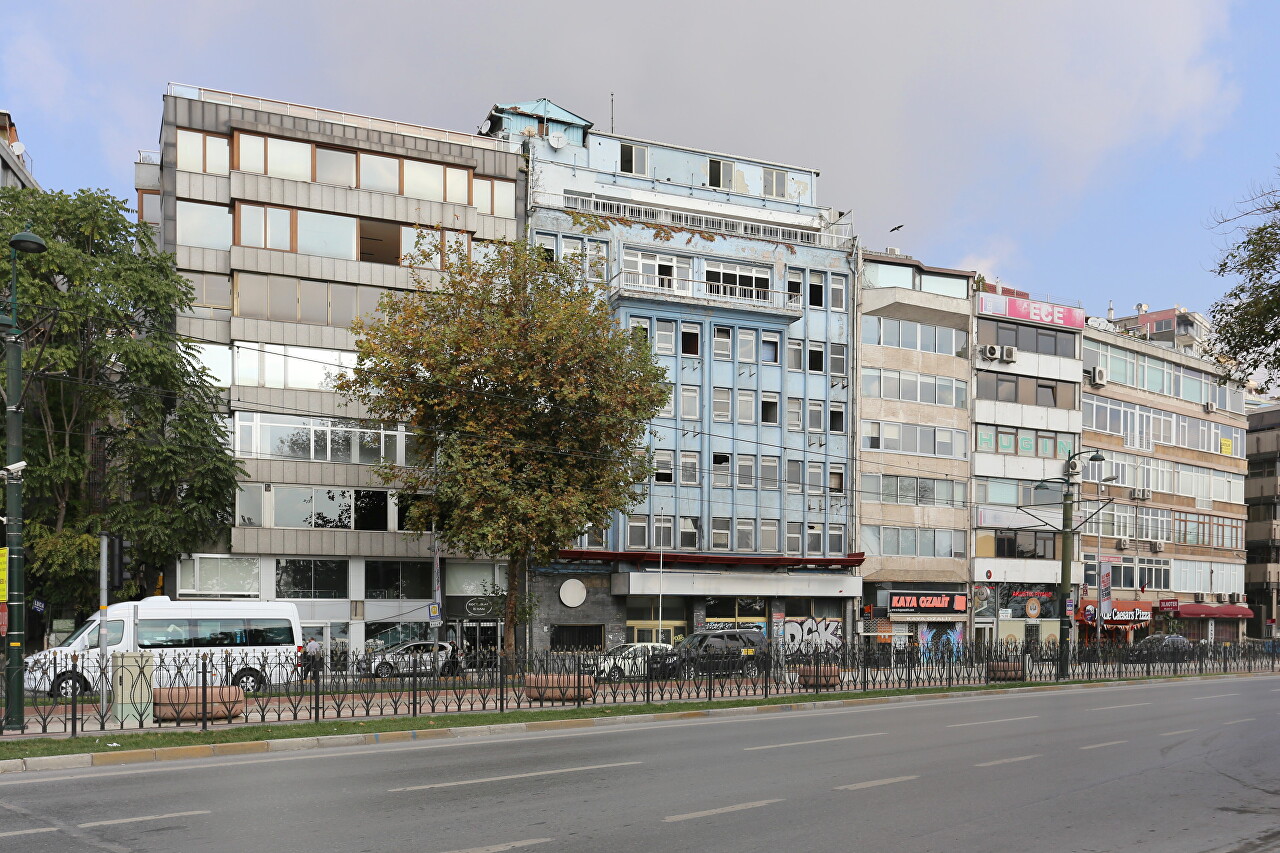
Overall, the street is lined with modern office buildings in the post‑war style known as rationalism - that is, without any architectural excesses.
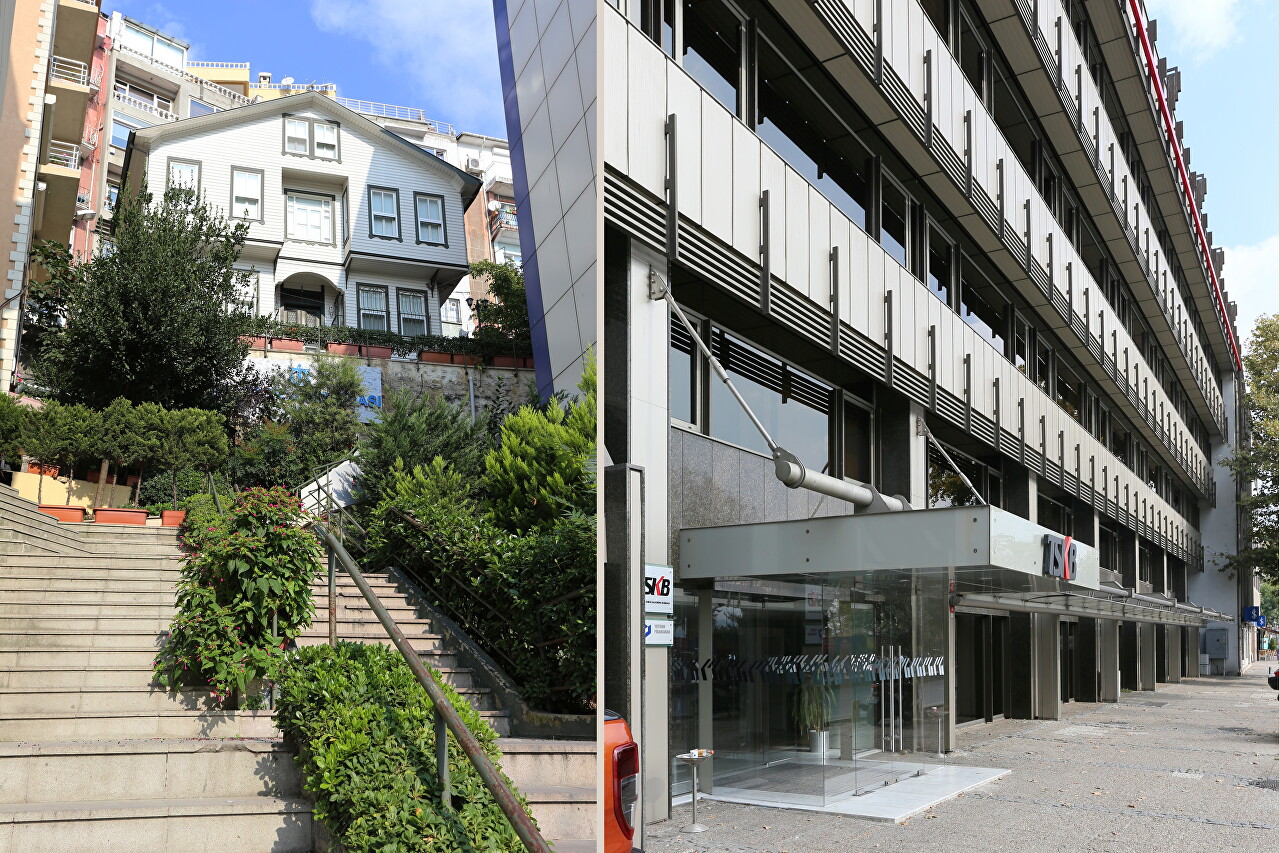
The next staircase is not as impressive, but at the top you can see a classic Ottoman mansion that has miraculously survived among the modern concrete blocks.
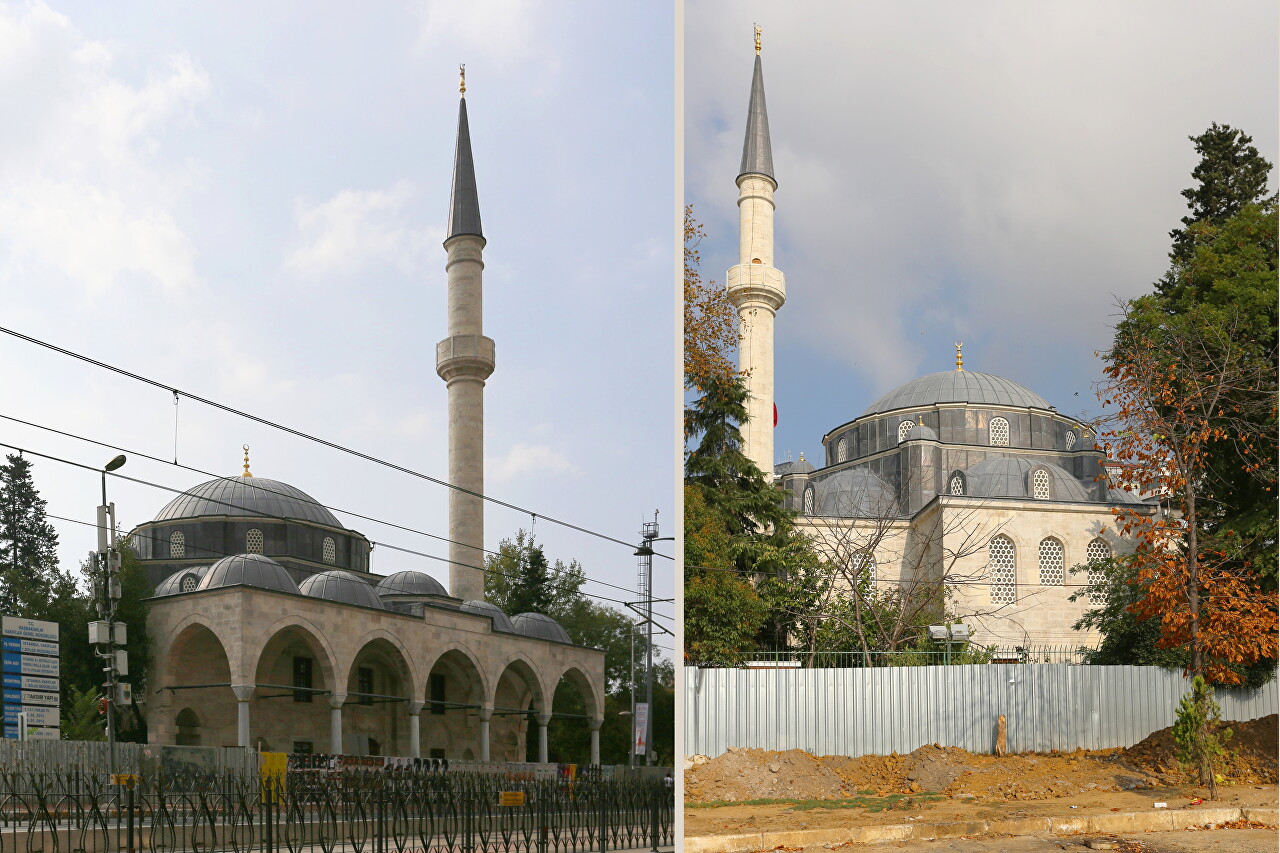
Closer to Kabataş Square is the Molla Çelebi Mosque (Molla Çelebi Camii), more commonly known as the Fındıklı Mosque (Fındıklı Cami). It is an outstanding monument of Ottoman architecture, built in 1562 according to the design of the famous architect Mimar Sinan. The mosque was erected by order of the supreme city judge Mehmed Vuzuli Efendi, who was known by the respectful nickname Mulla Çelebi. The building has a rare hexagonal layout. The central dome, with a diameter of almost 12 meters, rests on six powerful column‑buttresses built into the walls and is surrounded by four semi‑domes, which creates an abundance of light inside and a sense of spaciousness.
..