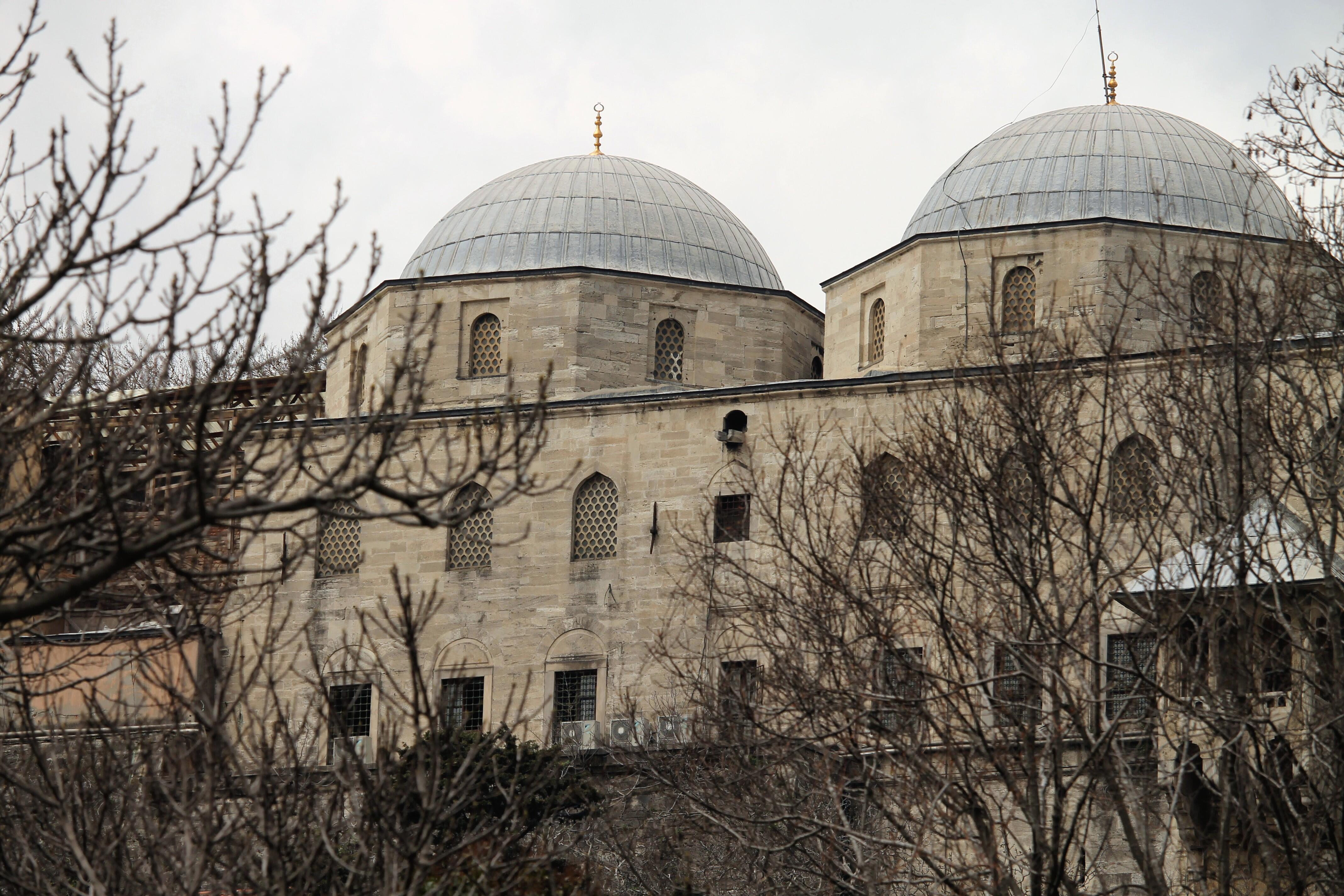
Monument of Tergut Reis
Two hundred paces from the Sarayburnu promontory on the Marmara Sea embankment, near the walls of the Topkapi Palace, stands a monument to Admiral Turgut (Tergut Reis), known in Europe as Dargut. Under his command, in the mid‑16th century, the fleet of the Ottoman Empire reached the peak of its power in North Africa. Sultan Suleiman the Magnificent called him “the Naked Sword of Islam.” The future naval commander was born in 1485 into a simple peasant family near Bodrum; at the age of 12, he mastered the use of a bow and a spear perfectly. Later, quite by chance, he caught the eye of the commander of the Ottoman army, who happened to be passing by, and was taken into service, where he underwent training in artillery. In 1517, he participated in the conquest of Egypt as an artilleryman. After the death of his high patron, Turgut joined the fleet of the corsair Sinan Pasha (Sinanuddin Yusuf Pasha). Having mastered seamanship, he was given command of a brigantine, then a galleon. Having armed the ship with modern cannons, he made many daring raids in the eastern Mediterranean. In 1520, he joined Barbarossa's fleet and quickly became his best friend and colleague. Commanding a flotilla of 12 galleons, Turgut took an active part in opposing the shipping of the European kingdoms. In September 1538, in the Battle of Preveza, where the Ottomans defeated the Christian Holy League, Turgut Reis commanded a wing consisting of 20 galleys and 10 galliots. However, on June 15, 1540, fortune turned against him, and he was defeated by the Genoese fleet near Corsica and captured. Four years later, Barbarossa redeemed his friend for 3,500 gold ducats. In July 1546, Turgut became the commander‑in‑chief of the Ottoman naval forces in the Mediterranean in his place, and on April 30, 1551, he officially entered the service of Suleiman I. In 1565, the 80‑year‑old Turgut Reis, on Suleiman I’s orders, arrived with his ships to take part in the Great Siege of Malta.He personally led the siege of the key Fort Saint Elmo, where Turgut received a fatal wound. His body was transported to Tripoli and buried in the Dragut Mosque, which he had founded, and which has survived to this day..
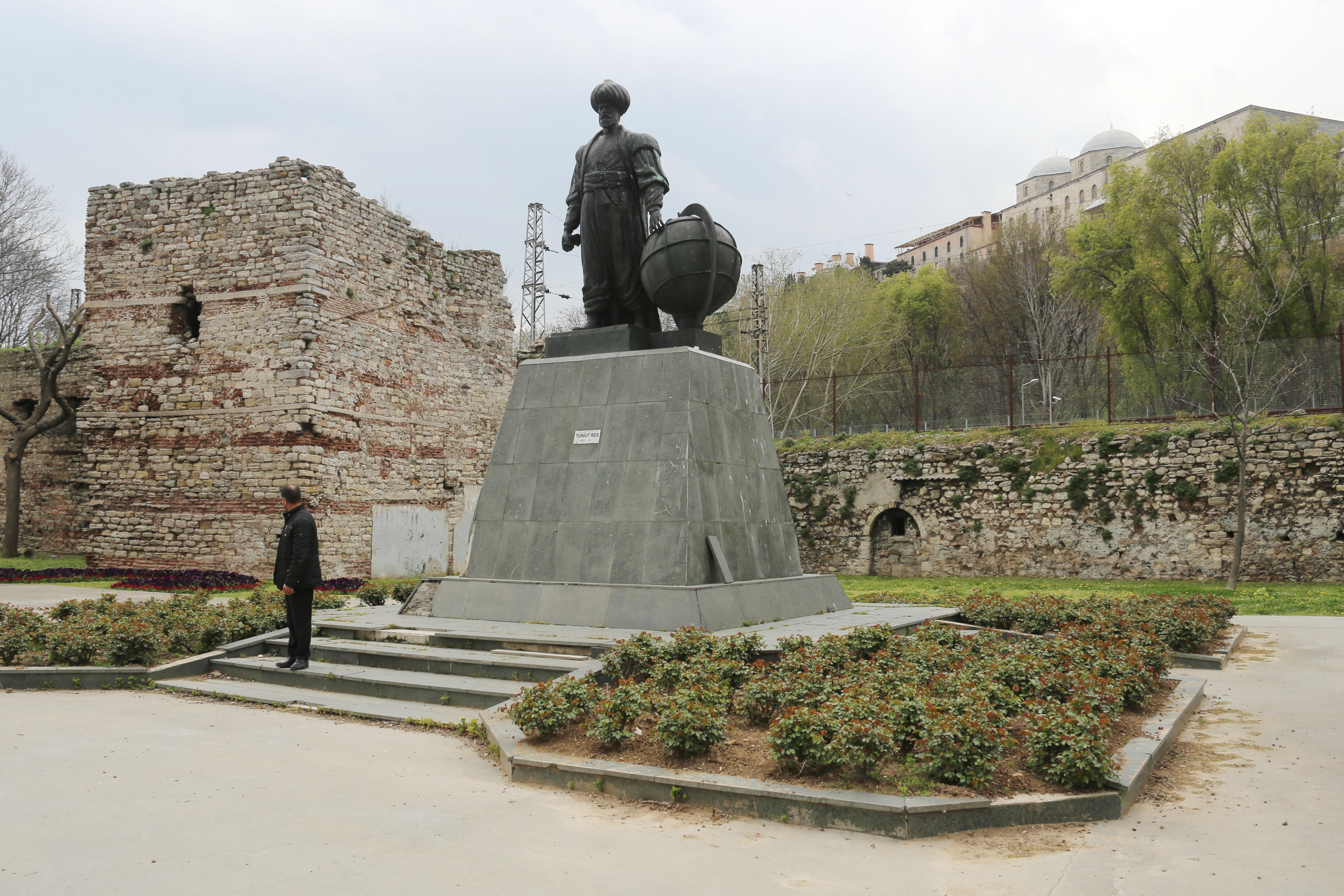
The monument was erected in 1986 as part of the state project "Turkish Great People" (Türk Büyükleri), it was executed by the famous Turkish sculptor Haluk Tezonar. The naval commander's gaze is directed towards the Mediterranean Sea, where Turgut won his most resounding victories..
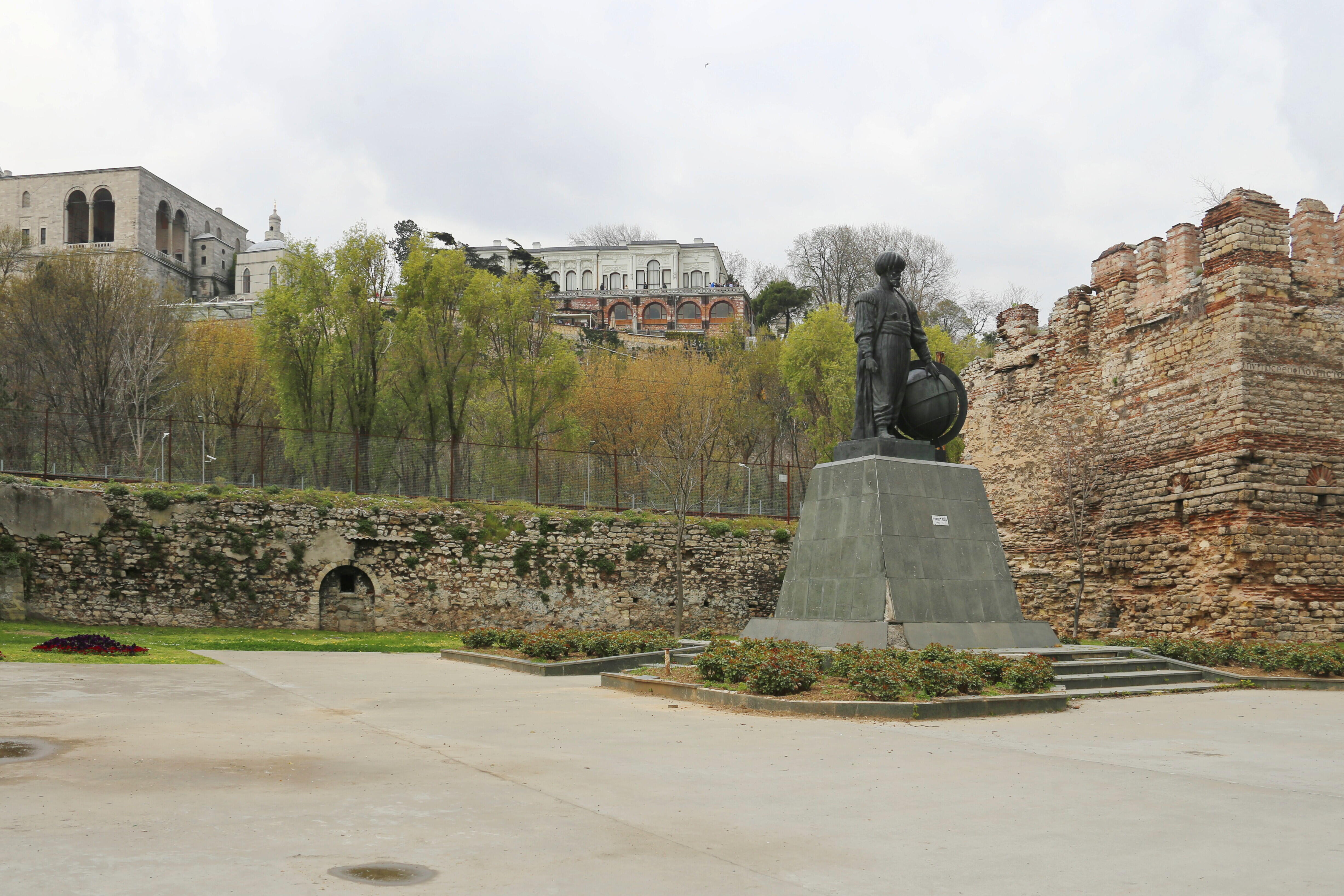
Above the walls behind the monument, the domes of the Fatih Pavilion (Fatih Köşkü) of the Topkapi Palace are clearly visible.