Arasta Market (Arasta Çarşısı)
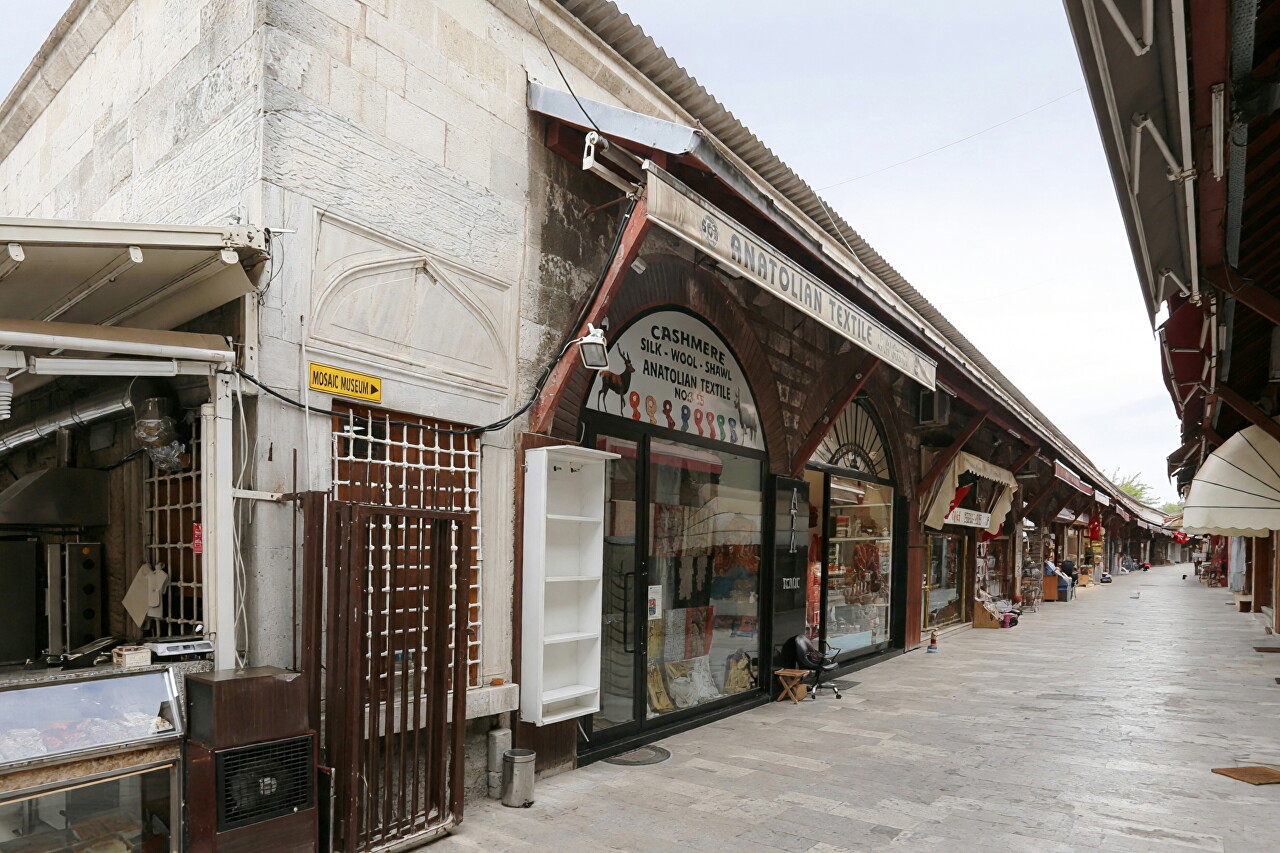
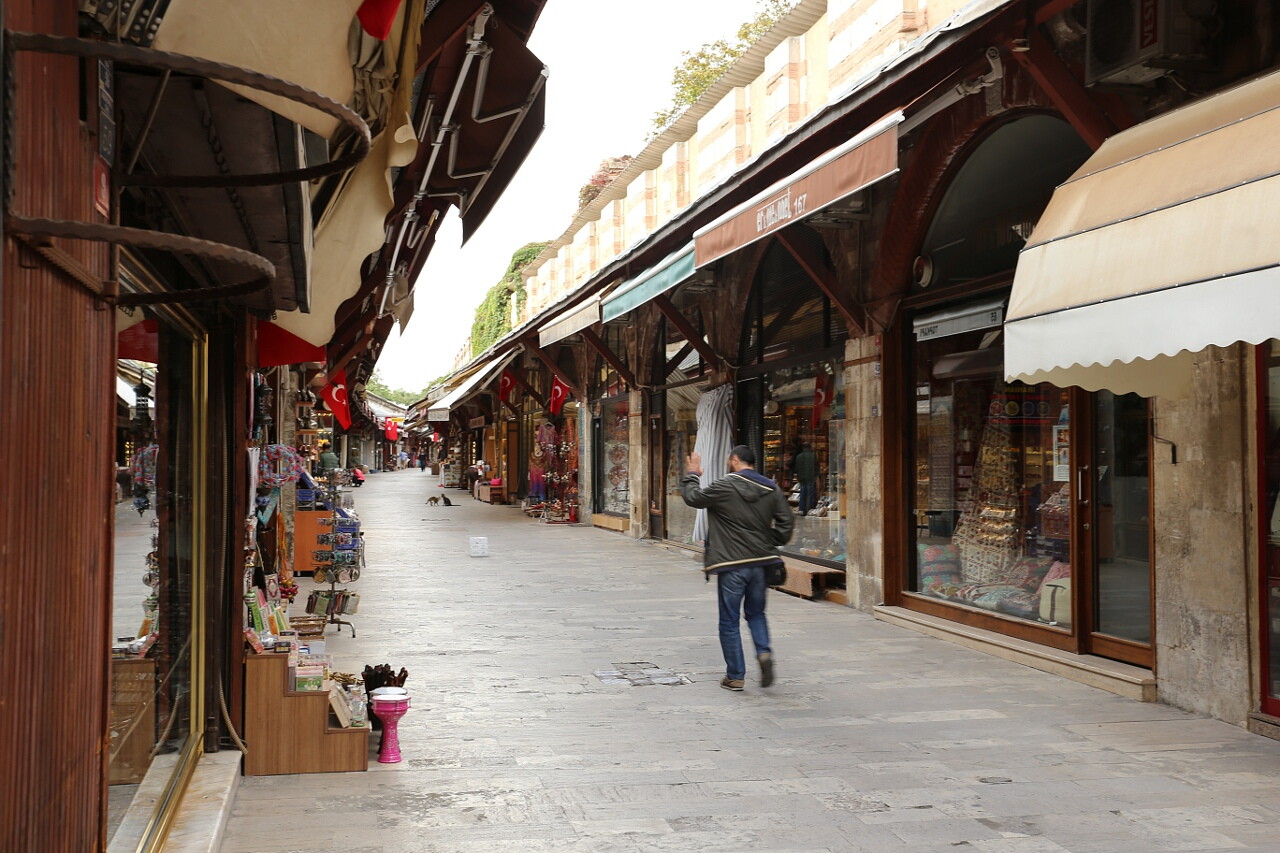
Kabasakal pedestrian street with many shops, boutiques, and souvenir shops runs along the southeastern wall of the Blue Mosque complex (Sultanahmet Camii). Although, like everywhere else in Turkey, absolutely everything is sold here, the main focus is on traditional items of Turkish culture: handmade carpets and textiles, ceramic products, including Iznik tiles, copper and silver tableware, jewelry, tea and coffee, spices, sweets. You can also buy all kinds of antiques, gifts and souvenirs here. Unlike the Grand Bazaar or the Egyptian Bazaar, where there is a typical oriental atmosphere with crowds and intrusive vendors, here is a calm and almost European atmosphere. This is a purely tourist area, so the prices are appropriate.
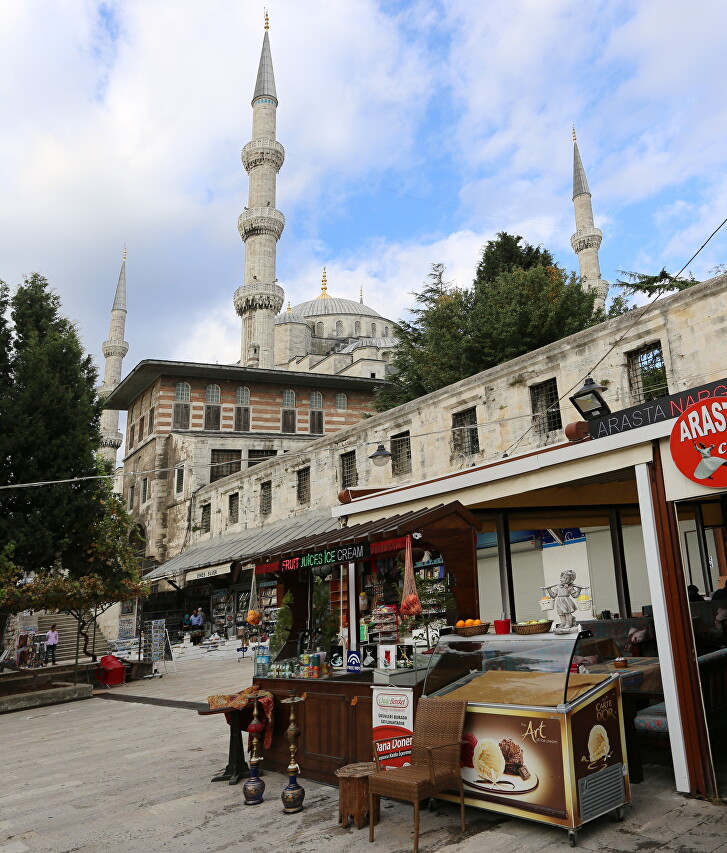
The shopping area is located directly on the foundations of the Great Palace of the Byzantine Emperors, which occupied a vast territory from the Hippodrome to the Marmara Sea. In 1204, the palace was looted and burned by the Crusaders, and by the time the Ottomans captured Constantinople, it had already turned into ruins. In 1609-1617, by order of Sultan Ahmed I, the ensemble of the Blue Mosque was built. The Arasta market was built right on the Byzantine ruins as an important part of this religious and charitable complex (kullye), the proceeds from the rental of shops went to the maintenance of the Blue Mosque and its charitable institutions. The word "arasta" in Ottoman architecture means the shopping malls built at the mosque.
Since the stables of the Sultan's elite cavalry (sipahi) were located nearby, the shops mainly sold military equipment. Therefore, the bazaar was officially called Sipahiler Çarşısı for a long time. This name can still be found in guidebooks these days. In 1912, a devastating fire broke out in the Sultanahmet district, which almost completely destroyed the wooden buildings of the market. For more than half a century, this place was abandoned and gradually built up by the shacks of the poor.
In the 1930s, during the clearing of the territory under the market, archaeologists discovered beautifully preserved Byzantine floor mosaics of the VI century, which once decorated the main courtyard of the Grand Imperial Palace. Later, a pavilion was built directly above the excavations, in which a Mosaic Museum was opened, an inconspicuous entrance to it is located right at the western entrance to the market.

In the 80s, the slums were demolished and the historical appearance of the bazaar was restored according to old drawings. At the same time, the preserved fragments of the Byzantine walls were carefully used. Therefore, in addition to shopping, here you can touch the living history.

When entering the shops, pay attention to the walls. The shopkeepers do not specifically cover these areas with plaster and treat people who are interested in history very kindly. Ask "Can I see the Byzantine wall?", they will show you fragments, and maybe even take you to a utility room and proudly show you fragments of walls that serve as a support for modern shelves with goods.

The market is open daily from 8:30 to 23:00.