The Rock of Sant'Angelo
The main attraction of the village of Sant'Angelo is visible as soon as you get off the bus. There is a viewing platform here that offers the best view of the rock.
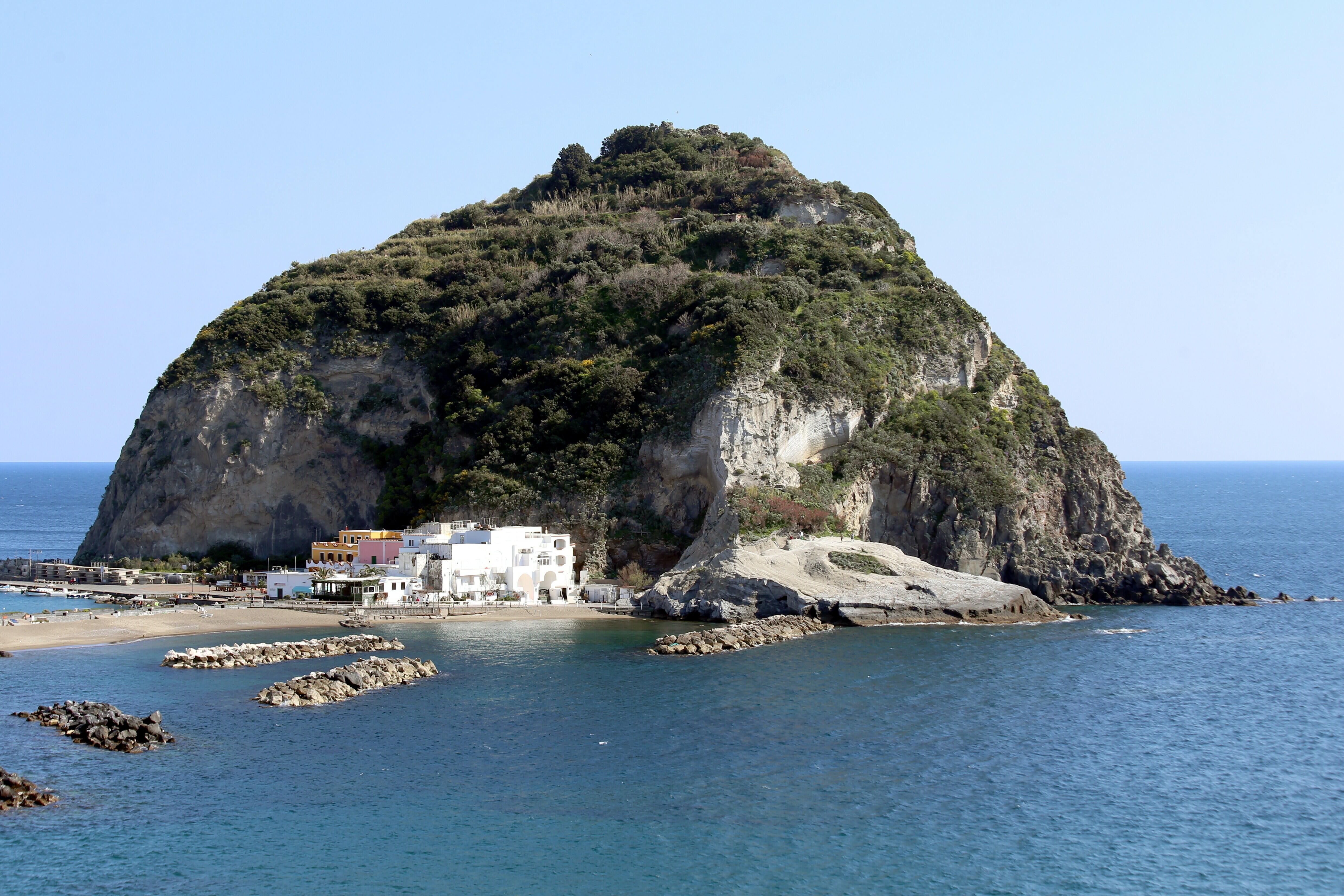
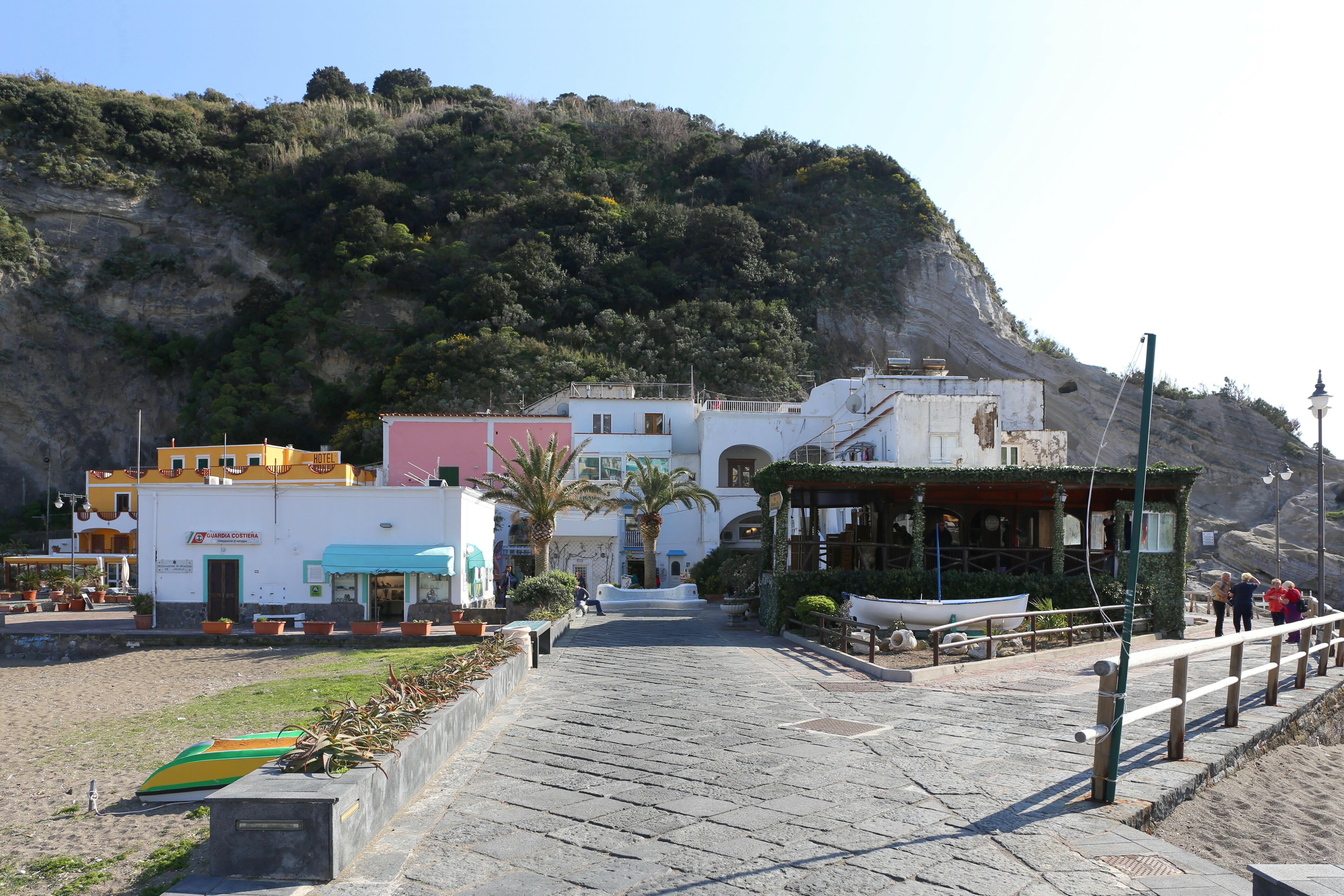
The rock is connected to the island by a bridge with beaches and a promenade. At the foot of the rock, there is Hotel Conte - S. Angelo Bay 3*, a couple of restaurants, and several boutiques with exclusive clothing and souvenir shops.
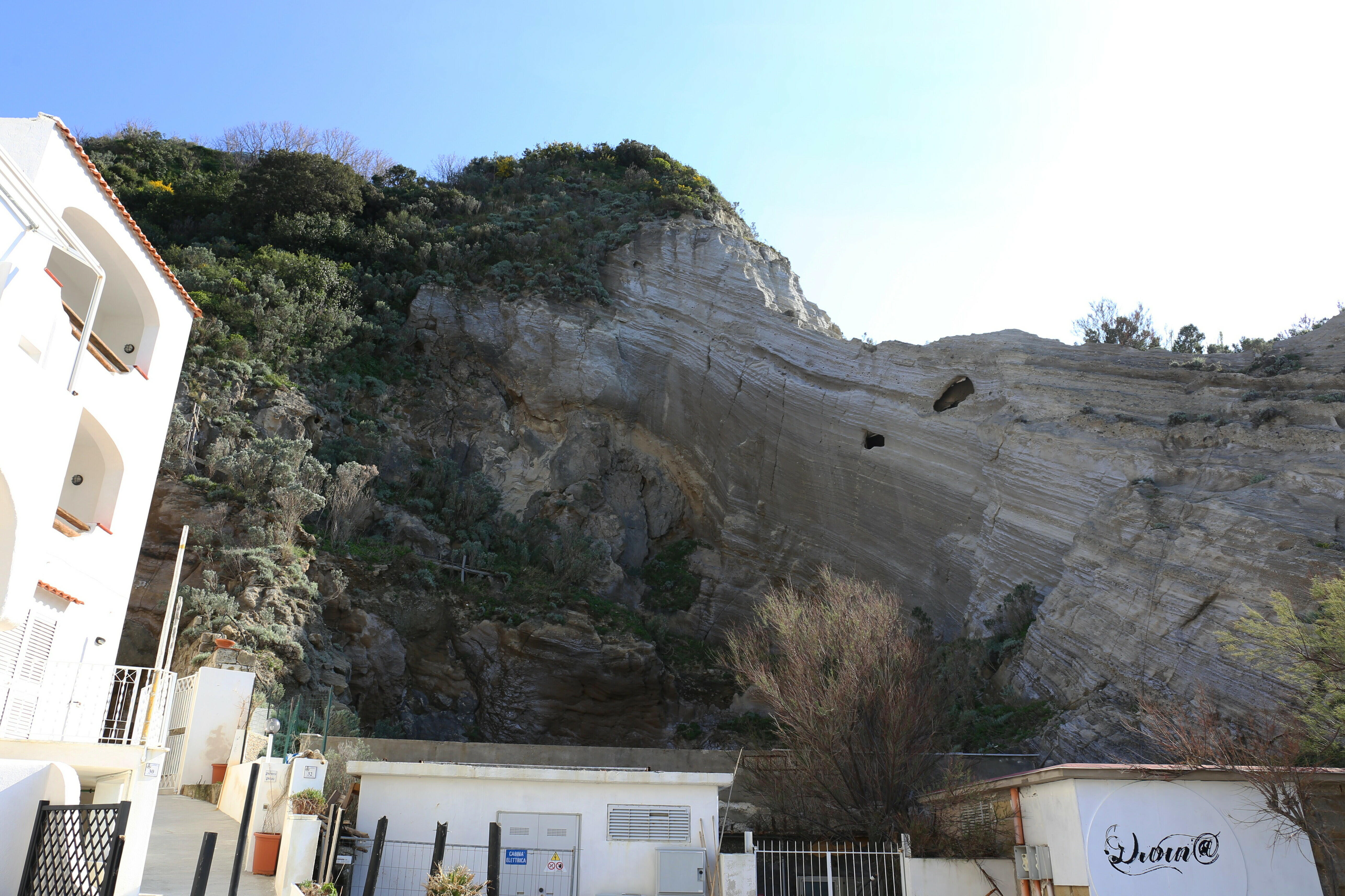
The island of Ischia appeared about 55 thousand years ago as a result of volcanic activity. The territory of the island is a layer of lava that was erupted from a dozen craters. The western part of the island, where there was the most activity, stands on a powerful geological fault, the emissions from which formed this rock. The rock where the Aragonese Castle stands has the same origin. You can admire the frozen lava flows, which look like a layered cake.
Over time, the waves built up a sandbar between the island and the rock, and two small coves formed on either side of it. The rock protected them from the wind and waves, which is why a fishing village was built here.
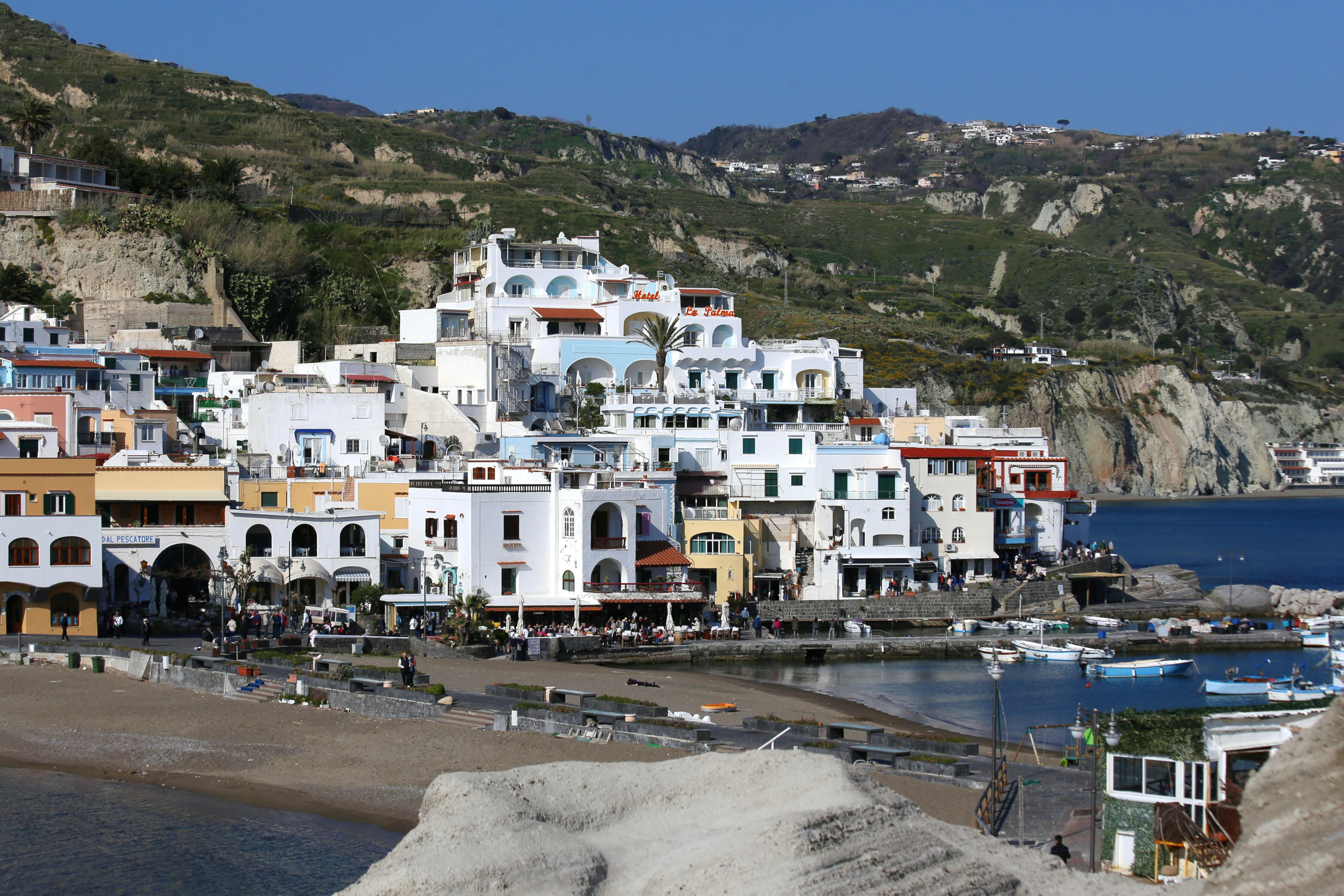
The fishermen were terrorized by African pirates, and a stone tower was built on top of the cliff, where the villagers would hide during the raids. Hermit monks settled near the tower, and they would watch over the sea and warn the villagers of any danger. In 1808, the island was besieged by a British squadron, and all the buildings on top of the cliff were destroyed by artillery fire.
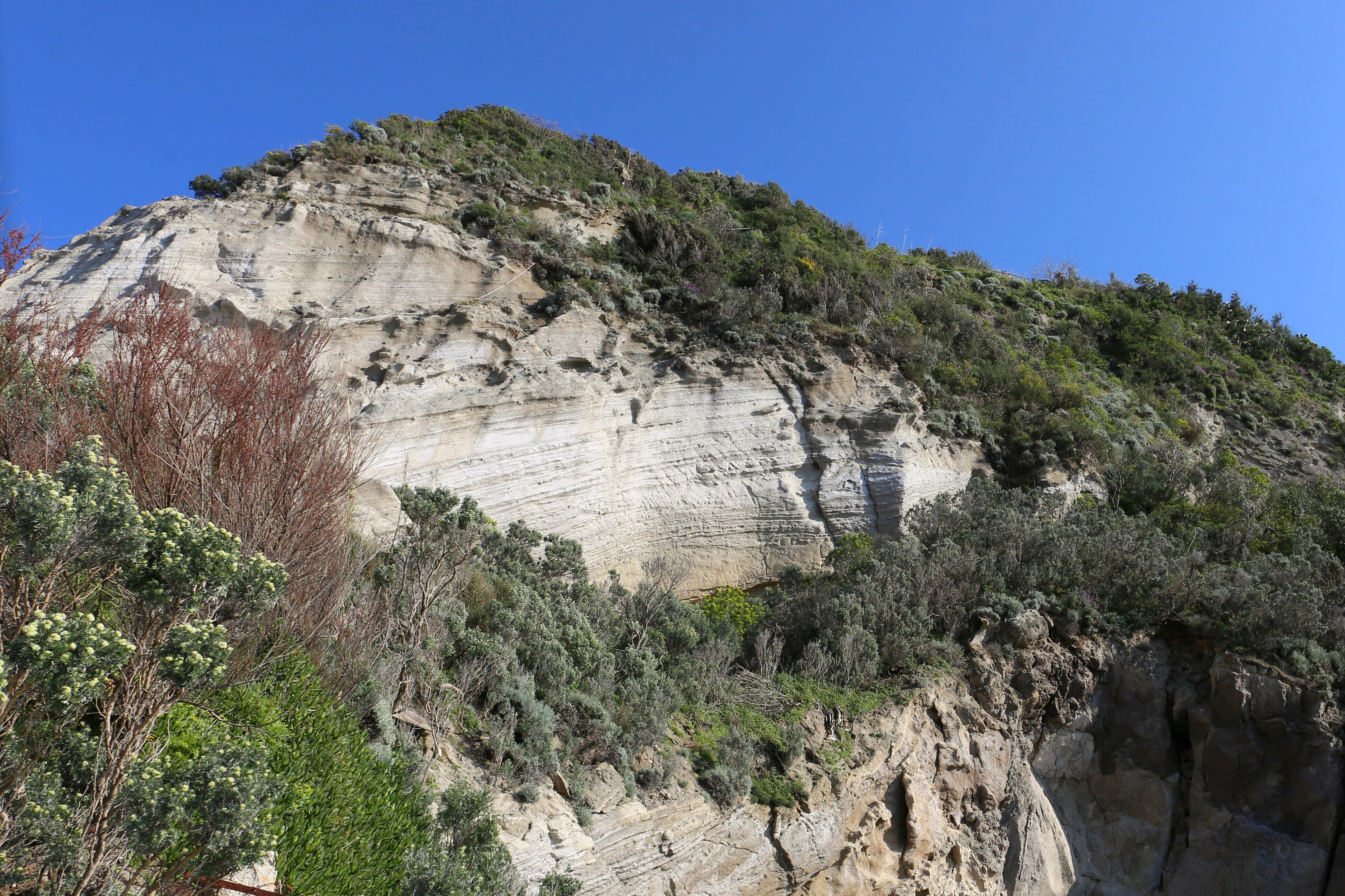
In the western part of the cliff, there is a gentle lava tongue, to which a path has been cut through the soft tuff.
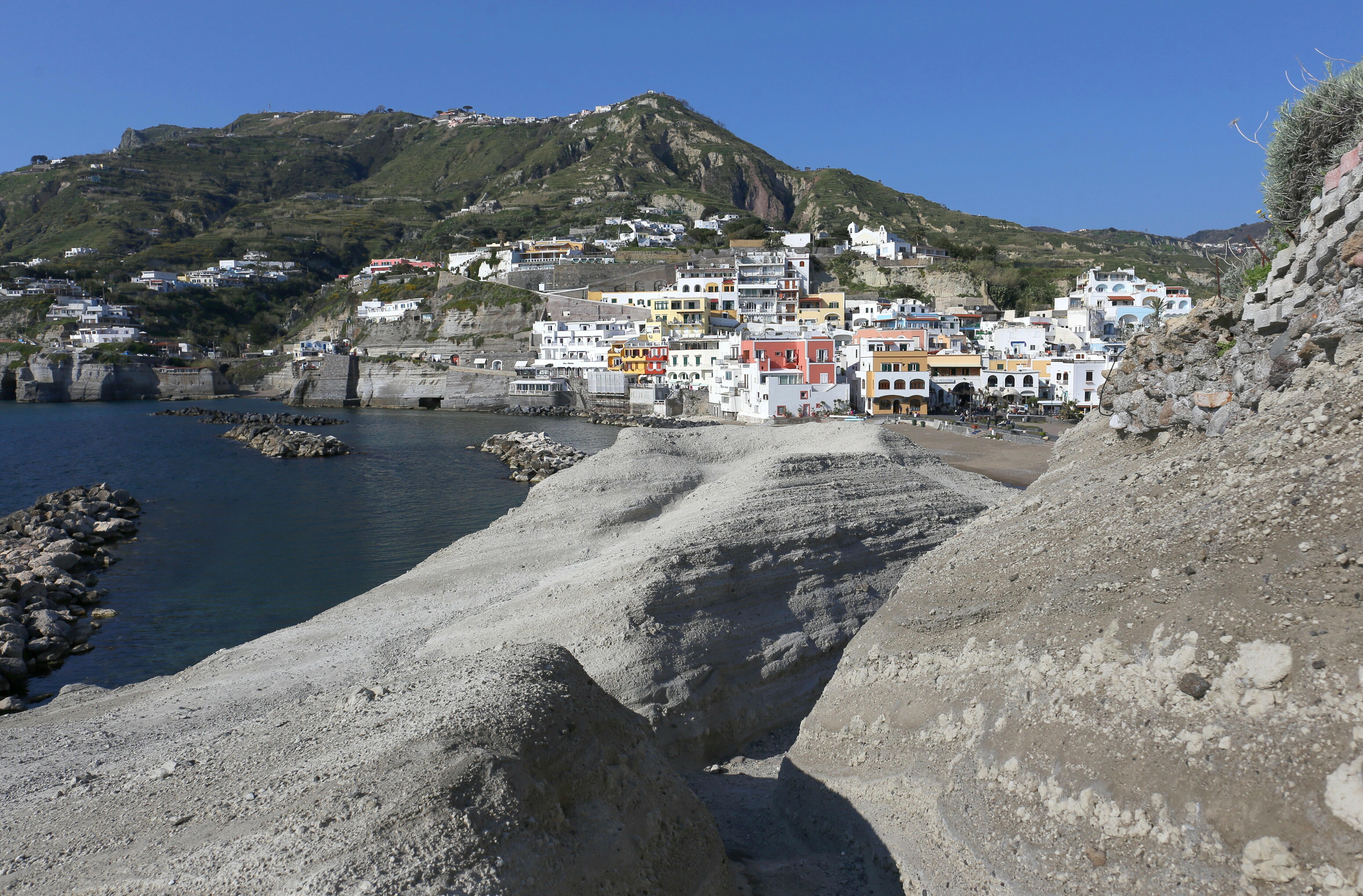
On some maps, there is a trail leading to the top, and my plan was to climb to the top of the cliff, where the ruins of a hermitage and a watchtower still stood, but my ascent ended there. The steep slope was lined with steps carved into the rock, and the entrance was blocked by a red ribbon and a sign warning of a rockslide. The trail itself was lost in dense vegetation within a few meters, indicating that it had not been used for a long time.
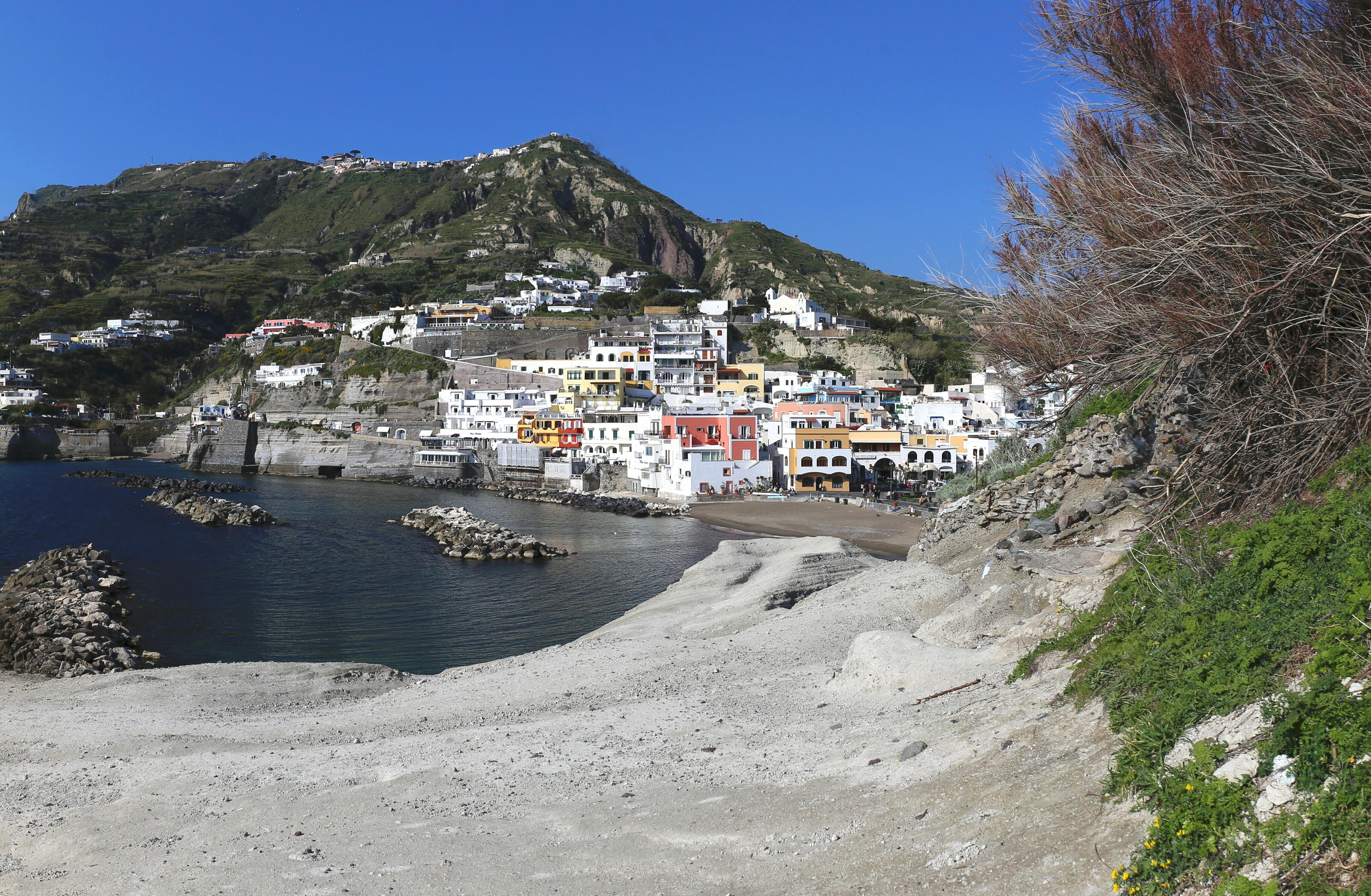
All that remains is to admire the panorama of the coast, as the lava tongue has formed a wonderful observation deck.
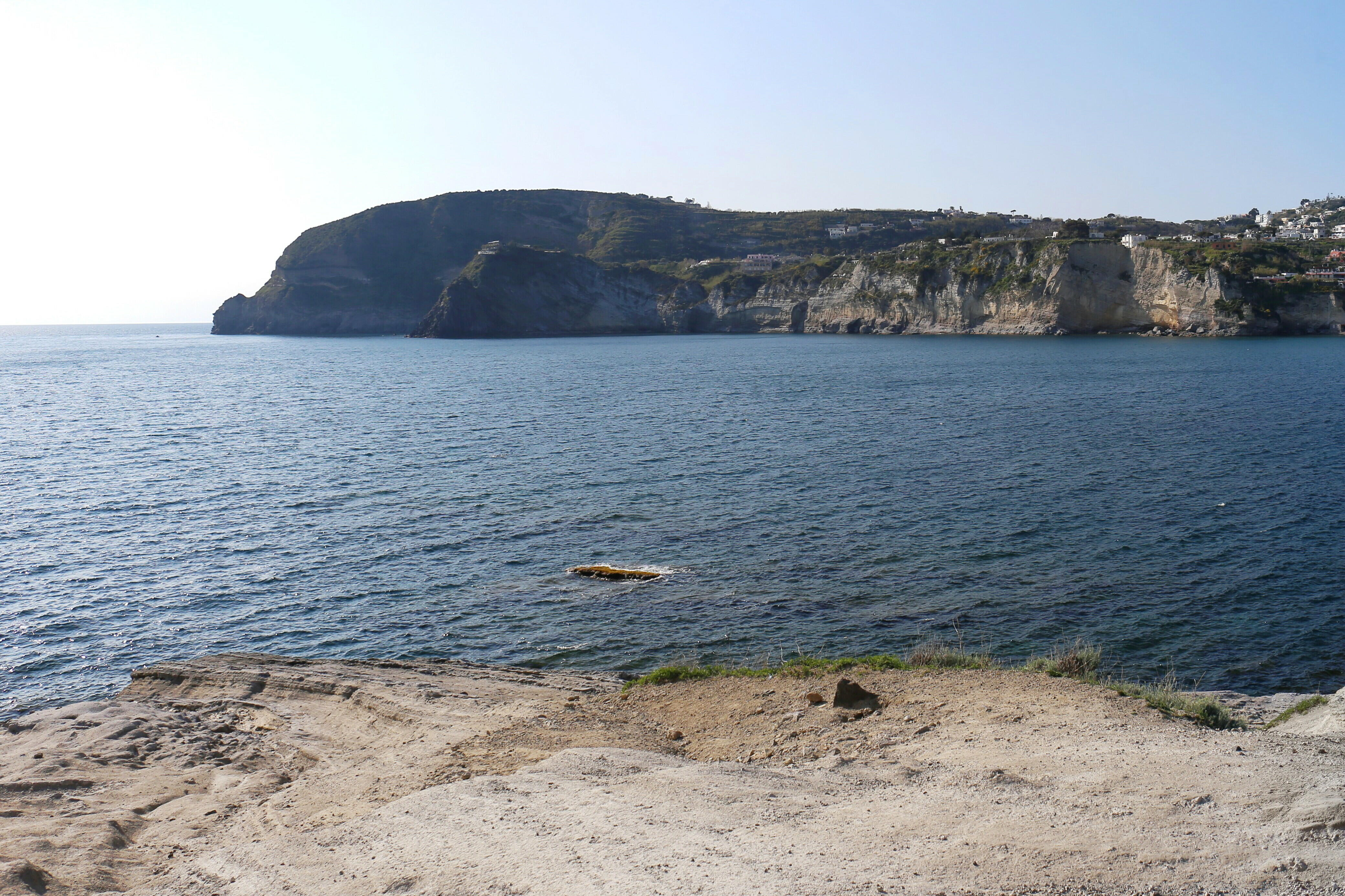
On the left, we see the southwestern tip of Ischia, Capo Negro (Black Cape), and Punto Chiarito in the background.

There is a high, steep bank between them and Sant'Angelo.
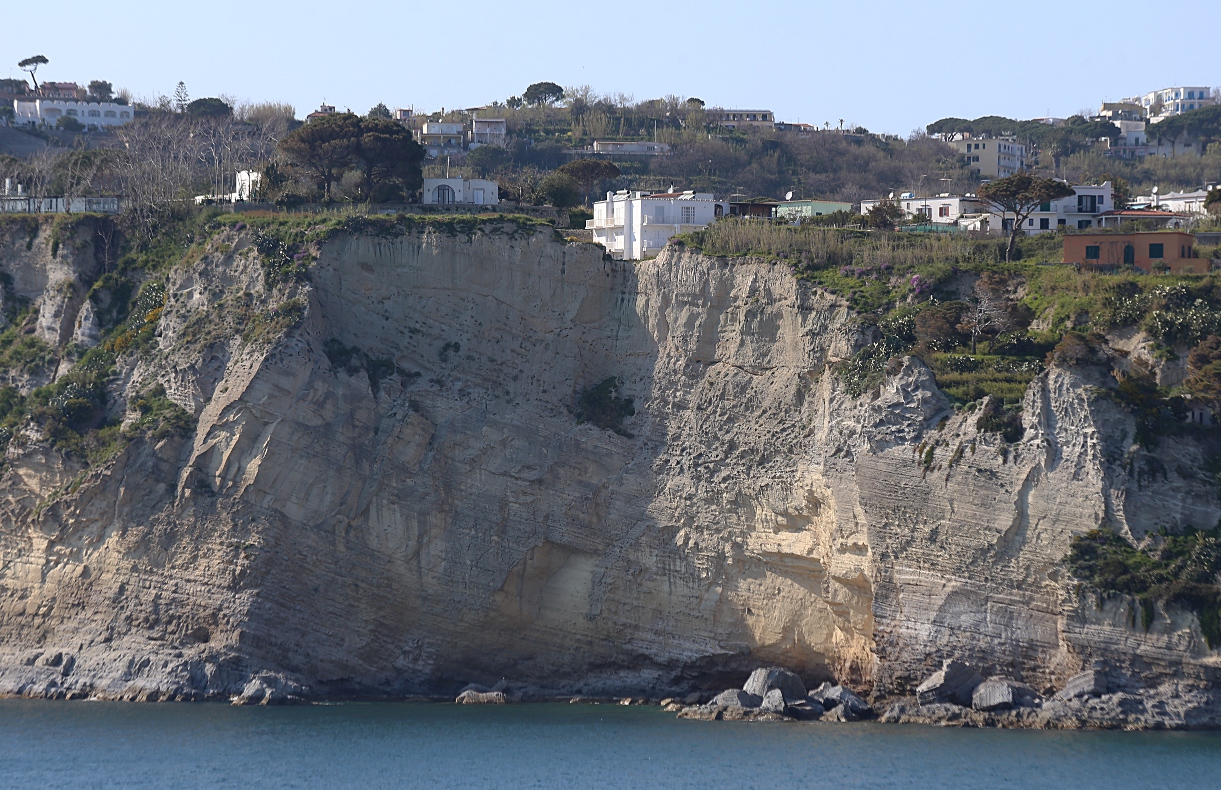
Small hotels have been built on the thermal springs, as evidenced by the light clouds of steam that rise from time to time.
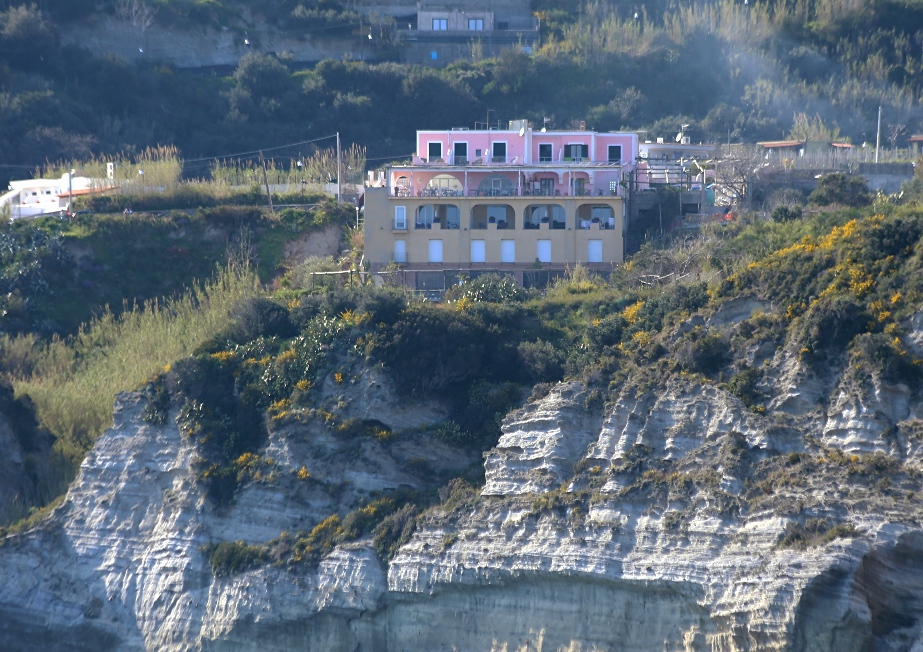
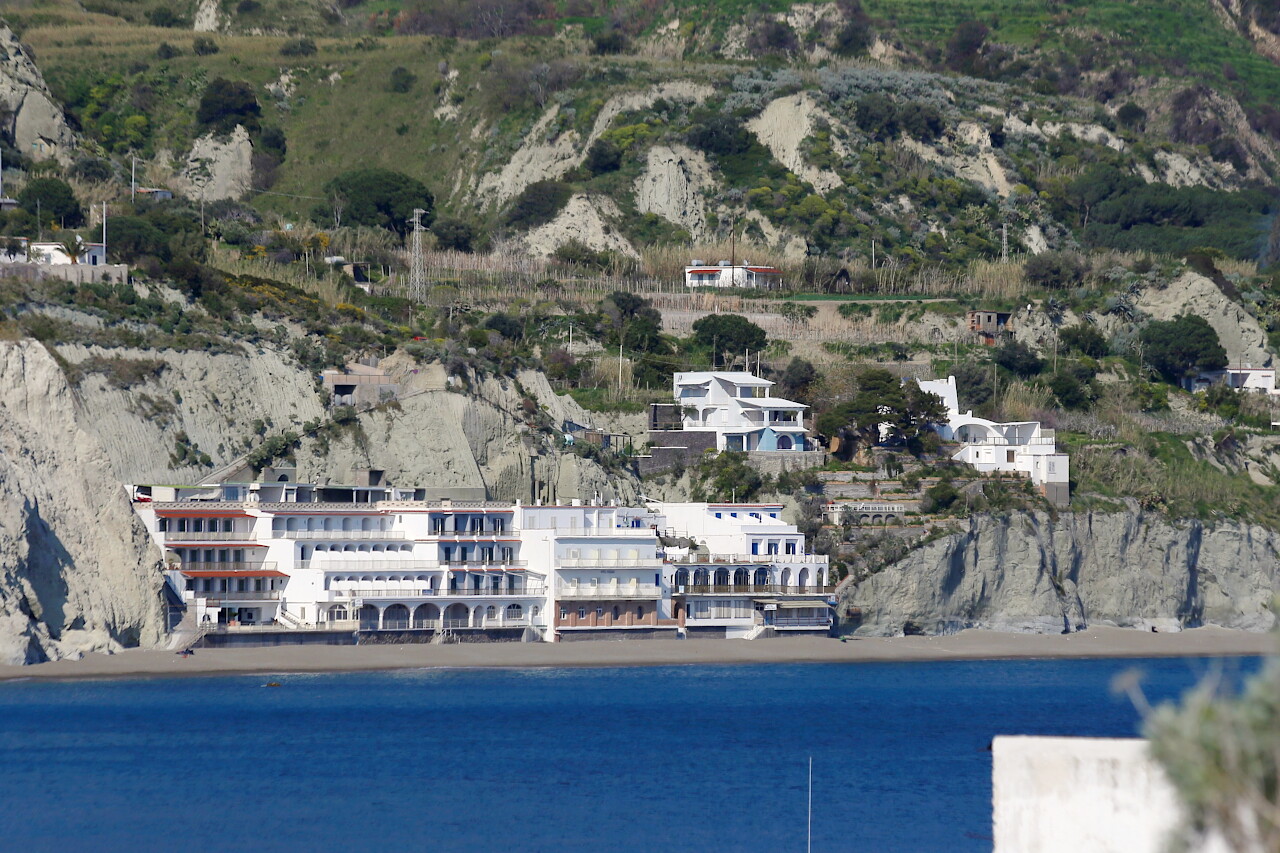
Closer to Sant'Angelo, the arches of the Romance SPA Hotel (Park Hotel & Terme Romantica 4*) can be seen above the road.
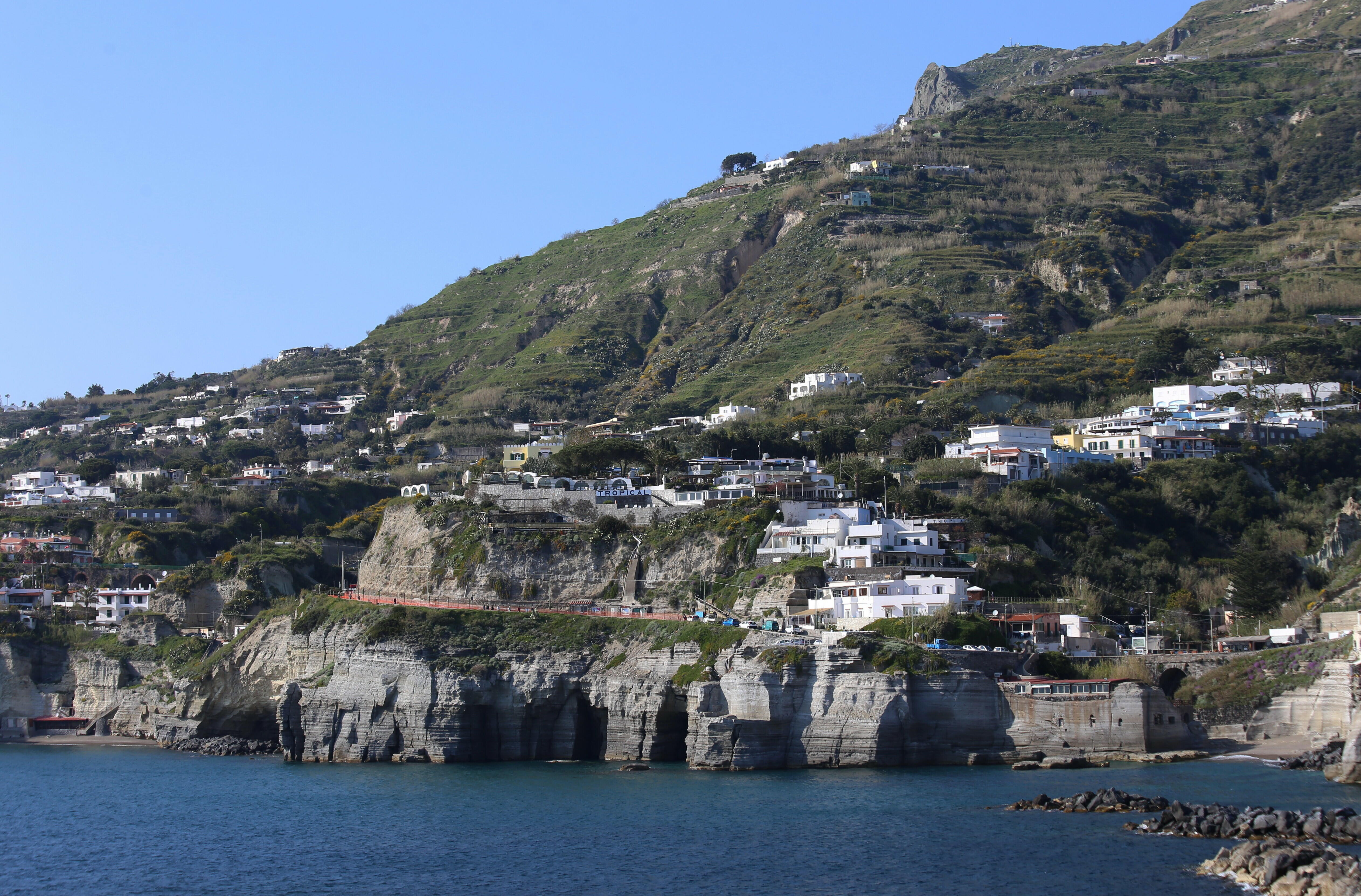
Below the hotel, there is a small beach and a restaurant carved into the rocks.
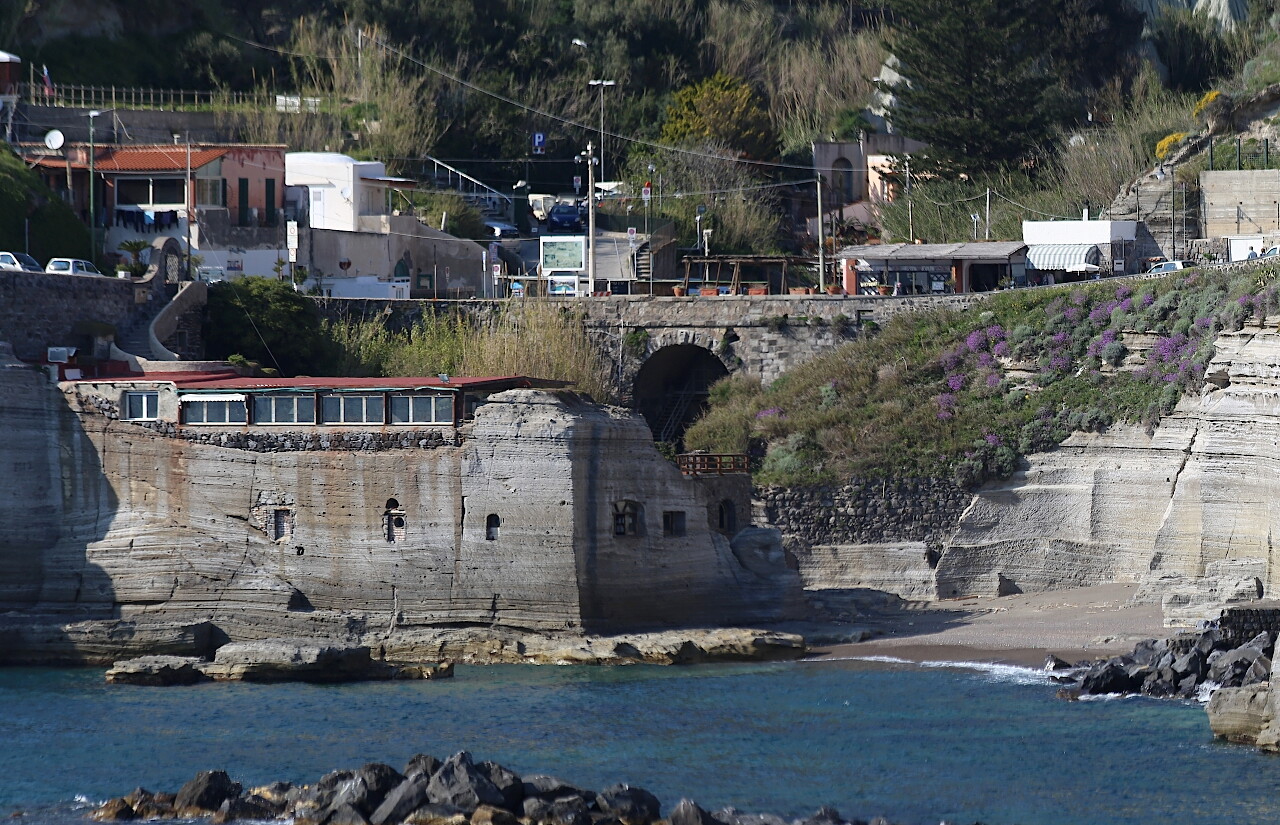
On the other side, the Deus Neptunus Ischia restaurant overlooks the beach.
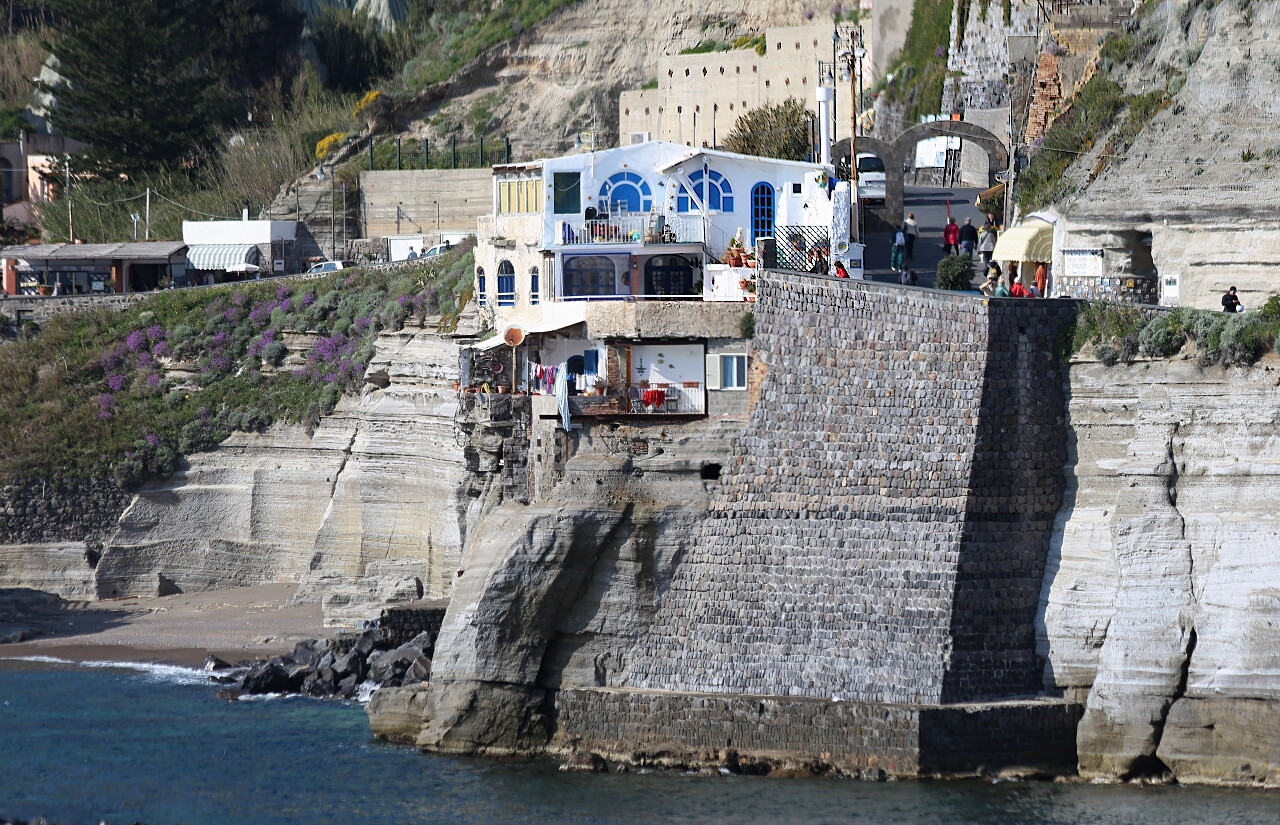
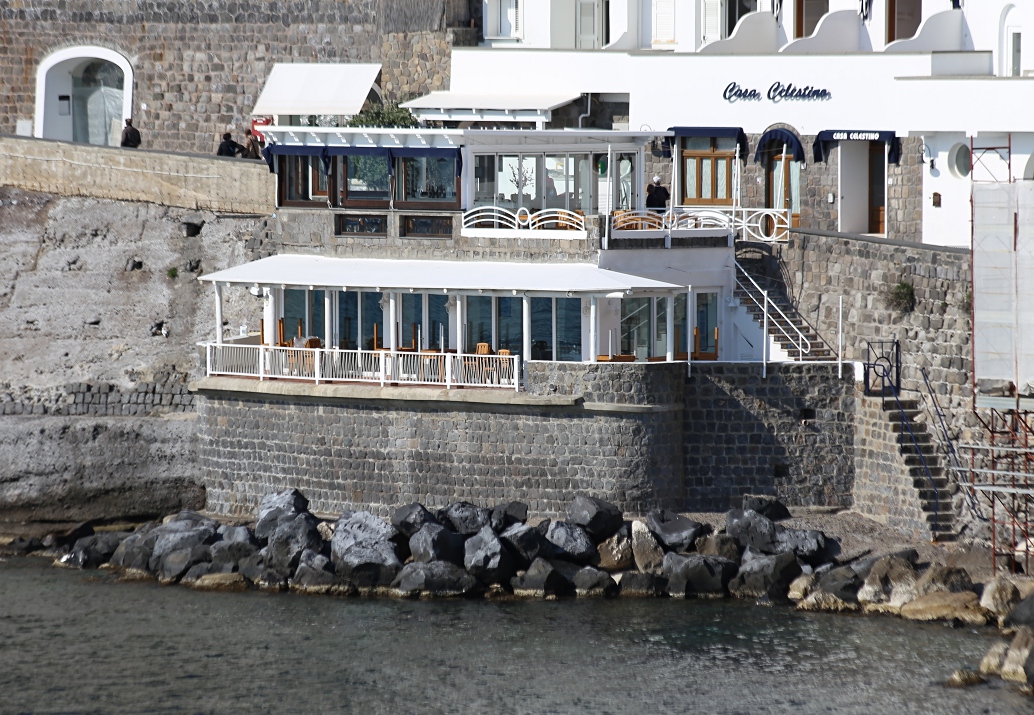
The Casa Celestina hotel and restaurant are located closer to the water.
Sant'Angelo is no longer a fishing village, but a well-known resort that is expensive and prestigious.
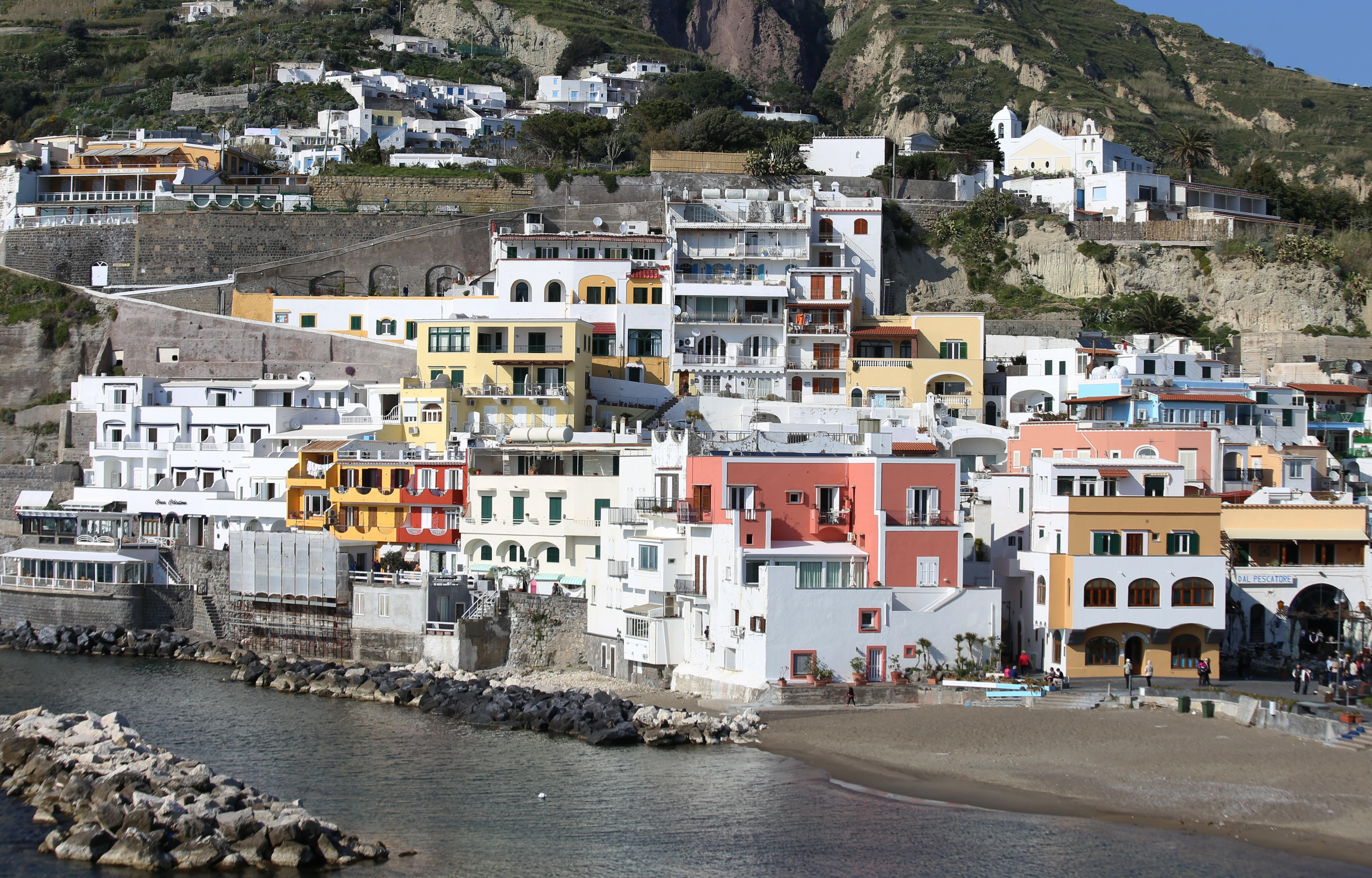
The most famous guest of the town is Angela Merkel. The German Chancellor and her husband have been spending their summer holidays here for many years.
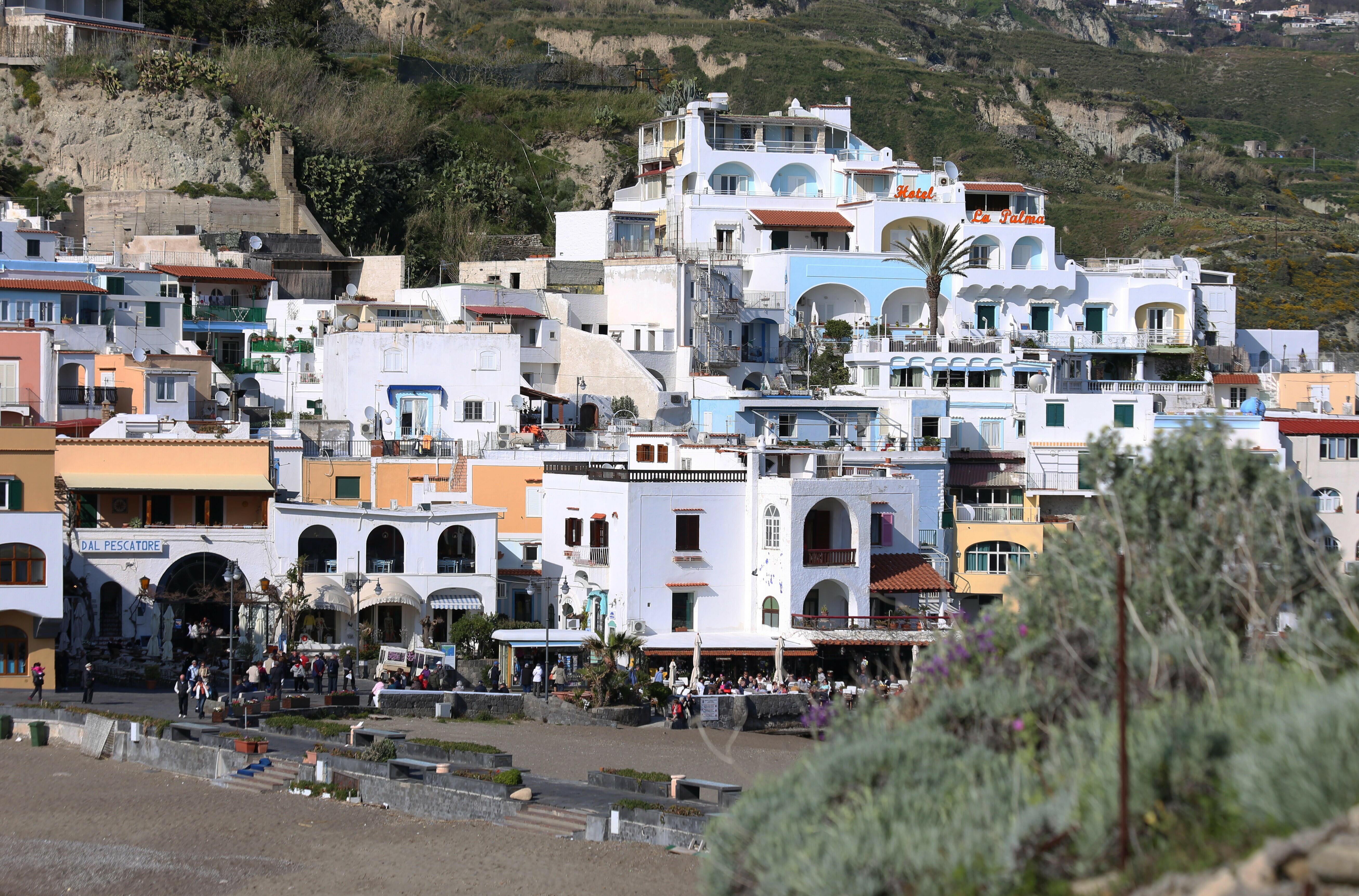
Stone embankments protect a wide sandy beach from the waves.
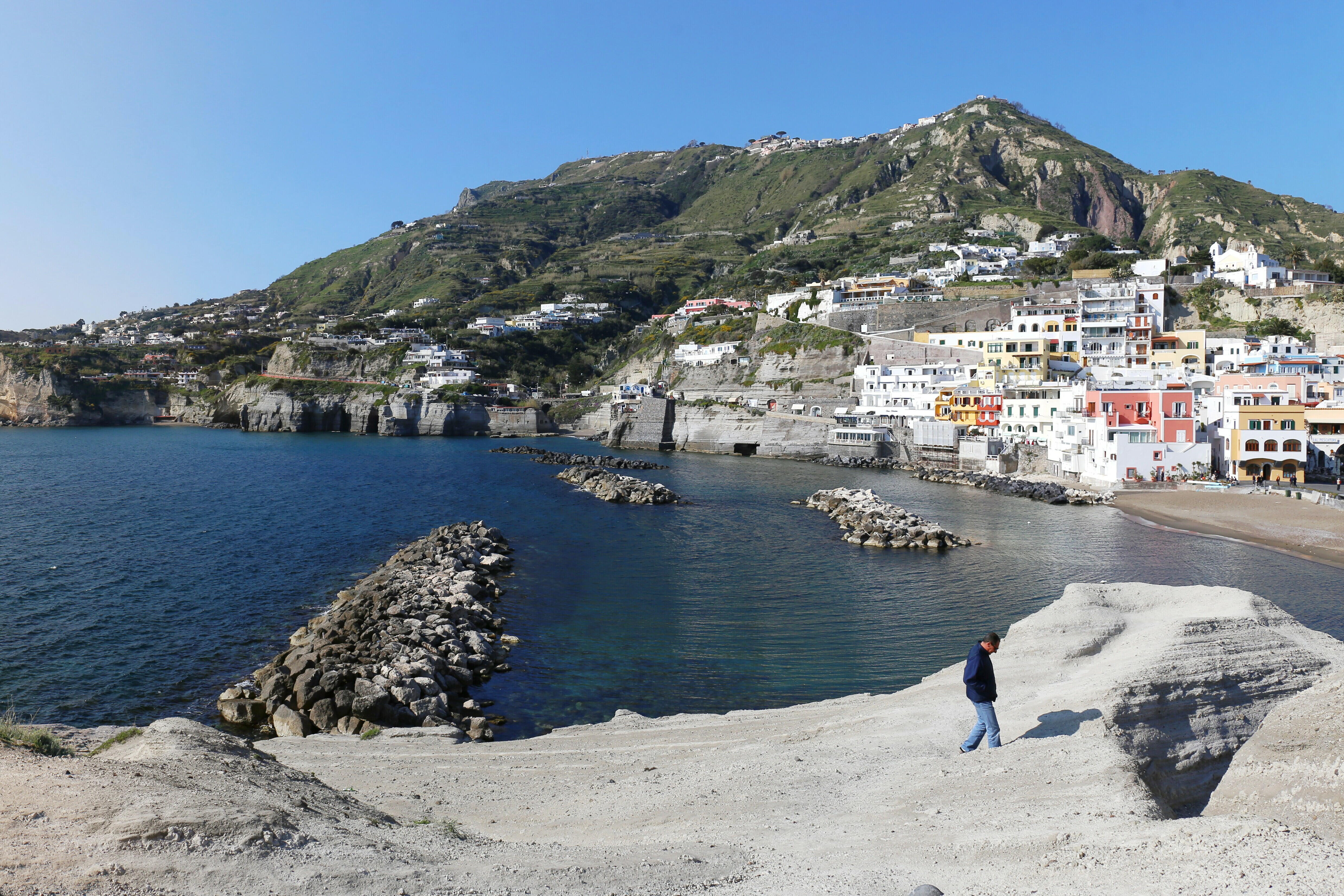
At the highest point of the town, you can see the Church of St. Michael the Archangel (Chiesa di San Michele Arcangelo). We will visit it later.
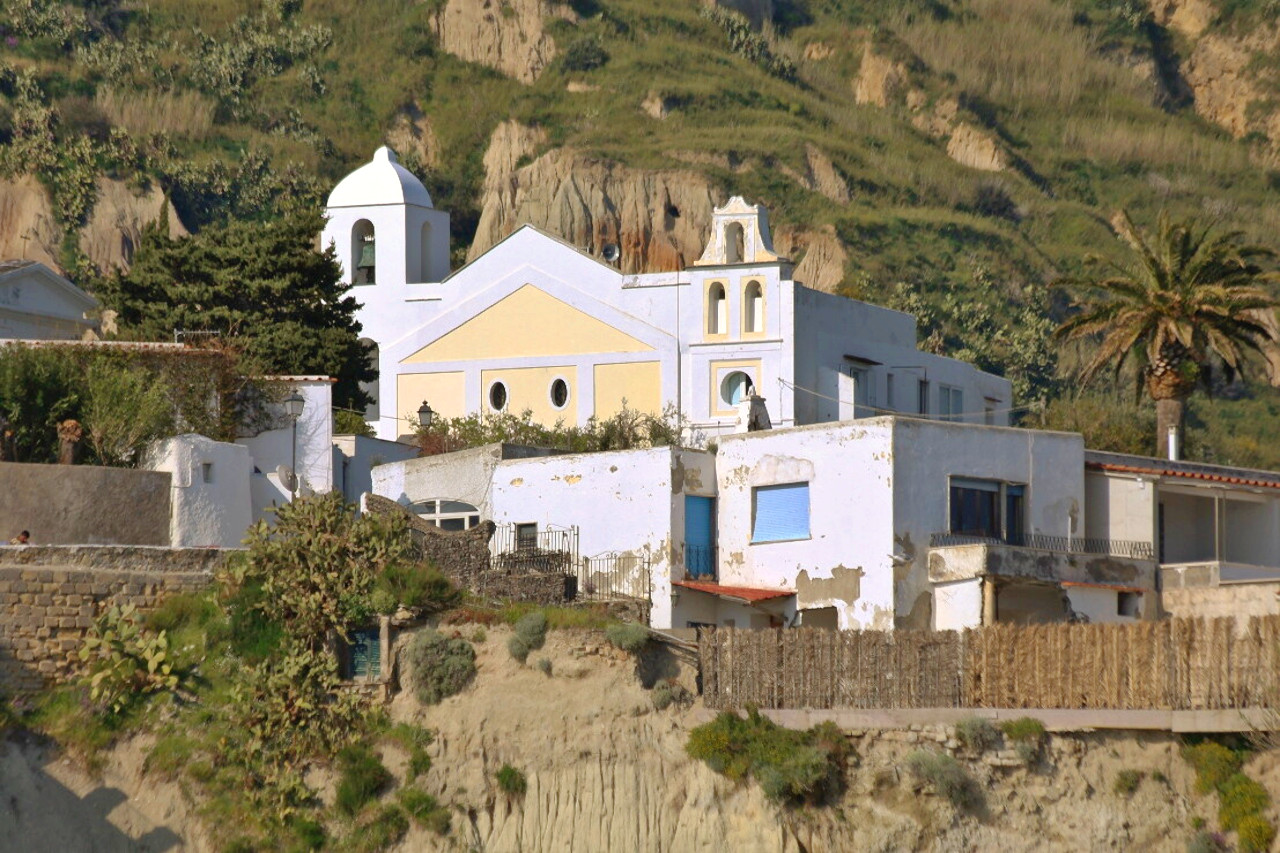
The fault zone, which stretches along the southern coast of the island, from Sant'Angelo to the Aragonese Castle, is rich in thermal springs and fumaroles. The healing properties of these springs were known to the ancient Greeks, and now a series of spa hotels stretch along the fault.