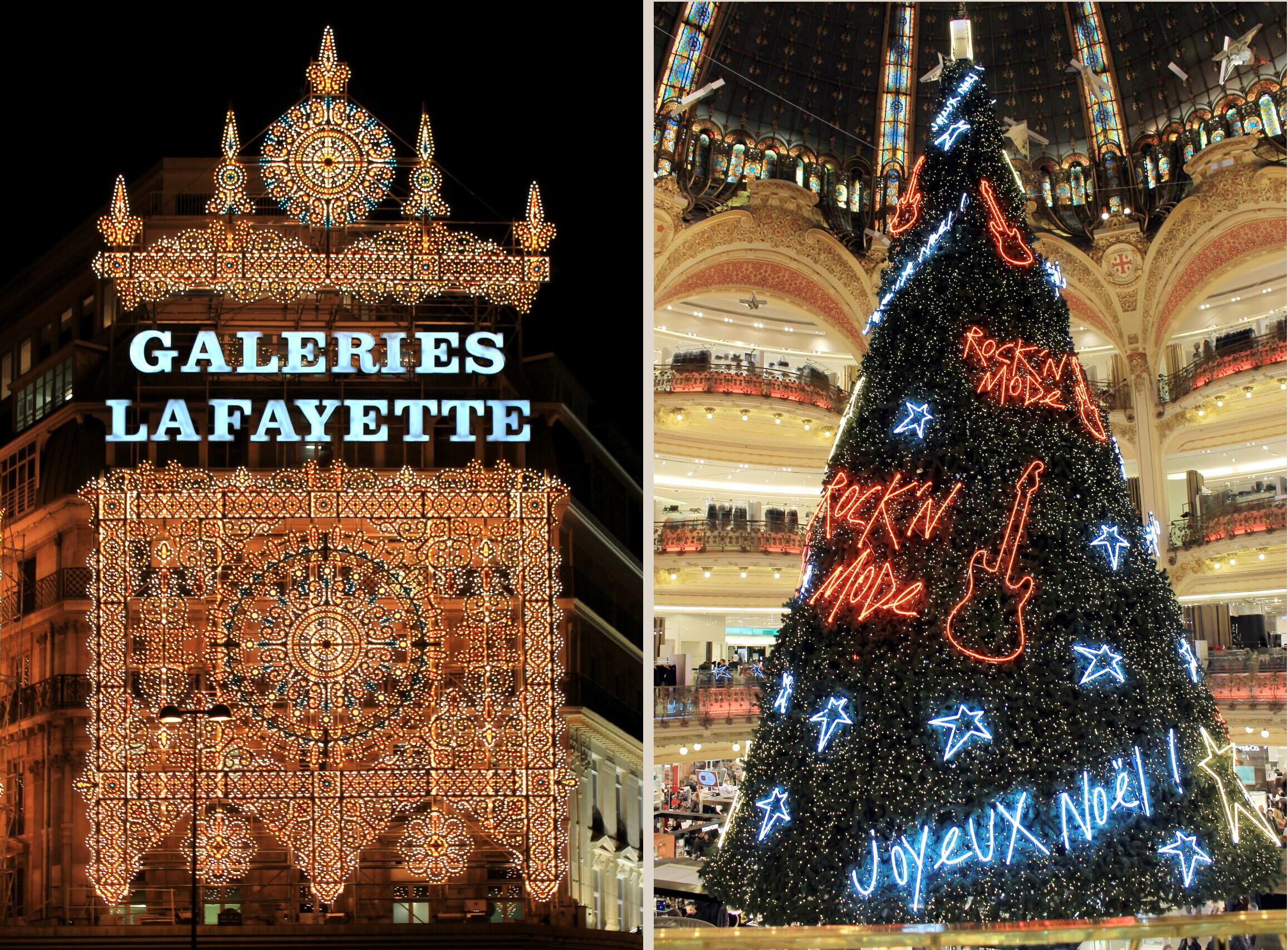
Galeries Lafayette in Chrismas Decoration, Paris
The most famous department store in Paris is located very close to Opéra Square; you just need to walk two blocks along the street that runs to the right of the Grand Opera building. At the origins of this giant trading house stands a small haberdashery shop, which was opened in 1893 by two cousins from Alsace, Théophile Bader and Alphonse Caneto. The 70‑square‑meter shop was located at the corner of La Fayette Street and the Champs‑Élysées, and the owners, without overcomplicating things, gave it the name Aux Galeries Lafayette (In the Lafayette Galleries). Initially, the main products were lace, ribbons, and fabrics. The brothers came up with a truly brilliant idea: they displayed the goods on large counters, allowing customers to touch them, and introduced fixed price tags instead of the usual bargaining that was common at the time.
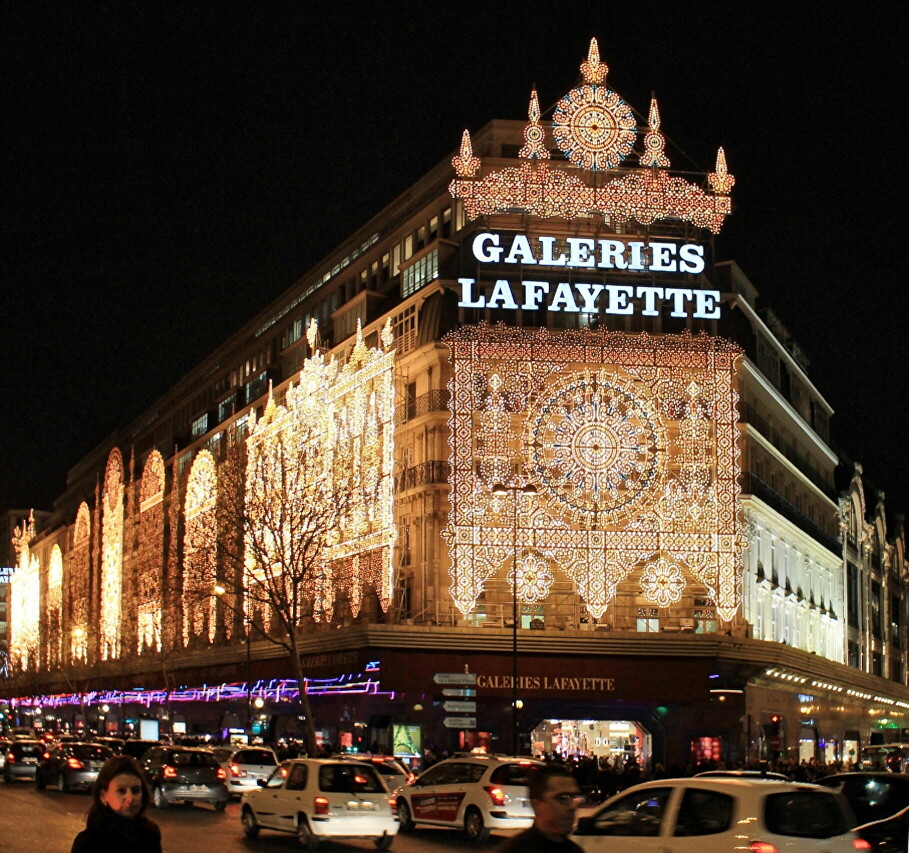
The public appreciated the innovation, things went so well that by 1896
a year later, the partners bought out the entire building. In 1903, the brothers conceived the idea of building a luxurious shopping building, where the abundance of goods among visitors would, in modern parlance, "blow the roof off." The famous architect Georges Shedan and his student Ferdinand Chanois were invited to design, by 1905 they had bought up neighboring houses and a grandiose construction began in their place. In October 1912, the grand opening of the department store, which became a masterpiece of Art Nouveau style, took place.
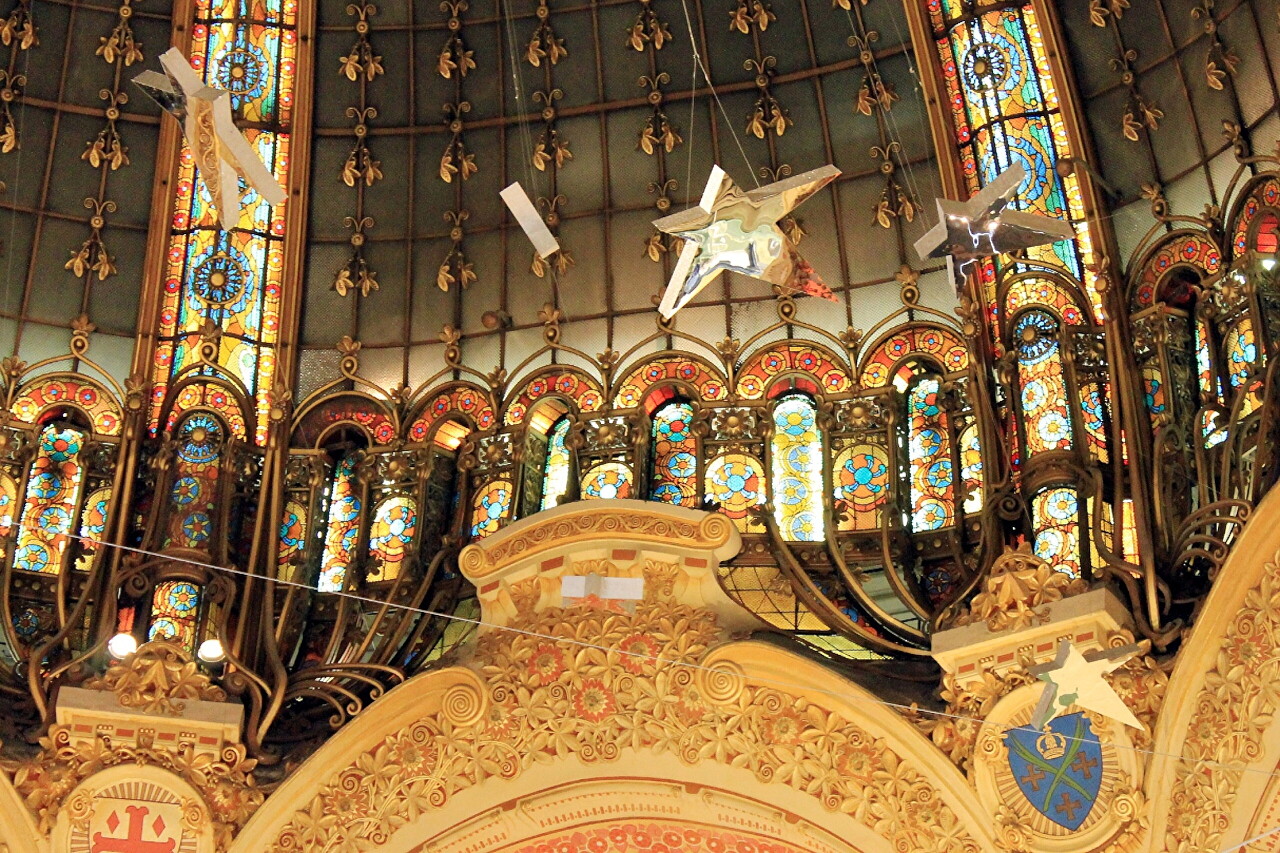
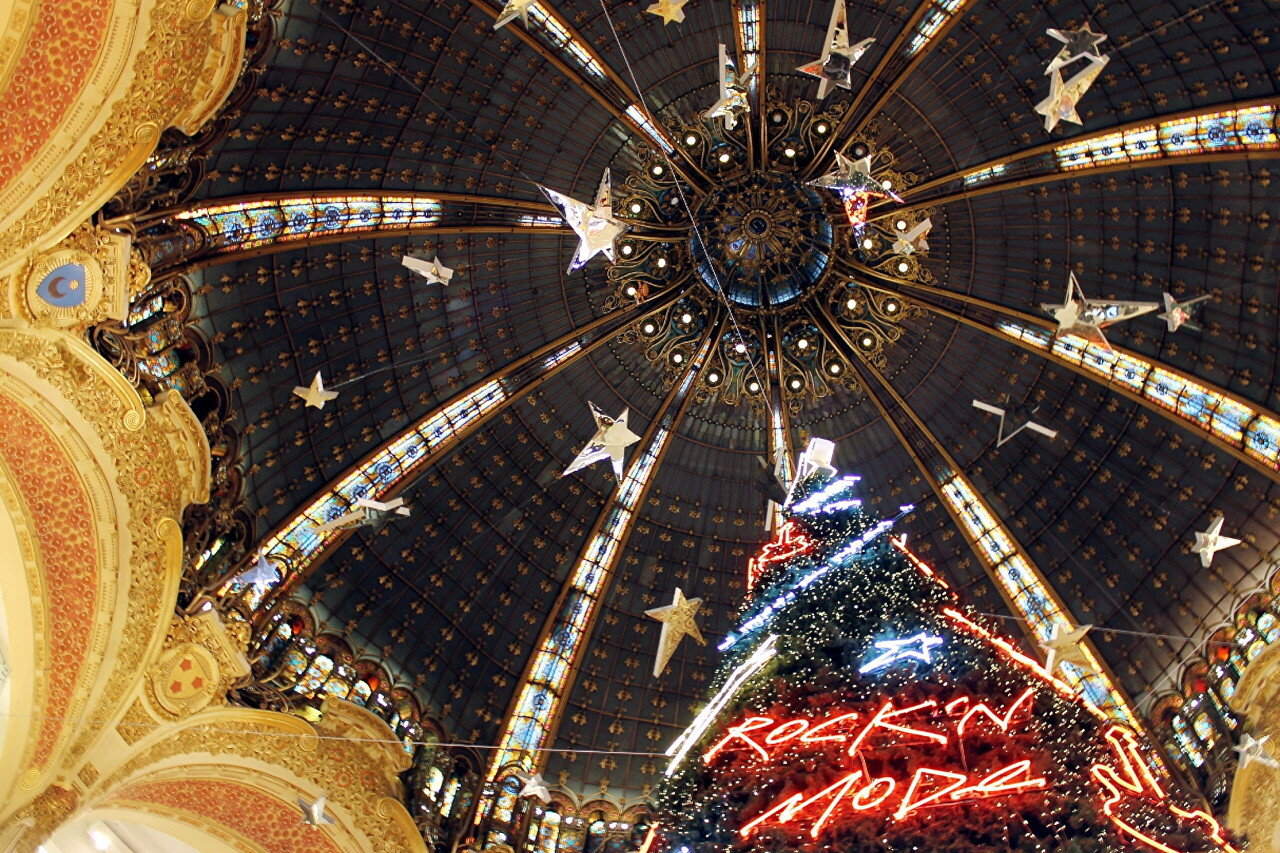
The main attraction was the 43‑meter dome, designed by Ferdinand Chany, featuring unique Neo‑Byzantine stained‑glass windows by the great master of glassmaking, Jacques Gruber. Bader dreamed of making haute couture accessible not only to the aristocracy but also to the middle class, so the trading house launched its own ready‑to‑wear production, promptly copying the most fashionable haute couture designs and selling them at affordable prices. To attract customers, the owners regularly held sales with eye‑catching advertisements in newspapers. The department store gained worldwide fame in 1919 when pilot Jules Védrine, on a bet, landed his small plane right on the roof.
In 1940, during the German occupation of Paris, the founding family, which had Jewish roots, was removed from management, and the company itself came under the control of the Vichy regime. During this period, the department store lost all its individuality and exclusivity. After the liberation of Paris in 1944, the rightful owners regained control over the business and soon once again became innovators in the retail business. In the 1950s, two additional floors were added, and for the first time in Parisian department stores, escalators were installed to make moving between floors easier. It was the Galeries Lafayette that introduced Paris and the world to such names as Yves Saint Laurent, Sonia Rykiel, and Karl Lagerfeld, hosting fashion shows featuring collections by unknown designers.
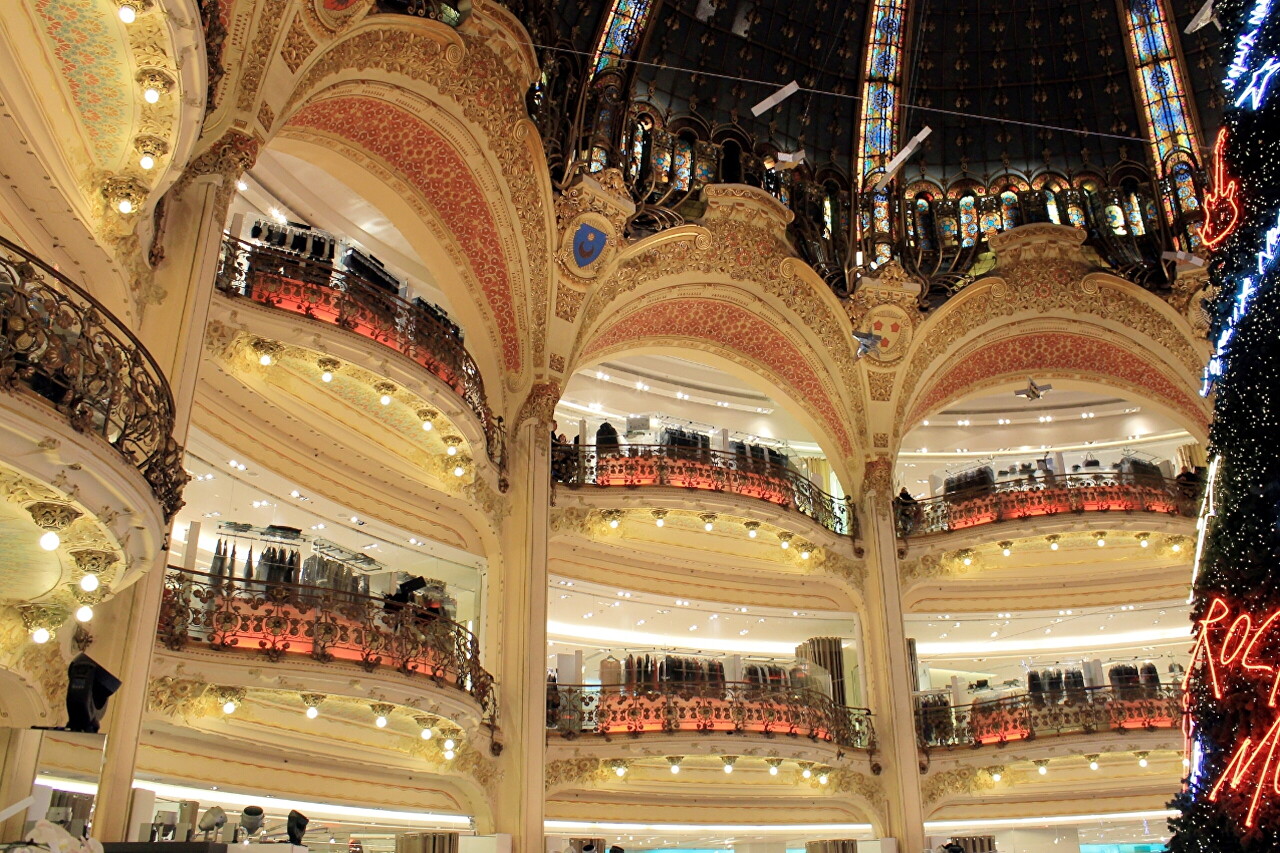
The idea of placing a huge Christmas tree under the dome was born in 1976, sparking a frenzy that became a tradition. Tourists from all over the world come to see the Christmas tree and the Christmas illumination of Galerie Lafayette, leaving a lot of money in its exclusive boutiques.
Today, the brand has many branches, and the main department store welcomes more than 25 million visitors per year. The huge retail chain that grew out of a small shop remains a family business, run by the fifth generation of Theophile Bader's descendants.