Sculptures and Installations of the Figueras Dali Museum, Inner Court
This space was originally the auditorium of the Figueres Municipal Theatre, which was destroyed at the end of the Spanish Civil War. Some guides and travel portals claim that the theatre was destroyed by bombing by Francoist air forces, but this is not true. The building burned down on February 19, 1939, when the city was already under the control of the Nationalists. Soldiers from the Moroccan Corps were stationed in the theatre building, and they accidentally started the fire. As a result, all that remained of the theater were stone walls.
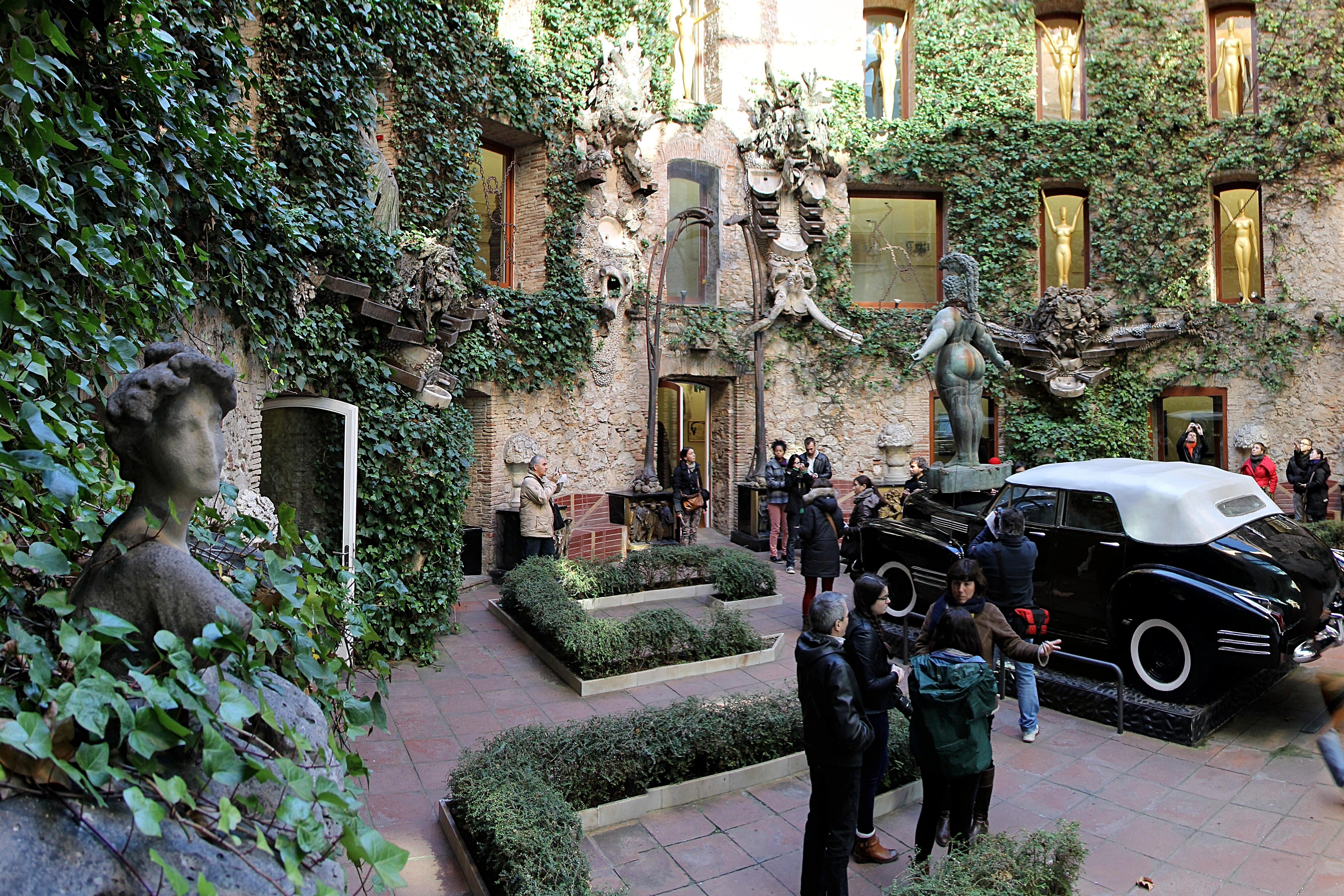
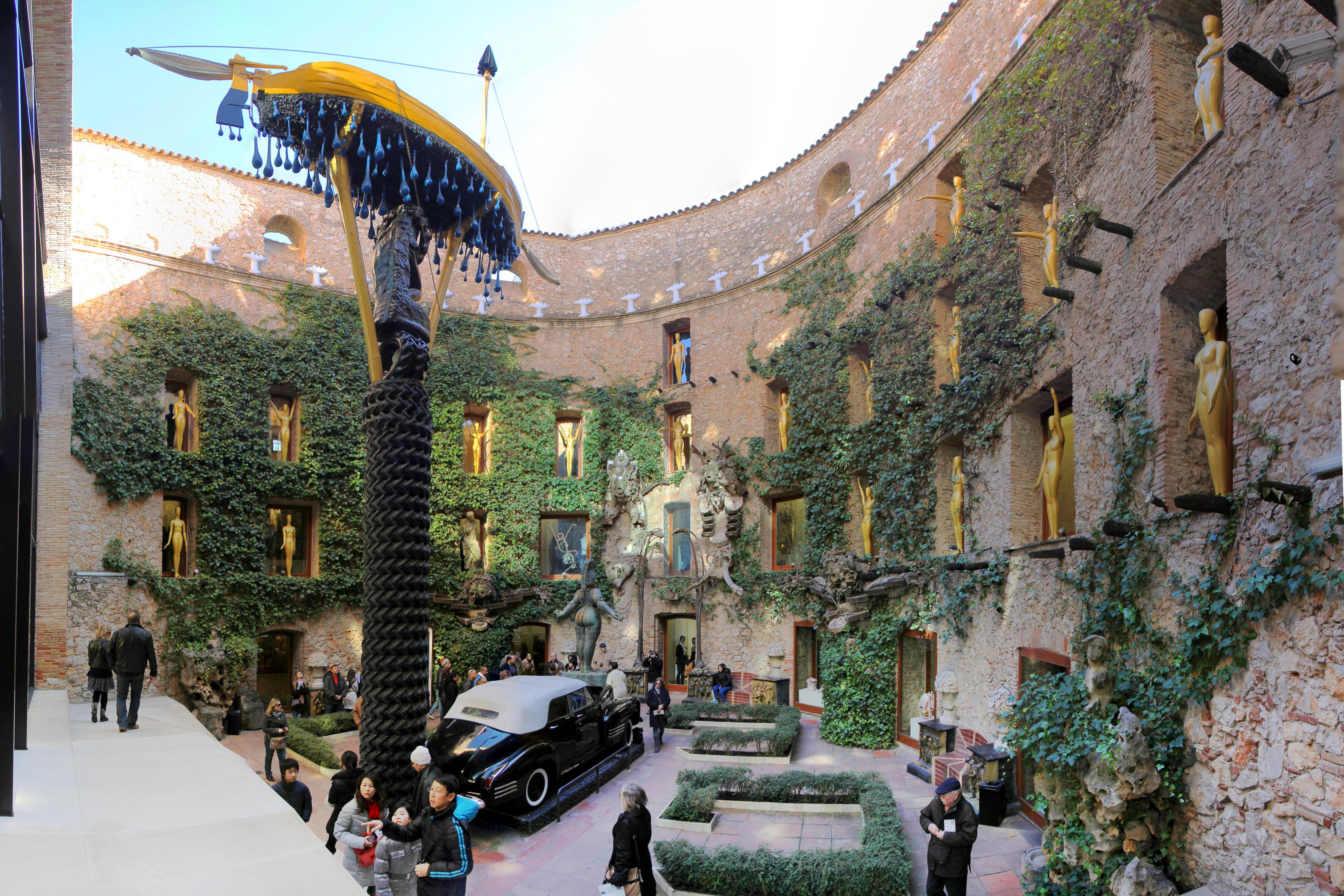
When Salvador Dali started the renovation, he deliberately left the stalls area open, turning the former auditorium into a mystical garden-an open-air courtyard. The artist intentionally preserved the traces of the disaster, according to his plan, the spirit of destruction perfectly emphasized the surreal atmosphere. This is most noticeable in the courtyard, where the black, charred ends of wooden beams protrude from the walls, which once supported the spectator tiers and balconies.
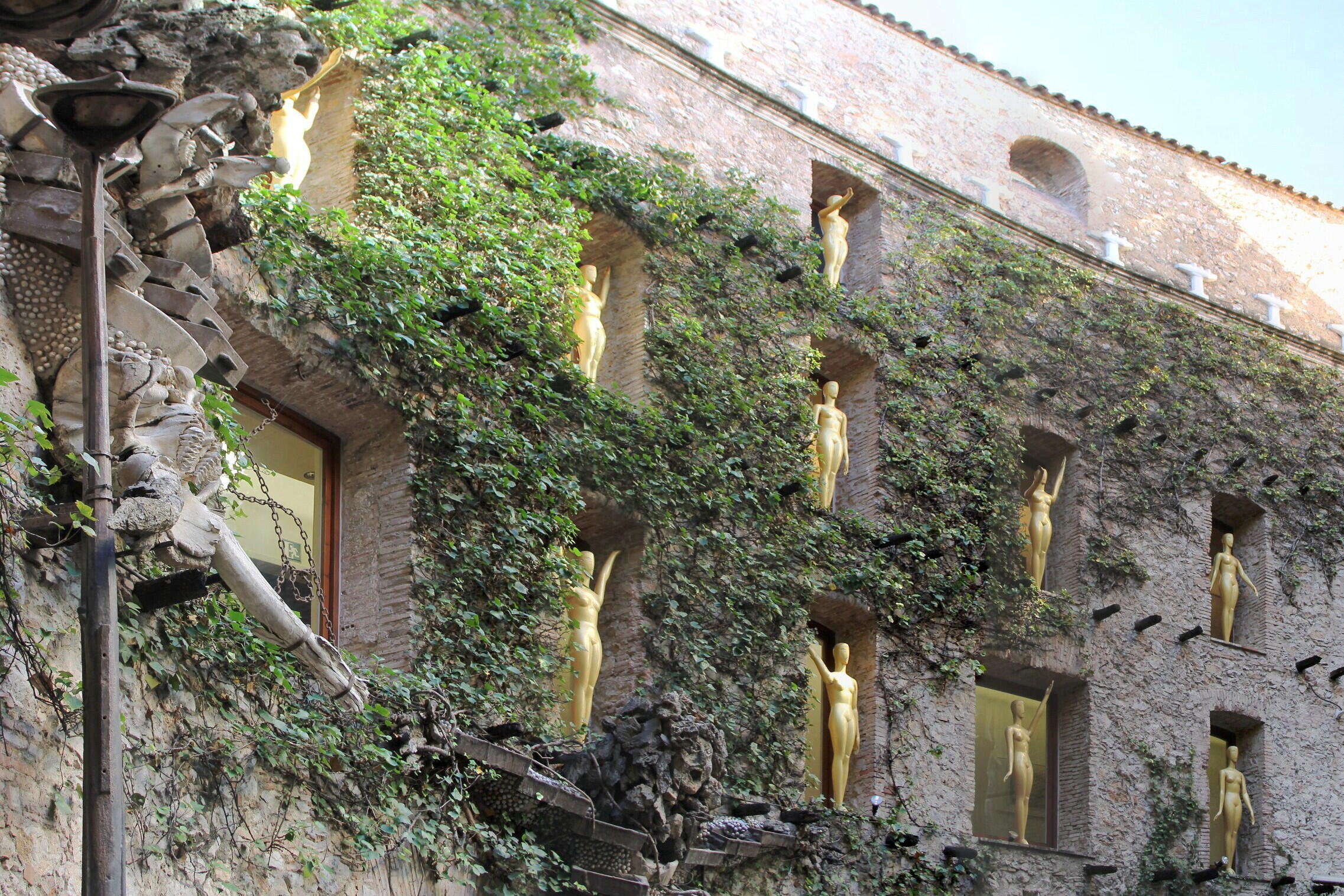
Dali filled the window niches in the walls with golden figurines that resemble the figurines of cinematic Oscars, but they carry a completely different meaning: all of them depict Gala — Salvador Dalí’s wife, muse, and the main love of his life. The artist idealized her body, turning it into a serial iconic object. At first glance, the figures look identical, but if you take a closer look, you’ll see that each of them is frozen in a different gesture and symbolizes a theatrical performance. The contrast of bright gold glittering figures right between the black charred beams of the burnt-out theater is a metaphor for the rebirth of art from the ashes of war and destruction. The similarity to the Oscars is, on the one hand, an irony over consumer society, which elevates faceless brilliance to the rank of art; on the other hand, a tribute to American cinema and a memory of Dali's work in Hollywood with Alfred Hitchcock and Walt Disney.
In addition to the famous golden mannequins, other sculptures and installations can be seen on the walls, from classical antique statues covered with ivy to compositions of utilitarian objects.
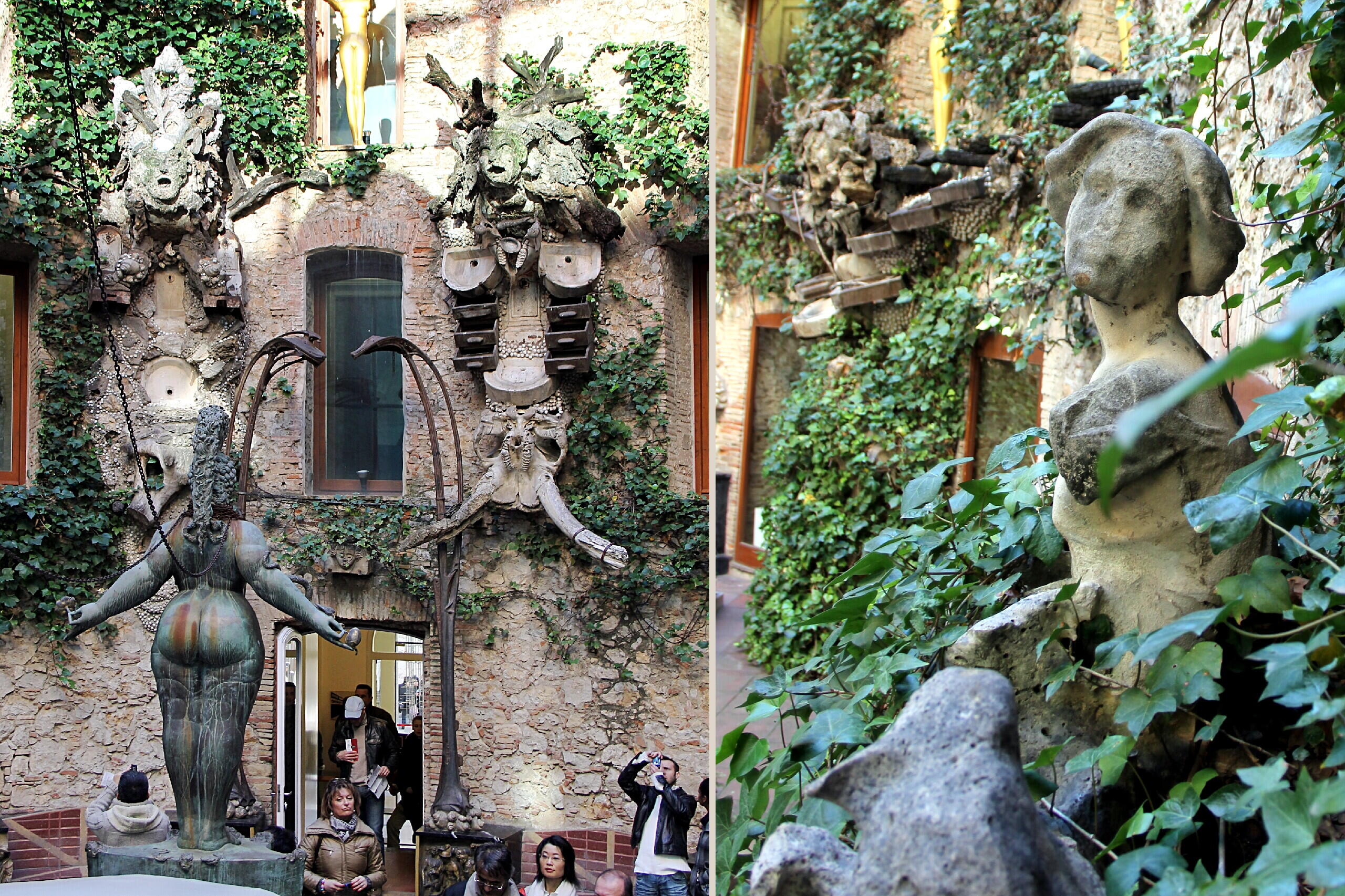
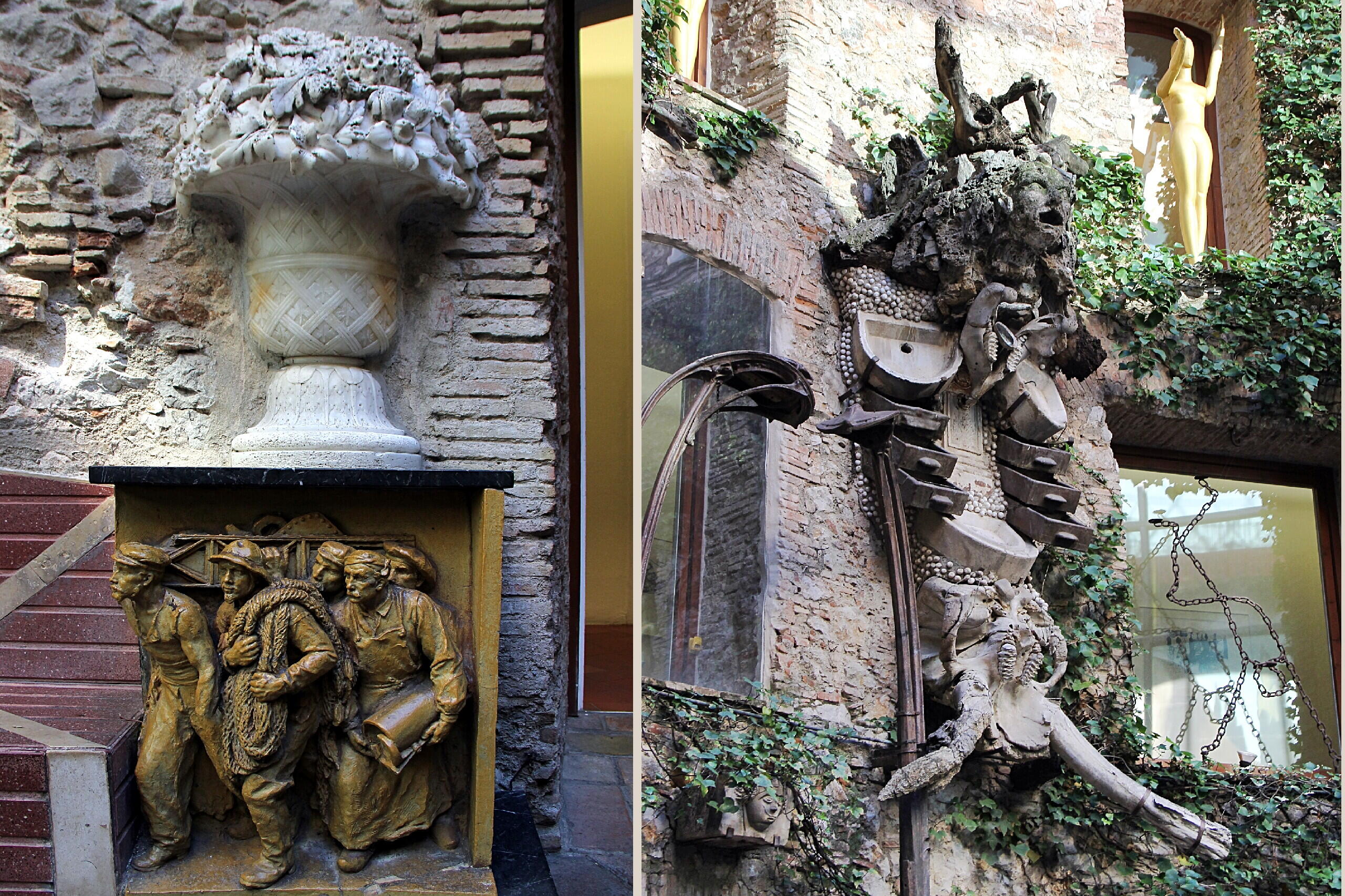
An ancient vase with a bas‑relief on the pedestal, depicting workers as a contrast between fine art for the chosen few and the harsh reality of hard labour for the masses. On one of the walls, you can see a grotesque monster assembled from driftwood, shells, drawers from a desk, and seashells, alluding to Dalí’s early memories.
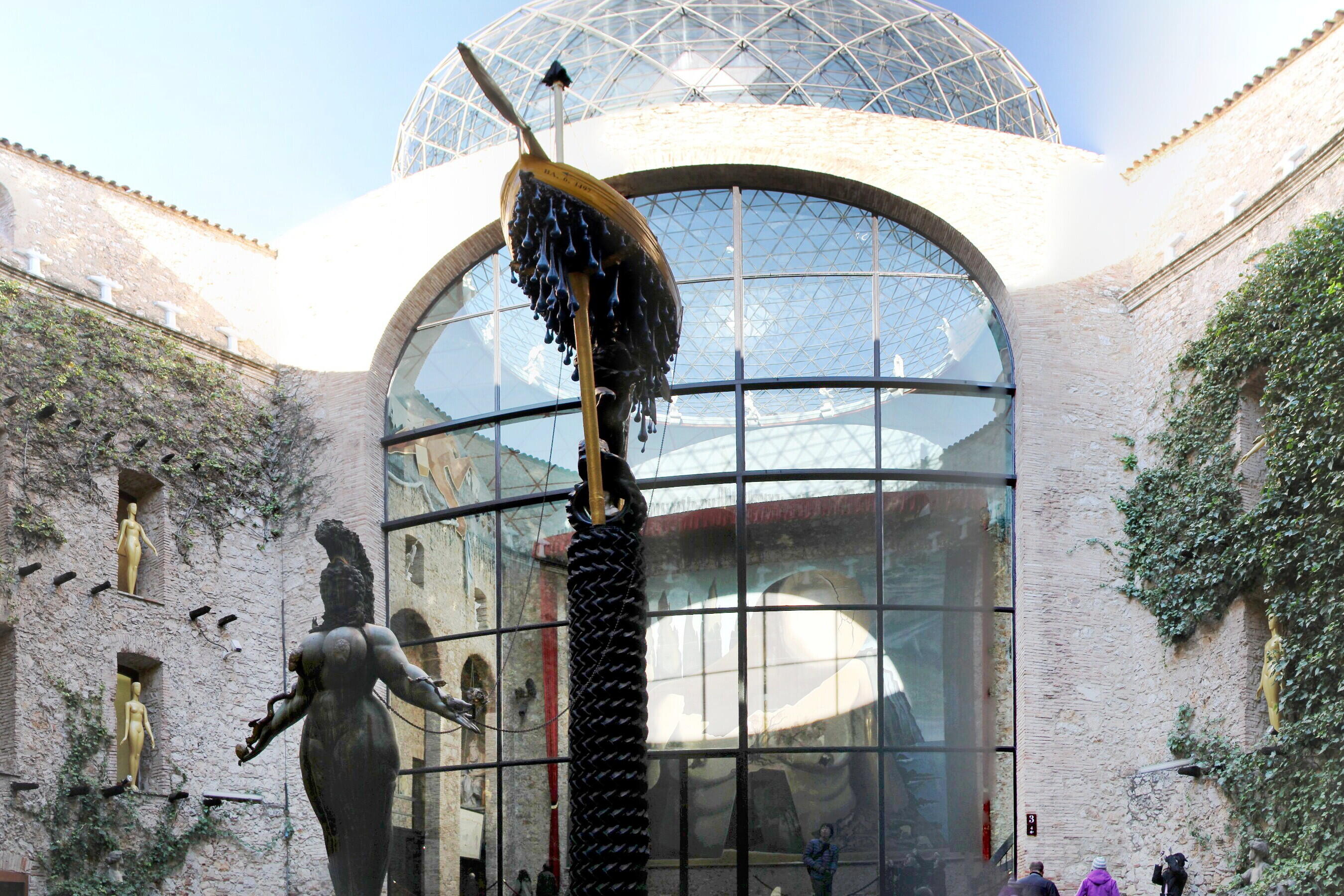
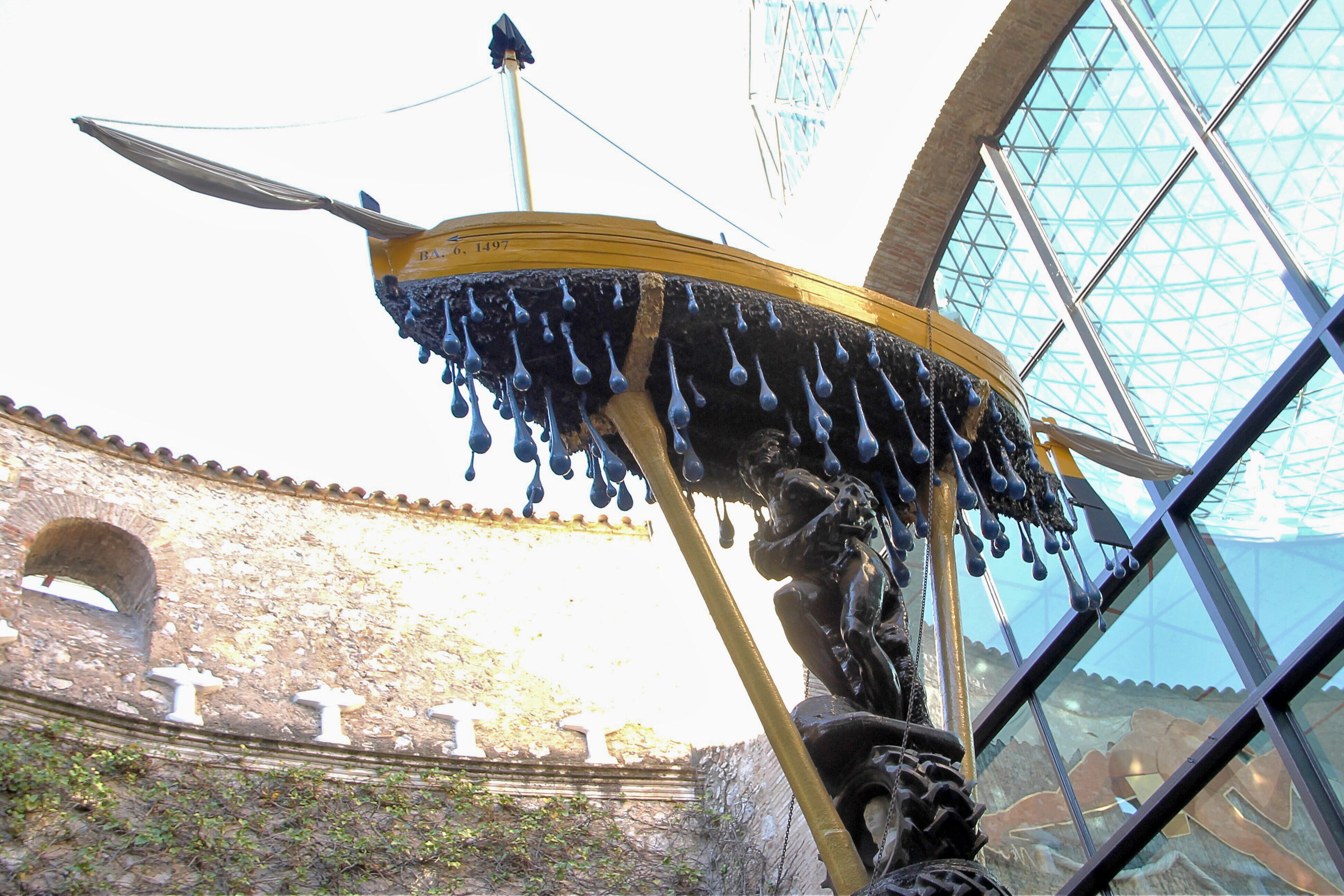
In the center of the courtyard stands a column made of car tires with a boat on top, which was assembled in 1978, four years after the museum opened. The giant installation is called “Travauntana,” after the famous Catalan northerly wind. The artist raised a real fishing boat into the sky—the boat built by the boatwright Delpho Pascual at Gala’s request in the 1950s. Salvador and Gala used it for boat trips at their residence in Portlligat; for them, it was a refuge from the hustle and bustle of the outside world. The boat is mounted on a hinge, and the wind can gently sway it, simulating movement across the waves.
Large blue droplets made of colored resin hang from the bottom of the boat. Dalí claimed that these were petrified drops of Gala’s sweat, which she had worked hard to produce, helping him to row and guide him through life. Folding a column of car tires, Dali used several associations: Black tires and tires with regular tread relief are contrasted with Trajan's column in Rome with elaborate bas-reliefs on noble white marble, symbolizing the replacement of art with utilitarianism and unrestrained consumption; tire rubber symbolizes Dali's idea of "flexible time", for him it was plastic, subjective and It is inextricably linked with space and the psychological state of a person.
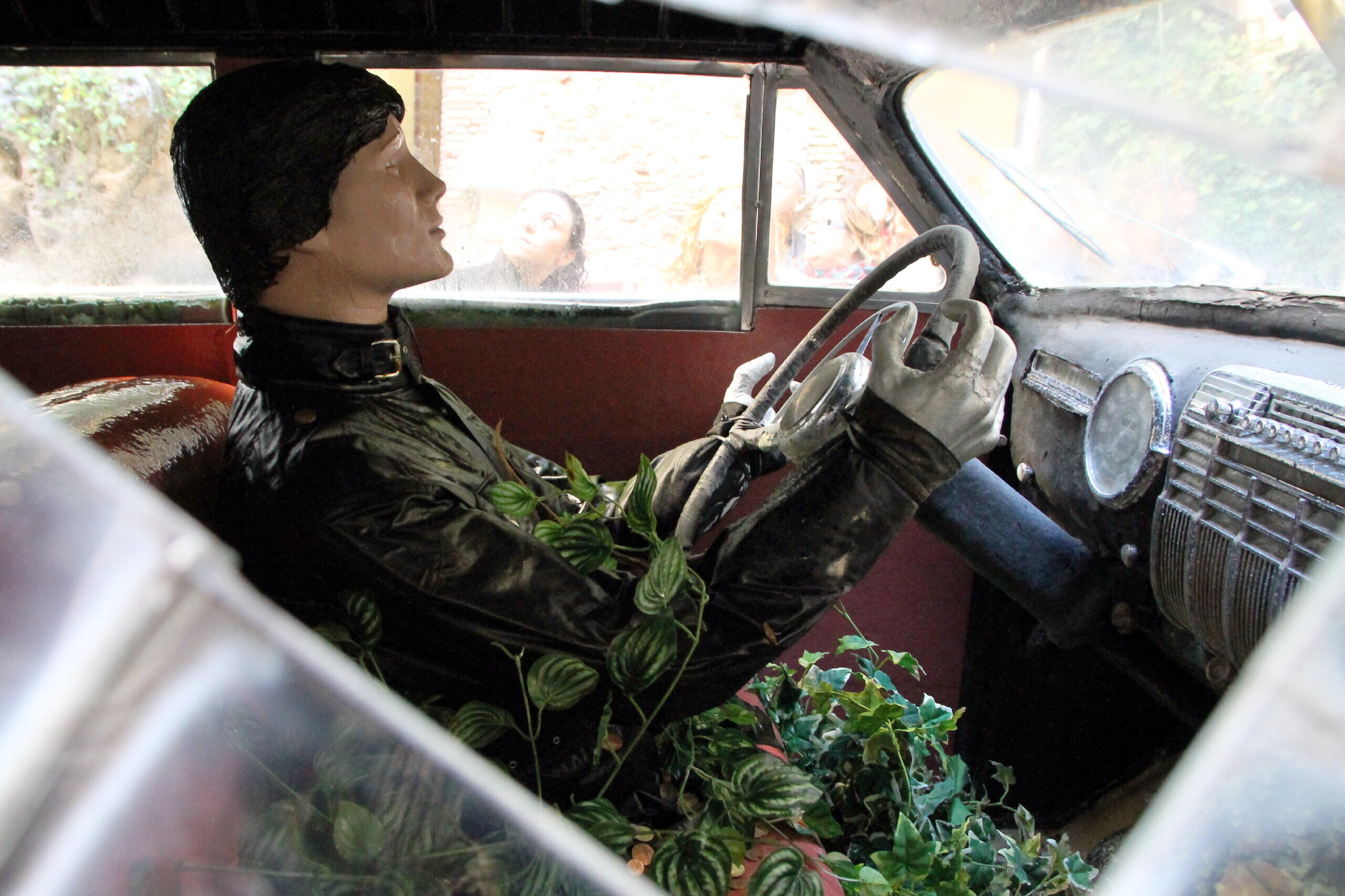
Next to the column stands a luxurious Cadillac from the early 1940s, which became the basis for the “Dozhlivoe taksi” installation; I will tell you about it in a separate article. The entire composition of the courtyard is connected with movement: at the bottom stands a luxurious Cadillac that has traveled thousands of kilometers, in the middle there is a column made of tires worn down by roads, and the whole thing is topped off with a water transport — a boat. This is a monument to human wanderings, both earthly and spiritual.