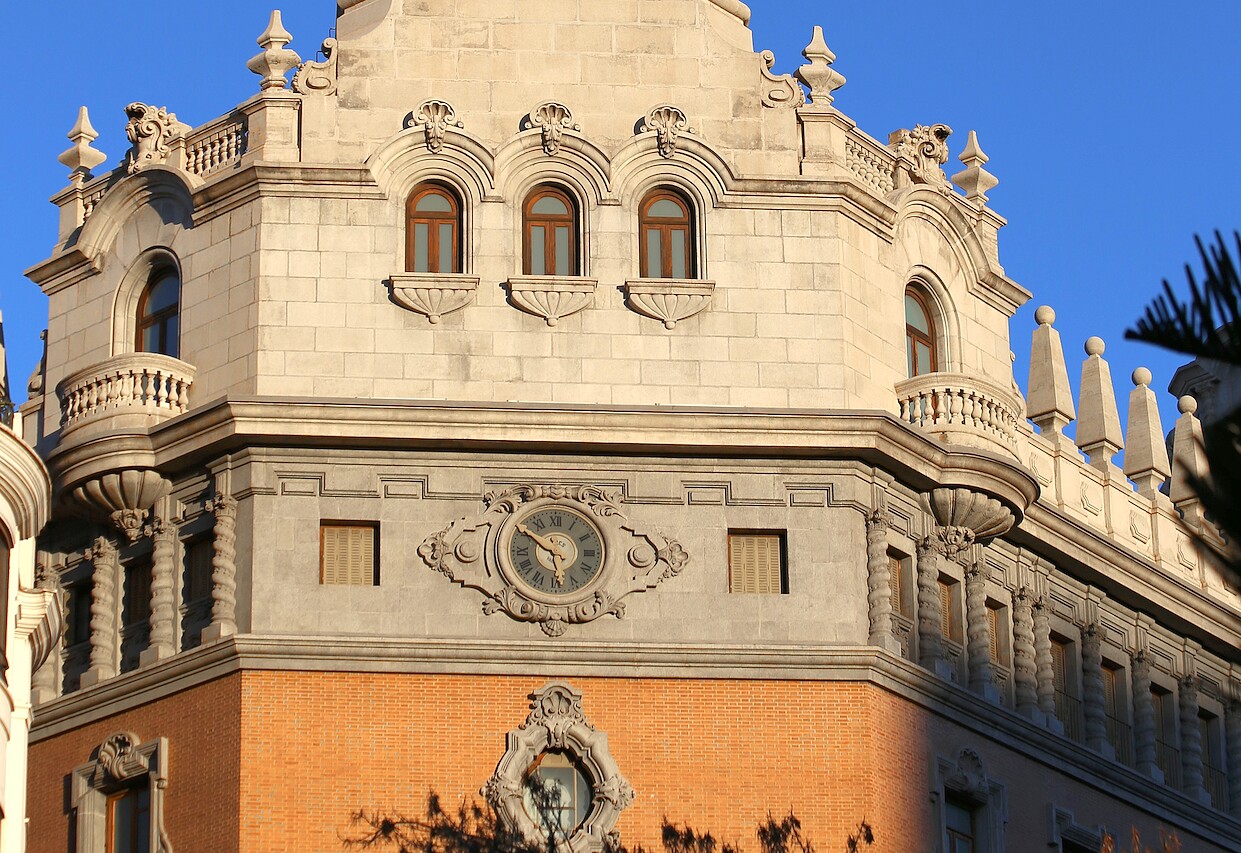
Centro Cultural Bancaja, Valencia
In the immediate vicinity of the Glorieta Gardens, which we discussed earlier, on Tetuan Square (Plaza de Tetuán) stands a monumental building, erected between 1932 and 1934 by the famous Valencian architect Antonio Gomez Davó, commissioned by the Valencia Savings Bank (Caja de Ahorros y Monte de Piedad de Valencia). The financial institution operated successfully for almost 80 years, but during the real estate crisis of 2010-2011, it was forced to merge with other savings banks. As a result of this merger, a huge banking conglomerate, Bankia, was created. According to Spanish law, when savings banks are commercialized or merged, only business assets are transferred, while all their long‑standing social, charitable, and cultural activities are set aside in an independent fund. This is how the charitable fund Fundación Bancaja came into being. However, as early as 2012, the new conglomerate found itself on the brink of complete bankruptcy and was effectively nationalized by the state. During the restructuring, the bank completely optimized its expenses, closing many offices, and the magnificent building came under the management of a cultural foundation. Today, this building fully functions as the cultural center of the Banco Jaixa Foundation and is one of Valencia’s main art and exhibition venues. Major exhibitions are held here regularly. The foundation brings world‑class masterpieces: Picasso’s and Dalí’s graphic works, as well as pieces by Francis Bacon and Andy Warhol. A large section is devoted to the work of the Valencian artist Joaquín Sorolla, known as the “master of Mediterranean light”. Separate halls are dedicated to the works of contemporary Spanish and international authors, sculptors, and avant‑garde artists. In the concert and lecture hall, a series of musical evenings called Els Concerts a la Fundació is regularly held, featuring classical music, jazz, or traditional flamenco, as well as cultural conferences and educational masterclasses.

The building is a striking example of Spanish neo-Baroque and so-called Casticismo. The architect skillfully combined the strict brickwork of the walls with luxurious, almost jewel-like stone carvings. The main focus of the composition is on the angular facade (chaflán), which is crowned by a magnificent multi-tiered non-baroque rotunda tower with a clock, a spire and decorative pinnacles..