Waterfront of Via Giudecca, Cefalù
This street connects the historic center of Cefalu (Centro Storico) with the old quarter of Giudecca (Quartiere della Giudecca) and leads further towards the eastern coastal districts of Presidiana and Caldura. Giudecca was a Jewish quarter located outside the city wall, which explains the name, which comes from the Latin Judaean - Jewish.

The street begins at the gates, which bore the same name, but now nothing remains of them except for a plaque with information and the remains of ancient foundations.

The street runs along a steep coastal slope, which consists of a jumble of rocks that appear completely impassable. Nevertheless, a path has been laid right by the water, officially known as Percorso sugli scogli (Path along the Rocks). It begins at the old port, and the entrance to it is located at Porta Pescara (Porta Marina).
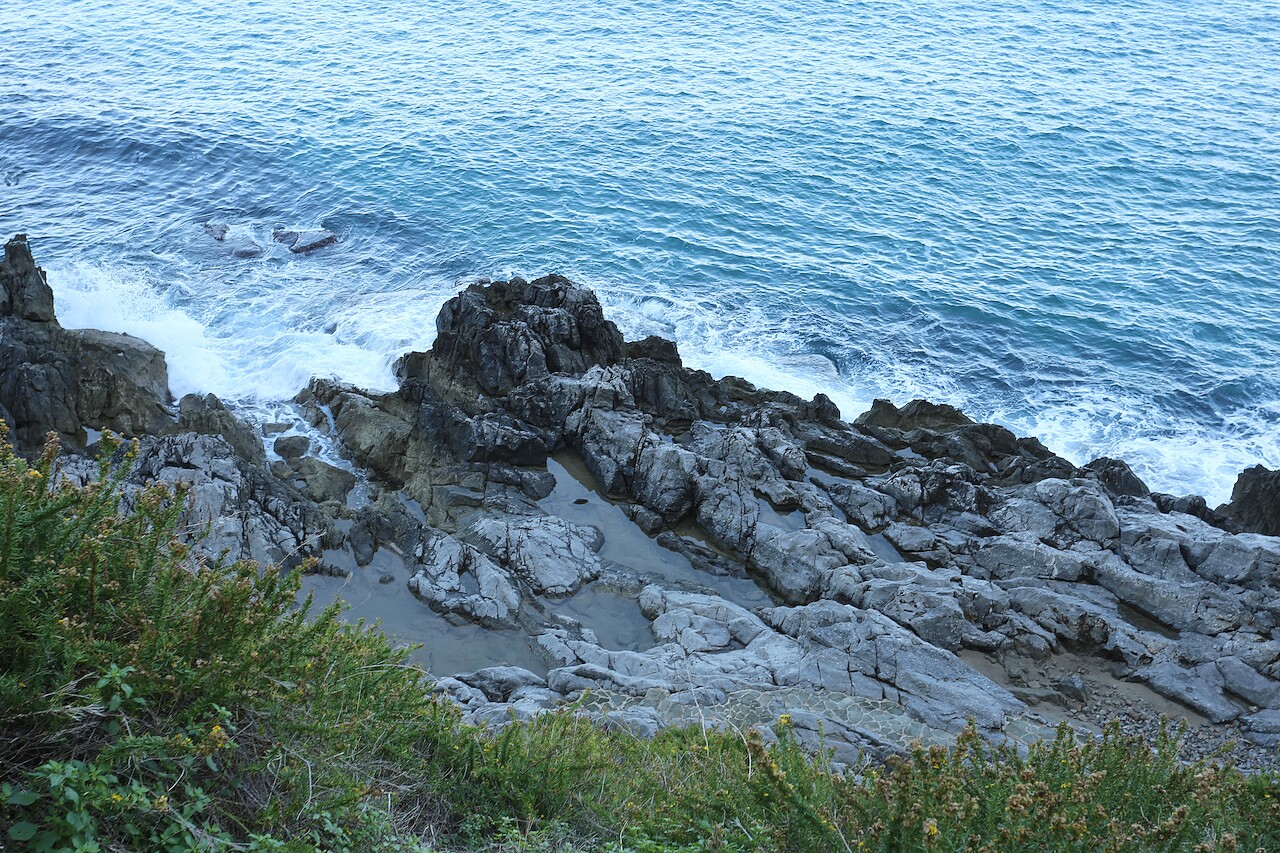
However, if you have enough courage and agility, you can descend to it next to the remains of the Giudecca gate using steps carved into the limestone. To do this, you need to crawl through an opening in the wall. It is only safe to walk here in calm weather, as splashes from large waves make the path very slippery, and the waves often wash over it.
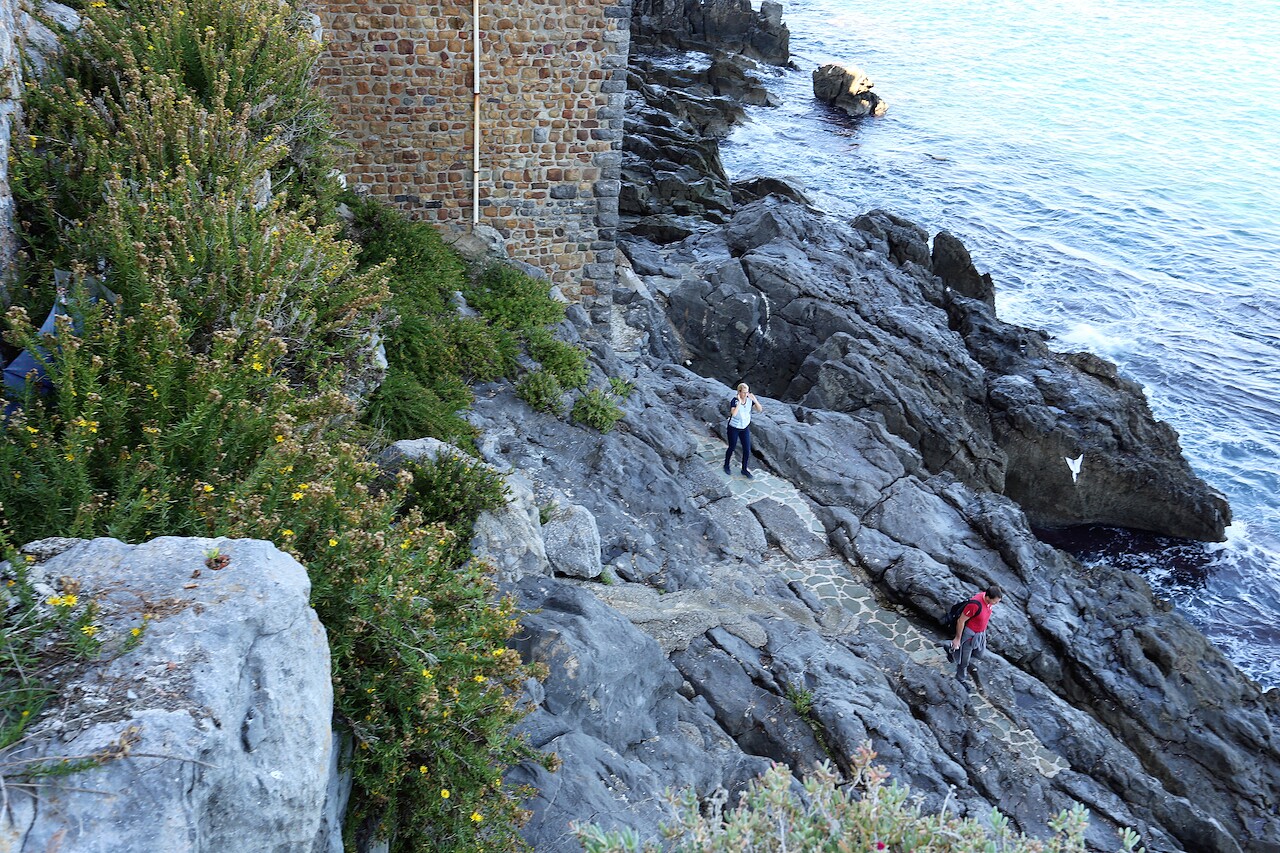
I had planned a walk along the trail separately, so I walked along the top, watching the surf of the Tyrrhenian Sea crashing against the coastal cliffs and admiring the interesting vegetation. Here you can see drought‑resistant plants typical of the Sicilian coast — dried flowers and wild grasses on the rocky slope, as well as the sea thrift shrub or wild fennel with yellow flowers.

A lush low-growing shrub blooms among the limestone stones with many small four-petaled white flowers gathered in dense clusters and narrow gray-green leaves. This is Lobularia maritima, also known as alyssum marine, a typical representative of the Mediterranean coastal flora, which easily tolerates sea spray, sun and poor rocky soils, and in the mild climate of Sicily is able to bloom almost all year round, exuding a sweet honey aroma.

On sunny stone terraces, next to wild coastal grasses, you can find bright bushes of mirabilis (Mirabilis jalapa), which in Sicily, as throughout the Mediterranean, is called the “night beauty.” During the day, under the southern sun, its yellow and crimson buds are tightly rolled into graceful tubes, but as soon as the heat subsides before sunset, they open, filling the evening sea air with a delicate, sweet fragrance.

A hundred meters from the gate, the urban development ended, and a view of La Rocca rock opened up: a steep green slope that turned into sheer cliffs.

Another two hundred meters and I reached the observation deck Punto di vista dalle scale al mare, from which you can see the entire coast up to Capo Marchiafava (Capo Marchiafava).

Here I found a half‑ruined stone wall, along which a concrete staircase descends to the water. This is the second official entrance to “The Path Along the Rocks”.

On the site, there is an administrative building; judging by the round rose window above the entrance, it is a former church. Next to it, there is a public toilet. On the other side of the street, there are houses made of natural stone with restaurants and apartments for tourists.

This is where the Via Giudecca ended, and I headed down to the port.
