Palazzo Tezzano, Catania
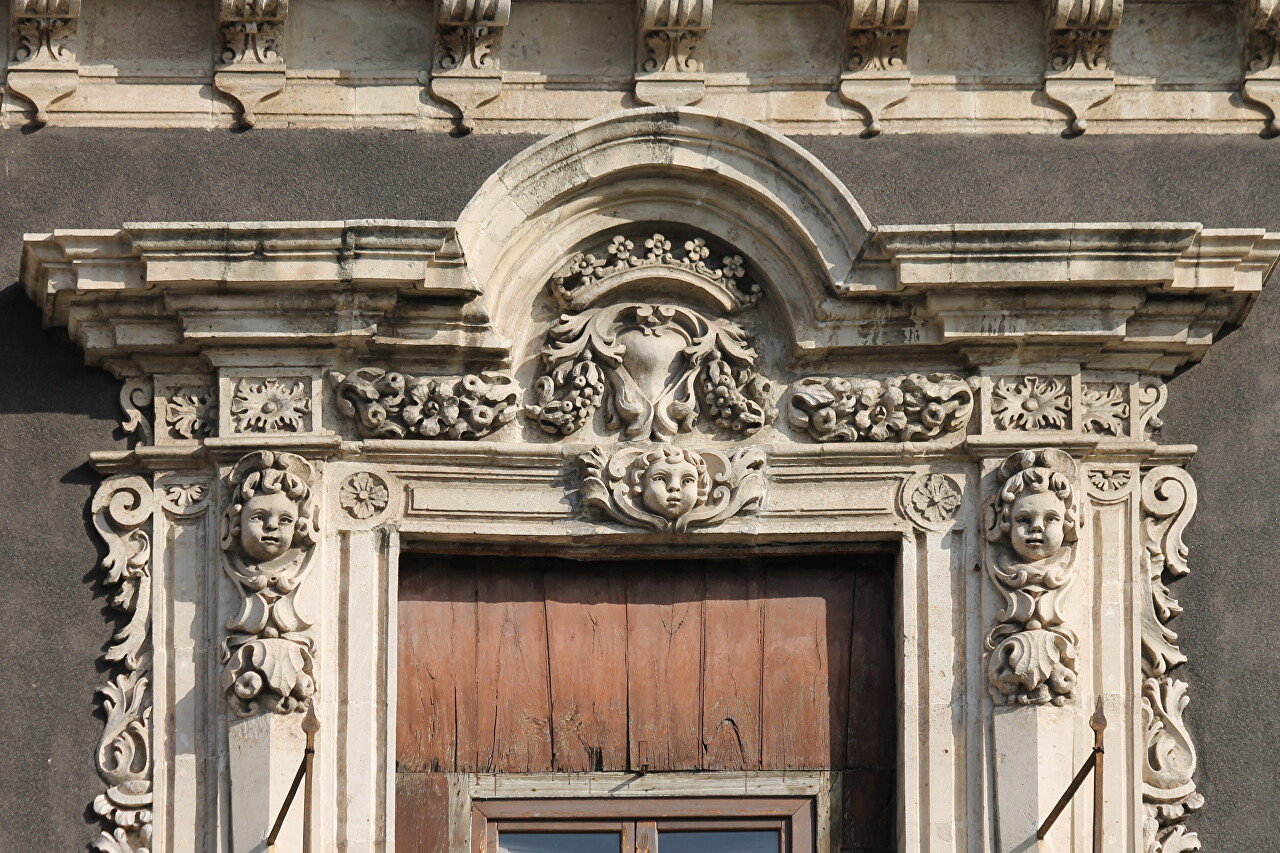
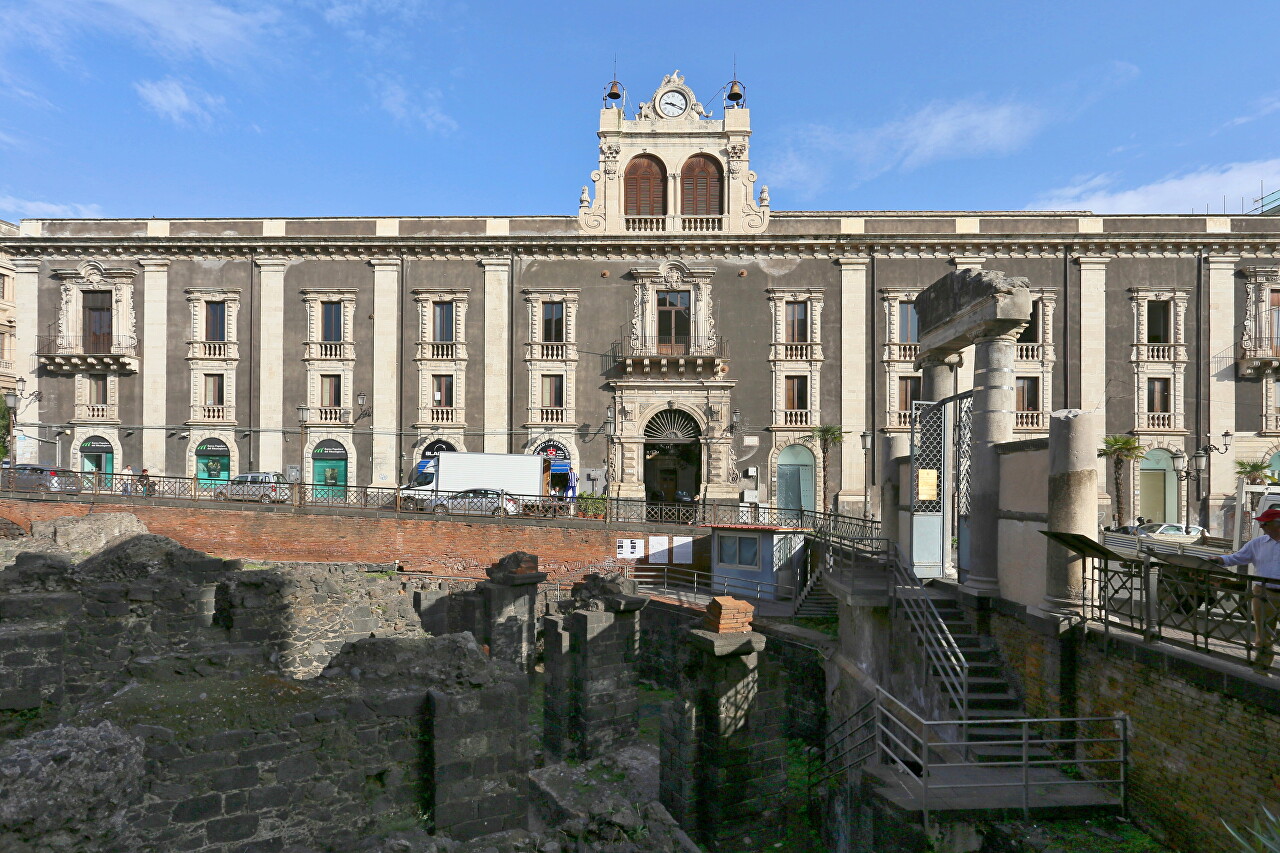
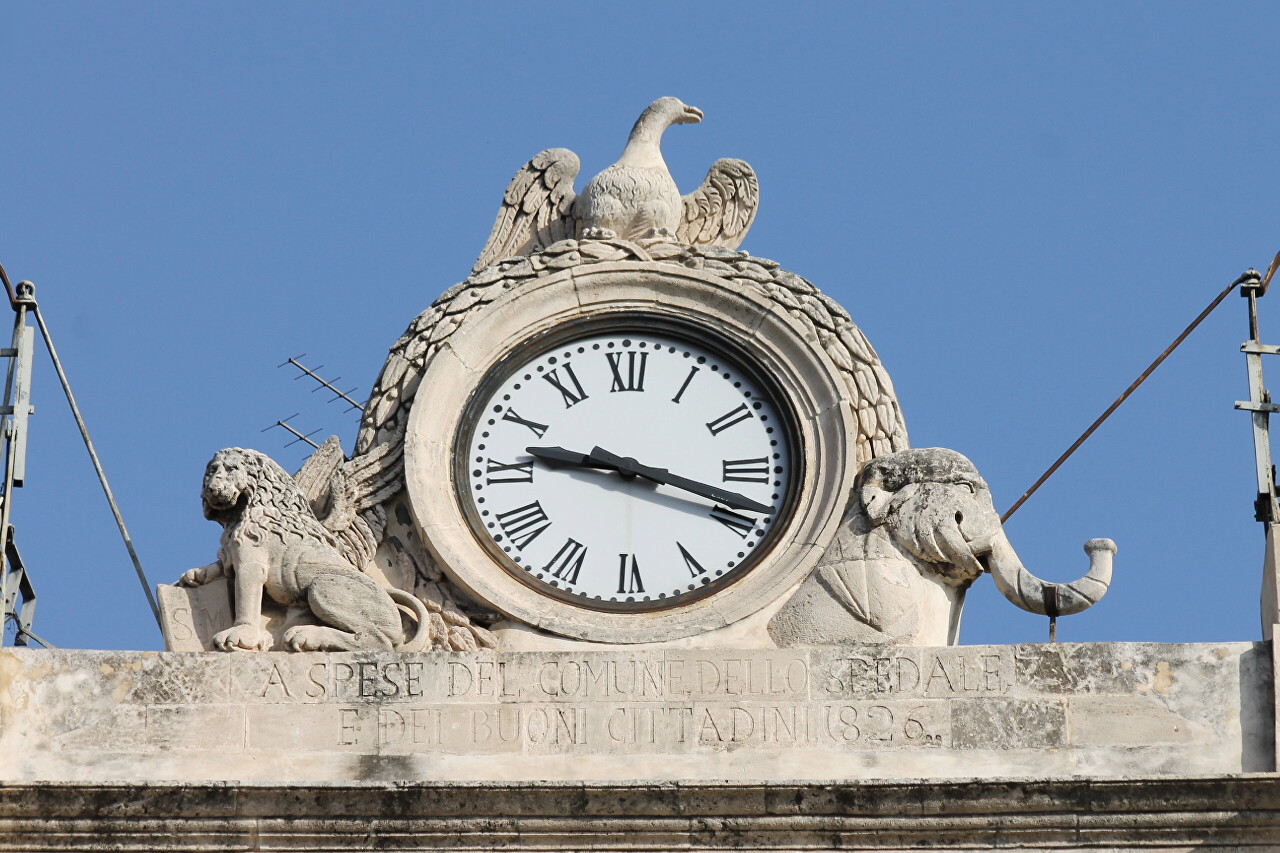
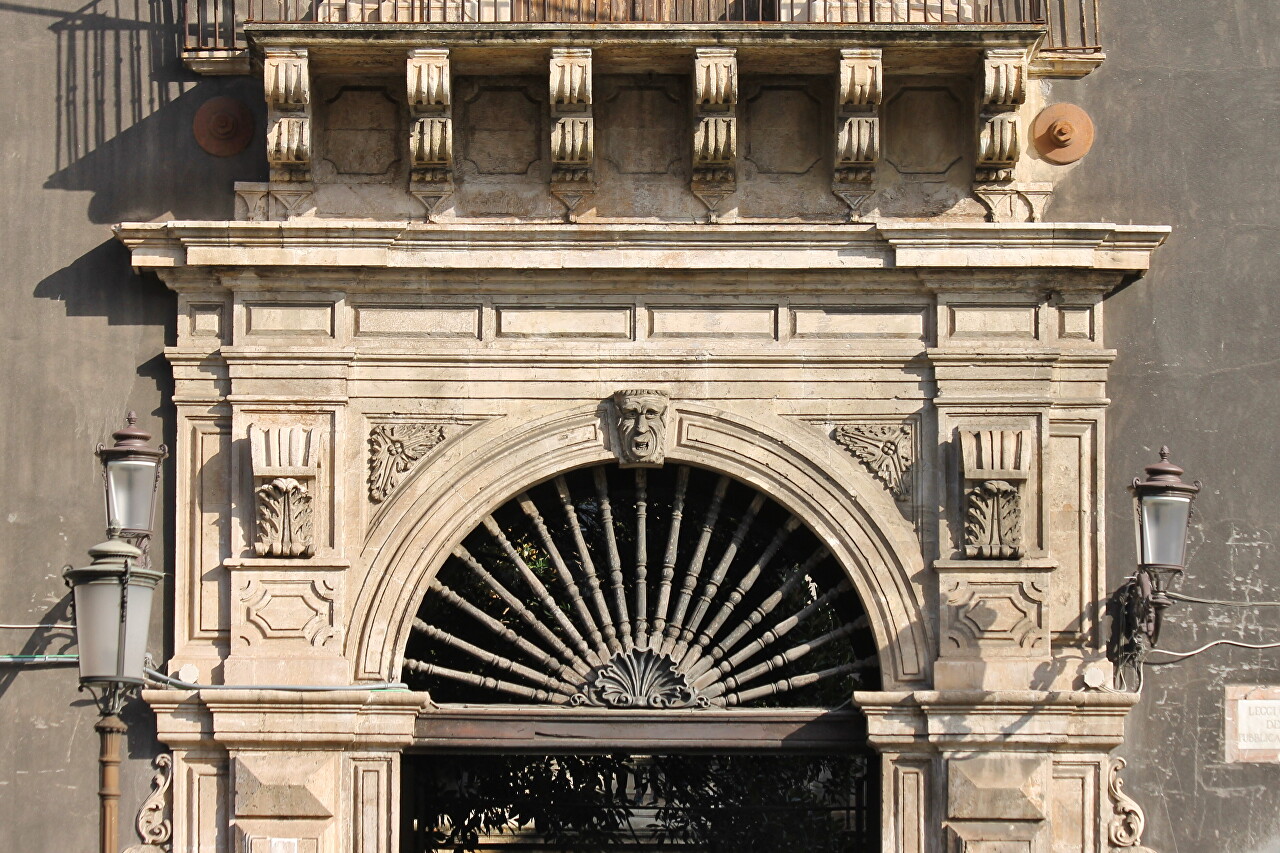
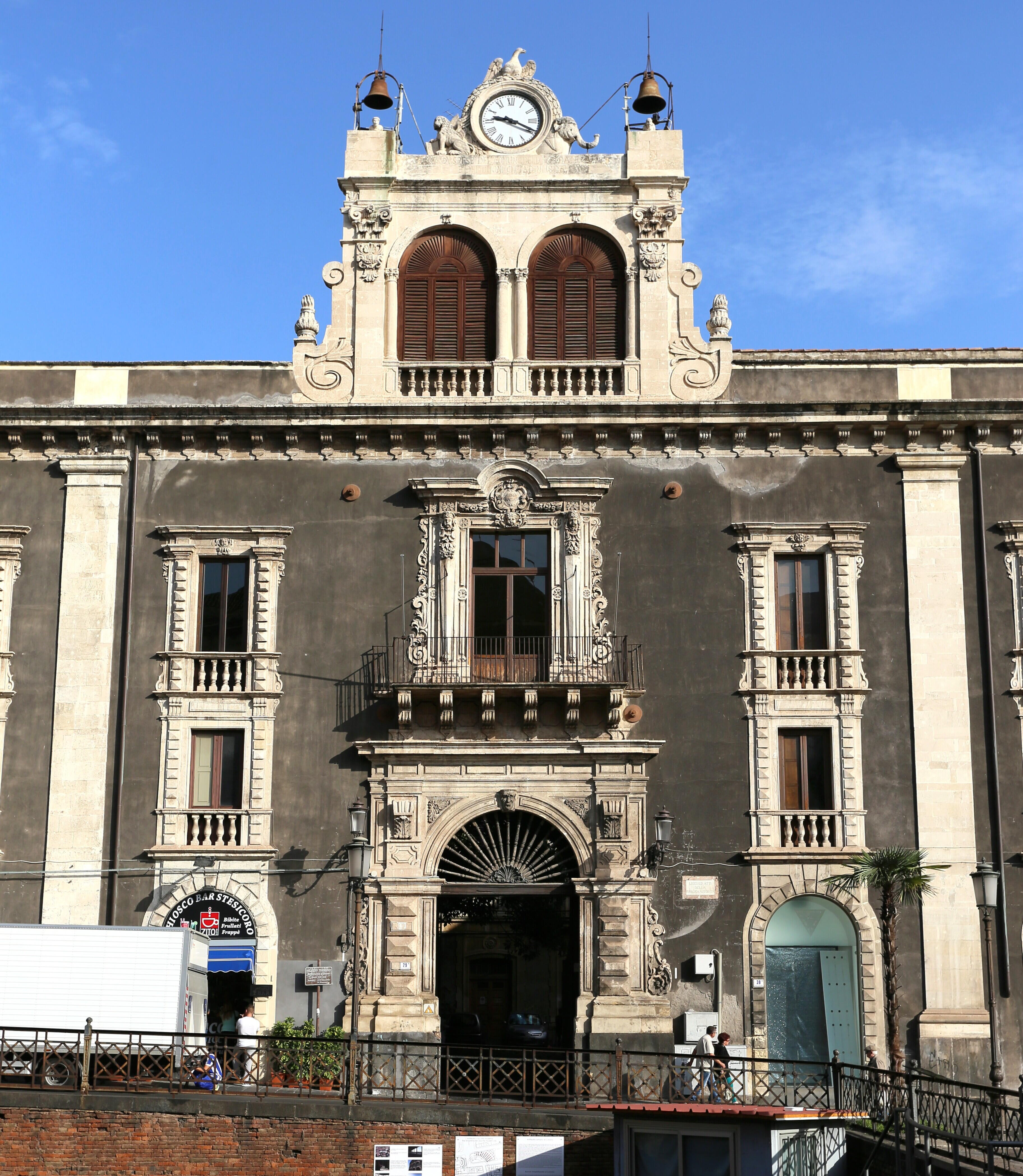
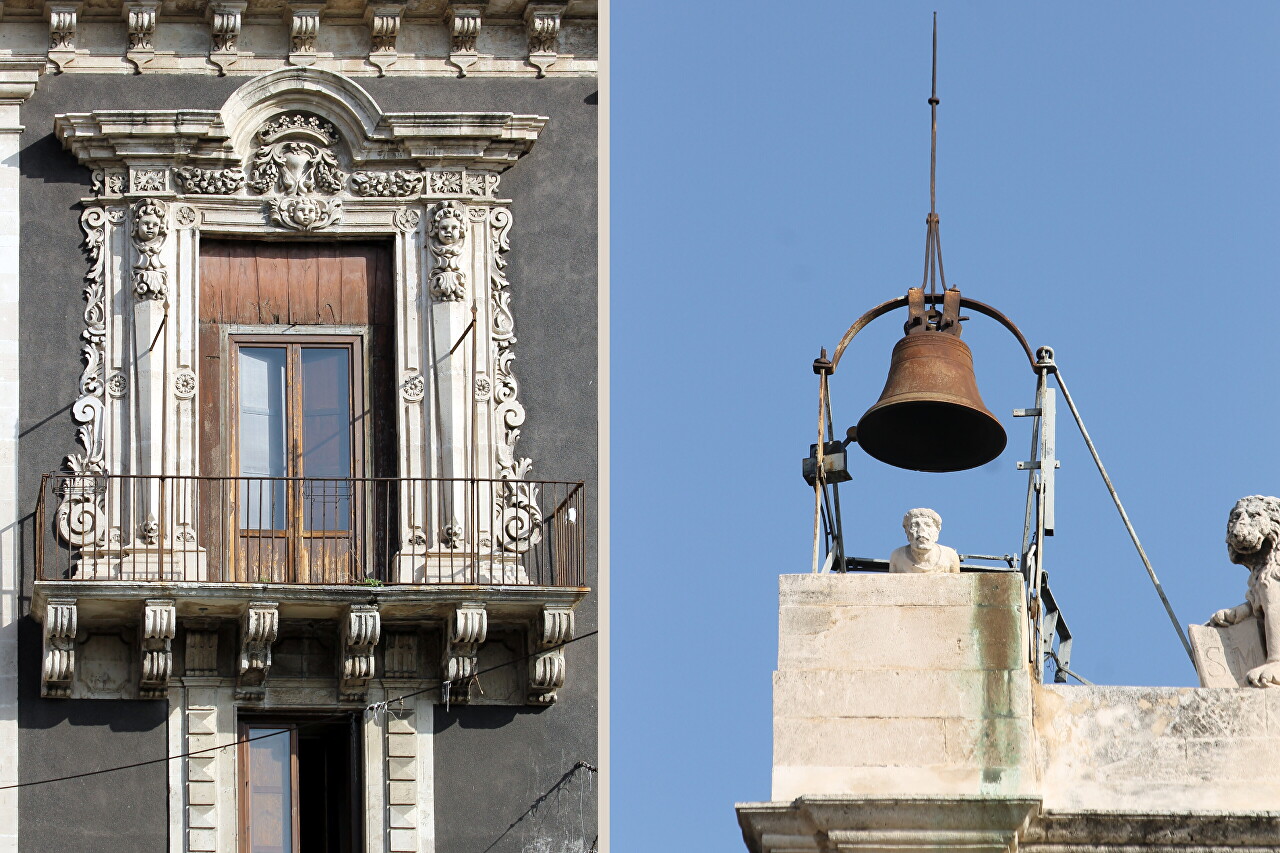
Piazza Stesicoro is home to a monumental building that has become one of the symbols of the city's renaissance after the catastrophic earthquake of 1693. Excavations of the ruins of the ancient Roman amphitheater in front of the facade of the palace create a spectacular neighborhood of the ancient and Baroque architecture of Catania. The palace was built in 1709 by order of Count and physician Niccolo Tezzano, the project was carried out by the famous architect Alonzo di Benedetto. Initially, the building was used as the residence of the count's family, but later Tezzano donated it for the needs of the city, contributing to its speedy restoration after a terrible natural disaster. From 1720 to 1727, under the direction of the same architect Alonzo di Benedetto, the palace was rebuilt into the central city hospital. In the first half of the 19th century, the hospital moved to a new large building, and from 1937 to 1953, the former Count's palace was occupied by the city tribunal and the prosecutor's office, the criminal chancellery and the archive of court cases. The state archives of the Bourbons were also located here. Then the building was transferred to the University of Catania, today it houses the Ceramic Archive and the Archive of Greek Ceramics, one of the largest in the world. The building has a quadrangular shape with a large courtyard. The main symmetrical facade is decorated with a monumental central portal, directly above which stands a balcony and a clock tower. A special charm is given by the color contrast between the dark gray plaster walls, made with the addition of lava sand, and the bright decorative elements made of white stone. There is little chance to get inside the building, and there is not much to see there - during the stay of the building in government institutions, nothing remained of the former luxury in the Baroque style.
..
..
..
..
..