Haus of Wolflin (Dům Wolflina od Kamene)
The exact year this house was founded has not survived in written records, but the original corner house in the Early Gothic style was likely built in the second half of the 13th century. It had two stories, an arched entrance portal (on the left), and a small tower. The first documented mention of the building dates back to 1301, when it passed into the possession of the wealthy Wolflin family. Some sources interpret the suffix od Kamene as the merchant's nickname, though it most likely simply indicates that the house was made of stone. In that era, Prague was predominantly wooden and houses had no numbers, so they were identified by the owner's name, while the building material served as both a landmark and a sign of wealth.
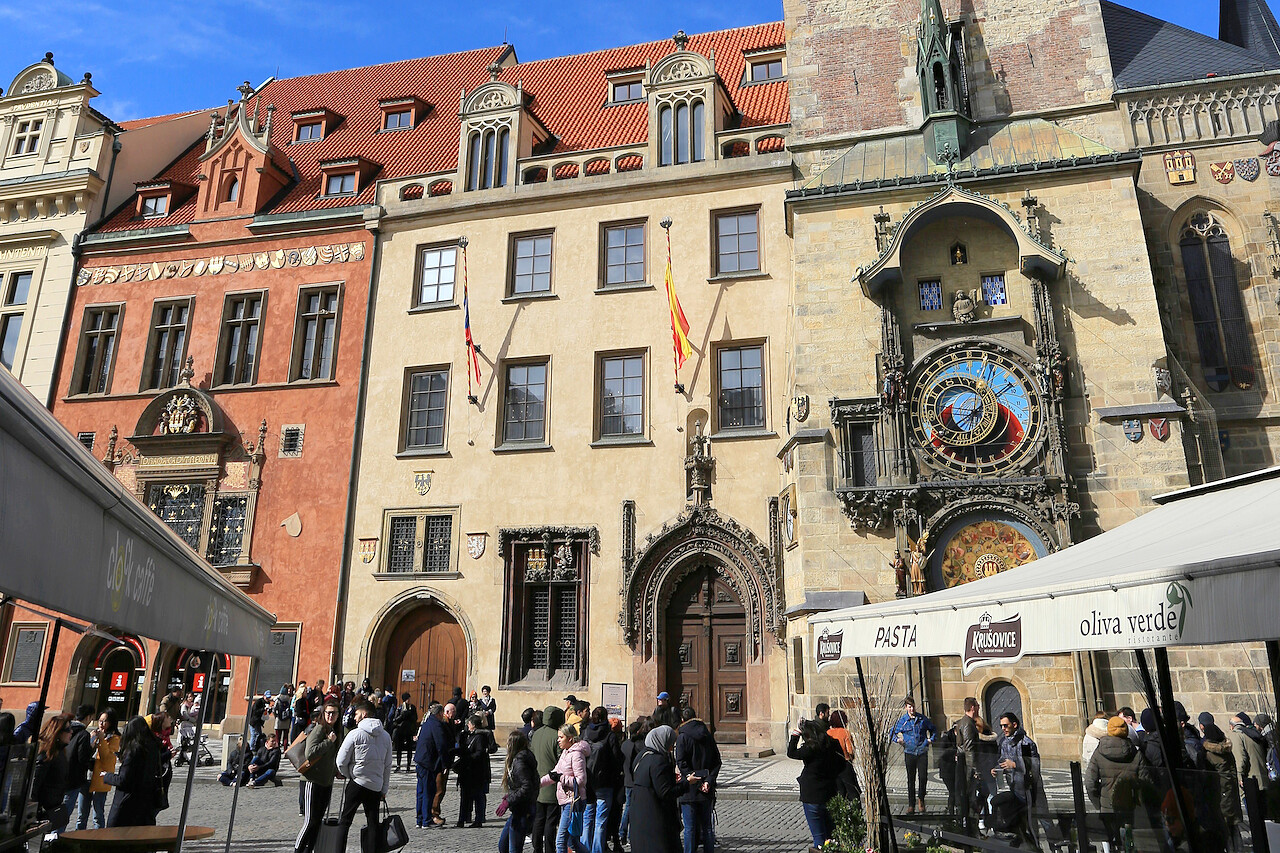
On September 18, 1338, King John of Bohemia issued a decree granting self-government to the Old Town, and the newly elected Town Council purchased this house from Wolflin to use as the Town Hall. Immediately afterward, construction began on a tower on the eastern side of the house—an invariable attribute of municipal authority—which I will cover in one of the upcoming articles. The entrance to the building (on the left) was redesigned in the Gothic style. In 1477, during the conversion of the ground floor into a vestibule, a new Gothic portal was built on the right side of the facade, and a large window was cut between the old and new portals, decorated with a garland of fruit, animal figurines, and the coats of arms of the Old Town and the Kingdom of Bohemia. Historians believe that the portal and the window were created by the famous Czech architect, stonemason, and sculptor Matěj Rejsek.
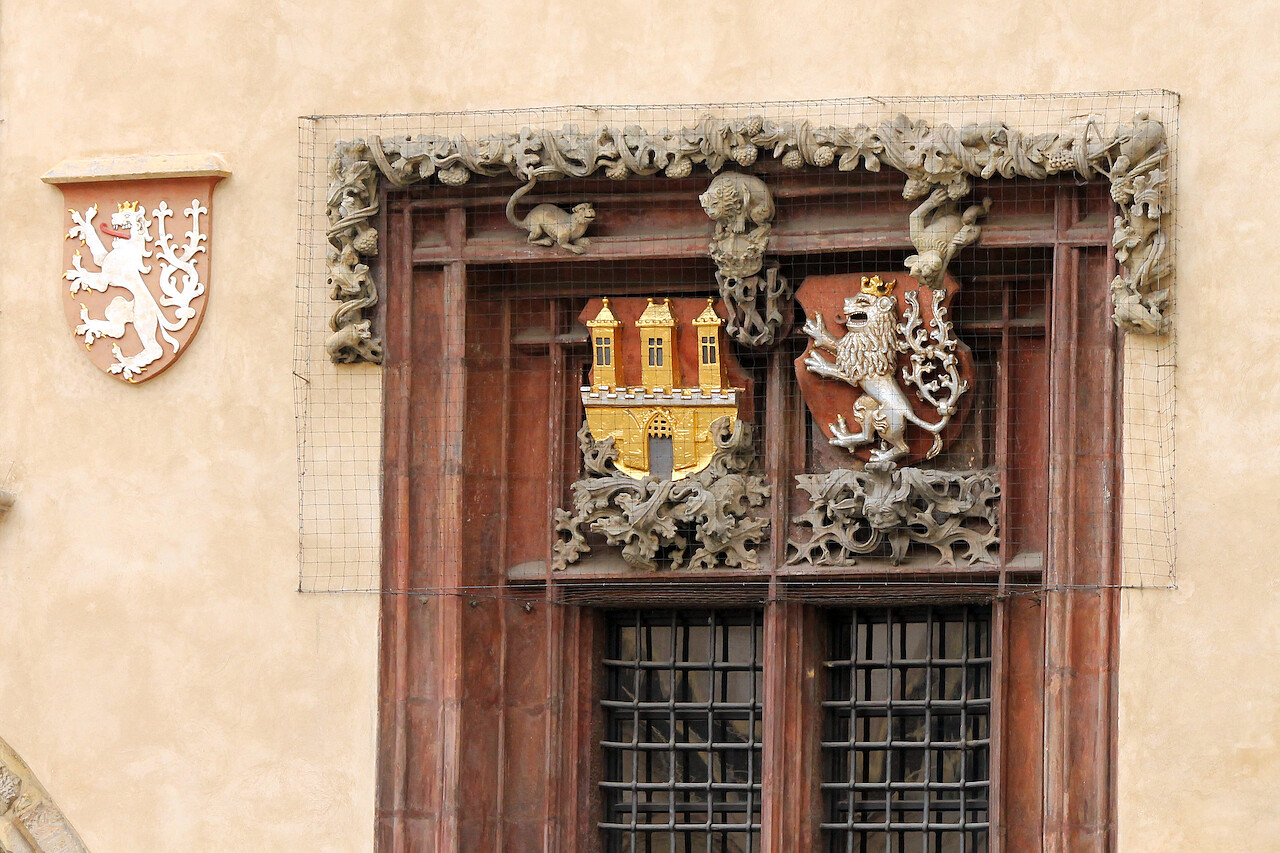
In 1652, the right portal received carved gates in the Early Baroque style. The final architectural modification dates to 1854, when Neo-Gothic dormer windows, designed by architect Bernhard Grueber, were added to the roof.
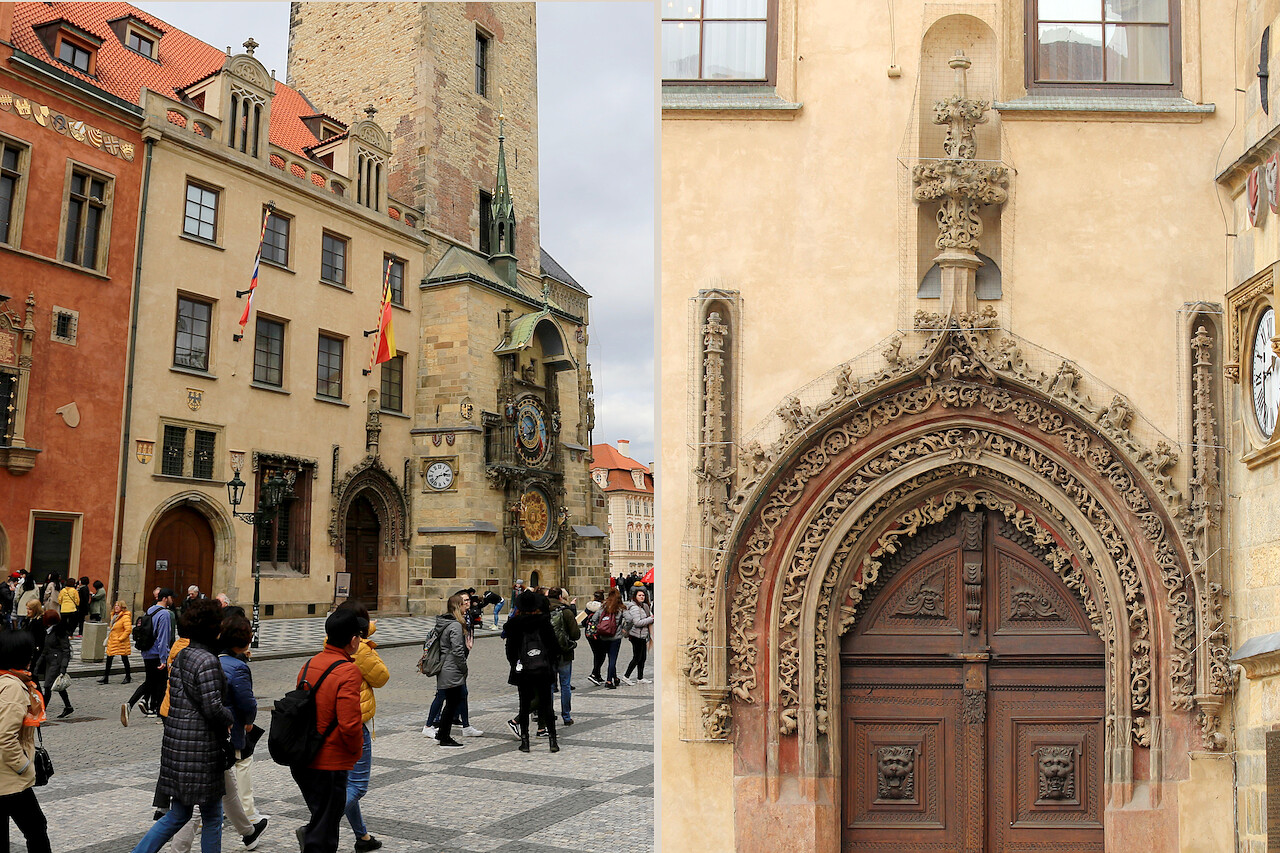
After being purchased in 1338, the building was used for meetings of the mayor and city councilors (konšelů). In 1477, the Municipal Hall (obecní síň) was established here, where key municipal matters were decided, elections were held, and justice was administered. The extensive multi-level cellars were converted into a city prison. Debtors were kept on the upper levels, while the deeper dungeons housed torture chambers and cells for those sentenced to death (for instance, leaders of the Bohemian Revolt were held here before their execution in 1621). Following the unification of the Prague towns in 1784, the building remained part of the unified Prague Magistrate. Today, Wolflin's House still serves as the main entrance to the Old Town Hall complex. The ground floor houses a tourist information center where you can also purchase tickets for guided tours of the Town Hall's historic halls and underground passages. The Old Municipal Hall is now used for official receptions by the Prague City Hall and for wedding ceremonies.