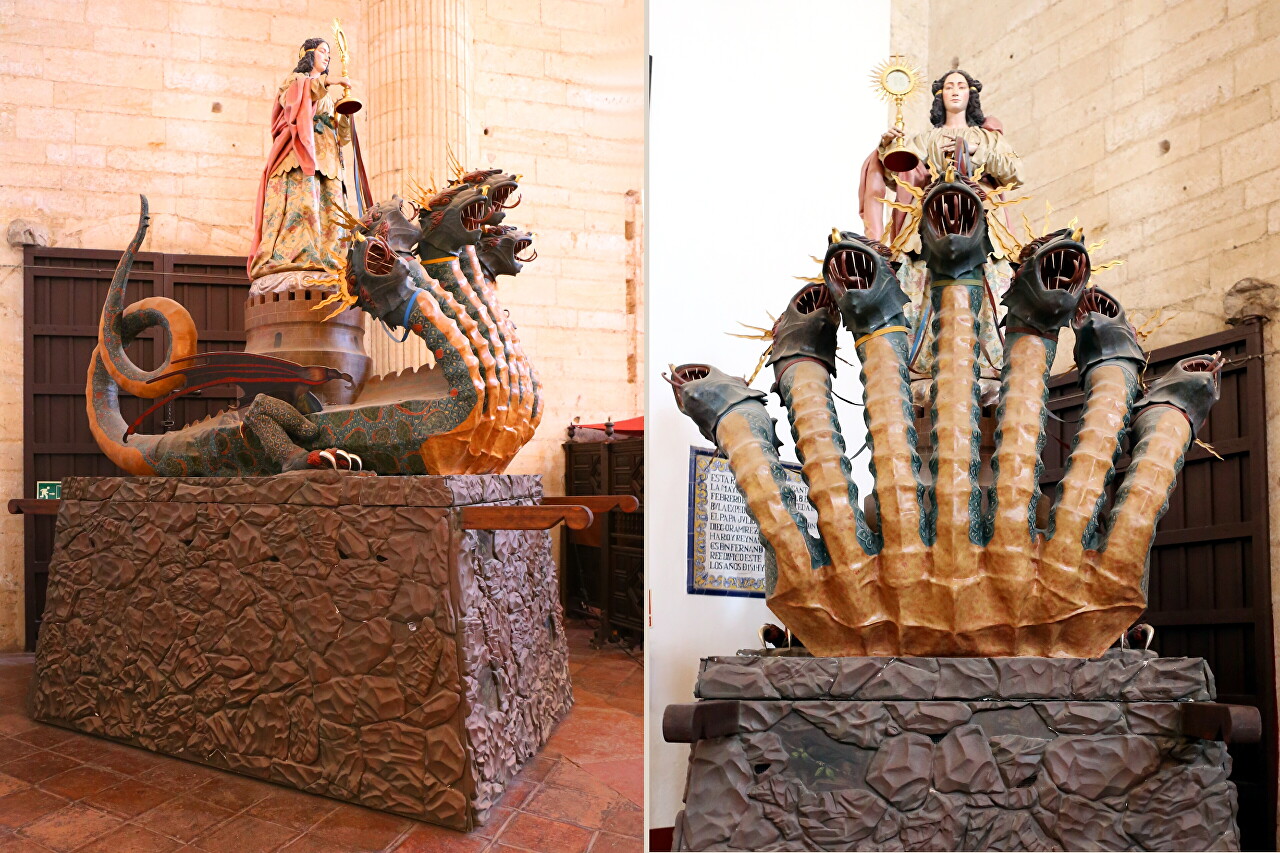
Interiors of Royal Church in Antequera
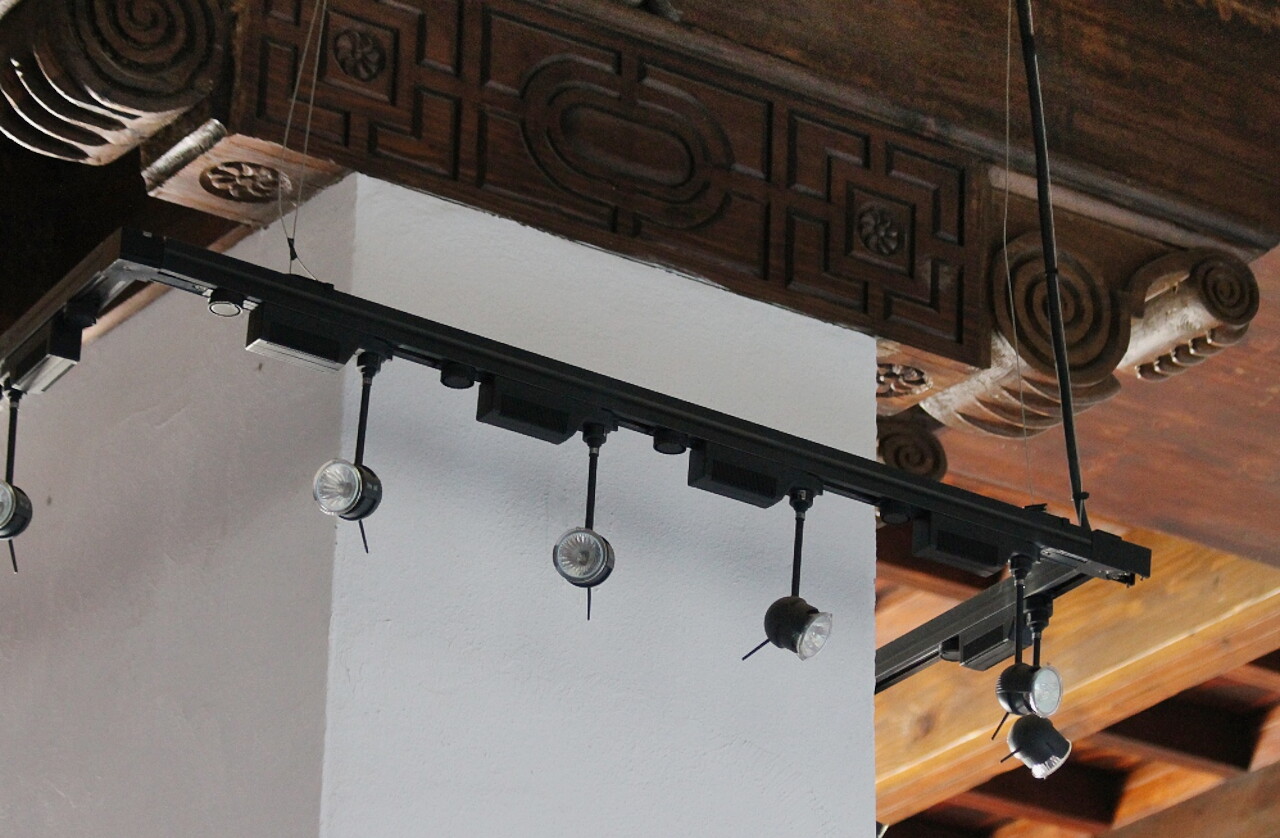
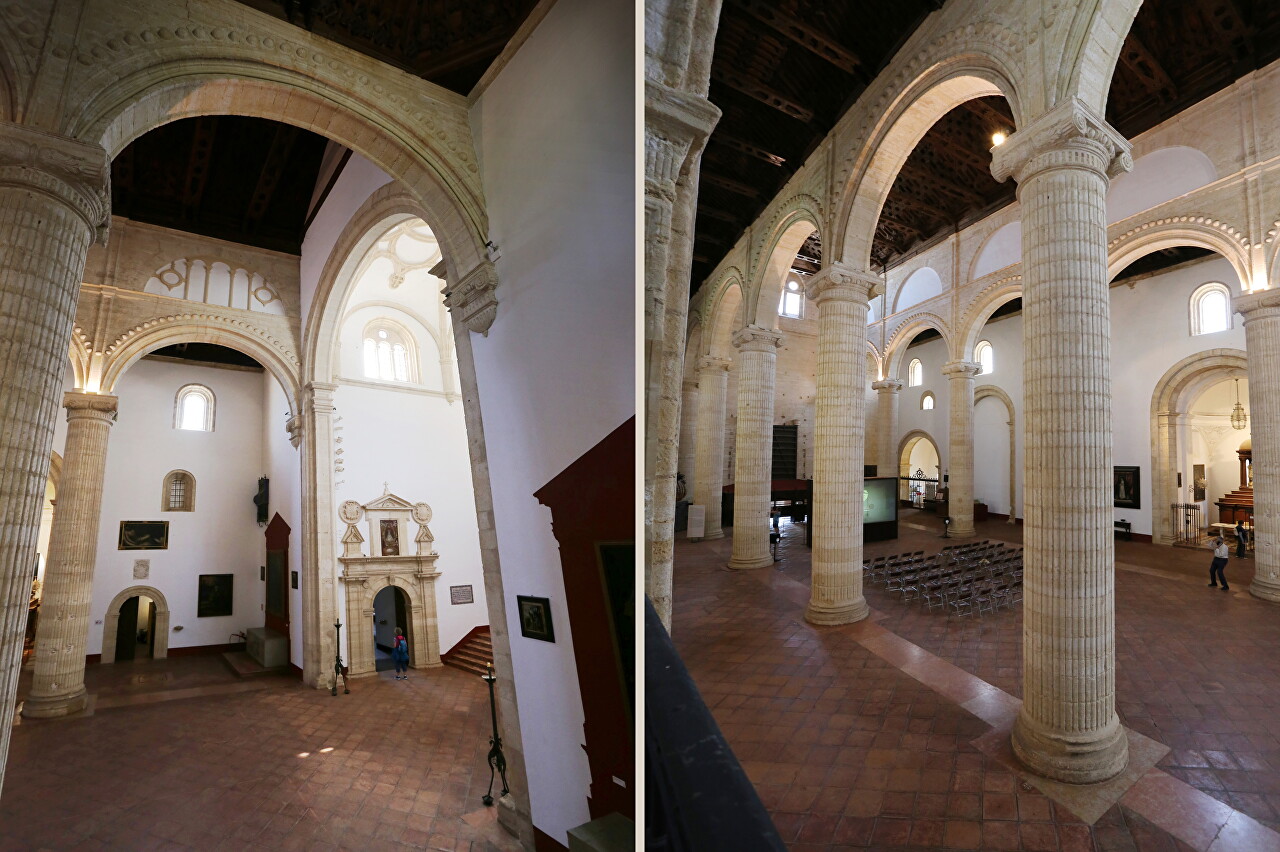
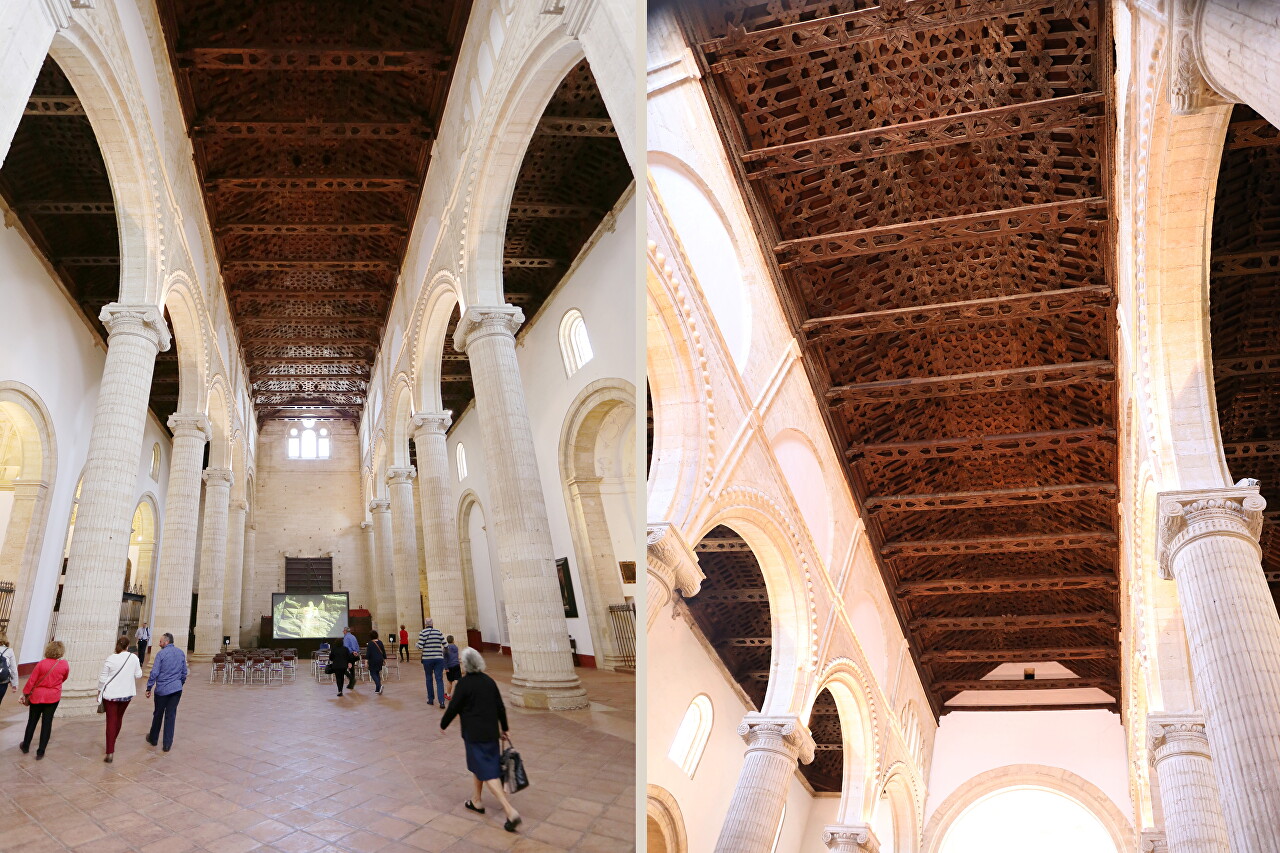
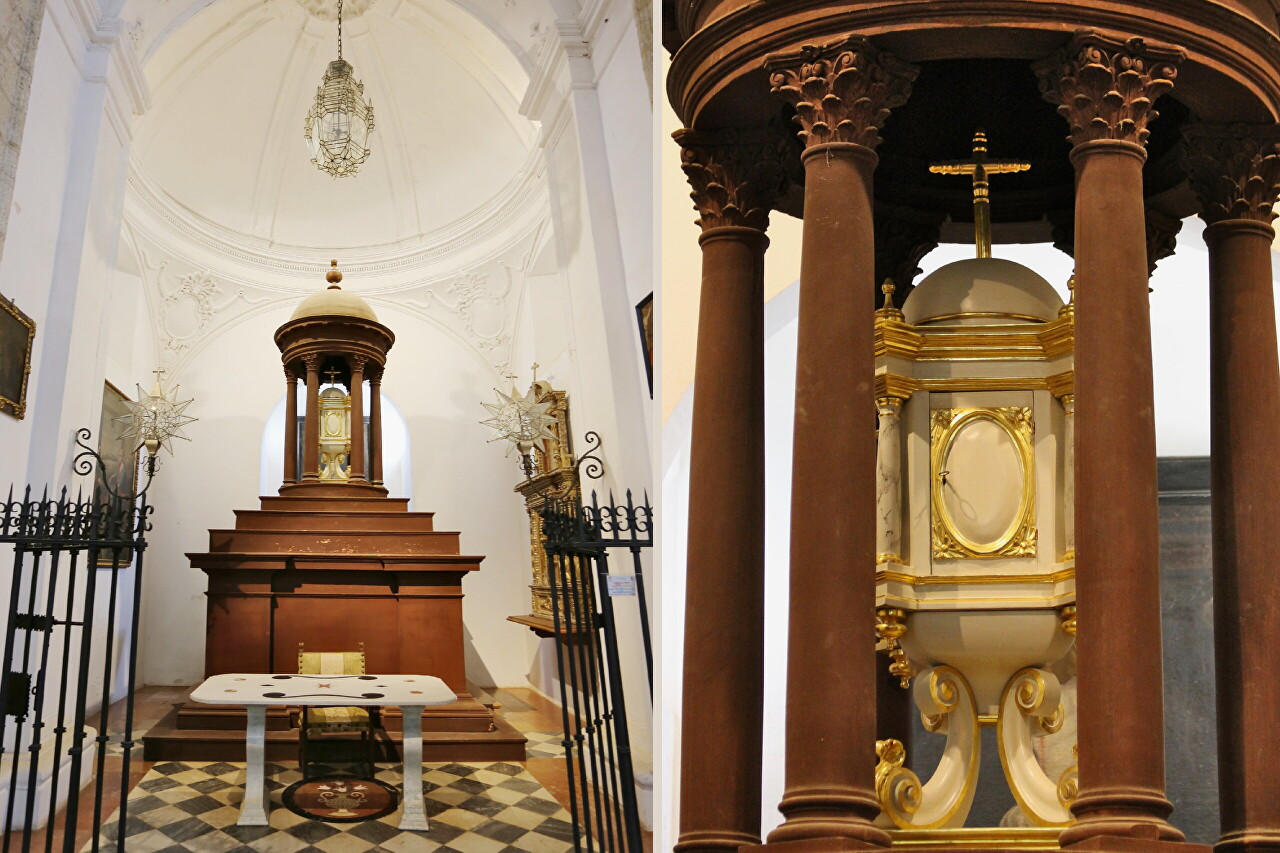
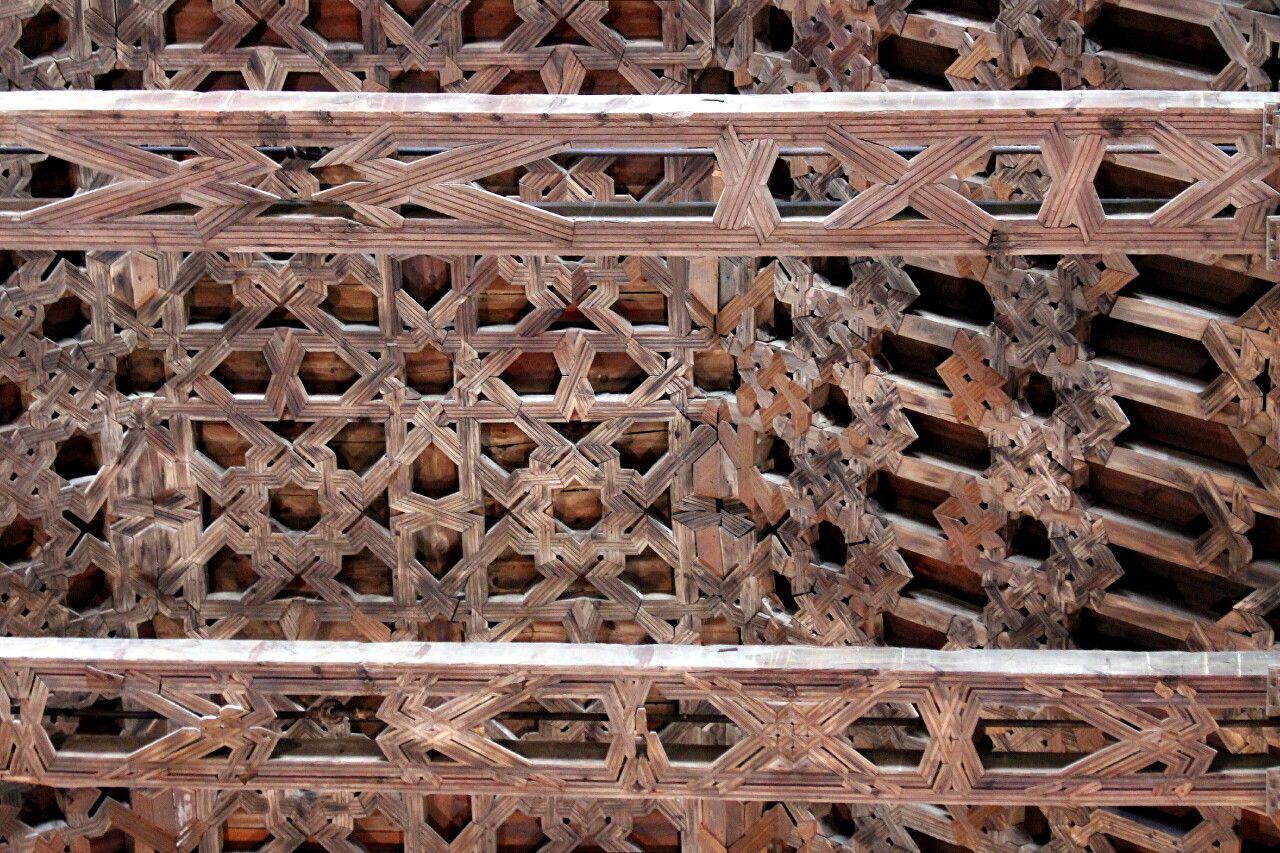
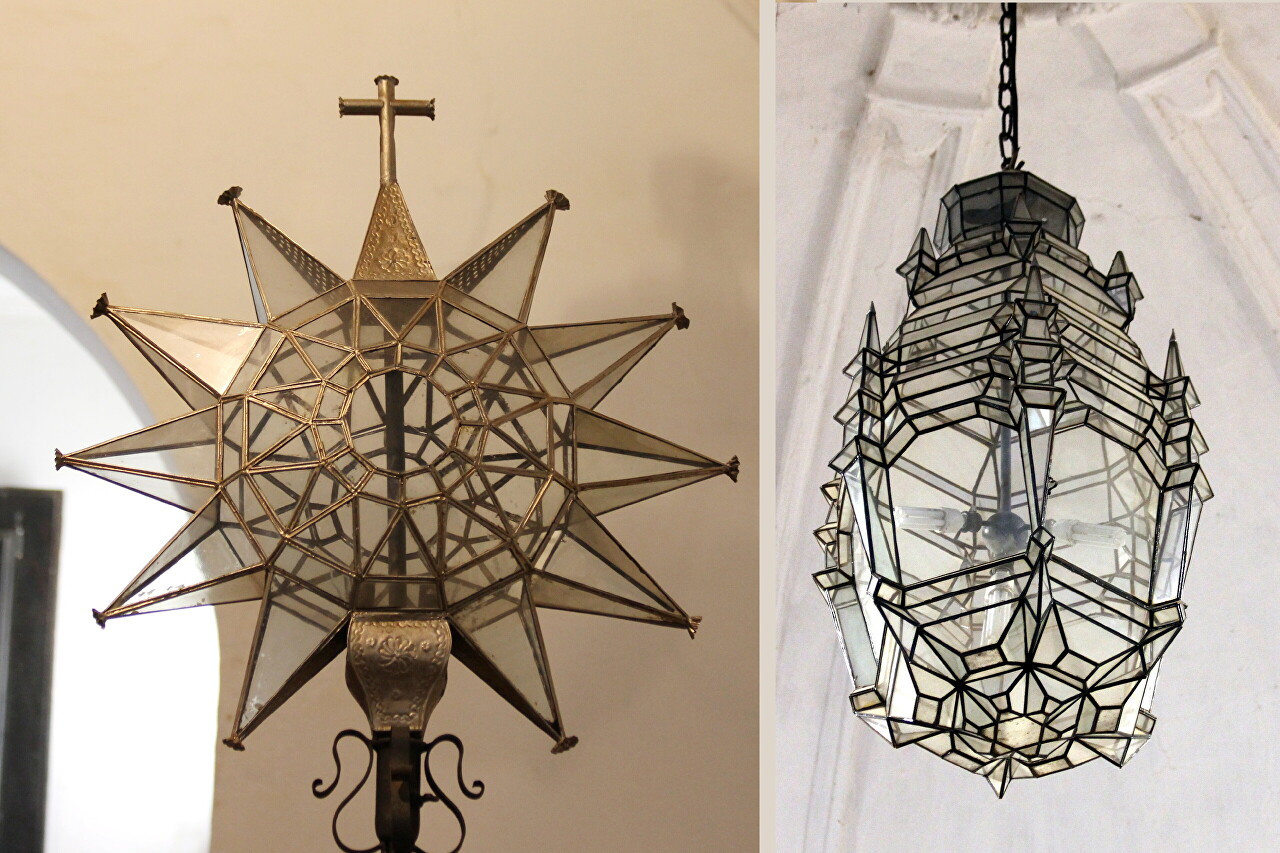
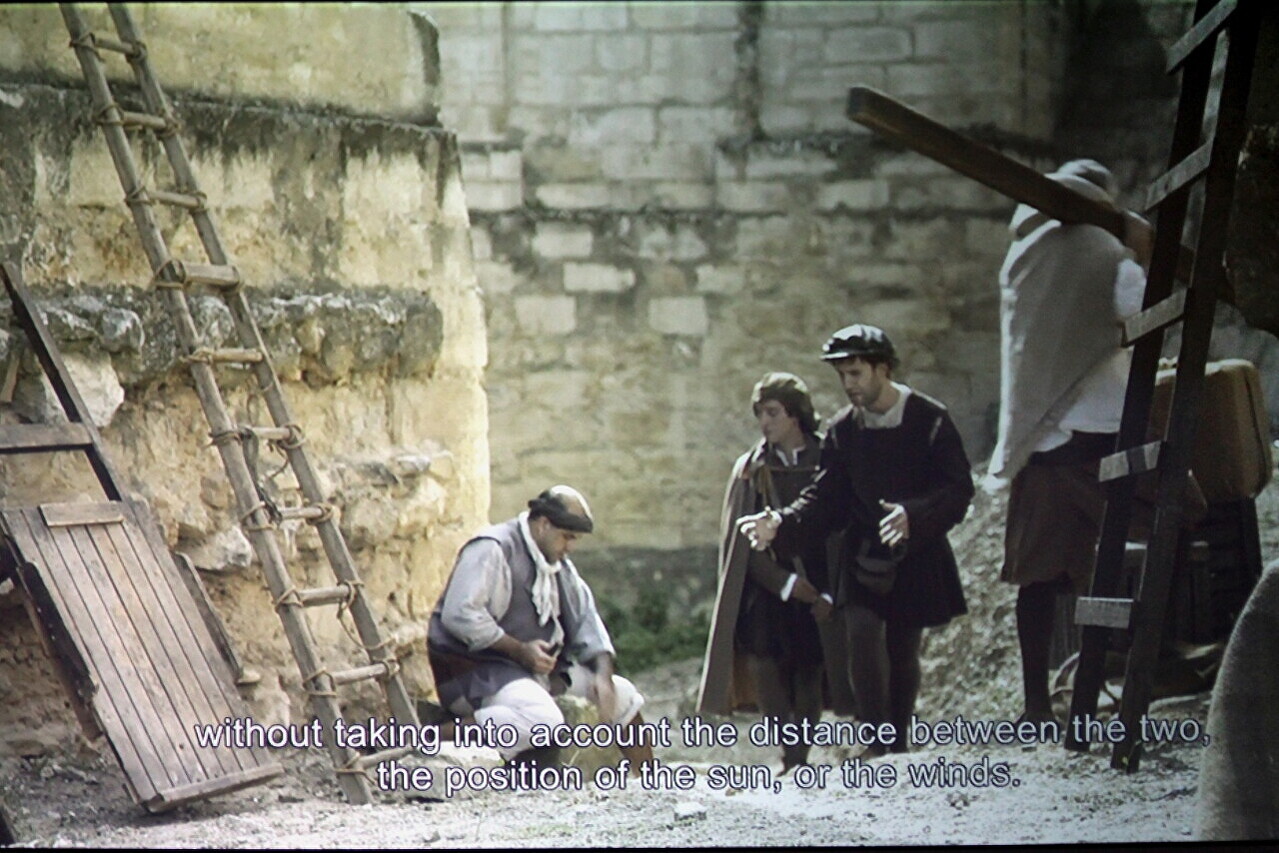
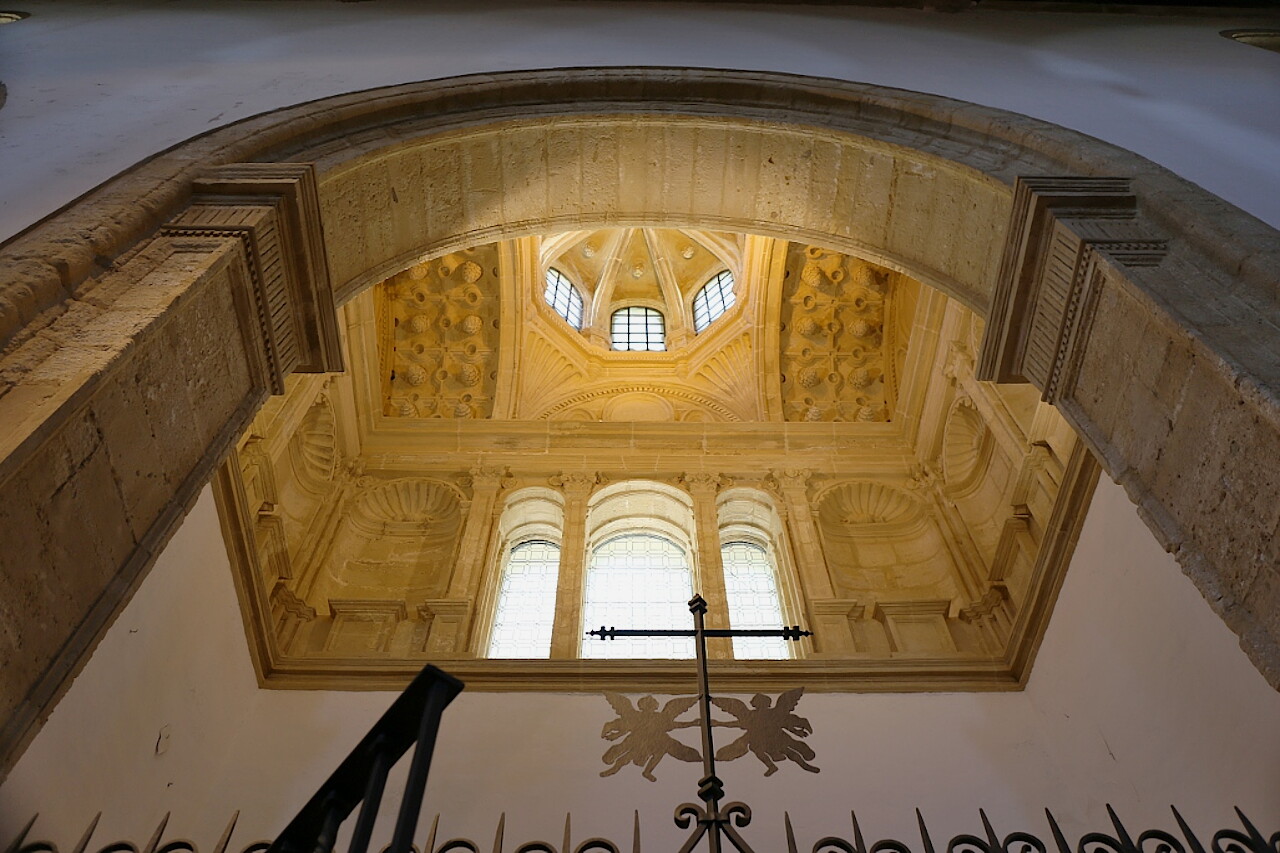
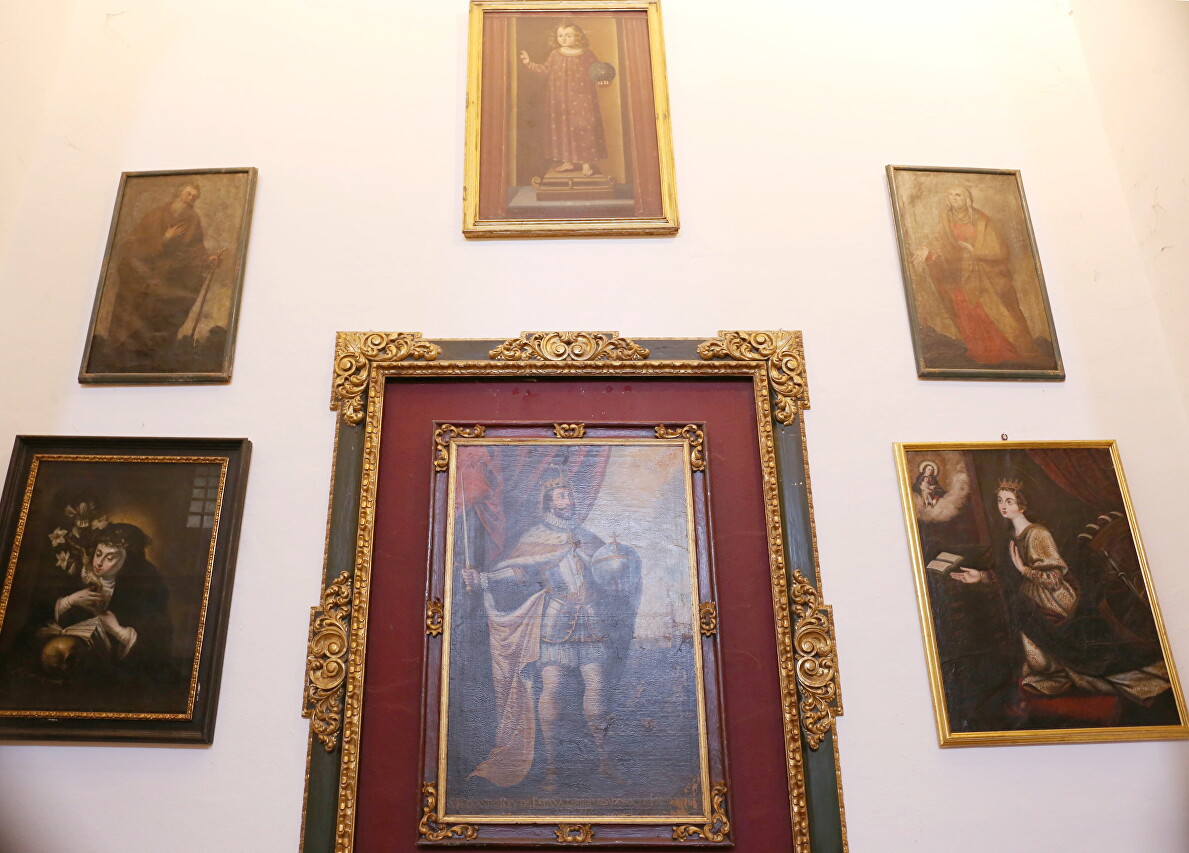
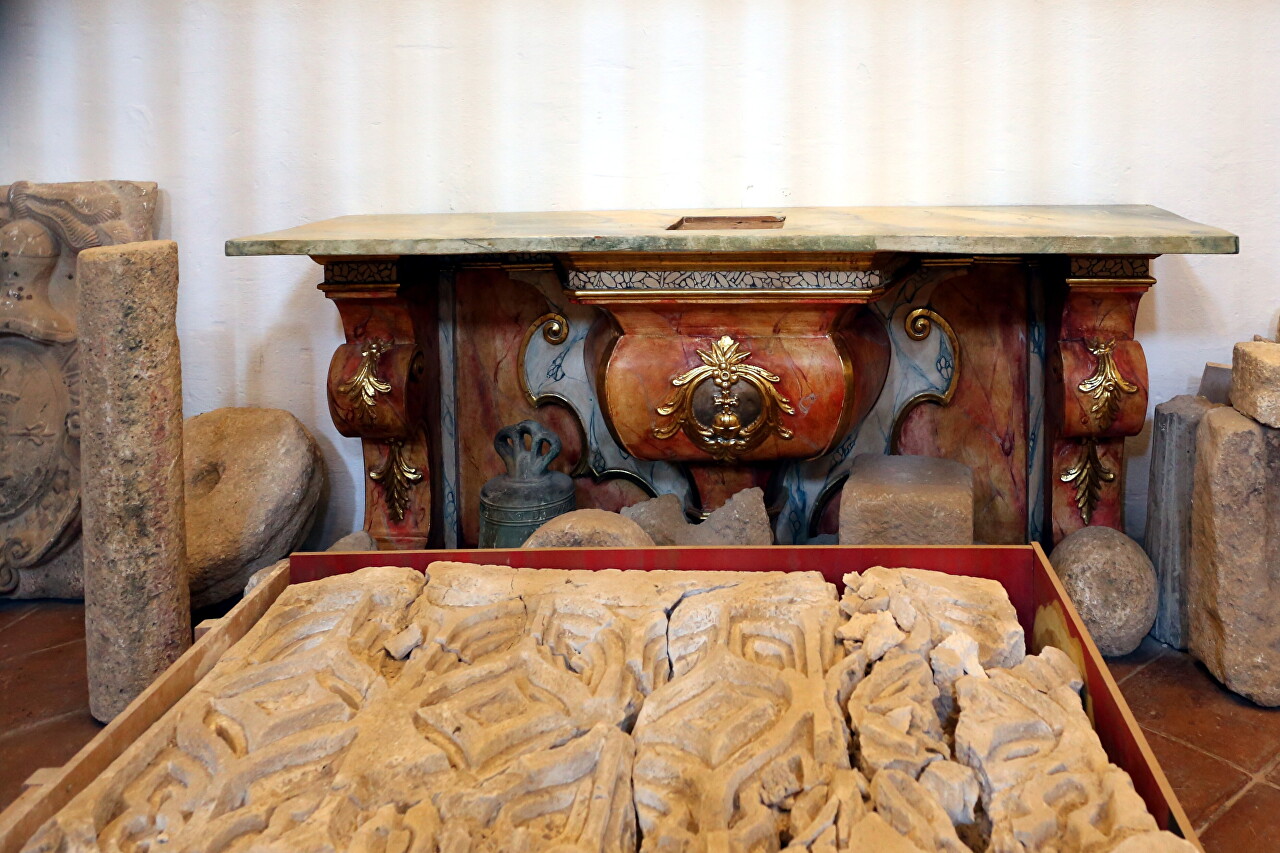
The interiors of the church combine elements of the early Renaissance and Moorish style. The space is divided into three naves by tall and massive columns in the Ionic style. The naves are covered with wooden ceilings with carved ornaments in the Mudejar style. Only the main chapel has a ribbed Gothic vault. Florentine-style windows let in a lot of light and are located at the top of the walls, so that the interior does not appear dark. The almost complete lack of decoration is surprising, which is atypical for Spanish churches, especially royal ones. In fact, in the 16th and 17th centuries it was one of the most luxurious churches in Andalusia, but in 1692 the collegiate status was transferred to the church of San Sebastian in the lower part of the city and the luxurious utensils were moved there. Until the middle of the 20th century, the church operated as a parish church, and in 1904 it was declared a national monument, but no restoration was carried out there. During the Civil War, the church was closed and looted, losing the last values of the Renaissance interior. It was only in the 80s that the government of Andalusia and the city hall of Antequeri began to rebuild. The builders cleared the premises of debris, reinforced the supporting columns, and replaced the roof. The main focus was on restoring the unique wooden ceilings, and the canopy in the main chapel was also recreated. With the completion of the work, the church has become accessible to tourists, and the facility is positioned as a public cultural center. Various events are held here, including costumed presentations for tourists. In 2024, a large-scale restoration project was launched in order to return the complex to its authentic look of the mid-16th century.
..
..
..
..
..
..
..
..
..
..
..
..