Fuente de Neptuno, Madrid
The Plaza de Cánovas del Castillo is home to another Charlemagne monument. As you know, the reformer king sought to bring the capital of Spain on a par with European cultural centers, Paris and Vienna. In addition to urban improvement, which resulted in pavement and gas lighting on the streets, the monarch did not forget about the aesthetic side. As a result, in the 1780s, the Alcalá Gate and two fountains were built, which later became tourist symbols of Madrid: the Cibeles Fountain in the square of the same name and the Neptune Fountain.

The fountains were designed by the city architect Ventura Rodríguez. The work began in 1777 with the production of a wooden model based on sketches by the artist Miguel Ximénez. In 1782, the sculptor Juan Pascual de Mena began work on a statue of Neptune made of white Toledo marble. Two years later, the master died, and the work on the statue was continued by his students: Jose Rodriguez, Pablo de la Cerda and Jose Guerra( José Rodríguez, Pablo de la Cerda, José Guerra), they also made all the other sculptures of the fountain.
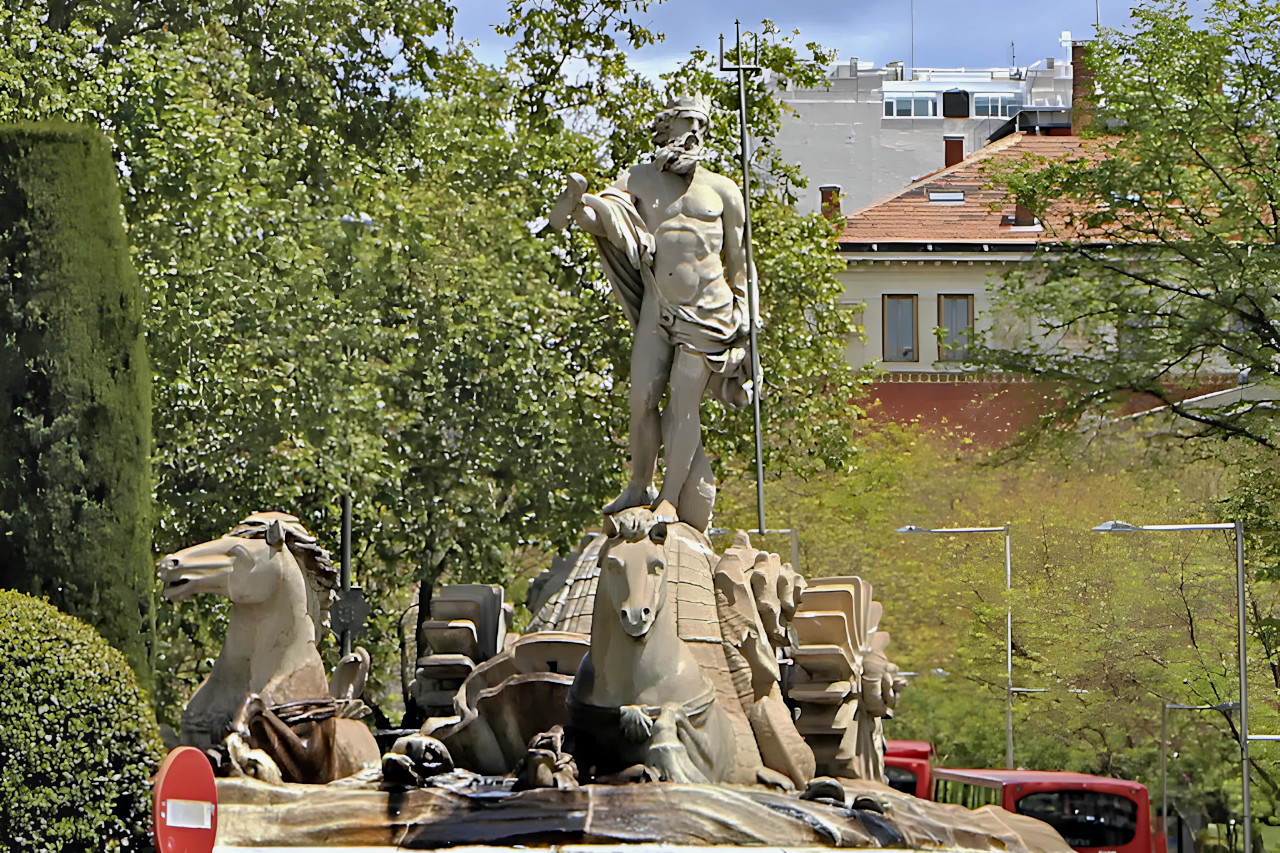
The fountain was completed in 1886 and installed on Paseo de Recoletos near the Palacio de Buenavista. The sculpture of the Lord of the Seas became a monument to the progressive reforms of the navy. One hundred years later, the beautiful structure became a hindrance to city traffic, and in 1898, the fountain was relocated to its current location.

I also recommend visiting the fountains at night, when the sculptures and water jets are beautifully illuminated.
