Yeni Saraçhane Sokak
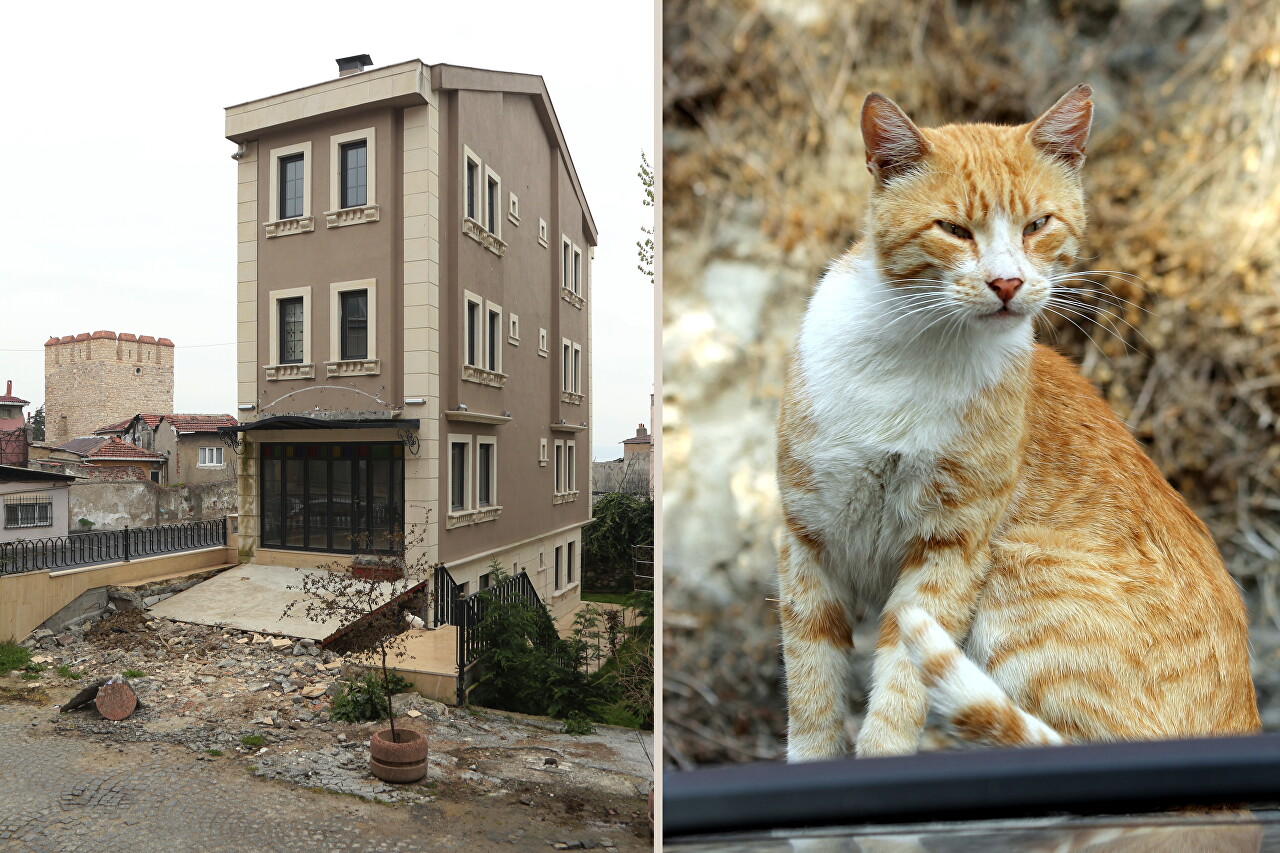
This short street begins below the Ishakpasha baths and extends from the wall of the Topkapi Palace into the depths of a quarter that has not been significantly affected by modern development. At the beginning of the street, you will see several new hotels surrounded by piles of construction debris, with cats roaming among them.
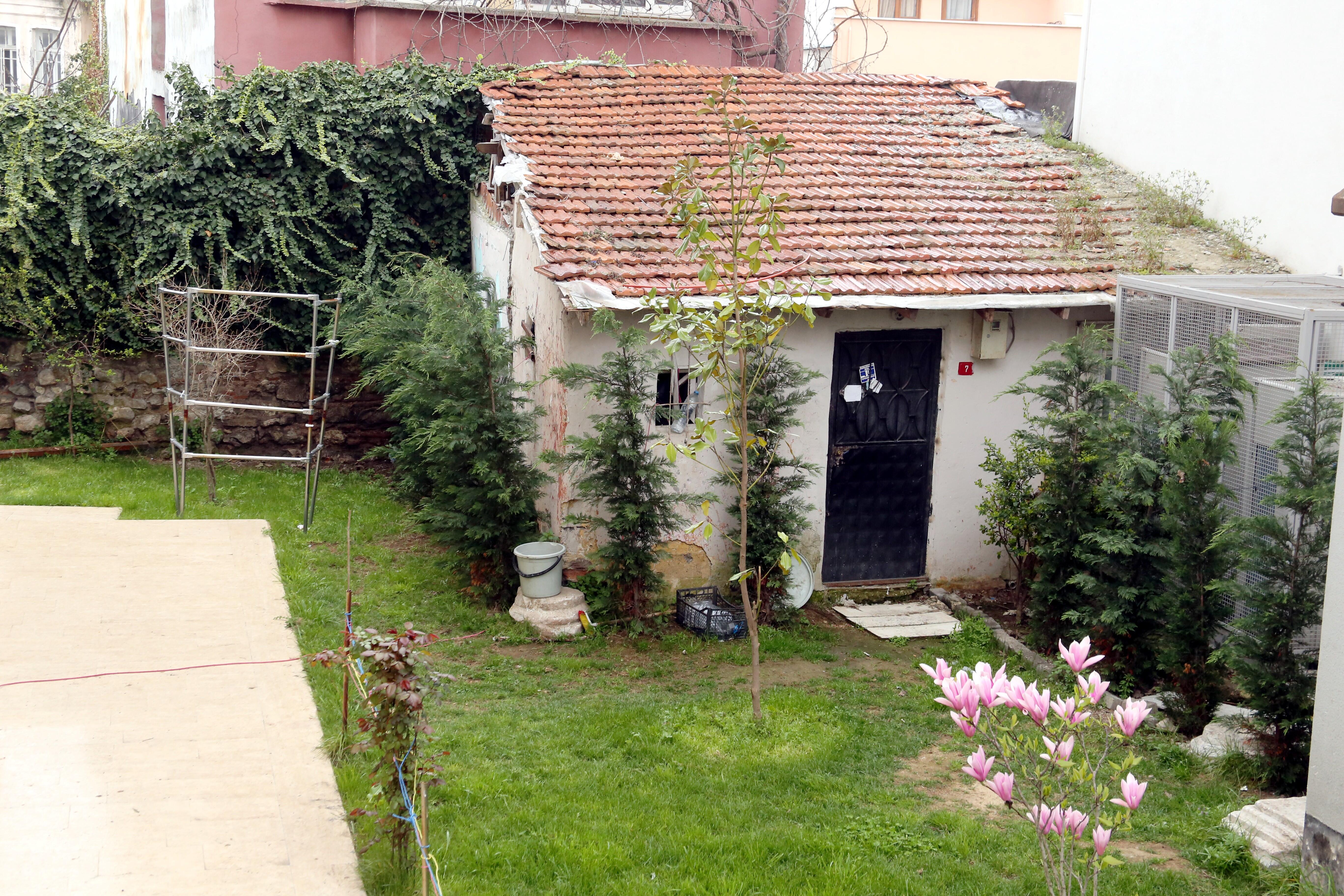
Below the hotels, on the seaside side, among the ruins, a tiny house with a miniature courtyard miraculously survived.
In 30 steps, a retaining wall made of natural stone will begin on the right. This is the eastern part of one of the terraces of the Great Palace of the Byzantine Emperors.
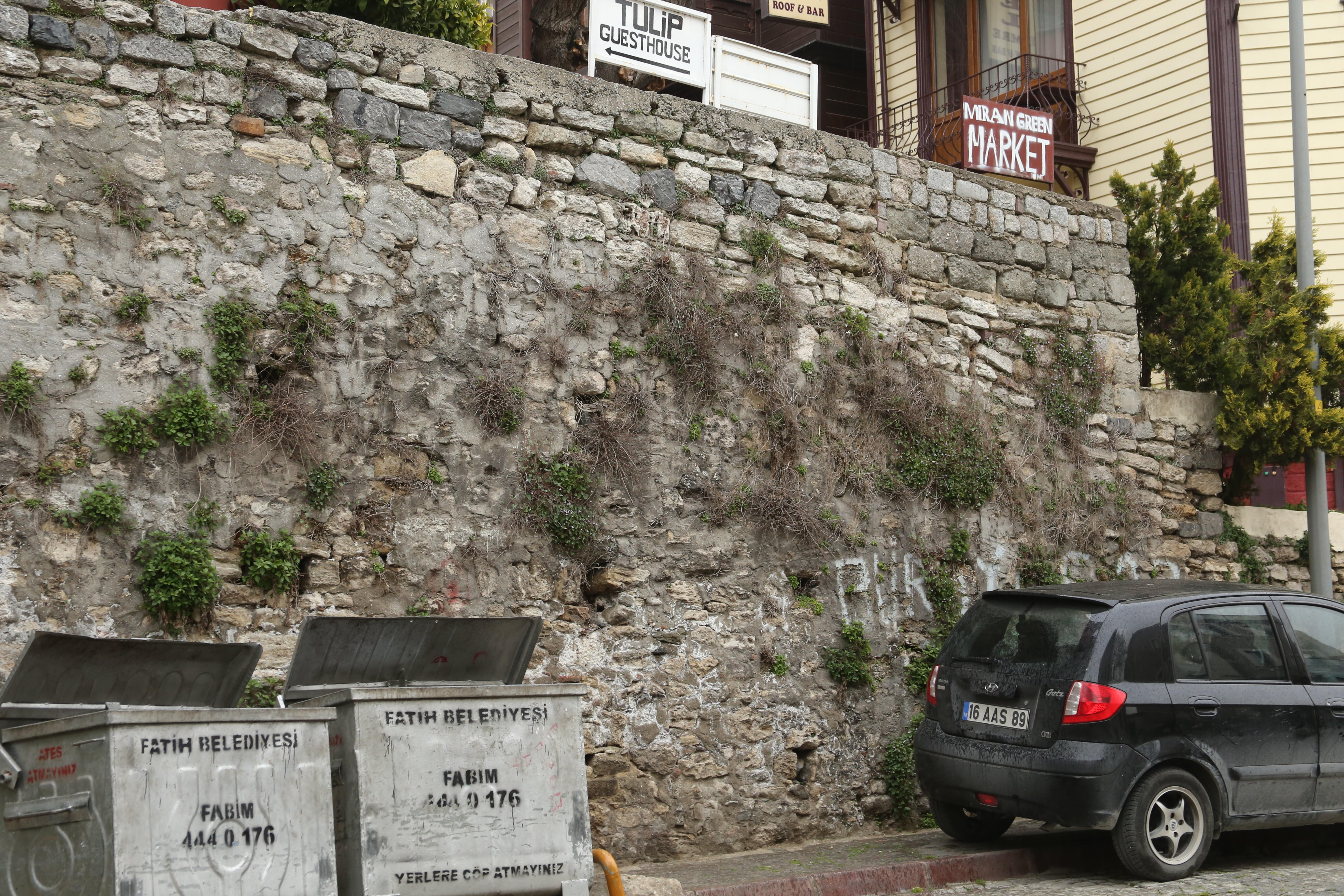
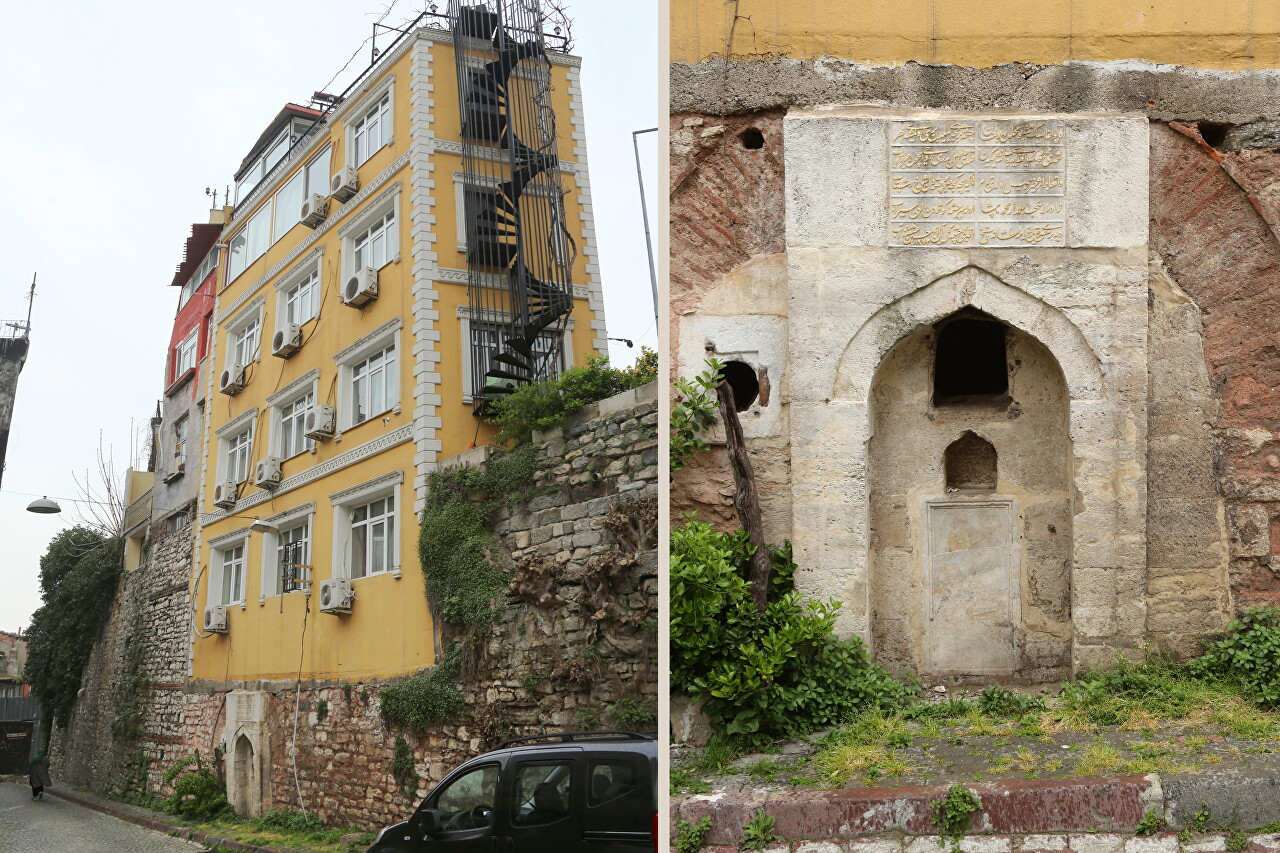
Part of the wall has been dismantled, and a modern four‑story building has been constructed in the opening. And on the remaining part of the wall beneath it, we can see a stone niche with an arch — the remains of a public water source (fountain). The fountain is named after Ebezâde Abdullah Efendi (Ebezâde Abdullah Efendi Çeşmesi), an outstanding Ottoman scholar, theologian, and jurist. At the turn of the 17th and 18th centuries, he held the highest religious and judicial position in the Ottoman Empire. Efendi died in 1714, and eight years later, his widow built a public spring in memory of her husband. Building street fountains in the Ottoman Empire was a popular form of charity, allowing one to immortalize their name and do a good deed for ordinary citizens.
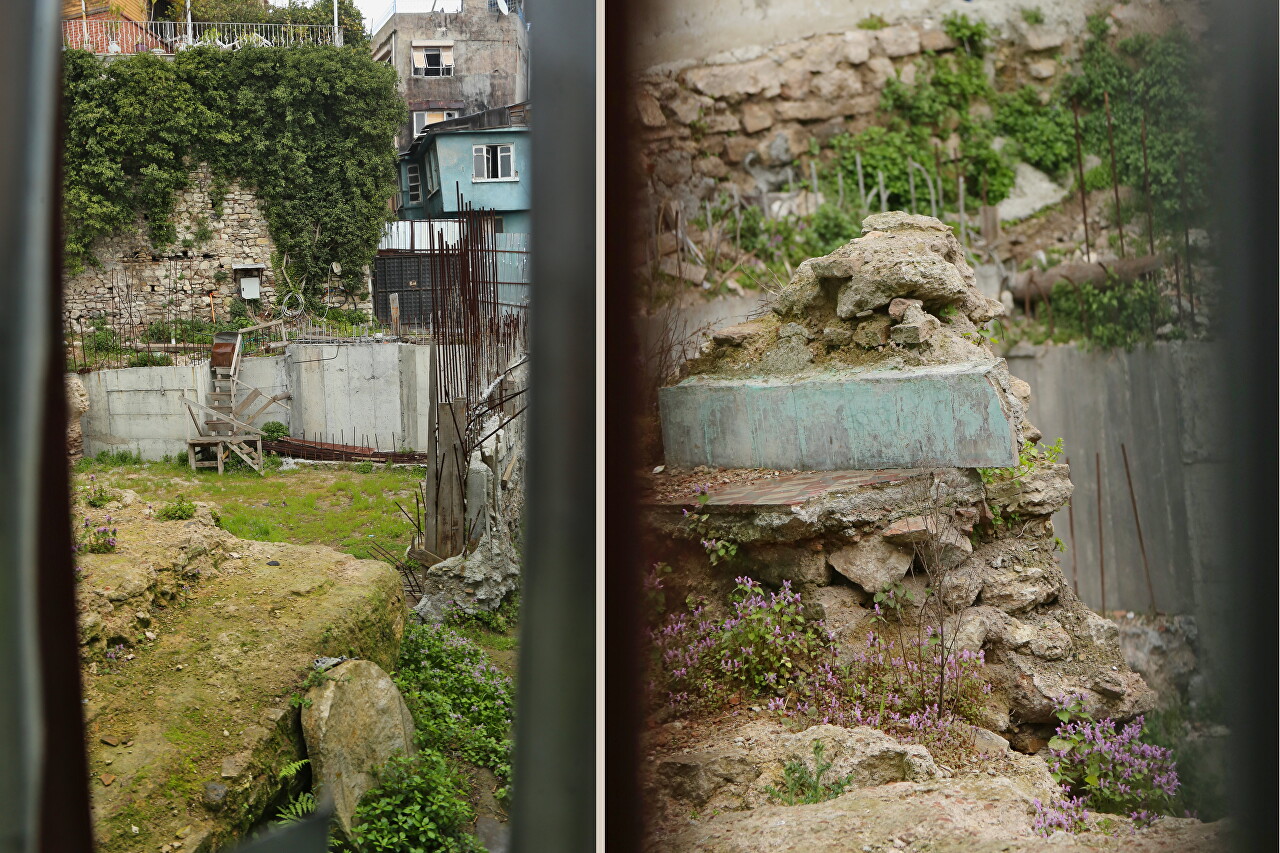
Further on, the street ends at a corrugated iron fence surrounding a dead construction site. At the fence, the street doesn’t end; it makes a turn and descends rather steeply towards the sea.
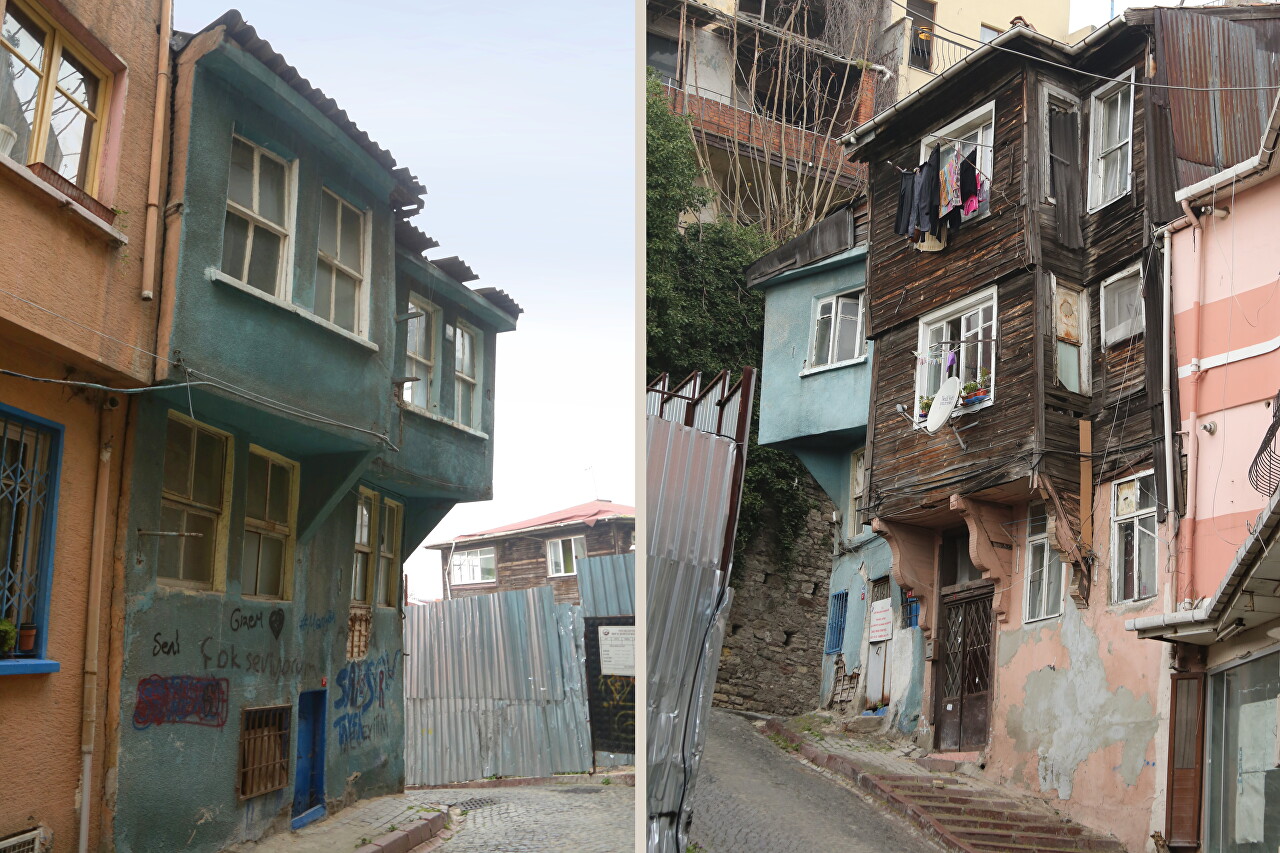
In Sergei Nikolaevich Ivanov’s book “In Search of Constantinople,” it is recommended to look behind this fence (as well as behind others) - there you can see the remains of walls from the Byzantine period. The route for my today’s walk was planned using this wonderful guidebook. Having found a small gap, I actually saw a fragment of a stone wall.
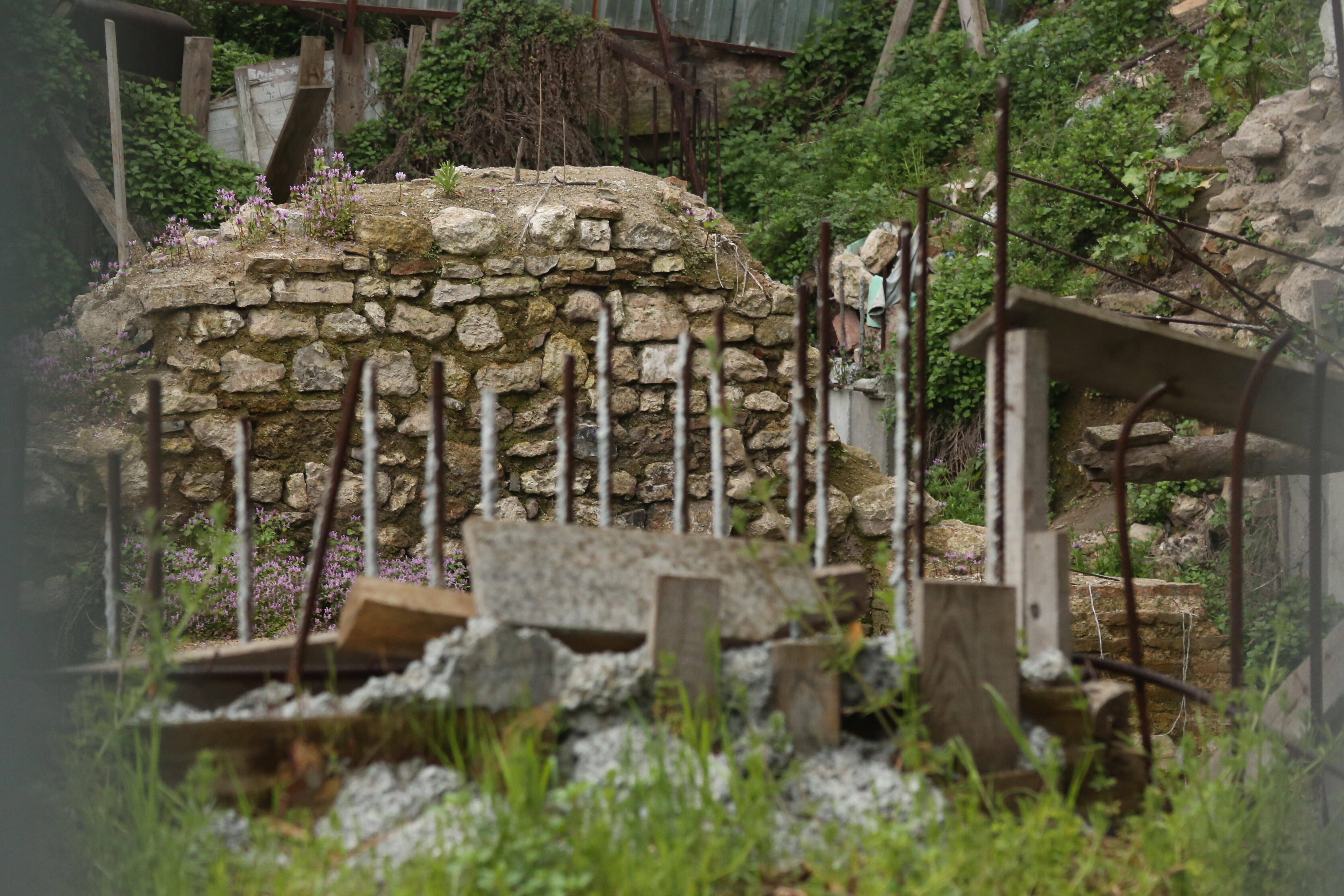
After walking around the fence on three sides, I found a bent‑back leaf where I could get a better look at the artifacts. We can see the continuation of the same retaining wall and the massive stone foundations in front of it.