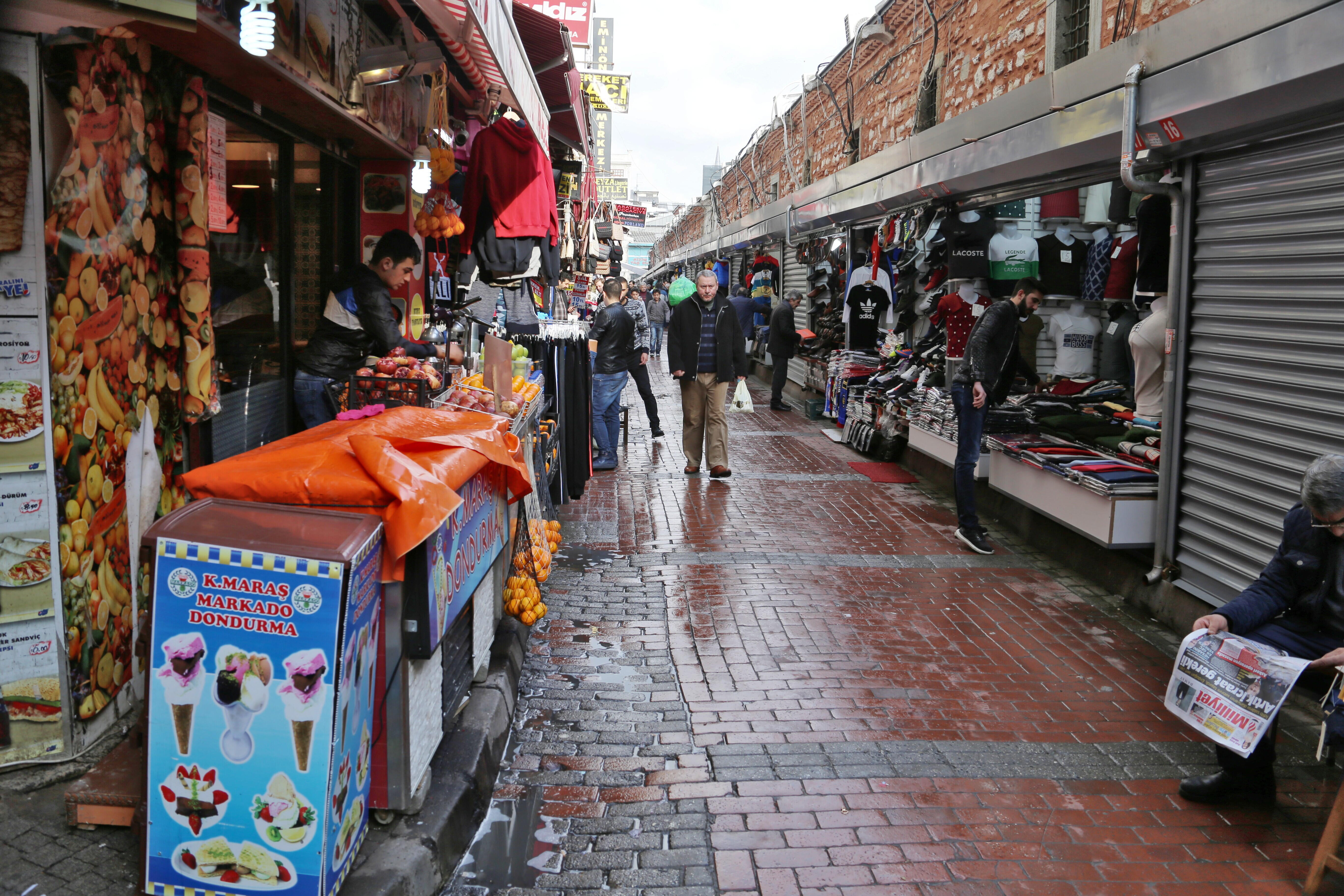
Morning in Fatih. The Eastern Spurs of the Grand Bazaar
Today, I had planned to visit the Rahmi Koç Museum of Transportation, which is conveniently accessible by ferry across the Golden Horn. I set out on foot through the bustling streets of Fatih, starting from Çemberlitaş Square. The square was named after a Roman column reinforced with steel hoops, Çemberlitaş Sütunu, which translates to "Girded Column" in Turkish.
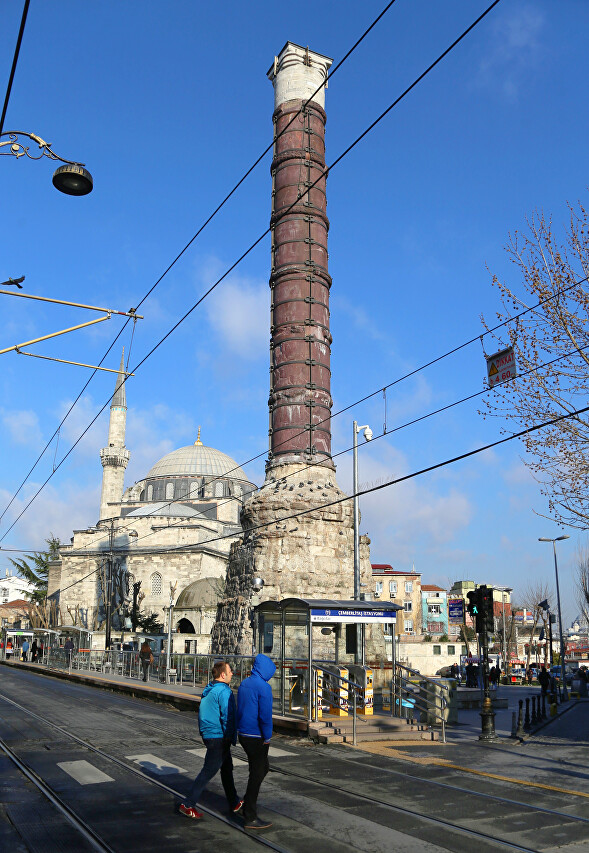
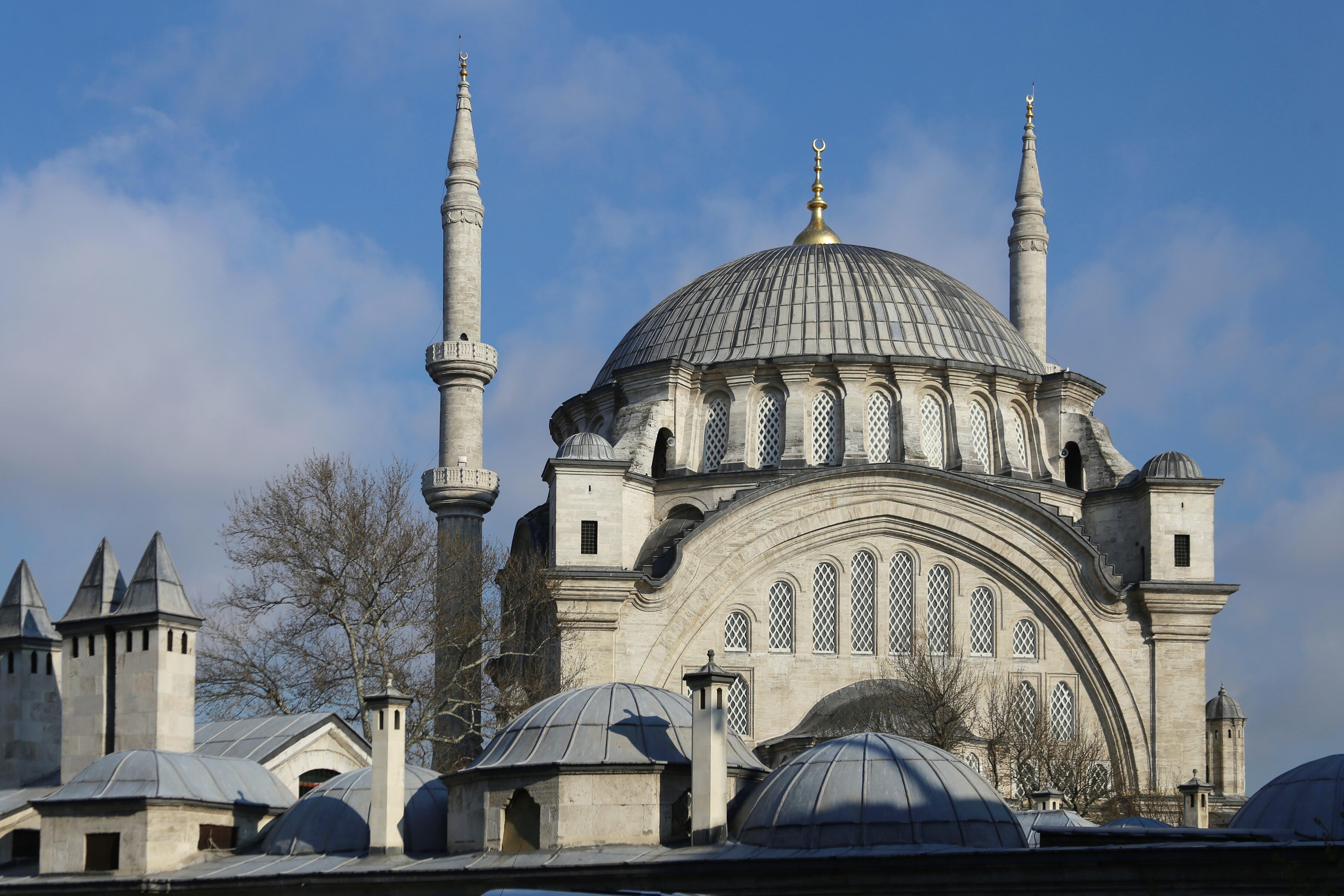
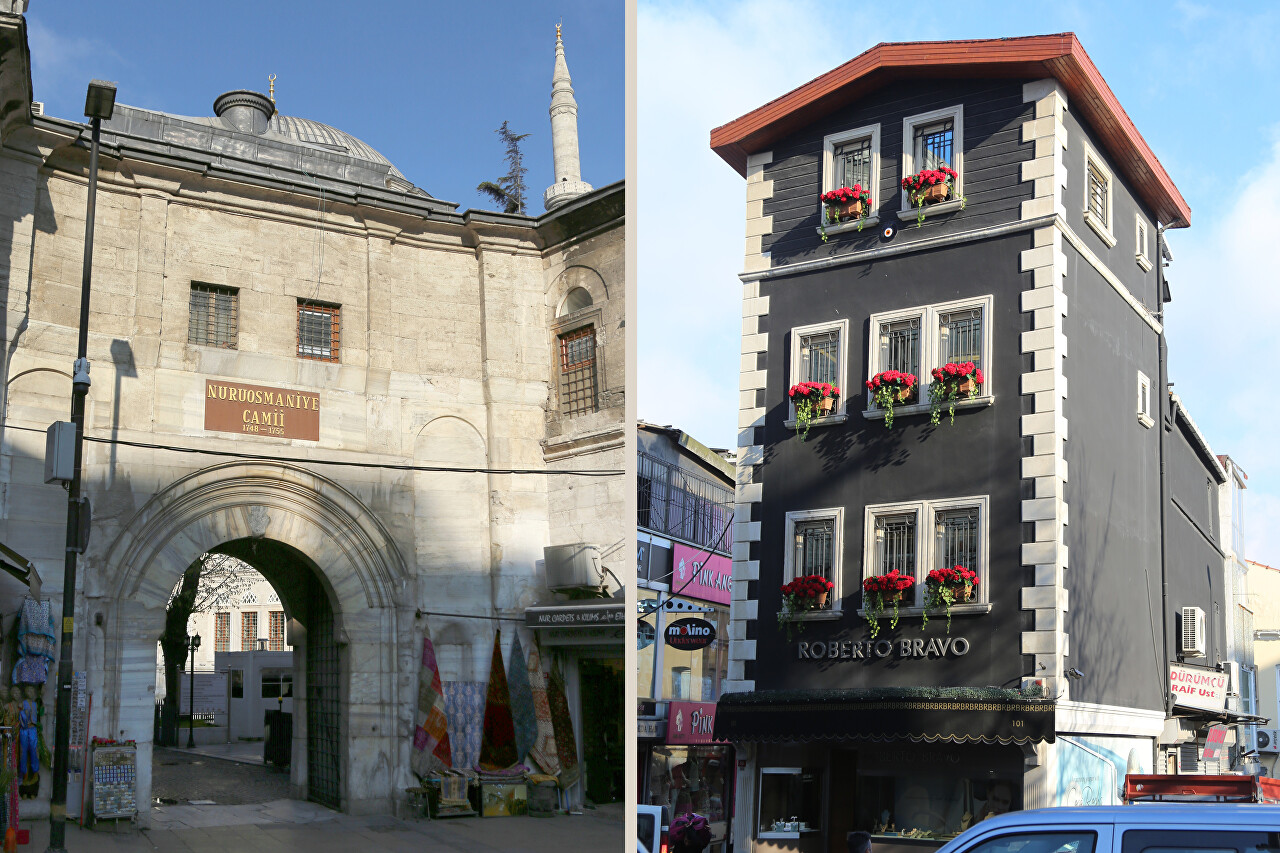
In the square, I admired the Nuruosmaniye Camii Mosque in the morning sun.
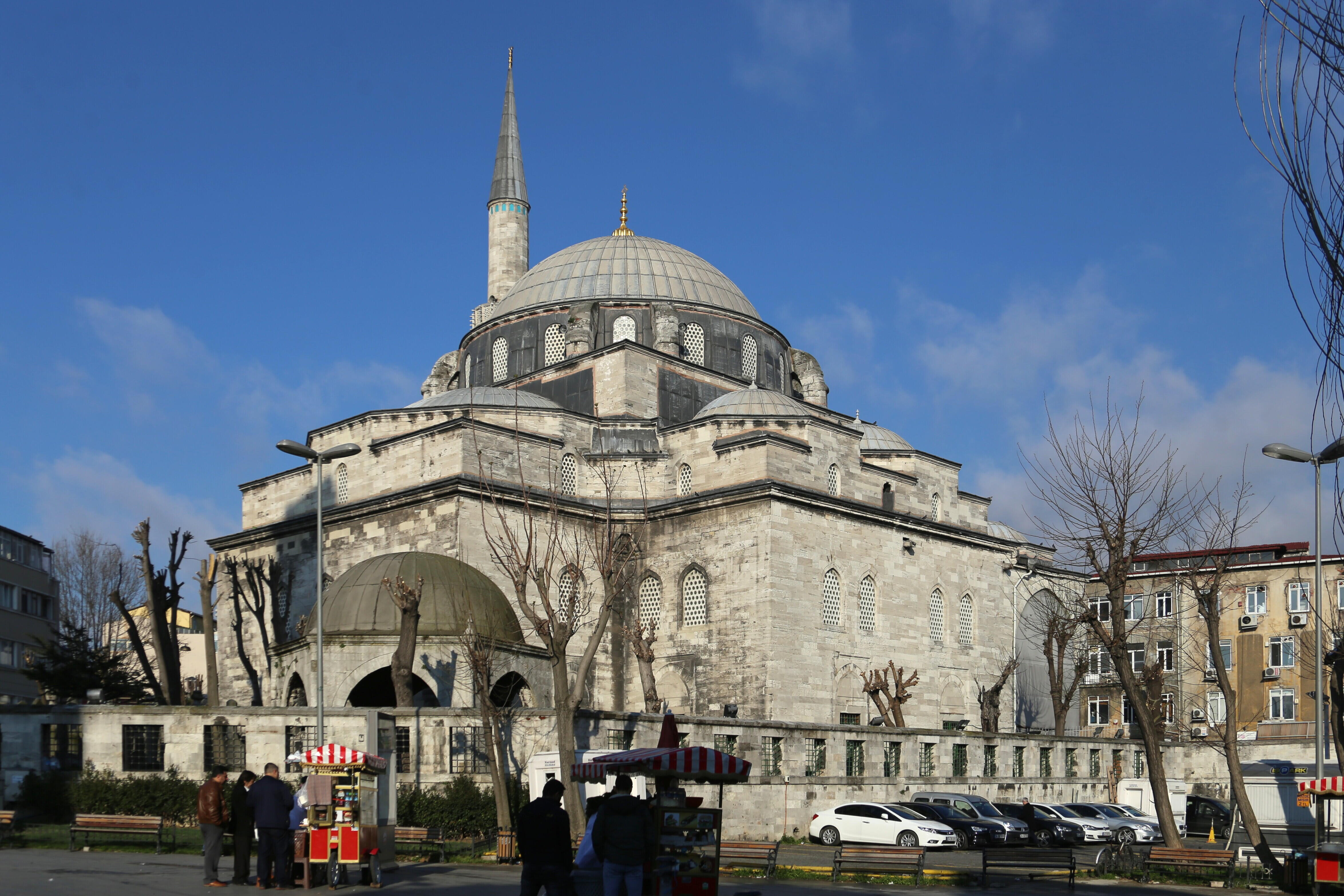
The mosque was built in the 18th century on the Second Hill near the Grand Bazaar, and it is one of the structures that shape the silhouette of the European part of the city.
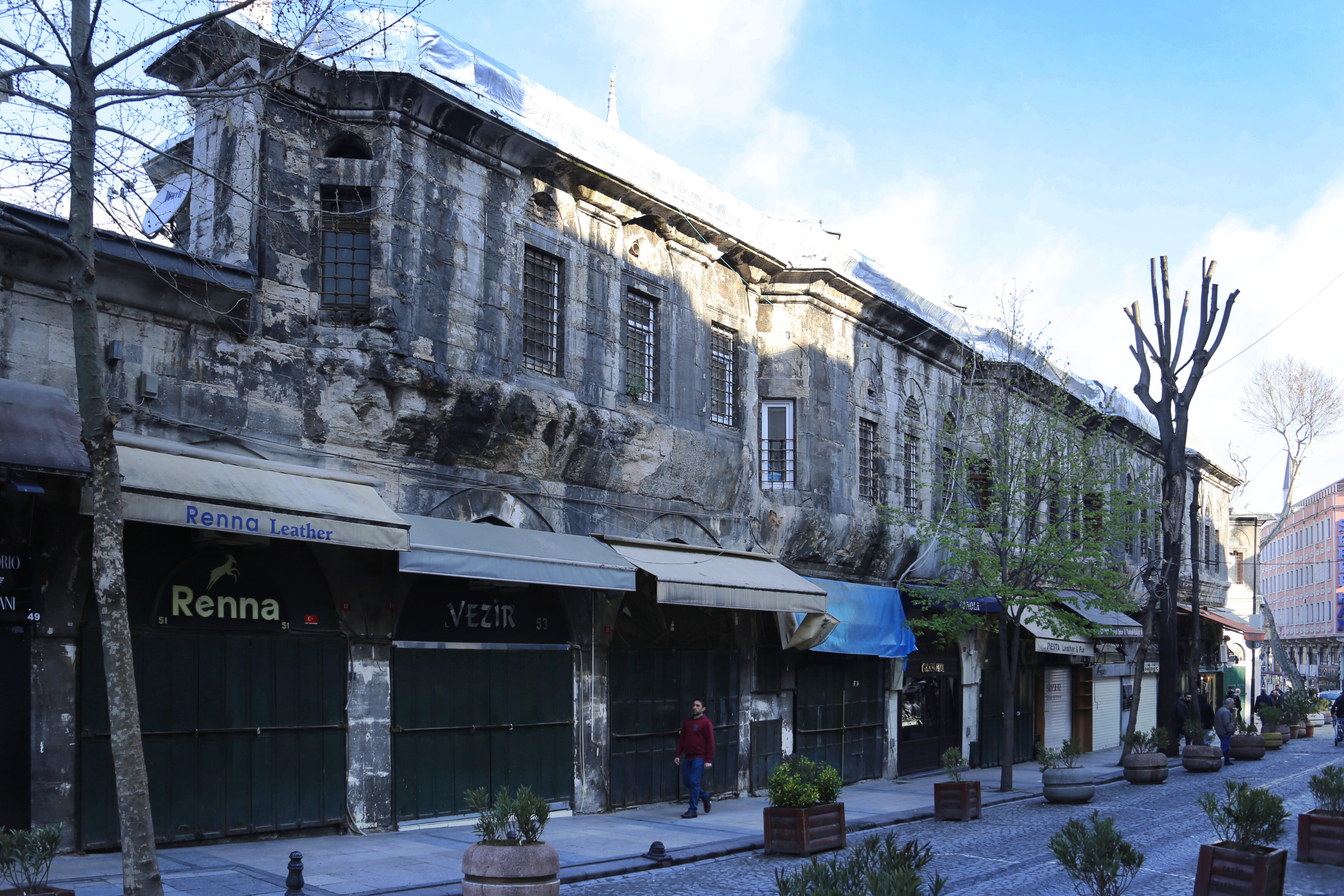
At the square begins the street Vezirhan (Vezirhan Caddesi), which can be called the eastern border between the Grand Bazaar and Sultanahmet. Here are many old buildings, the first floors of which are occupied by shops, at this early hour they are still closed.
One hundred steps to the right is the eastern entrance to the Nuruosmaniye Mosque, and in front of it is the famous Roberto Bravo jewelry store.
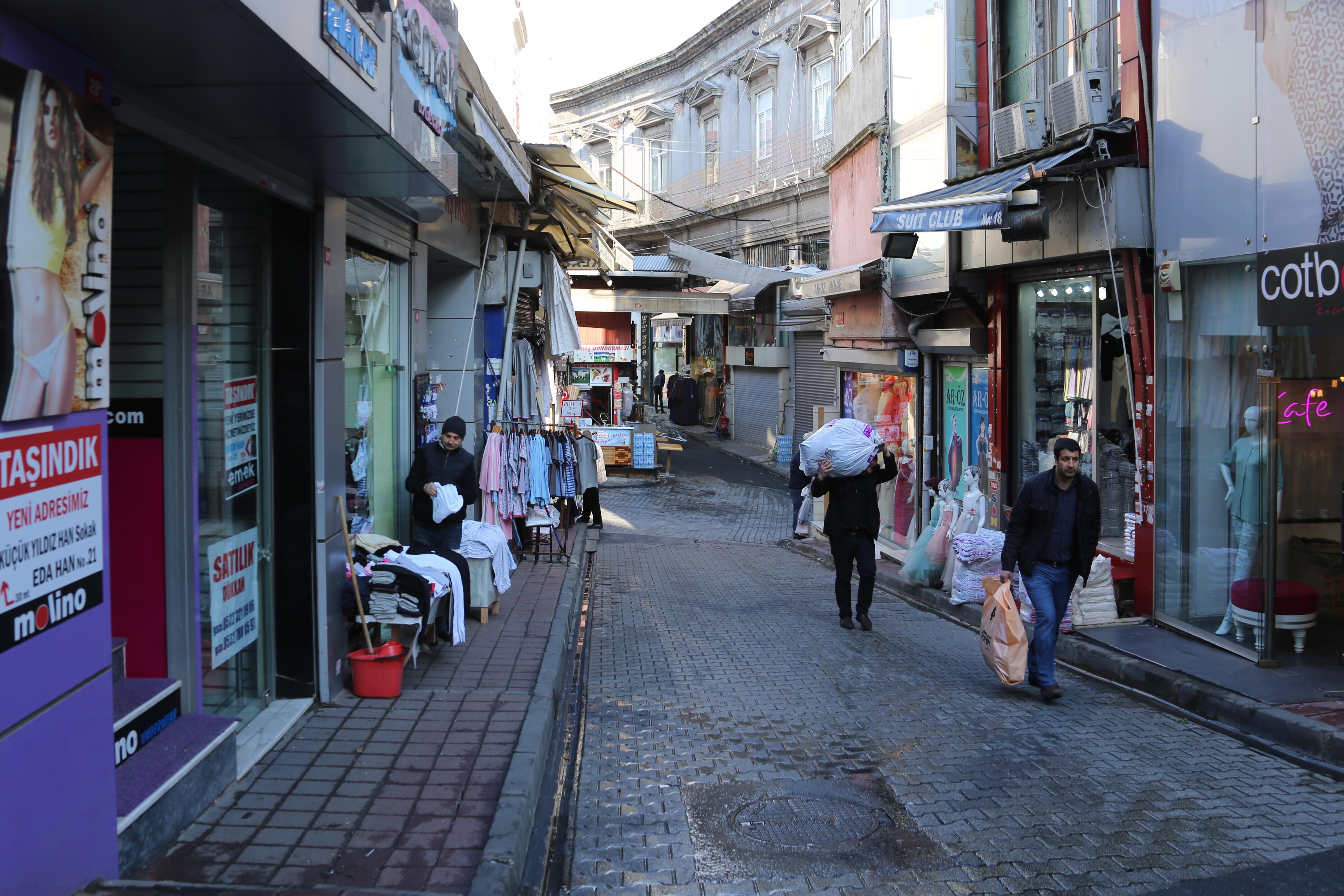
Here the street makes a bend and becomes narrower. This is already Küçük Yıldızhanı Street (Küçük Yıldızhanı Sokak) with endless rows of shops.
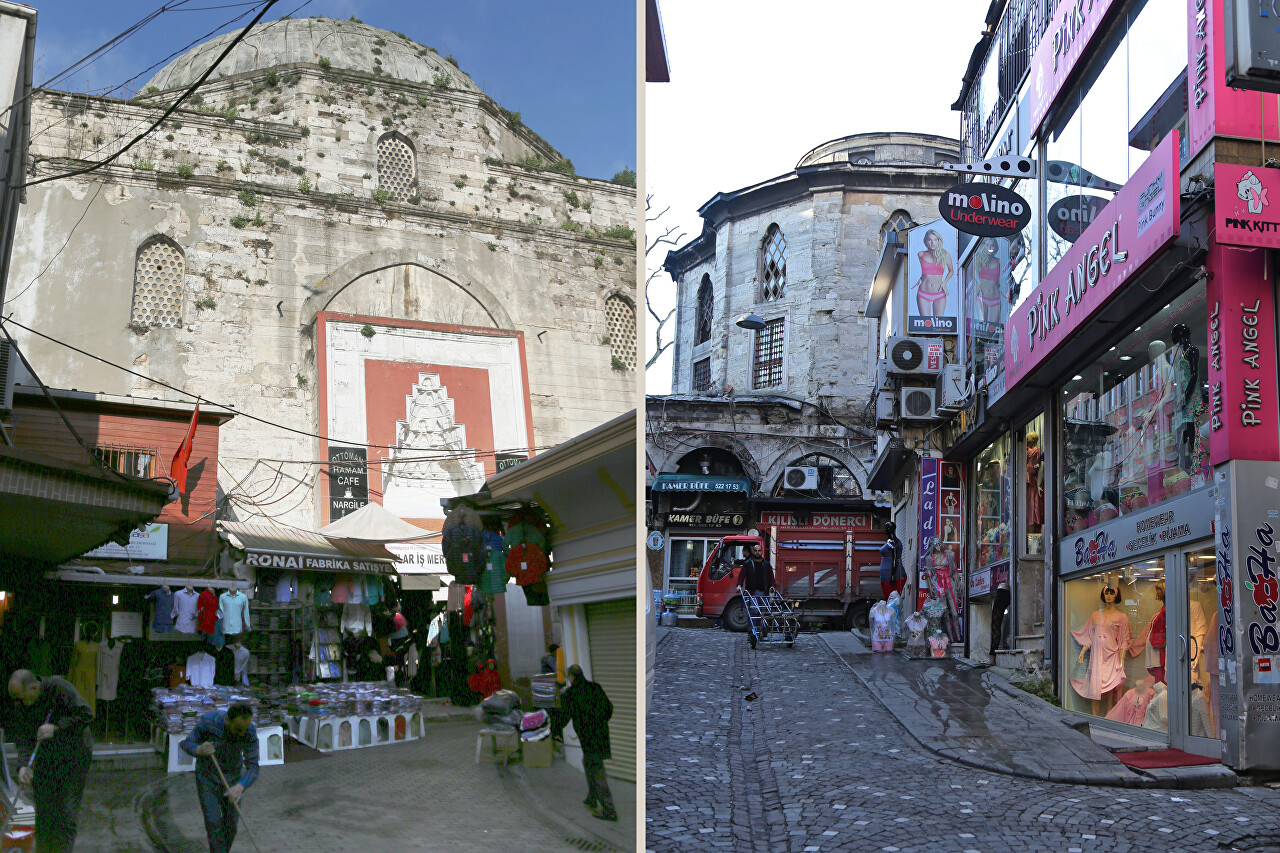
After walking a couple of blocks, we will see the Baths of Mahmut Pasha (Mahmutpaşa Hamamı) on the right. They were built in 1466 and were part of the Mahmut Pasha Camii Mosque complex, located on the right side of the street. In the 19th century, the baths were closed and for a long time were abandoned. In the 20th century, the building was renovated and now houses a shopping center.
I then went to Mahmutpaşa Street, which runs down from the Second Hill to the Golden Horn and was once the main shopping street of the Mahmutpaşa Bazaar.
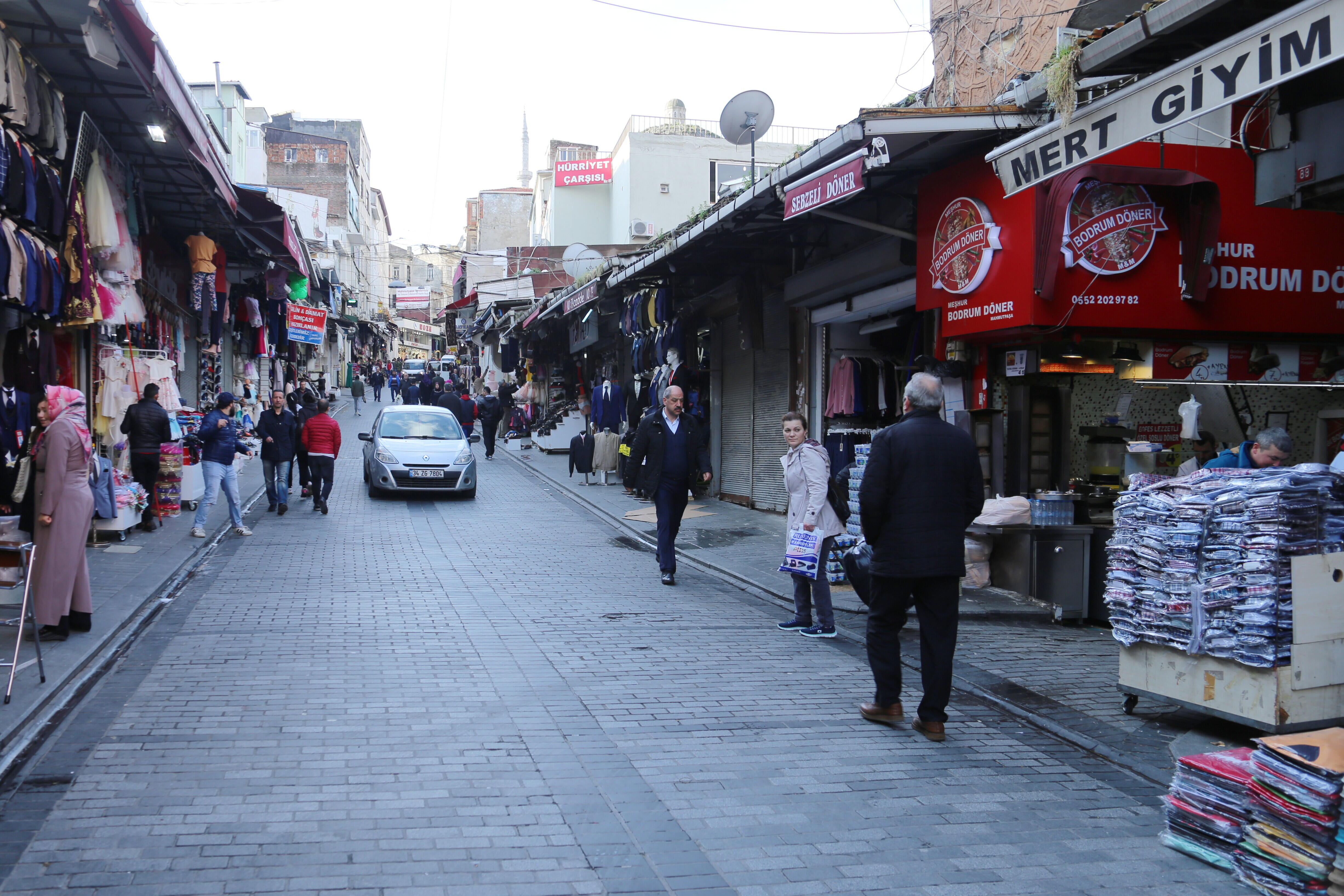
The street is surrounded by historic buildings, many of which look well-maintained. There are almost no hotels or cafes here, and the back streets are home to sewing workshops and wholesale merchants' offices.
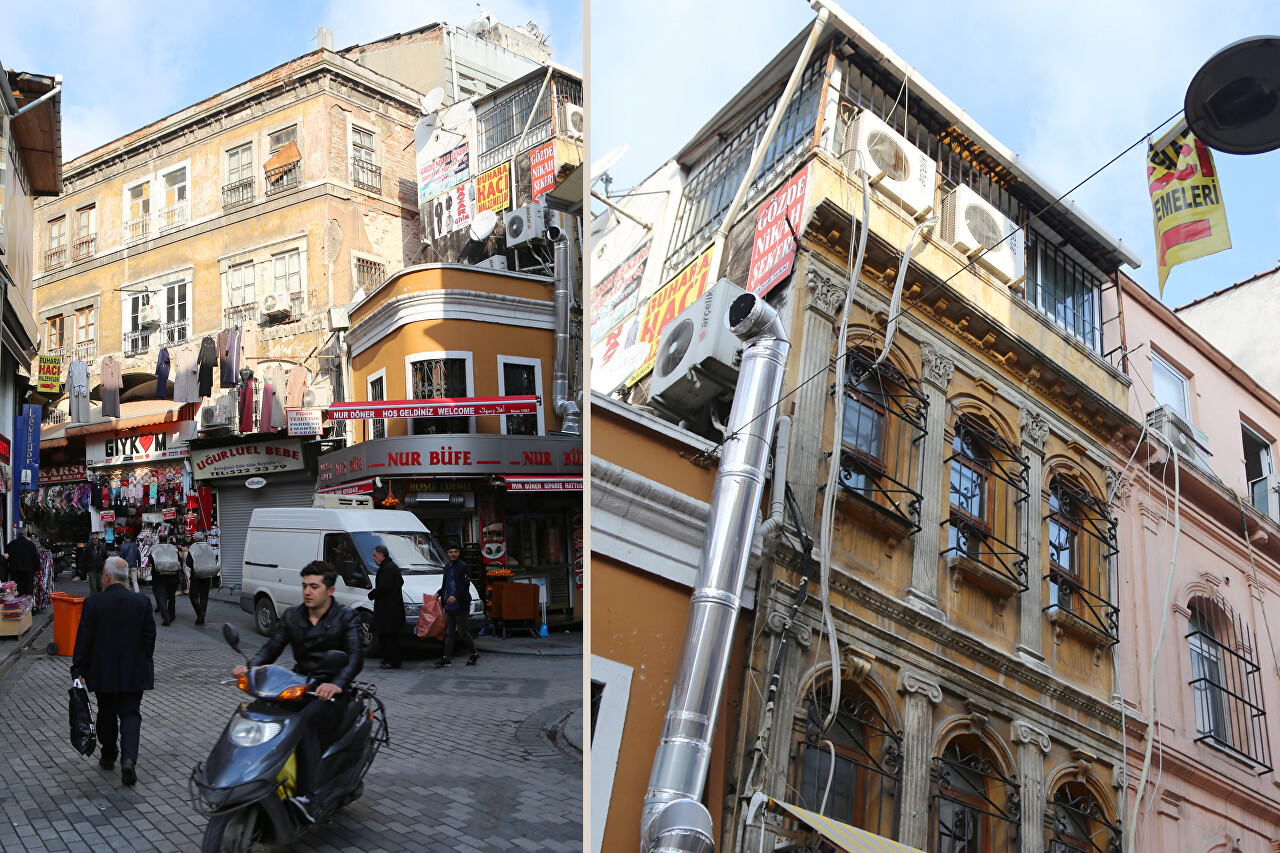
In the early 20th century, the street was paved with cobblestones, as it had previously been covered with potholes and mud. During the daytime and evening hours, when shops are open, the street is closed to vehicular traffic, and goods can only be delivered in the early morning hours.
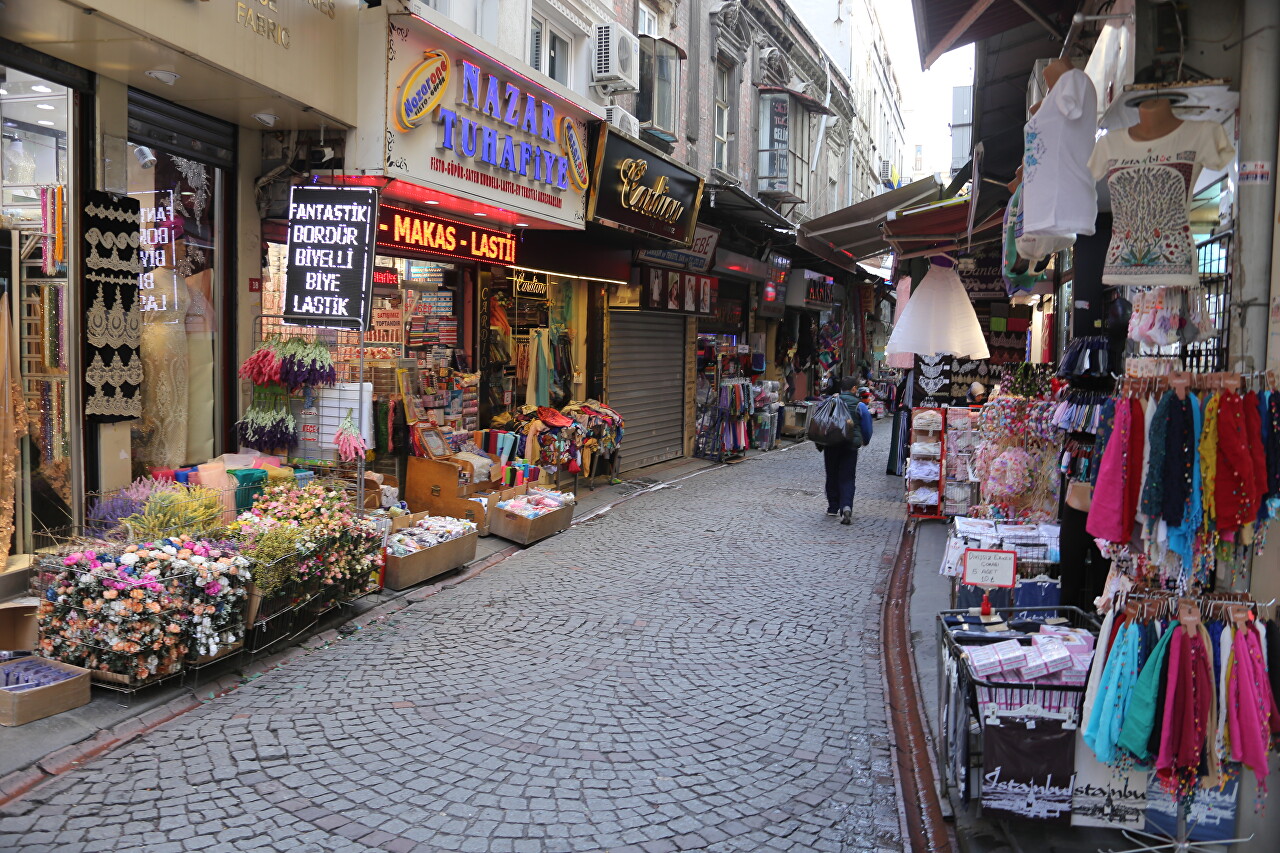
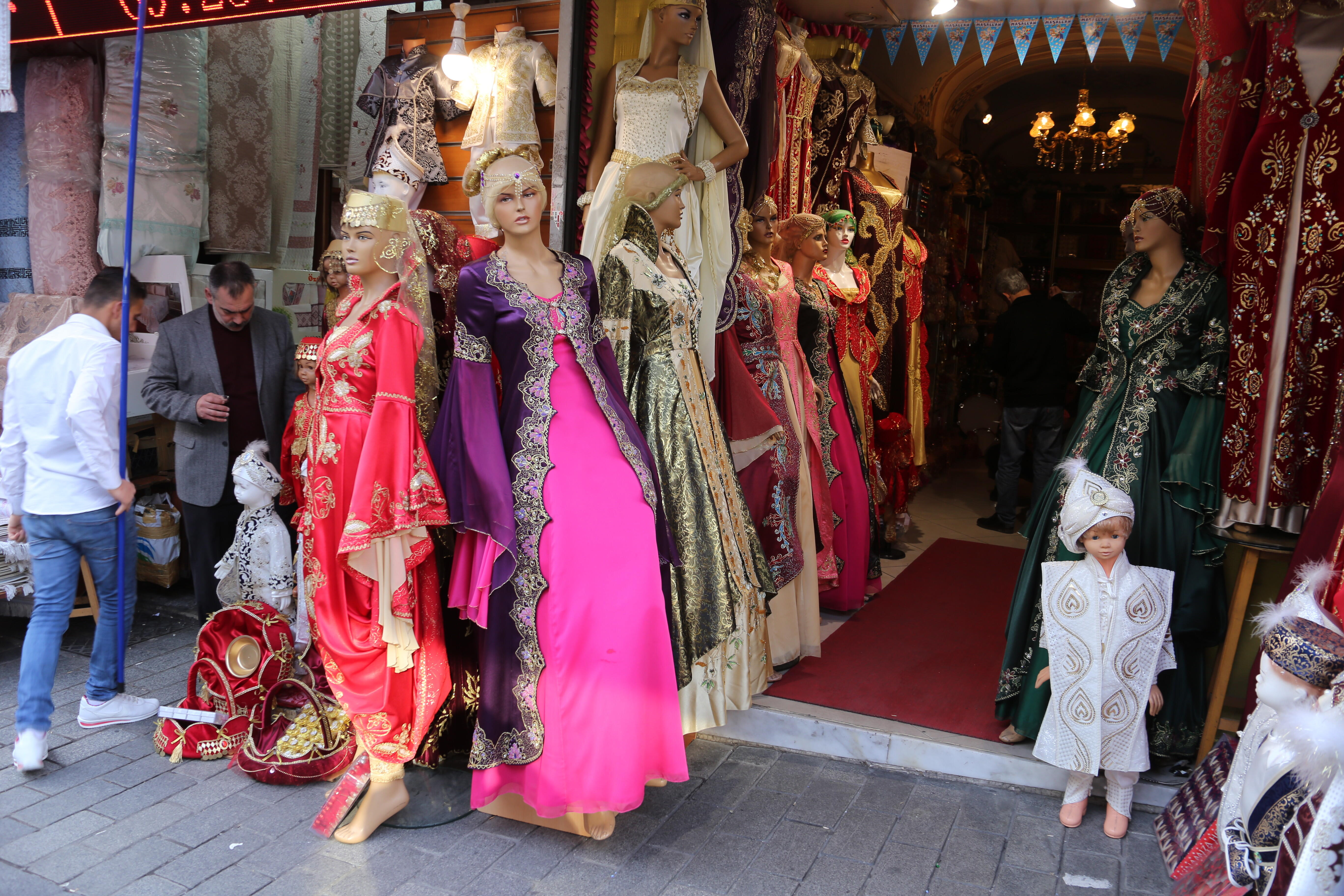
In the shopping districts of Istanbul, each street specializes in a specific range of products, which is convenient for customers and promotes competition. Mahmutpaşa Street is known for its affordable clothing for adults and children, as well as stationery and school supplies.
Finally, I made my way down to the coastal streets of the Golden Horn, near Eminönü Square.