Acient Sculpture of the Luxembourg Garden
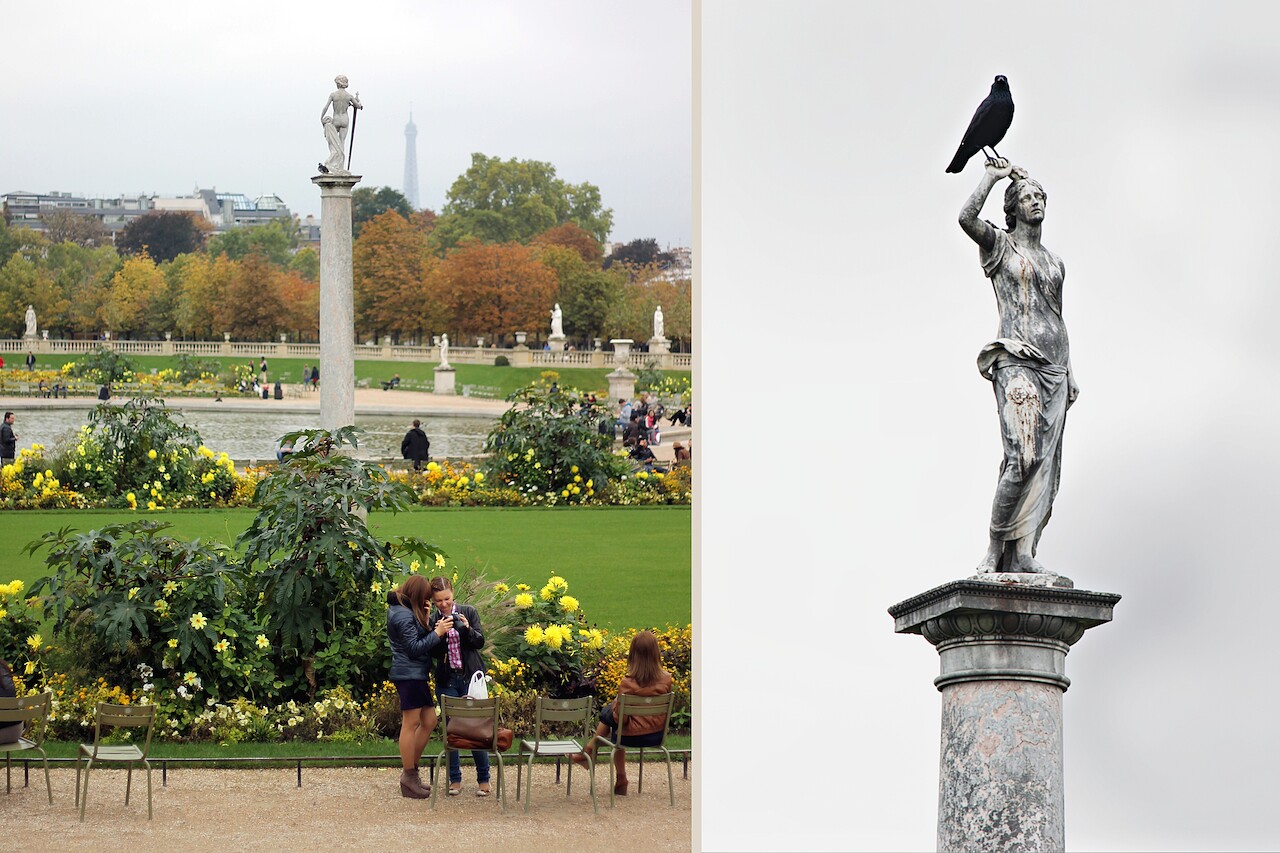
The garden contains more than a hundred sculptures, and some of them are replicas of authentic artifacts, while others replicate the ancient style. Naturally, there are no originals here, but these are outstanding works by sculptors of the modern era. First and foremost, two statues on four‑meter‑high columns made of pink granite near the Central Pool attract attention. Here we see the marble sculpture “David, Victor over Goliath” (David vainqueur de Goliath). This work is by Italian or French masters of the late Renaissance (16th century); its origin is unknown, and it is first mentioned in the Louvre inventories of 1692. In the 1840s, the Luxembourg Garden was being reconstructed, and the statue moved from the storage rooms to the column of the Central Basin, becoming the oldest in the garden. In 1993, the valuable exhibit was moved to the vestibule of the Luxembourg Palace, and its exact replica was installed on the column. Another column is adorned with a marble statue titled “Venus Emerging from the Bath” (Vénus sortant du bain), created in the 1840s; the author is also unknown. The prototype was the classic ancient Roman type of statues of Aphrodite/Venus (“Venus Pudica” or “Capitoline Venus”), where the goddess is caught in an intimate moment, covering her body with her hands or a light fabric.
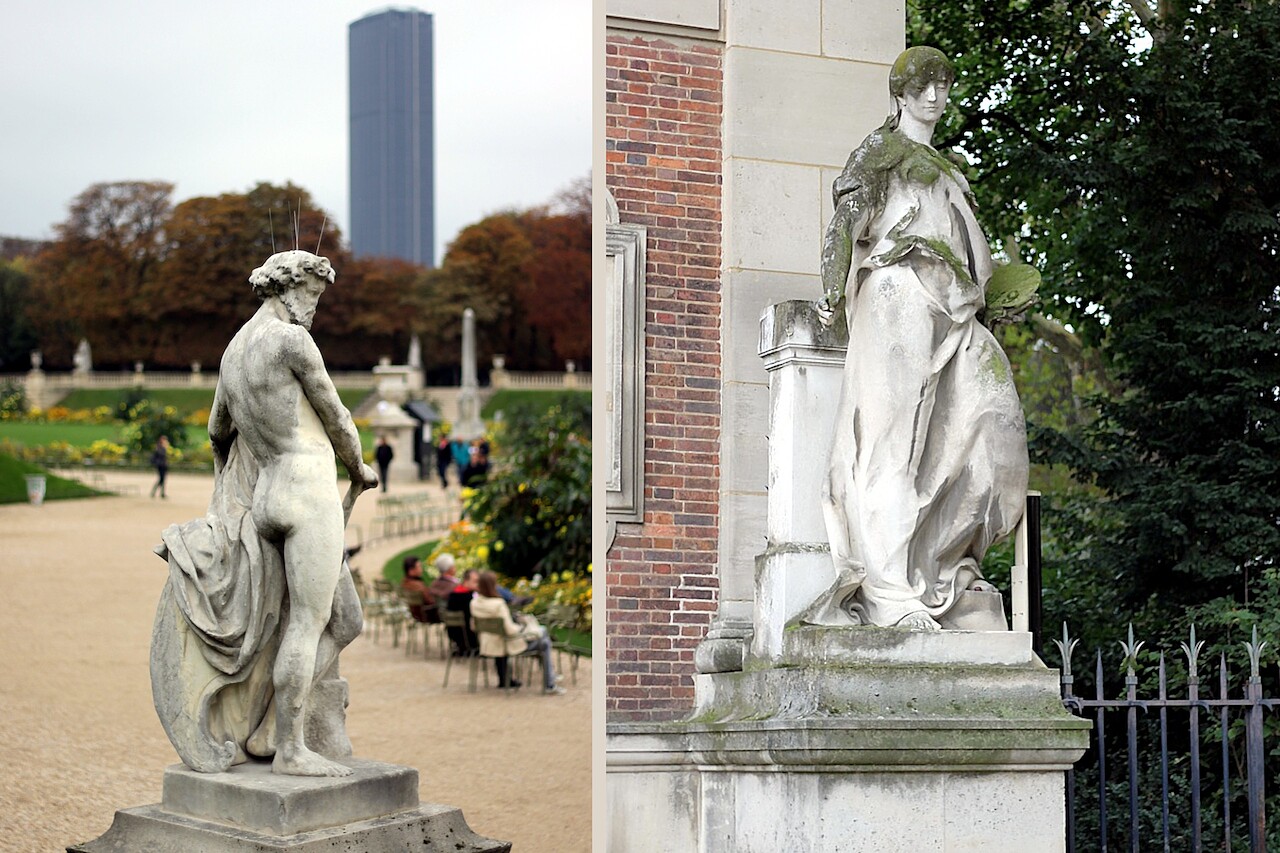
In the right photo is the statue "Vulcan, representing the weapon he forged" (Vulcain présentant les armes qu'il a forgées), installed in 1902 on the terrace of the Central Pool. The sculptor Charles-Antoine Bridan presented a plaster model at the Paris Salon in 1777, and a full-size marble version was created in 1781. The sculpture depicts the Roman god of fire and blacksmithing Vulcan, who holds a hammer and shows off the armor (helmet) forged for Aeneas. On the right is the sculpture "Painting" (La Peinture), installed on one of the corners of the Greenhouse. It was made by sculptor Jules Franceschi in 1889. The statue is a traditional allegory of art: a young woman in classical antique draperies holds the artist's palette in her left hand.
"Lion" is one of the animalistic sculptures of the Luxembourg Gardens, decorating the balustrade of the Central Pool. The famous French animal sculptor Jean-Baptiste Auguste Clésinger carved it out of stone in 1847.

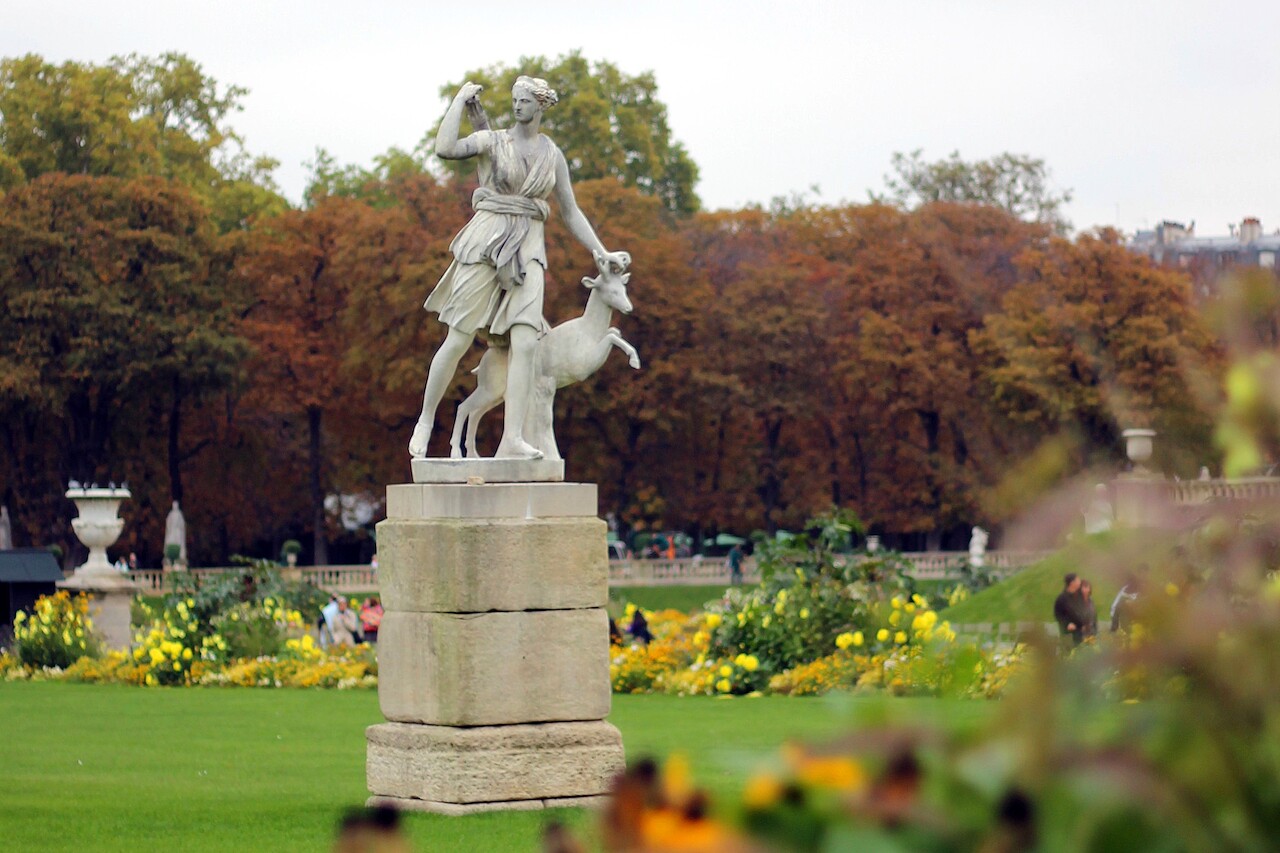
The marble sculpture “Diana of Versailles” (Diane de Versailles), also known as “Diana the Huntress.” This is a copy of an ancient Roman marble statue (which, in turn, replicated a lost ancient Greek bronze original from the 4th century BC, attributed to Leochares). The sculpture depicts the ancient goddess of the hunt, Diana (Artemis), who is moving forward rapidly, drawing an arrow from the quiver behind her back with her right hand, and holding a running doe in her left hand. An unknown Roman master replicated Leochares’ work in marble — this very statue was found in Italy, presented by the Pope to the French king Henry II, and later gained worldwide fame. A replica is installed in the Luxembourg Garden; the original is kept in the Louvre.
"Marius on the ruins of Carthage" (Marius sur les ruines de Carthage). The monument depicts the Roman commander and politician Gaius Marius, who fled after his defeat in the civil war and contemplated the destroyed Carthage. He holds the hilt of his sword in his raised left hand. The famous French sculptor Pierre-Jean David d’Pierre-Jean David d'Angers created it in 1835. Mari looks at the majestic dome of the Pantheon, rising behind the crowns of the autumn trees in the Latin Quarter.

The marble statue "La Messagère" by Gabriel Forestier was installed in 1950. Presumably, it is dedicated to the ancient Greek goddess Iris. In ancient mythology, she is the goddess of the rainbow and the official messenger of the gods (primarily Hera/Juno). She connected the world of the Olympians with the world of humans, descending through the rainbow, and carried out the orders of the higher gods. Iris symbolized pure good news and reconciliation between heaven and earth.

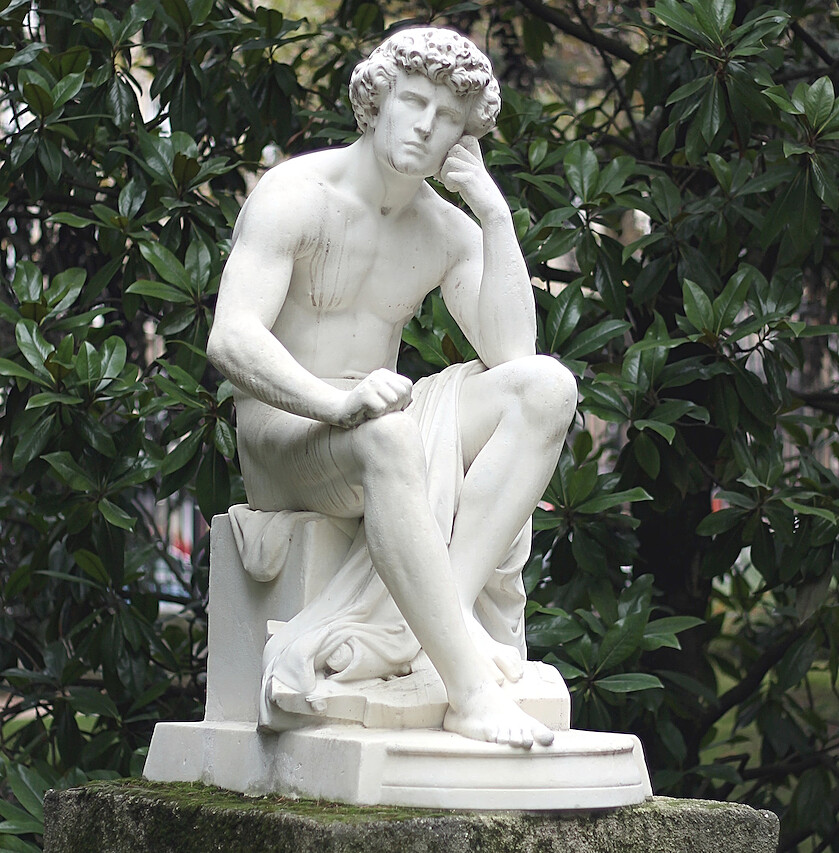
Sculpture "Resentment" (Il Dispetto) by sculptor Jean Valette (Jean Valette) in 1861. The master captured a young man immersed in his thoughts in a classic pose of thoughtfulness, whose figure expresses inner dissatisfaction, melancholy or disappointment.